1. ArchDaily
  2. Thresholds

Thresholds: The Latest Architecture and News

From Passages to Shared Spaces: The Social Life of Circulation

Subscriber Access | 

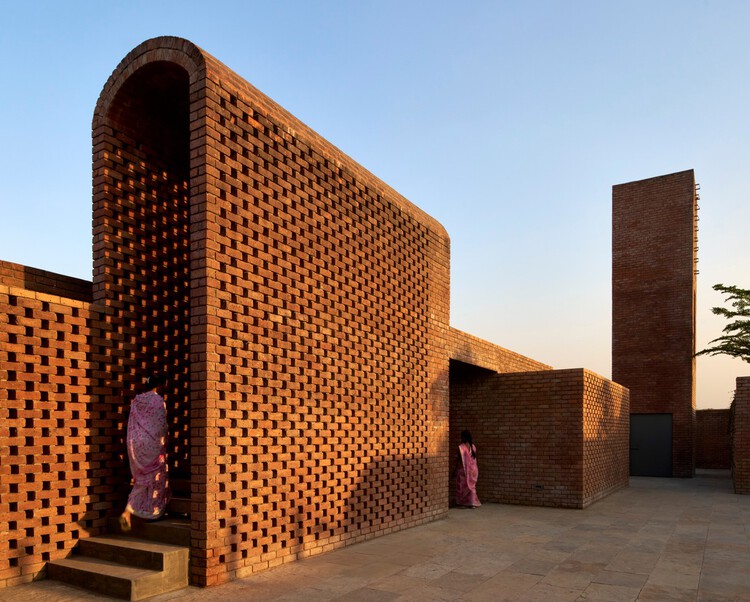
Most people rarely remember a passage. They remember the classroom, the apartment, the gallery, or the plaza at the end of it. Passages are usually designed to disappear into the background, guiding movement from one destination to the next. Yet some of architecture's most memorable experiences happen while moving through a place rather than arriving at it.

Circulation is often treated as one of architecture's most practical elements. Corridors connect rooms, galleries provide access, and walkways organize movement through a building. Their purpose seems straightforward: to help people get from one point to another. Because of this, circulation spaces have long been considered secondary to the programs they serve. Attention tends to focus on destinations, while the spaces in between remain largely unnoticed.


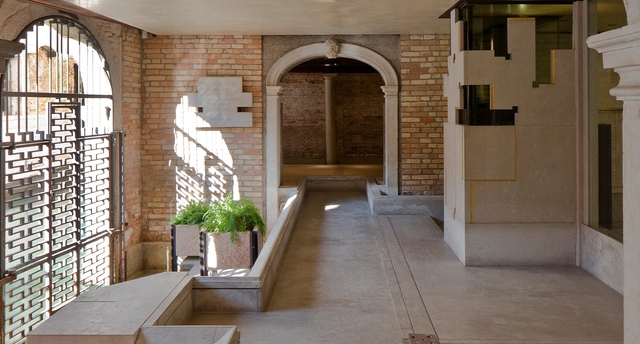
From Passages to Shared Spaces: The Social Life of Circulation - Image 1 of 4From Passages to Shared Spaces: The Social Life of Circulation - Image 2 of 4From Passages to Shared Spaces: The Social Life of Circulation - Image 3 of 4From Passages to Shared Spaces: The Social Life of Circulation - Image 4 of 4From Passages to Shared Spaces: The Social Life of Circulation - More Images+ 13

A Picture Worth a Thousand Pixels: Turning Disneyland Paris into a Canvas

 | In Collaboration

In highly-curated environments such as Disneyland Paris, architecture operates under a different set of expectations. Buildings are not only required to perform, they must also communicate, often instantly. Within this context, the facade becomes a visual marker that can serve as a threshold, mediating light, air, and perception. One strategy that has gained traction in this setting is the use of semi-opaque envelope systems. Neither fully transparent nor entirely enclosed, these facade systems introduce depth and variability.

Unlike conventional cladding, opaque threshold systems perform as filters. They temper solar exposure, enable natural ventilation, and provide privacy without severing visual continuity. These features are valuable in urban and commercial contexts, where buildings balance environmental responsiveness with experiential impact. Such systems also become carriers of narrative, embedding cultural references, patterns, or imagery into the architectural skin.

Calibrated Rawness: Studio 1:1 and the Discipline of Making in Hong Kong and Beyond

Subscriber Access | 

In Hong Kong, where interiors and small buildings are routinely caught between two extremes—high-gloss "luxury" finishes on one end, and budget-cautious industrial roughness on the other—a third attitude has emerged through the calibration of both: a uniquely precise, relevant, and materially honest execution that is not dependent on price point. This is calibrated rawness. Calibrated rawness describes an architecture that retains the directness of matter and materiality—concrete, metal, blockwork, exposed structure, visible services—while subjecting it to rigorous control.

The "raw" is not a costume, and the "refined" is not polished; it is a discipline of precise execution, producing spaces that feel balanced and considered, yet never "made up" or overworked. Studio 1:1 demonstrates this attitude consistently across its work—and its upcoming publication, Architecture under the Radar: Three Projects in Asia (with a foreword by Nader Tehrani), offers a timely frame through which to read this ethos as more than an aesthetic, but as a repeatable architectural method.

Calibrated Rawness: Studio 1:1 and the Discipline of Making in Hong Kong and Beyond - Image 1 of 4Calibrated Rawness: Studio 1:1 and the Discipline of Making in Hong Kong and Beyond - Image 2 of 4Calibrated Rawness: Studio 1:1 and the Discipline of Making in Hong Kong and Beyond - Image 3 of 4Calibrated Rawness: Studio 1:1 and the Discipline of Making in Hong Kong and Beyond - Image 4 of 4Calibrated Rawness: Studio 1:1 and the Discipline of Making in Hong Kong and Beyond - More Images+ 11

The Illusion of Level: Detailing for Water in “Flat” Architecture

Subscriber Access | 

We walk on "flat" ground every day and rarely think twice—but how flat is it, really? In the city, curbs are chamfered, sidewalks pitch toward grates, and roadways are crowned to shed water into shallow gutters. In suburbs and on unpaved paths, irregular terrain is the norm. Inside buildings, by contrast, we pursue near-perfect horizontality—structural frames, slabs, and finishes are all disciplined to create level walking surfaces in the name of safety and accessibility. Yet flatness is inherently at odds with water. A closer look reveals a quiet repertoire of accommodations: slight falls at entries, thresholds raised a few millimeters, wet areas with barely perceptible pitches. The floor is read as flat, but it is in fact carefully tuned—micro-topographies masquerading as plane—to manage water without calling attention to themselves.

What are the common ways architects "keep things flat" while actually managing water—the perennial enemy of buildings? A useful way to look at it is by zooming into three recurring conditions: exterior or roof decking, bathrooms and other wet rooms, and exterior ground planes. Each relies on a slightly different toolkit—pedestal systems over sloped waterproofing, micro-gradients to floor traps, hidden perimeter drains, split slopes—to maintain the illusion of a seamless, level surface. Studying these situations side by side reveals just how much design effort goes into reconciling perceptual flatness with the messy reality.

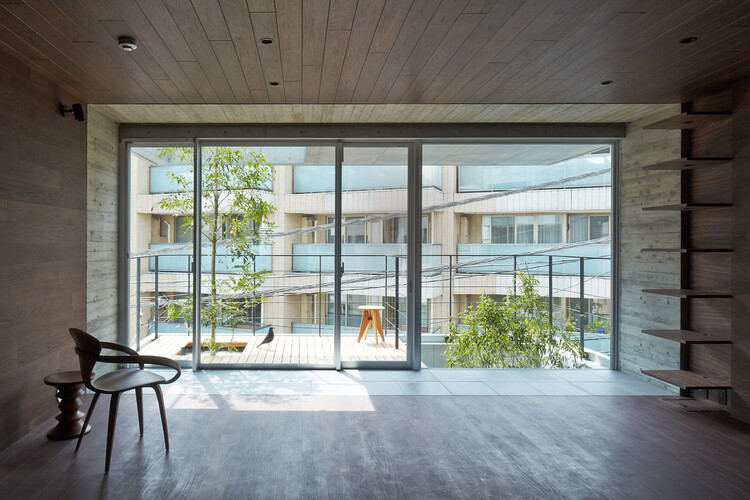
The Illusion of Level: Detailing for Water in “Flat” Architecture - Image 1 of 4The Illusion of Level: Detailing for Water in “Flat” Architecture - Image 2 of 4The Illusion of Level: Detailing for Water in “Flat” Architecture - Image 3 of 4The Illusion of Level: Detailing for Water in “Flat” Architecture - Image 4 of 4The Illusion of Level: Detailing for Water in “Flat” Architecture - More Images+ 15

Bridging the Gap: 15 Atypical Living Solutions in Urban Remnants

Subscriber Access | 

Behind facades lie vibrant lives, where the exterior melds with the interior, transforming neglected urban spaces into captivating residences. In cities around the world, architects, engineers and designers face the challenge of integrating new buildings into existing urban landscapes with limited space. Many architects are now embracing this concept, expanding their designs beyond conventional boundaries and transforming small city lots into layered and interconnected living spaces.

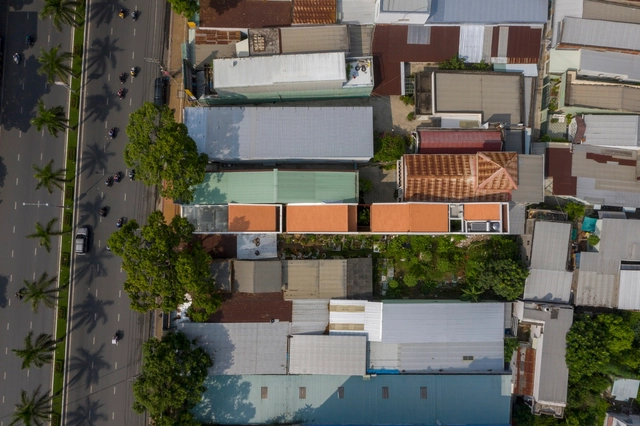
Bridging the Gap: 15 Atypical Living Solutions in Urban Remnants - Image 1 of 4Bridging the Gap: 15 Atypical Living Solutions in Urban Remnants - Image 2 of 4Bridging the Gap: 15 Atypical Living Solutions in Urban Remnants - Image 3 of 4Bridging the Gap: 15 Atypical Living Solutions in Urban Remnants - Image 4 of 4Bridging the Gap: 15 Atypical Living Solutions in Urban Remnants - More Images+ 41

DoorScape Entrance Architecture Contest: Exploring the Space Beyond the Threshold

 | Sponsored Content

The role of a building’s entrance area is critical in a world where first impressions are everything. It anticipates what is to come, marks the starting point to an architectural journey and sets the tone for the rest of the interior. As a practical “passageway” between different places, an entrance connects and unites, but at the same time separates, protects and provides safety for both homeowners and visitors. Thus, every aspect conveys specific formal features to serve that purpose; from the position of the door, to the shape of the threshold, to the structure of the ceiling.

The Veranda: A Disappearing Threshold Space in India

Subscriber Access | 

An ancient Indian folktale narrates the story of a demigod, Hiranyakashipu, who was granted a boon of indestructibility. He wished for his death to never be brought about by any weapon, human or animal, not at day or night, and neither inside nor outside his residence. To cease his wrathful ways, Lord Vishnu took the form of a half-human-half-animal to slay the demigod at twilight at the threshold of his house.

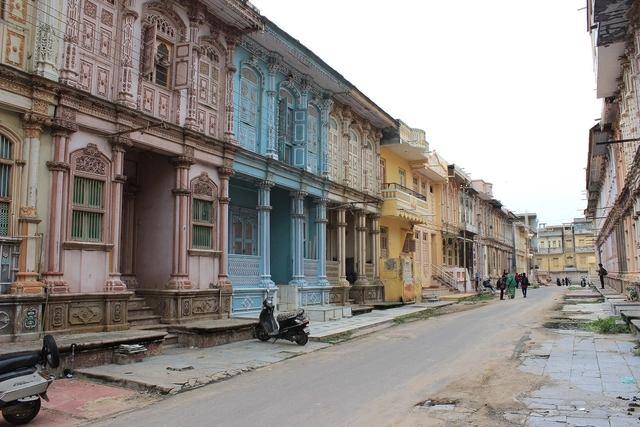
Threshold architectural spaces have always held deep cultural meaning to the people of India. In-between spaces are found in the midst of daily activities as courtyards, stairways, and verandas. The entrance to the house is revered by Indians of all social backgrounds. Throughout the country’s varied landscape, transitional entry spaces are flanked by distinctive front verandas that merge the street with the house.

The Veranda: A Disappearing Threshold Space in India  - Image 1 of 4The Veranda: A Disappearing Threshold Space in India  - Image 2 of 4The Veranda: A Disappearing Threshold Space in India  - Image 3 of 4The Veranda: A Disappearing Threshold Space in India  - Image 4 of 4The Veranda: A Disappearing Threshold Space in India  - More Images+ 1

MIT's Thresholds Launches New Website

In time with the release of the 42nd issue, Human, Thresholds Journal — MIT’s peer-reviewed journal of art, architecture and culture — has launched a new website. The new ThresholdsJournal.com has been redesigned with more content, spanning the past two decades of the journal’s publication. Other features include online purchasing of past issues, enhanced search capabilities for past contributors, and social media interactivity. The new website will feature news on upcoming issues and related events, submission calls, as well as the broad range of voices that Thresholds has featured since 1992.