1. ArchDaily
  2. Toshiko Mori

Toshiko Mori: The Latest Architecture and News

‘T’ Space Presents New Hudson Valley Houses by Steven Holl, Toshiko Mori, and Others at the Archive Gallery

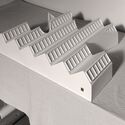
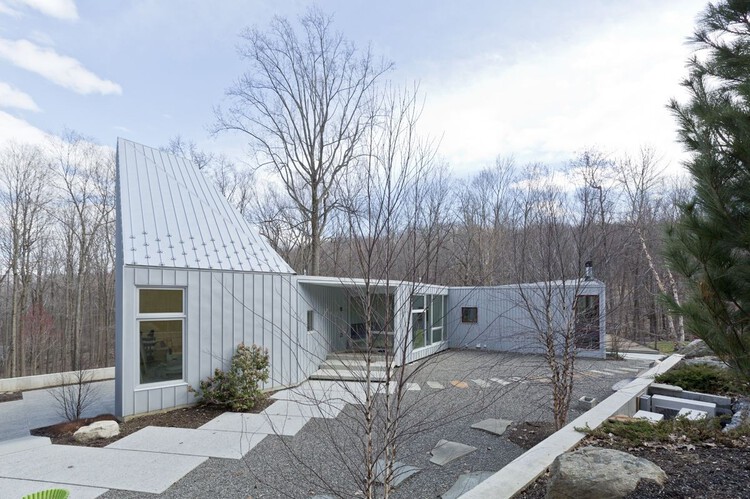
'T' Space will open New Hudson Valley Houses on September 7 at the Archive Gallery in Rhinebeck, New York. The exhibition gathers ten recently designed homes by architects Stan Allen, Garrick Ambrose, Steven Holl, Toshiko Mori Architect, and MOS, all located within three hours of New York City. Rather than showcasing completed works through photography, the presentation relies exclusively on models and drawings, inviting visitors into the architectural process and the conceptual foundations behind each project.

‘T’ Space Presents New Hudson Valley Houses by Steven Holl, Toshiko Mori, and Others at the Archive Gallery - Image 1 of 4‘T’ Space Presents New Hudson Valley Houses by Steven Holl, Toshiko Mori, and Others at the Archive Gallery - Image 2 of 4‘T’ Space Presents New Hudson Valley Houses by Steven Holl, Toshiko Mori, and Others at the Archive Gallery - Image 3 of 4‘T’ Space Presents New Hudson Valley Houses by Steven Holl, Toshiko Mori, and Others at the Archive Gallery - Image 4 of 4‘T’ Space Presents New Hudson Valley Houses by Steven Holl, Toshiko Mori, and Others at the Archive Gallery - More Images+ 4

Rhythms of the Soil: Architecture as Agroecology

At a time of ecological collapse and rising food insecurity, architecture is increasingly called upon to engage not only with landscapes but with the systems that sustain and regenerate them. Among these systems, agriculture occupies a paradoxical role, as both a leading contributor to environmental degradation and a potential agent of ecological recovery. Industrial farming has depleted soils, fragmented habitats, and driven climate change through monocultures, fossil-fuel dependency, and territorial standardization. In response, agroecology has emerged as a counter-practice rooted in biodiversity, local knowledge, and the cyclical rhythms of nature. It reframes farming not as extraction, but as regeneration of ecosystems, communities, and the soil itself.

This reframing opens space for architecture to contribute meaningfully. To align with agroecology is not only to support food production, but to engage with the broader cultural, spatial, and ecological conditions that sustain it. It implies designing with seasonal variation, supporting shared use, and building in ways that respect both the land and those who work it. Architecture becomes more than enclosure — it becomes a mediator of cultivation, reciprocity, and coexistence.

Rhythms of the Soil: Architecture as Agroecology - Image 1 of 4Rhythms of the Soil: Architecture as Agroecology - Image 2 of 4Rhythms of the Soil: Architecture as Agroecology - Image 3 of 4Rhythms of the Soil: Architecture as Agroecology - Image 4 of 4Rhythms of the Soil: Architecture as Agroecology - More Images+ 47

Learning Circles: 12 Educational Projects with Elliptical Plans

Subscriber Access | 

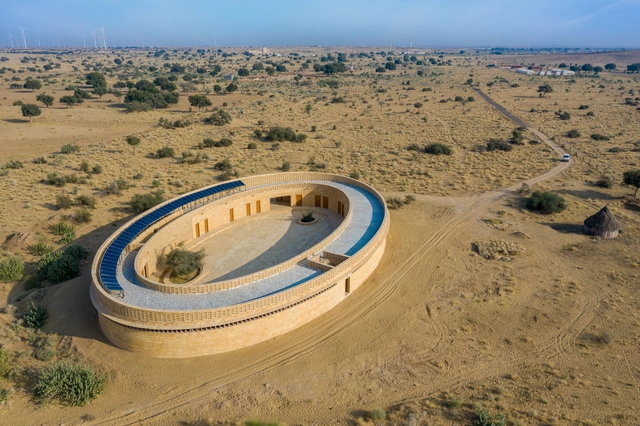
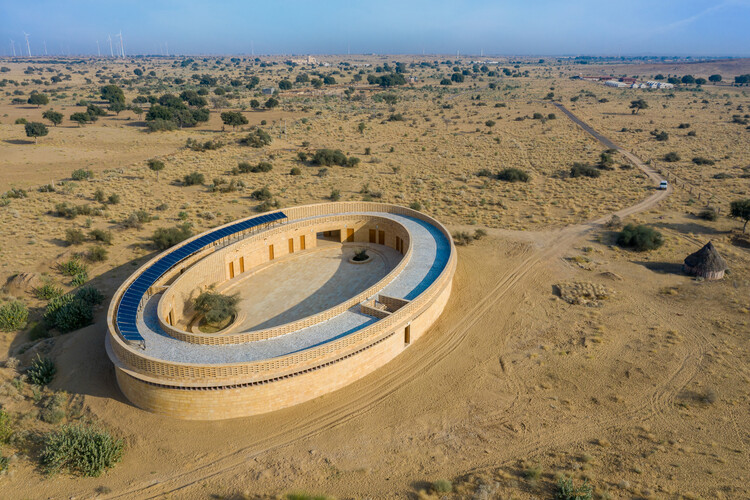
Creating an educational setting is a specific and sensitive task. Merging children's safety and learning optimization requirements with an aesthetic appeal and solid concept can birth some of the most beautiful, unique projects around. One common configuration is the elliptical or circular school. A circular, more specifically ringlike educational setting can suggest a sense of protectiveness and safety with the construction of the embracing surrounding membrane. It is also a practical setup that envelopes multiple functions while linking them, consequently allowing interactive instances through the central courtyard.

Learning Circles: 12 Educational Projects with Elliptical Plans - Image 1 of 4Learning Circles: 12 Educational Projects with Elliptical Plans - Image 2 of 4Learning Circles: 12 Educational Projects with Elliptical Plans - Image 3 of 4Learning Circles: 12 Educational Projects with Elliptical Plans - Image 4 of 4Learning Circles: 12 Educational Projects with Elliptical Plans - More Images+ 42

International Women’s Day 2024: Sharing Empowering Stories and Understanding the Transformative Power of Architecture

Subscriber Access | 

Expanding beyond just March 8th, ArchDaily acknowledges and celebrates the ongoing contributions of women who influence the development of the built environment globally. The "Women in Architecture" theme is central to our content strategy, underscoring our daily commitment to highlight the vital role and impact of female architects.

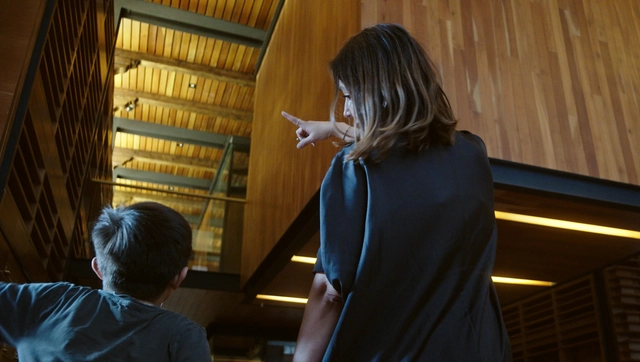
After arguing in 2021 “Why is it still important to talk about "female architects"?, contributing to “rebalancing forces and adjusting narratives” in 2022, and focusing on the achievements of "innovative women at the forefront of global challenges" in 2023, on this International Women's Day, we extend an invitation to you to watch ArchDaily's documentary "Women in Architecture." This project, initiated by Sky-Frame and directed by Boris Noir, offers a captivating exploration of the role of women in shaping the architectural landscape, looking specifically at the professional and personal journeys of three remarkable women in architecture, each contributing something unique to the world: Toshiko Mori, Gabriela Carrillo, and Johanna Meyer-Grohbrügge. To inspire our community with their stories and accomplishments, we are pleased to announce a sequel film, set to be launched in 2024. This installment will showcase three new female architects, including Tosin Oshinowo, a Nigerian architect, designer, and curator of the 2023 Sharjah Architecture Triennial.

International Women’s Day 2024: Sharing Empowering Stories and Understanding the Transformative Power of Architecture - Image 1 of 4International Women’s Day 2024: Sharing Empowering Stories and Understanding the Transformative Power of Architecture - Image 2 of 4International Women’s Day 2024: Sharing Empowering Stories and Understanding the Transformative Power of Architecture - Image 3 of 4International Women’s Day 2024: Sharing Empowering Stories and Understanding the Transformative Power of Architecture - Image 4 of 4International Women’s Day 2024: Sharing Empowering Stories and Understanding the Transformative Power of Architecture - More Images+ 2

Premiere: Documentary "Women in Architecture"

We are happy to premiere the documentary "Women in Architecture", a project initiated by Sky-Frame, directed by Boris Noir.

A better built environment is also an inclusive one. That's why diversity is key to our profession, as it expands our views of the world and connects us with the real needs of society. So we opened a window into the professional and personal lives of three women in architecture who bring something unique to the world, to inspire others. 

The project has been initiated by Sky-Frame to shed more light on the role of women in architecture, by increasing their visibility and empowering them to realize their full potential.

"To make our world a better place. Everyone should have an idea of how architecture works and what it can have an impact on. We live in the era where humans are changing the planet, architecture is one of the most important tools", stated film-maker Boris Noir about the idea behind the film. 

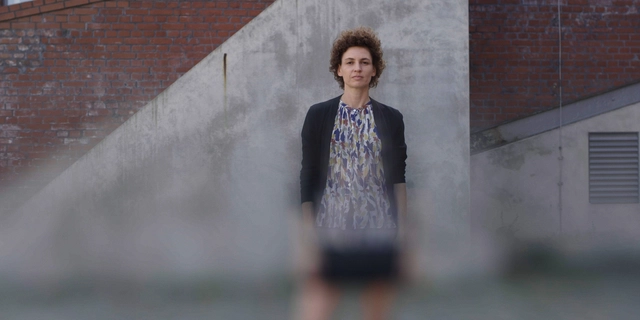
We reached out to Toshiko Mori, Gabriela Carrillo and Johanna Meyer-Grohbrügge, three architects in three different countries, in different contexts, at different stages of their life and career, but with a lot in common: recognized practitioners, with a passion for education, working with communities, and a sensibility towards the needs of society and the built environment.


Johanna Meyer-Grohbrügge and the Spatialization of Content

From ending up by accident in architectural studies, to eventually falling in love with the complexity of the field and the multitude of its layers, Johanna Meyer-Grohbrügge was amazed by the dual nature of architecture; its intellectual aspect, and physical outcome. Founder of Meyer-Grohbrügge in Berlin, the architect, and her studio seek to spatialize content, create relationships, and find solutions for living together.

With Toshiko Mori and Gabriela Carrillo, Johanna Meyer-Grohbrügge is part of a new documentary titled "Women in Architecture", premiering on November 3rd. The film by Sky-Frame, in collaboration with ArchDaily, and directed by Boris Noir is a catalyst for debate on one of the most pressing topics in architecture.

Johanna Meyer-Grohbrügge and the Spatialization of Content - Image 1 of 4Johanna Meyer-Grohbrügge and the Spatialization of Content - Image 2 of 4Johanna Meyer-Grohbrügge and the Spatialization of Content - Image 3 of 4Johanna Meyer-Grohbrügge and the Spatialization of Content - Image 4 of 4Johanna Meyer-Grohbrügge and the Spatialization of Content - More Images+ 3

Toshiko Mori and Good Curiosity in the Exercise of Architecture

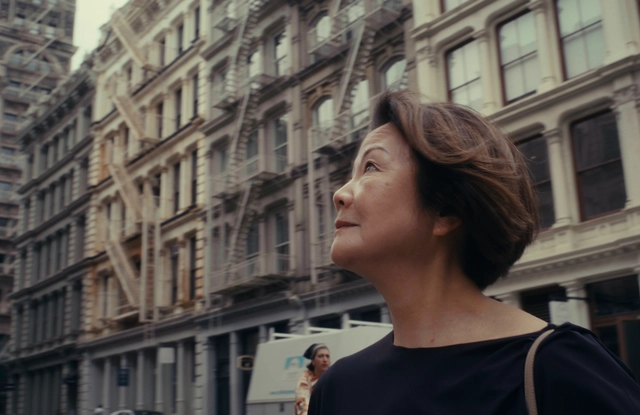
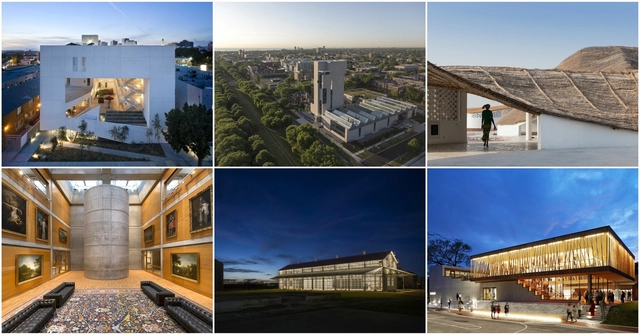
In architecture, context is what concerns human existence in a given place. Climate, culture, geography, and pre-existences, to name just a few. For Toshiko Mori, a Japanese architect based in the United States, context is everything that arouses curiosity about the people we design for. In almost four decades as the head of her office in New York, Mori has had the opportunity to exercise her interest in design practice and academia, managing to build her buildings in contexts as diverse as China, U.S., and Senegal.

With Johanna Meyer-Grohbrügge and Gabriela Carrillo, Toshiko Mori is part of the new documentary Women in Architecture, premiering November 3. The film — made by Sky-Frame in exclusive collaboration with ArchDaily, and directed by Boris Noir — is a catalyst for debate on one of the most pressing topics in architecture.

Women in Architecture: Gabriela Carrillo

Mexican architect Gabriela Carrillo has built an exemplary career and is passionate about the city, territory, and diversity. Her widely awarded works, first in partnership with Mauricio Rocha and now running her own studio, have become the reference image when discussing contemporary architecture in Mexico. Her projects translate the world's needs, developing constant work to recognize the values of the territory in order to provide spaces that dignify its inhabitants. Situated between praxis, theory, and research, her interests are focused on the everyday, leading a flexible and dynamic practice that allows her to maintain a balance between working and living.

Alongside Toshiko Mori and Johanna Meyer-Grohbrügge, Gabriela Carrillo is part of the new documentary "Women in Architecture" to be released on the 3rd of November 2022. The film promoted by Sky-Frame, in exclusive collaboration with ArchDaily and under the direction of Boris Noir, is an impulse for inspiration, debate, and reflection around one of the most pressing issues in architecture.

Announcing "Women in Architecture" Documentary

To make our world a better place, everyone should have an idea of how architecture works and what it can have an impact on. 

Thinking on how to share empowering stories about women who are making an impact on the built environment through architecture, we partnered with filmmaker Boris Noir who developed the concept for the documentary “Women in Architecture”. The project has been initiated by Sky-Frame to shed more light on the role of women in architecture, by increasing their visibility and empowering them to realize their full potential.

We reached out to Toshiko Mori, Gabriela Carrillo, and Johanna Meyer-Grohbrügge, three architects in three different countries, in different stages of their careers, but with a lot in common: recognized practitioners, with a passion for education, working with communities, and a sensibility towards the needs of society and the built environment.
The protagonists shared with us a variety of fundamental topics, such as their perspectives on being a woman in an industry led by men, how to balance work and private life, and the general challenges women experience in the profession. Their enthusiasm provides a space for reflection and inspiration.
Announcing "Women in Architecture" Documentary - Image 1 of 4Announcing "Women in Architecture" Documentary - Image 2 of 4Announcing "Women in Architecture" Documentary - Image 3 of 4Announcing "Women in Architecture" Documentary - Image 4 of 4Announcing Women in Architecture Documentary - More Images+ 8

In Times of Need: Architects Stepping Up in Humanitarian Crisis

Subscriber Access | 

Hard times bring people together. In recent years we have seen how collective work can be a driving force to help those affected by natural or man-made disasters. After a disaster or displacement, a safe physical environment is often essential. Therefore, the need for coordination becomes a key factor in assisting people in times of need.

Architects, as "Shelter Specialists", play an important role in creating safe and adequate environments, whether it is individual housing, public buildings, schools, or emergency tent camps. But as architect Diébédo Francis Kéré says, "When you have nothing and you want to convince your community to believe in an idea, it may happen that everybody starts working with you, but you need to keep fighting to convince them."

In Times of Need: Architects Stepping Up in Humanitarian Crisis - Image 1 of 4In Times of Need: Architects Stepping Up in Humanitarian Crisis - Image 2 of 4In Times of Need: Architects Stepping Up in Humanitarian Crisis - Image 3 of 4In Times of Need: Architects Stepping Up in Humanitarian Crisis - Image 4 of 4In Times of Need: Architects Stepping Up in Humanitarian Crisis - More Images+ 25

The Second Studio Podcast: Interview with Toshiko Mori

The Second Studio (formerly The Midnight Charette) is an explicit podcast about design, architecture, and the everyday. Hosted by Architects David Lee and Marina Bourderonnet, it features different creative professionals in unscripted conversations that allow for thoughtful takes and personal discussions.

A variety of subjects are covered with honesty and humor: some episodes are interviews, while others are tips for fellow designers, reviews of buildings and other projects, or casual explorations of everyday life and design. The Second Studio is also available on iTunes, Spotify, and YouTube.

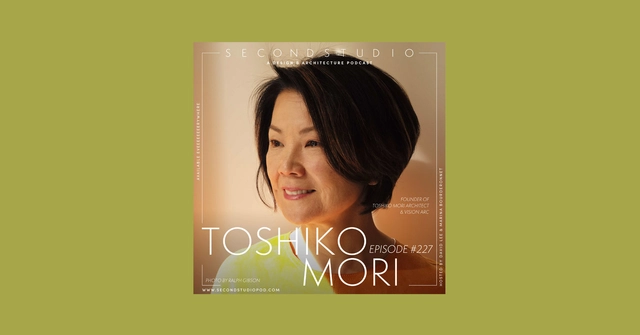
This week David and Marina are joined by Architect Toshiko Mori to discuss her moving from Japan to New York City at a young age, attending The Cooper Union for Art and Architecture, starting her own practice and VisionArc, witnessing the 9/11 attack, her design process, creating a temporary concert hall, and more.

Toshiko Mori Pursues Dialogue That Transcends Time and Space

Continuing their Time-Space-Existence series of monthly videos leading up to this year’s Venice Biennale, PLANE—SITE have released a new conversation with architect and former Harvard GSD chair of architecture Toshiko Mori. Each video highlights the ideas that drive the work of well-known designers, with this episode focusing on Mori’s philosophy of visual communication, dialogue with history and considering the future in her work.

Toshiko Mori Pursues Dialogue That Transcends Time and Space   - Featured ImageToshiko Mori Pursues Dialogue That Transcends Time and Space   - Image 1 of 4Toshiko Mori Pursues Dialogue That Transcends Time and Space   - Image 2 of 4Toshiko Mori Pursues Dialogue That Transcends Time and Space   - Image 3 of 4Toshiko Mori Pursues Dialogue That Transcends Time and Space   - More Images+ 10

Studio Gang, SANAA Among Winners of 2017 AIA Institute Honor Awards

The American Institute of Architects (AIA) have named 18 architectural and interior projects as recipients of the 2017 Institute Honor Awards, the profession’s highest recognition for excellence in design.

According to the AIA, “the 2017 Architecture program celebrates the best contemporary architecture regardless of budget, size, style, or type. These stunning projects show the world the range of outstanding work architects create and highlight the many ways buildings and spaces can improve our lives.”

The awarded projects were selected from nearly 700 submissions. The winners will be honored at the 2017 AIA National Convention in Orlando.

Interview with Toshiko Mori: “Rather Than Working With Forms, We Work With Forces”

As a Japanese immigrant who has spent much of her life in the United States, the architecture of Toshiko Mori occupies an interesting space: on one hand, the material and tectonic culture of Japan is, as she puts it, her “DNA.” On the other hand, her work clearly draws inspiration from the Modernists of 20th century America, and most notably from Mies van der Rohe. In this interview from his “City of Ideas” series, Vladimir Belogolovsky speaks with Mori (his former architecture professor) about materials, details, and the inspiration behind her work.

Interview with Toshiko Mori: “Rather Than Working With Forms, We Work With Forces” - Image 7 of 4Interview with Toshiko Mori: “Rather Than Working With Forms, We Work With Forces” - Image 14 of 4Interview with Toshiko Mori: “Rather Than Working With Forms, We Work With Forces” - Image 36 of 4Interview with Toshiko Mori: “Rather Than Working With Forms, We Work With Forces” - Image 42 of 4Interview with Toshiko Mori: “Rather Than Working With Forms, We Work With Forces” - More Images+ 52

Steven Holl, Tod Williams and More Reflect on the Importance of the Emerging Voices Award

Every year, the Architectural League of New York honors the rising stars of architecture with the Emerging Voices Award, a title offered only to the most promising professionals. Long known as a predictor of long-term career success, the award has been given to architects who have later become some of the best in the world, including Steven Holl, Toshiko Mori, and Tod Williams. For a recent article entitled 10 Emerging Voices Winners on the Program's Lasting Influence, Metropolis Magazine asked some of the award's most illustrious winners to discuss how their trajectories were changed by the award, and how they changed architecture.

Toshiko Mori Calls Tokyo's At-Risk Hotel Okura "A Very Beautiful Orphan Child"

A photo posted by ArchDaily 🏠 (@archdaily) on

With the planned demolition of Hotel Okura in preparation for the 2020 Tokyo Olympic Games fast approaching, architects and designers have rallied around the Modernist icon, calling for its preservation. In the latest and most high profile campaign, Japanese architect Toshiko Mori and Bottega Veneta's Tomas Maier have joined forces to span a breadth of platforms from a symposium held last November to an Instagram hashtag (#mymomentatokura) sharing images of the beloved hotel. Most recently, Mori sat down with Architectural Digest to discuss her passion for Hotel Okura, the origins of the campaign, and Japanese Modernism. Read the full interview and see why Mori says Hotel Okura is "a very beautiful orphan child," here.

Ruins of an Alternate Future (Jinhua Architecture Park)

Subscriber Access | 
Ruins of an Alternate Future (Jinhua Architecture Park) - Image 4 of 4
Courtesy of Chakroff

Originally published on the author’s website and blog on Archinect, 'Ruins of an Alternate Future (Jinhua Architecture Park)' was written by Shanghai-based architectural designer and theorist Evan Chakroff.

One of the great, if seldom realized, promises of architecture is its capacity to affect change. The best architects seem to have this potential in mind constantly as they structure career-length narratives around the social impact that good design can achieve. While this is often hyperbole, and most projects are driven by functional or economic considerations, there is the occasional opportunity for artists and architects to create purely speculative work, where radical departures from established typologies suggest alternatives to the status quo. In these rare cases, novelty is embraced not for its own sake, but for its potential to generate new archetypes, to provide a glimpse into a parallel world where architecture truly has agency: where design can change society for the better. 

Continue reading after the break...

Update: Resistance to NYU 2031 Expansion Heightens

Subscriber Access | 
Update: Resistance to NYU 2031 Expansion Heightens - Image 2 of 4
Illustrative Rendering of the Greene Street Walk, Part of the NYU 2031 Expansion Plan. © NYU

The contenders: NYU and the Greenwich Village community. Let Round 2 commence.

Almost two years after we first brought you news about NYU 2031, NYU’s plans for expansion in Brooklyn, Governor’s Island, and (most controversially) in Greenwich Village, and the fight has not only continued, but escalated. A debate, hosted by The Municipal Art Society of New York, two nights ago brought about 200 NYU affiliates and community residents together, but only spatially; there was a considerable lack of willingness to compromise from either camp.

NYU’s plan, thought up by Toshiko Mori Architect, Michael Van Valkenburgh Associates, and Grimshaw Architects, has ruffled feathers mostly for the fact of its bulk. The 2.5 million square-foot development (1.1 million of which would be underground) is the largest ever proposed for the Village, and has drawn criticism for its potential to diminish light, greenery, and open space in the neighborhood.