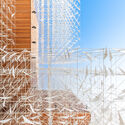
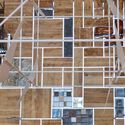
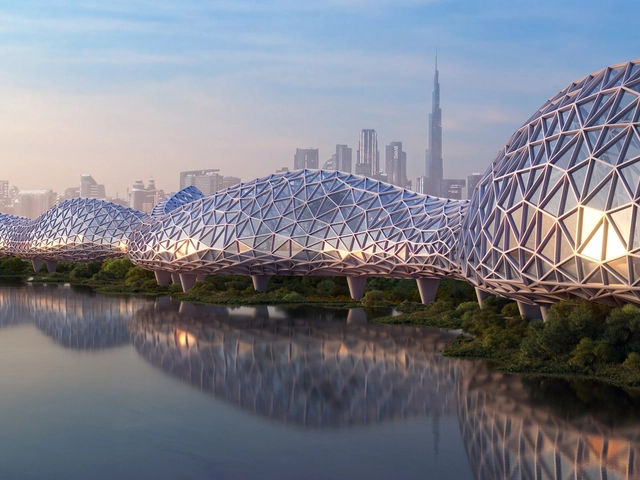
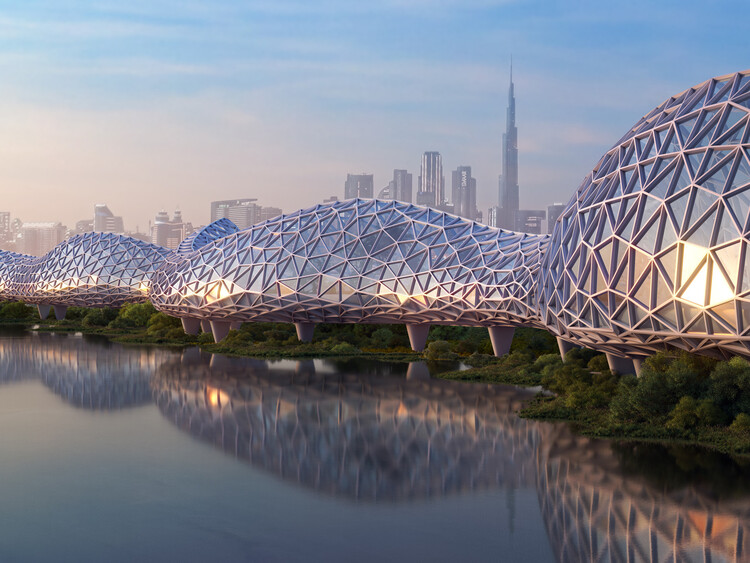
Designed by URB, The LOOP is a 93-kilometer-long sustainable highway that aims to encourage Dubai’s residents to opt for a healthy mode of transportation. The structure provides a climate-controlled all-year environment to make walking and cycling the preferred type of transportation in the city. The initiative aligns with Dubai’s 20-minute city initiative, which hopes to see 80% of Dubai’s residents commute to work by walking or cycling. The project is currently in the research and development phase.
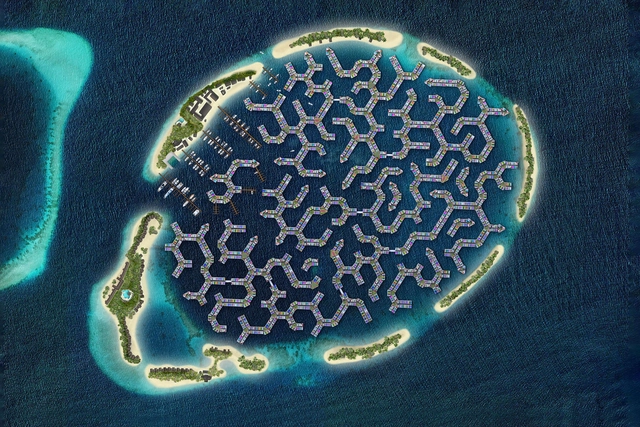
The threat of climate change is looming before us. Sea level rise concerns over 410 million people at risk of losing their livelihoods. Coastal cities are choked with high-rise buildings and traffic-laden roads, consuming land insufficiently. Synthesizing these problems, architects across the world have proposed a potential answer - floating cities. A future of living on water seems like a radical shift from how people live, work, and play. Vernacular precedents prove otherwise, offering inspiration for what our cities could morph into. As world leaders discuss courses of action to tackle climate change at the COP27 climate summit in Egypt, ArchDaily dives into the concept of radical water-based settlements.
Tu Casa by Lutolli Architects + Partners. Image Courtesy of Lutolli Architects + Partners
Architects play an important role in creating healthy, functional and aesthetically pleasing environments. Interior design represents a natural continuation of the same prerogative, and its importance has been accentuated in recent years, from the lockdown forcing many people to remain indoors for extended periods of time, to the rise of remote work. The task of the interior designer is not decorating spaces, but planning for an effective use of space, understanding the needs of the user and highlighting the intrinsic qualities of a space. Acoustics, lighting, material properties and proportions all play a role in achieving a coherent and enjoyable interior space.
This week’s curated selection of Best Unbuilt Architecture highlights interior design projects submitted by the ArchDaily community. From a pastel-colored library in Turkey to a renovated symphony hall in San Diego, US, this selection of unbuilt projects showcases how architects design interior spaces by integrating textures, materials, light, and color in well-proportioned spaces. The article includes projects from Turkey, US, Switzerland, Indonesia, UK, and Denmark.
As the new year begins, we look forward to the most exciting projects planned to open in 2023. The world's second-tallest tower is currently under construction in Malaysia; Egypt is almost ready to open its largest archeological museum, while MVRDV is currently renovating a large-scale brutalist landmark in Albania. Featuring internationally renown architectural offices such as Snøhetta, OMA, Studio Gang, Zaha Hadid Architects, BIG, along with the latest winner of the Pritzker Prize, Francis Kéré, the following selection presents projects from all around the world. They also range in scale and program, from international airports to sculptural arts galleries or museum expansions.
Several projects presented here have also featured in the previous year's compilation. Resource availability and labor issues generated by the pandemic have also continued to influence opening schedules, but with a diminishing impact. Following the predicted trends for 2023, more and more projects involve the adaptive reuse of existing structures. An underlying theme is visible in the increased interest in expanding artistic and cultural venues and integrating historical heritage into the expression of contemporary architecture.
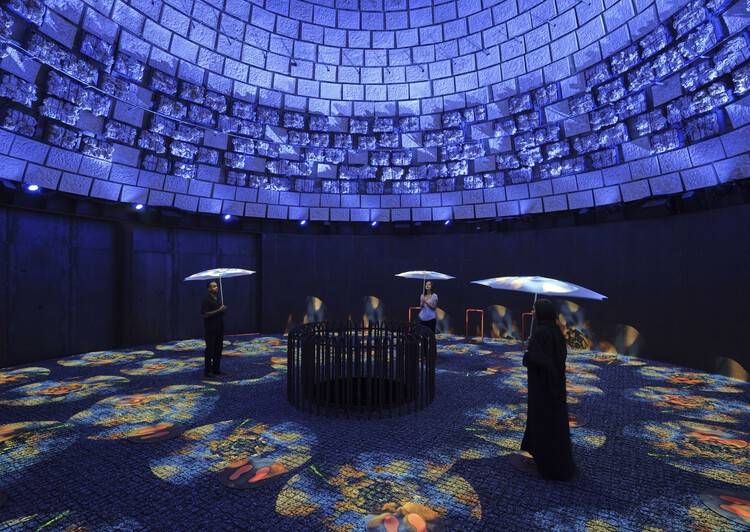
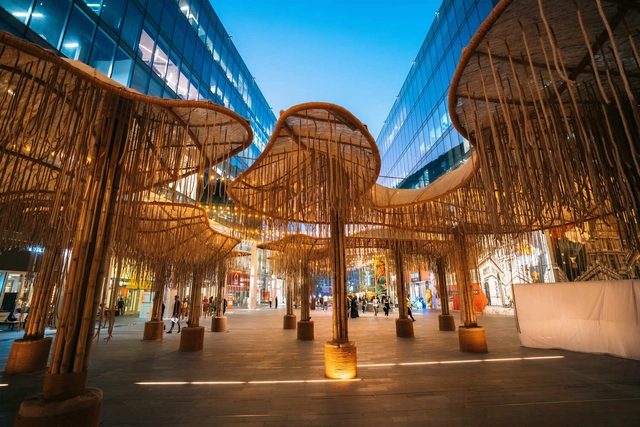
Once Upon a Forest / OBMI. Image Courtesy of Dubai Design Week
One of the most significant cultural events in the Middle East, Dubai Design Week represents a platform that offers individuals and companies the opportunity to showcase their design experience and to open conversations about the most pressing issues of our times. Developed in a strategic partnership with Dubai Design District (d3), the event presents a series of immersive, large-scale installations that highlight the festival’s theme: Design with Impact.
This year’s program is focused on designing a sustainable future. To promote this, Dubai Design Week has invited international and regional architects and designers to create installations that demonstrate creative design thinking, to introduce innovative materials, and spark conversations about the ways in which design can have a positive impact on the environment.
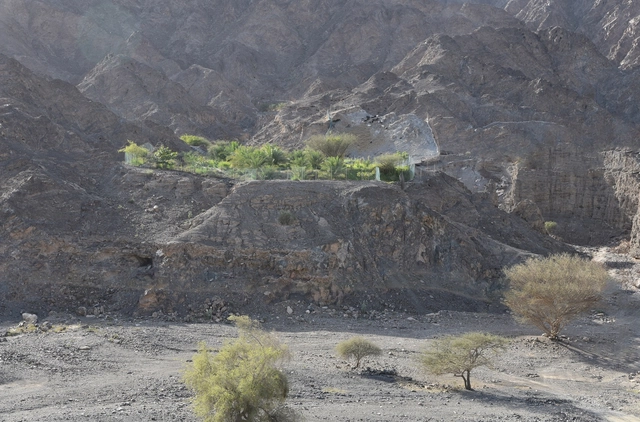
The National PavilionUAE has announced the appointment of Faysal Tabbarah, Associate Dean and Associate Professor of Architecture at the American University of Sharjah, as the curator of UAE’s pavilion for the 18th International Architecture Exhibition of La Biennale di Venezia in 2023. Tabbarah’s proposal for the exhibition focuses on the arid and dry landscapes of the UAE and their relationship with architecture. Through the research, these areas are reimagined as spaces of abundance and productivity. This approach represents Faysal Tabbarah’s response to the Venice Biennale 2023 theme: The Laboratory of the Future.
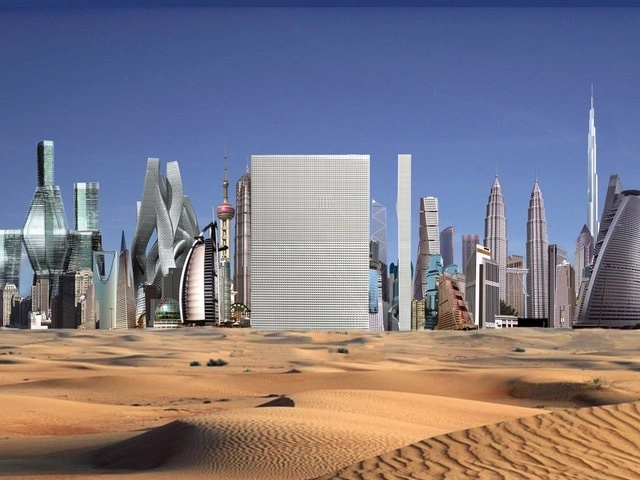
Rem Koolhaas, co-founder of Office for Metropolitan Architecture (OMA), receiver of the Pritzker Prize Award in 2000, and leading urban theorist, was one of the first to question the high-rise phenomenon and its influence on city transformation. Particularly intrigued by the Gulf region and the urban ambitions of this area, in 2009, during the 9th edition of the Sharjah Biennial, he delivered a lecture on the potential of re-inventing urbanization in the Emirates.
On the occasion of the golden jubilee of UAE, marking 50 years since the Emirates were founded in 1971, 50U, published by Archis explores the different developments in the Gulf, this region that “witnessed the transformation of a partly nomadic, partly town-based community into a globally active metropolitan society”. After Al Manakh, in 2007, followed in 2010 by Al Manakh Cont’d, 50U tells the story of the UAE through 50 portraits of people, plants, and places. The book also shares an excerpt of Koolhaas’ 2009 talk that reflects on contemporary conditions, focusing specifically on his reading of Dubai, his architectural involvement as well as his future urban predictions.
Standing at 78 meters tall, the Museum of the Future (MOTF) is far from reaching Dubai’s famous skyline, which features skyscrapers like the unparalleled Burj Khalifa – the world’s tallest tower. However, with its bold shape and striking façade illuminated by more than 14,000 meters of Arabic calligraphy, it certainly succeeds in taking its place among the city’s most iconic buildings. The award-winning project by Killa Design and Buro Happold, described by many as ‘the most beautiful building in the world’, opened in February of 2022 in Dubai’s Financial District. In a total built up area of 30,000 sqm, it accommodates exhibition spaces for innovative ideologies, services, and products, as well as theater spaces, a laboratory, and a research center.
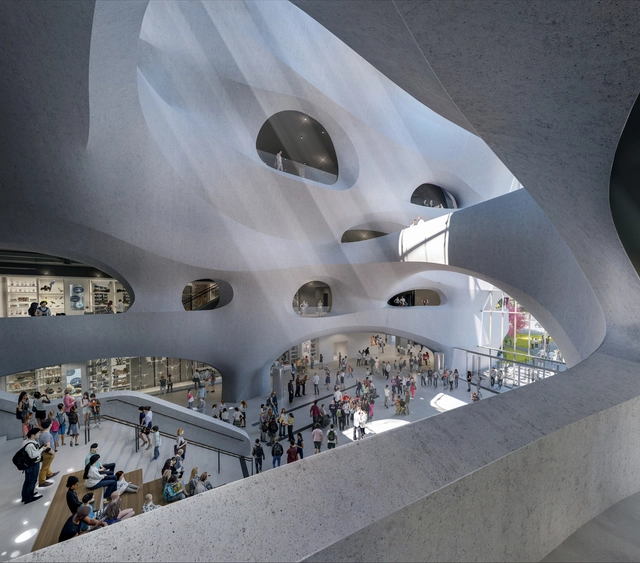
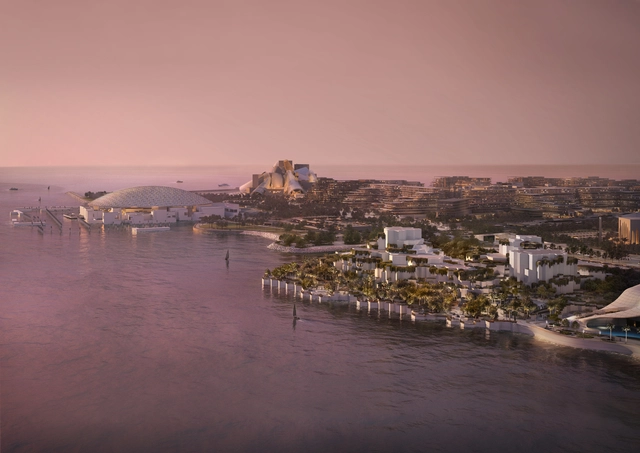
Abu Dhabi unveiled plans for a Natural History Museum designed by Dutch practice Mecanoo. The project resembles natural rock formations, and geometric shapes are present across all design elements, accompanied by the presence of water and vegetation. The 35,000 square-meter venue will feature gallery display areas, temporary exhibition spaces and theatre spaces, as well as an innovative research facility for the study of zoology, palaeontology, marine biology, molecular research and earth sciences. The new institution is intended as a space for education and, at the same time, as a think-tank for future innovation in these respective fields.
Videos
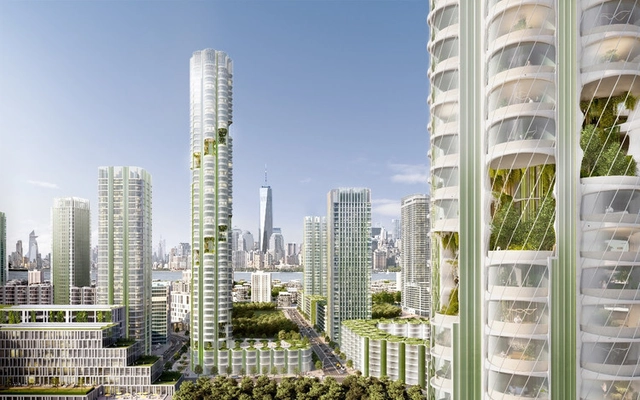
Urban Sequoia Forests of Buildings Isolating Carbon & Producing Biomaterials . Image Courtesy of SOM / Miysis
With the magnitude and urgency of the immediate Covid-19 crisis worldwide, efforts have been concentrated on saving lives, rather than focusing on concerns related to the road to Net-zero carbon. Net Zero carbon in regards to construction is defined as when the amount of carbon emissions associated with the construction of a building and its completion is zero. A zero-energy building will have an overall zero net energy consumption; the total amount of energy used by the building annually is equal to the amount of renewable energy generated on-site.
As the climate emergency presents itself as a severe and existential threat, it is crucial that the road to net-zero carbon is resumed large-scale in both an architectural and commercial sense. Around the globe, efforts have been renewed in an attempt to tackle the almost inconceivable. According to the 2019 global status report for buildings and construction, the buildings and construction sector accounted for 36% of final energy use and process-related carbon emissions in 2018. Although carbon emissions were temporarily reduced during the peak of the pandemic, they are set to swiftly return to previous figures.
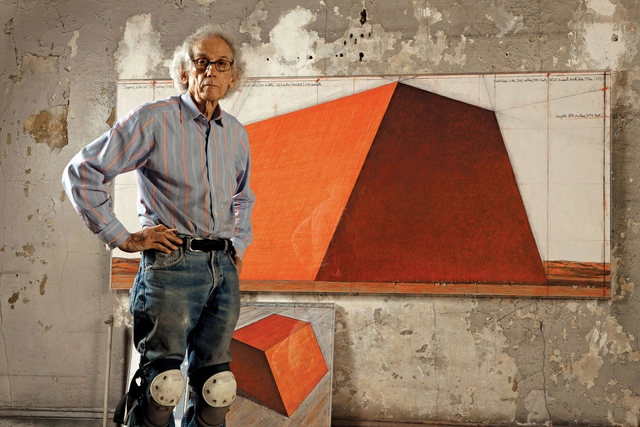
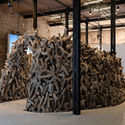
Conceived in 1977, and currently, in progress, The Mastaba, Christo and Jeanne-Claude’s largest permanent artwork in the world, is designed for Abu Dhabi, to be built in a proposed location approximately 160 kilometers south of the city in the desert of Liwa, in the United Arab Emirates. Made from 410,000 multi-colored barrels, the installation will create “a colorful mosaic, echoing Islamic architecture”. 150 meters high, 300 meters long at the vertical walls and 225 meters wide at the 60 degrees slanted walls, the duo’s final project will take at least three years to be built, once it receives governmental approval.
With its quantifiable objectives and measurable performance, sustainability often passes as a technological challenge. Its primary language is that of data, equipment, and engineered systems, most often translated into a hyper-technologized layer hidden within a design upholding pre-existing aesthetic norms. As architecture is the image of society at one moment in time, how does the focus on sustainability translate into architectural language, further legitimatizing the efforts to establish an equitable relationship with the environment? Architecture serves as an expression of attitudes, and since sustainability has become a fundamental value, it is worth looking at whether or not it has produced an aesthetic transformation.
Spanish Pavilion. Image Courtesy of Spanish Pavilion
Despite a year-long postponement and strict pandemic regulations, the 17th International Architecture Exhibition of La Biennale di Venezia has finally come to an end with over 300,000 visitors, exceeding the previous edition. Titled "How Will We Live Together", the 2021 edition of the event featured 112 participants and 60 national participations hailing from 46 countries, displayed across the Giardini, Arsenale, and the streets of Venice from May 22nd to November 21st, 2021. UAE's Wetland by curators Wael Al Awar and Kenichi Teramoto took home the Golden Lion for Best National Participation, for presenting an innovative contextual alternative to cement, one of the key emitters of the world's carbon dioxide.
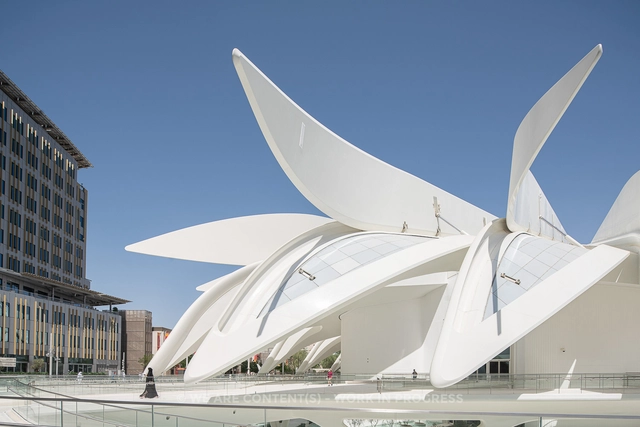
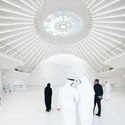
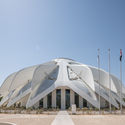
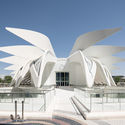
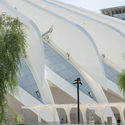
A "symbolic interpretation of the flow of movement", Calatrava’s design for the UAE Pavilion at the 2020 Expo Dubai is a 15,000 square meters immersive and multisensory experience. Images recently shot by Stephane Aboudaram highlight a structure of 28 automated cantilevered wings, that open and rotate at a range of 110 and 125 degrees. Moreover, these photos also show a central skylight, that mimics the logo of this year’s expo.
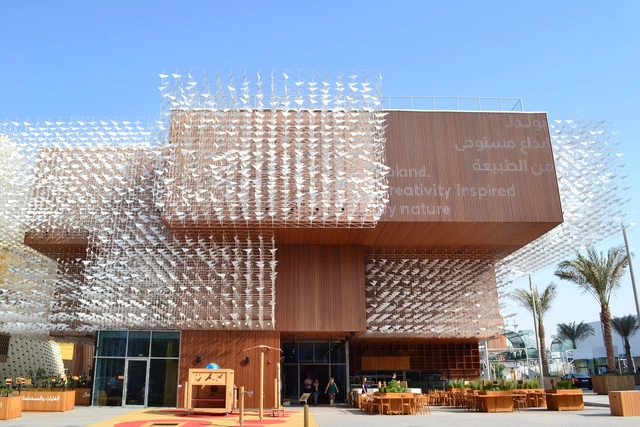
Designed by Warsaw-based architecture practice WXCA and Swiss studio Bellprat Partner, the Polish Pavilion for Expo 2020 Dubai is a nod to the country's natural landscapes representing an essential part of Polish identity. Through a modular structure enveloped by a kinetic sculpture resembling a flock of birds, the project references the idea of mobility while showcasing the natural connection established by bird migration between Poland and UAE.
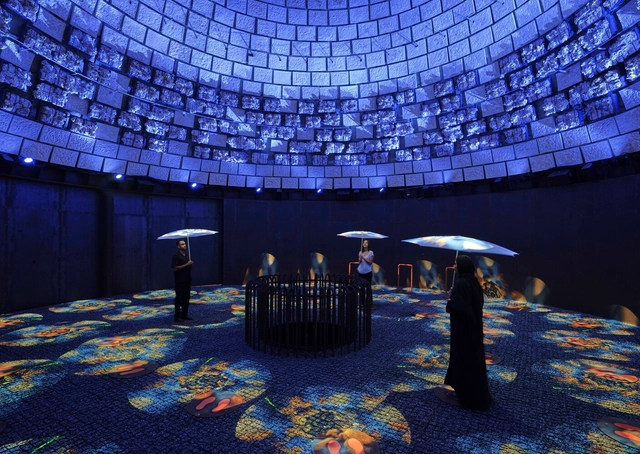
The Netherlands Pavilion at Expo 2020 Dubai proposes a circular climate system that harvests water, energy, manufactures rain and produces food, creating a temporary biotope that embodies the fusion between art, architecture and technology. Designed by V8 Architects, with a visitor experience curated by Kossmanndejong, the pavilion creates a multi-sensory narrative around natural phenomena. Industrial materials like metal sheets, steel tubes, ducts and pipes blend unexpectedly with vegetation and textile fabrics to create a spatial journey culminating in a centrepiece that provides a tranquil stop amidst the bustle of the Expo.
The Finnish Pavilion for Expo 2020 Dubai showcases the country's deep connection with nature and sustainability, contributing to its high quality of life. Titled "Snow Cape", the pavilion designed by JKMM Architects subtly evokes Finnish natural settings through materiality and atmosphere while embodying the principles of circular economy championed by the Nordic country. The structure with its tent-like entrance creates a point of commonality, reminding of Finland's nomadic heritage, as well as the Arabic text.








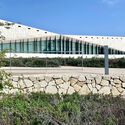
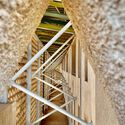





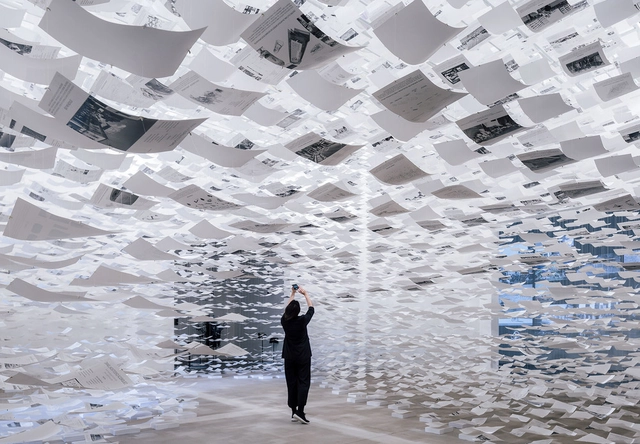
.jpg?1637575616 "Grand Duchy of Luxembourg: Homes for Luxembourg by LUCA Luxemburg Center for Architecure (Andrea Rumpf). Image © Laurian Ghinitoiu")
.jpg?1637576323 "Serbian Pavilion . Image © Laurian Ghinitoiu")