1. ArchDaily
  2. Urban Interventions

Urban Interventions: The Latest Architecture and News

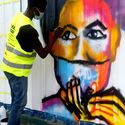
12 Key Principles for an Effective Urban Response during COVID-19

Subscriber Access | 

The Un-Habitat or the United Nations agency for human settlements and sustainable urban development, whose primary focus is to deal with the challenges of rapid urbanization, has been developing innovative approaches in the urban design field, centered on the active participation of the community. ArchDaily has teamed up with UN-Habitat to bring you weekly news, article, and interviews that highlight this work, with content straight from the source, developed by our editors.

As the fight against coronavirus keeps on bringing many cities around the world to a standstill, the need to support urban entities and local governments is greater than ever. Although the pandemic has drastically changed our relationship with the public realm, due to all the imposed but necessary restrictions, from physical distancing to limiting access, the demand for public space has not decreased. People still need to go outside, commute, work, study, play, socialize, and maintain a healthy mental state. Discover in this article UN-Habitat’s key areas of focus for an effective urban response for COVID-19 that local and national governments should focus on to prevent the spread of the virus and to develop resilience to and preparedness for events of a similar nature.
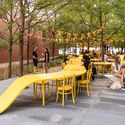
12 Key Principles for an Effective Urban Response during COVID-19 - Image 1 of 412 Key Principles for an Effective Urban Response during COVID-19 - Image 2 of 412 Key Principles for an Effective Urban Response during COVID-19 - Image 3 of 412 Key Principles for an Effective Urban Response during COVID-19 - Image 4 of 412 Key Principles for an Effective Urban Response during COVID-19 - More Images+ 14

A 3D-Printed Majlis and Suspended Cliff Platforms: 10 Unbuilt Projects Submitted to ArchDaily

Subscriber Access | 

This week’s curated selection of Best Unbuilt Architecture highlights cultural structures submitted by the ArchDaily Community. From pavilions to installations, this article explores the topic of cultural urban interventions and presents approaches submitted to us from all over the world.

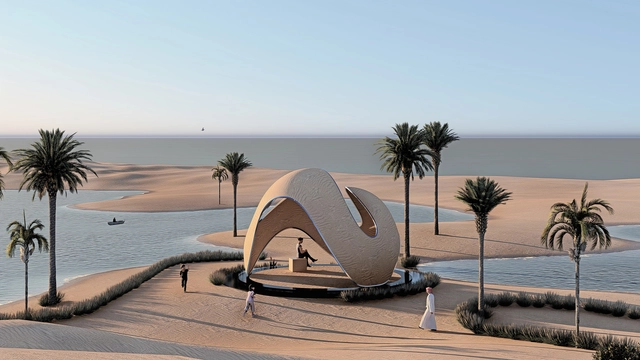
Featuring a pavilion nestled in the sand dunes of the Persian desert, an afrofuturistic, interactive art installation proposed for the upcoming Burning Man event, and a new take on summer cinemas in Russia, this roundup explores how architects reimagined traditional gathering places and created urban interventions in all scales. The round up also includes a collection of structures in the United Arab Emirates, United Sates of America, France, and the United Kingdom, each responding to different contexts and topographies.

A 3D-Printed Majlis and Suspended Cliff Platforms: 10 Unbuilt Projects Submitted to ArchDaily  - Image 2 of 4A 3D-Printed Majlis and Suspended Cliff Platforms: 10 Unbuilt Projects Submitted to ArchDaily  - Image 6 of 4A 3D-Printed Majlis and Suspended Cliff Platforms: 10 Unbuilt Projects Submitted to ArchDaily  - Image 51 of 4A 3D-Printed Majlis and Suspended Cliff Platforms: 10 Unbuilt Projects Submitted to ArchDaily  - Image 60 of 4A 3D-Printed Majlis and Suspended Cliff Platforms: 10 Unbuilt Projects Submitted to ArchDaily  - More Images+ 62

Torino Stratosferica Transforms Abandoned Tramway into Vibrant Urban Park

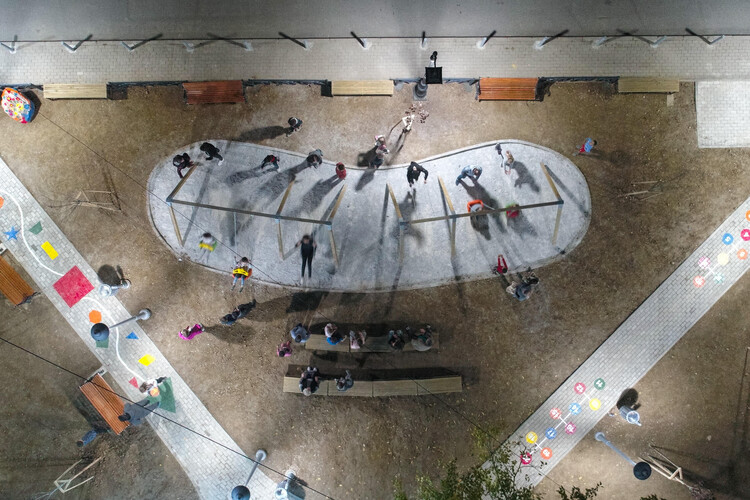
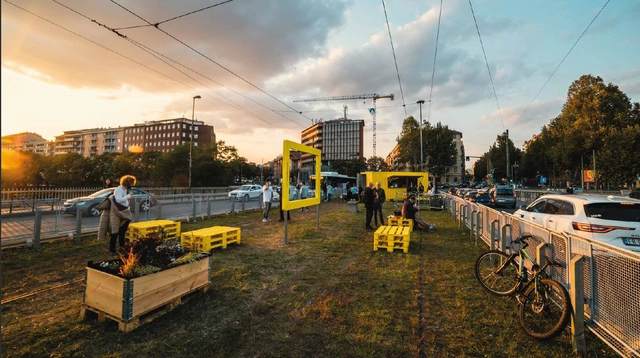
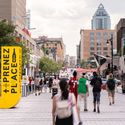
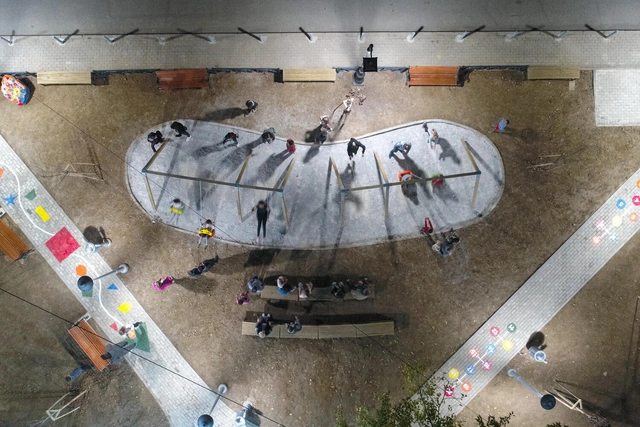
Ever since the tramline’s closure, the 800-meter-long strip in the center of Corso Gabetti and Ponte Regina Margherita in Turin, has been abandoned. To make use of the dead area and give residents an extra space outdoors following Italy's severe pandemic repercussions, non-profit cultural association Torino Stratosferica has transformed the tree-lined strip into Precollinear Park, a temporary public space fit for socially-distanced leisure.

Torino Stratosferica Transforms Abandoned Tramway into Vibrant Urban Park  - Image 1 of 4Torino Stratosferica Transforms Abandoned Tramway into Vibrant Urban Park  - Image 2 of 4Torino Stratosferica Transforms Abandoned Tramway into Vibrant Urban Park  - Image 3 of 4Torino Stratosferica Transforms Abandoned Tramway into Vibrant Urban Park  - Image 4 of 4Torino Stratosferica Transforms Abandoned Tramway into Vibrant Urban Park  - More Images+ 9

Public Spaces and the Challenges of Covid-19: UN-Habitat’s Small-Scale Urban Responses in Vietnam, Bangladesh and India

Subscriber Access | 

The Un-Habitat or the United Nations agency for human settlements and sustainable urban development, whose primary focus is to deal with the challenges of rapid urbanization, has been developing innovative approaches in the urban design field, centered on the active participation of the community. ArchDaily has teamed up with UN-Habitat to bring you weekly news, article, and interviews that highlight this work, with content straight from the source, developed by our editors.

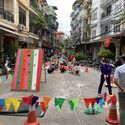
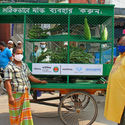
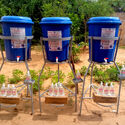
During this pandemic, public spaces have played a vital role in the health and sustainability of urban communities around the world” states James Delaney, Block by Block chair. In fact, people need to go outside, now more than ever. In order to equip these public spaces to face the challenges of Covid-19, UN-Habitat with the Block by Block Foundation has been supporting ten cities, throughout this past year. With the help of local governments and the community, the initiatives helped covid-proof open urban entities, especially in poor neighborhoods, where there are few shared and green spaces. From creating mobile pop-up playgrounds for children in Hanoi, Vietnam, improving livelihood for street vendors in Dhaka and Khulna, Bangladesh to Covid Proofing of Public Spaces in Bhopal informal settlements, India, these responses have provided help to those who need it the most.

Public Spaces and the Challenges of Covid-19: UN-Habitat’s Small-Scale Urban Responses in Vietnam, Bangladesh and India - Image 1 of 4Public Spaces and the Challenges of Covid-19: UN-Habitat’s Small-Scale Urban Responses in Vietnam, Bangladesh and India - Image 2 of 4Public Spaces and the Challenges of Covid-19: UN-Habitat’s Small-Scale Urban Responses in Vietnam, Bangladesh and India - Image 3 of 4Public Spaces and the Challenges of Covid-19: UN-Habitat’s Small-Scale Urban Responses in Vietnam, Bangladesh and India - Image 4 of 4Public Spaces and the Challenges of Covid-19: UN-Habitat’s Small-Scale Urban Responses in Vietnam, Bangladesh and India - More Images+ 13

How Has Public Space Changed in 2020?

Subscriber Access | 

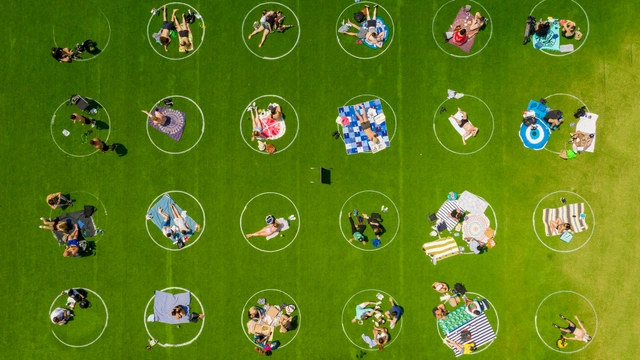
The pandemic provided a unique circumstance for city-scale experiments regarding mobility, while immediate responses showed the transformative power of tactical urbanism. In many cities, the measures meant to ensure social distancing are to be kept in place post-pandemic, paving the path towards recovery with less traffic and more outdoor activities. How did the pressure of rethinking streets, functions, and transportation systems transform public space in 2020?

How Has Public Space Changed in 2020? - Image 1 of 4How Has Public Space Changed in 2020? - Image 2 of 4How Has Public Space Changed in 2020? - Image 5 of 4How Has Public Space Changed in 2020? - Image 3 of 4How Has Public Space Changed in 2020? - More Images+ 5

A Lawn Circle 70 Meters in Diameter Took Over Plaza Mayor in Madrid

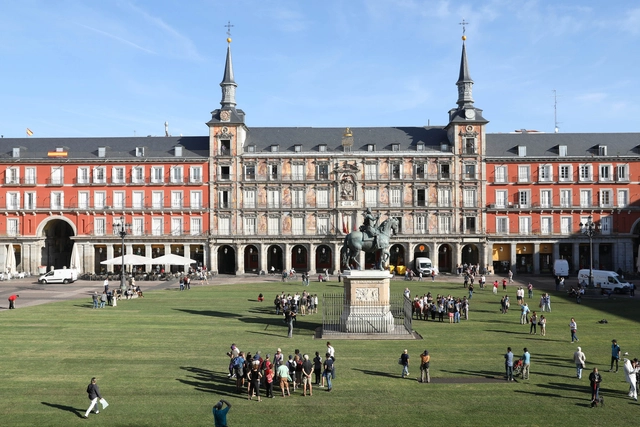
Earlier this year the Plaza Mayor in Madrid awoke covered by a giant meadow of natural grass. A circle of 70 meters in diameter, without any restriction of access, allowed Madrilenians to take a break, sit down, read a book or simply take a picture, enjoying this urban landmark from a new perspective.

This seemingly simple, but impressive doing is the most recent intervention by the anonymous artist SpY was part of Four Seasons (Cuatro Estaciones), an urban art program run by the Madrid City Council to celebrate the IV Centenary of the Plaza Mayor.

After Belonging Agency On the Emergence of New Patterns of Living

Subscriber Access | 

In this film, presented in collaboration with +KOTE, the After Belonging Agency—Carlos Minguez Carrasco, Ignacio Galán, Alejandra Navarrese Llopis, Lluís Alexandre Casanovas Blanco, and Marina Otero Verzier—narrate a walkthrough of In Residence, one of the two core exhibitions at this year's Oslo Architecture Triennale: After Belonging – A Triennale In Residence, On Residence, and the Ways We Stay in Transit.

How Schønherr is Transforming Aarhus with Experimental Urban Interventions

Subscriber Access | 

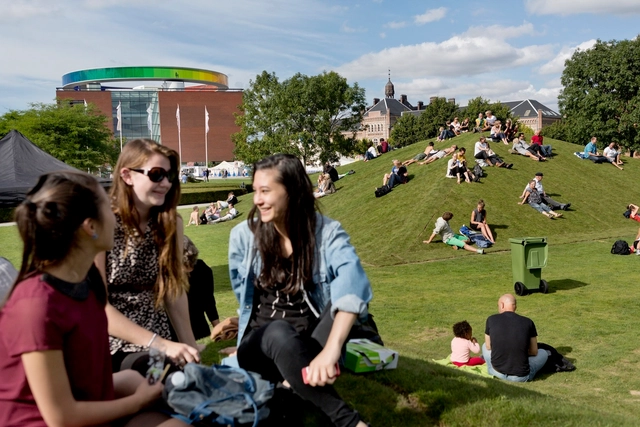
Since 2010, the Danish architects from Schønherr have been developing a series of large-scale urban interventions for the Aarhus Festival, the largest cultural festival in Denmark. These temporary projects have transformed the streets and parks into extraordinary public spaces, changing the natural topography of the city to attract citizens and bring them together.

We present their last four projects: "The Forest" (2010), "The City Park" (2012), "The Plaza" (2014) and "Bishops Square" (to be completed this 2016).

How Schønherr is Transforming Aarhus with Experimental Urban Interventions - Image 1 of 4How Schønherr is Transforming Aarhus with Experimental Urban Interventions - Image 2 of 4How Schønherr is Transforming Aarhus with Experimental Urban Interventions - Image 3 of 4How Schønherr is Transforming Aarhus with Experimental Urban Interventions - Image 4 of 4How Schønherr is Transforming Aarhus with Experimental Urban Interventions - More Images+ 44

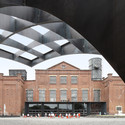
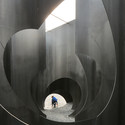
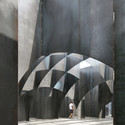
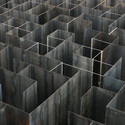
Gijs Van Vaerenbergh Install a Labyrinth of Boolean Voids in Genk

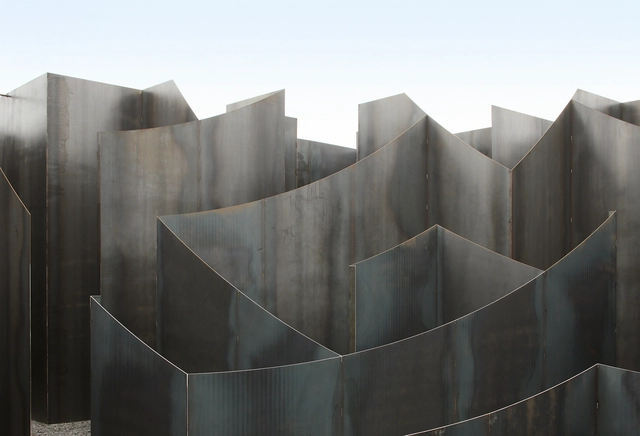
Gijs Van Vaerenbergh, an artistic collaboration between architects Pieterjan Gijs and Arnout Van Vaerenbergh, have created a labyrinthine intervention at the heart of the c-mine arts centre in Genk, Belgium. The development of this sculptural-spatial intervention has its foundations in the artists' interest in fundamental architectural typologies; earlier installations of theirs have been based on structures like the city gate, the bridge, the wall, and the dome. Here, the "age-old" form of the labyrinth" is explored as a spatial experience in a unique composition of wall and void.

Gijs Van Vaerenbergh Install a Labyrinth of Boolean Voids in Genk - Image 1 of 4Gijs Van Vaerenbergh Install a Labyrinth of Boolean Voids in Genk - Image 2 of 4Gijs Van Vaerenbergh Install a Labyrinth of Boolean Voids in Genk - Image 3 of 4Gijs Van Vaerenbergh Install a Labyrinth of Boolean Voids in Genk - Image 4 of 4Gijs Van Vaerenbergh Install a Labyrinth of Boolean Voids in Genk - More Images+ 23

Minga Valpo: Architects and Sustainable Reconstruction in Valparaíso, Chile

Subscriber Access | 

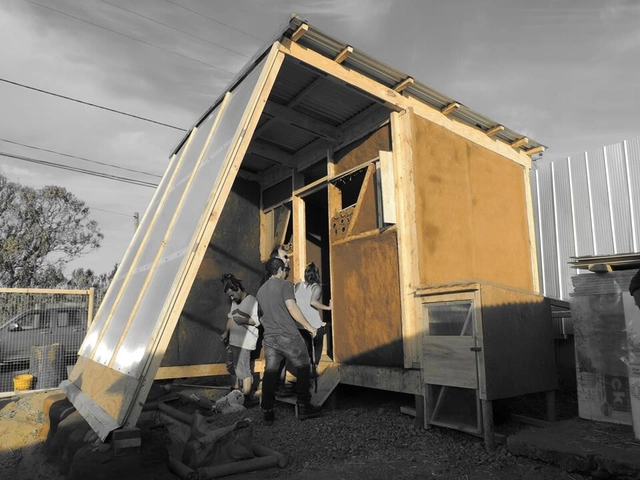
After the fire this past April in Valparaíso, Chile, a group of young architects went to the port city to develop a reconstruction project based on energy efficiency, recycled materials, and adaptability to Valparaíso's topographic context.

The Minga Valpo project has not only achieved these objectives, but it has also allowed families to help build their own houses. In a mere three months, Minga Valpo has already built three houses.

Urban Intervention Winners Built in Abrantes, Portugal for Canal 180’s Creative Camp

Twelve thousand pairs of shoes and stacked, rotating geometric forms were installed in the city centre of Abrantes, Portugal from July 13th-20th. The installations were the two winning projects of Portugal’s 180 Creative Camp 2014, which was designed by the country's Canal 180 to promote Urban Interventions Projects.

The competition received 72 entries from 18 countries and was created in partnership with Archdaily, Canal 180, and the Municipality of Abrantes. The contest ran until June 8th with a jury that included Archdaily Executive Editor Becky Quintal, the Executive Director of Canal 180, and the President of the Municipality of Abrantes. The two winning projects each received 2,500 Euros to realize and install their work in Abrantes.

See photos and read more about the winning projects of 180 Creative Camp after the break.

Kickstarter Campaign to Activate Vacant Storefronts in New York City

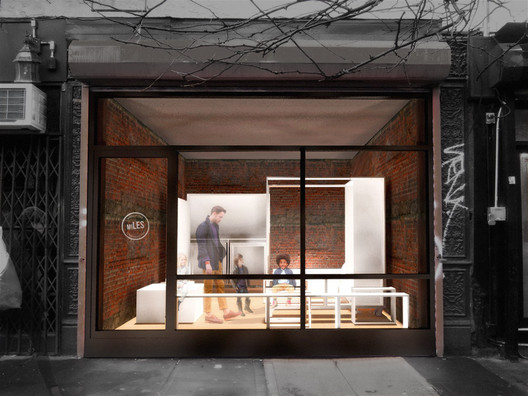
Kickstarter Campaign to Activate Vacant Storefronts in New York City - Featured Image
'Play'. Image Courtesy of Architecture Commons

In an attempt to activate a vacant storefront in New York's Lower East Side, the miLES Storefront Transformer - a 6ft cube designed to "program any storefront" - is a versatile, movable set of furnishing and amenities designed by Architecture Commons. Seven individual pop-up interventions, curated by a collection of creative minds, would inhabit empty shops between November 4th and December 22nd 2013 if their Kickstarter campaign is successful.