The magic of Indian architecture lies in an invisible order amidst visceral chaos. When an uncertain future knocks on the doors of local practitioners, one might begin to look within the four walls they occupy to discover an opportunity for reinterpretation.
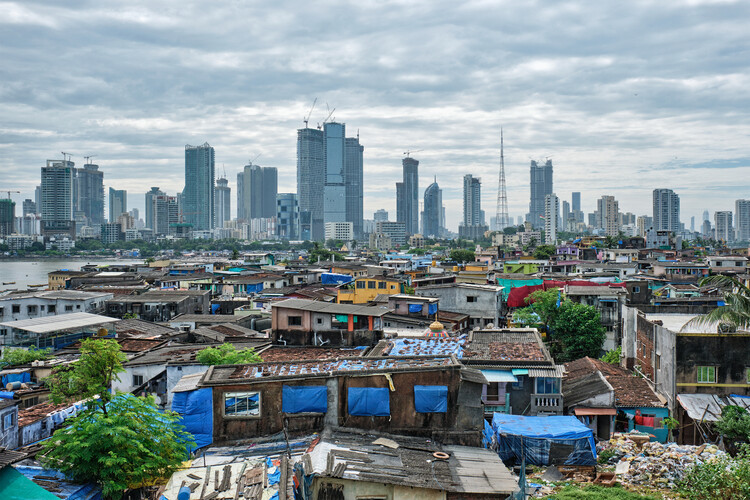
Mumbai, Delhi, Bengaluru, and other major metropolises are described as needing massive housing solutions for millions. The instinctive answer is predictable — masterplans, dense towers, and standardized units smeared over haphazard developments. The lexicon misses a deeper truth about how the people already live, work, and build in India. The shorthand used in policy and planning — slum, informal settlement, unauthorized colony — implies a temporary state to be corrected. A designer's eye views these places as layered urban histories, formed through necessity.
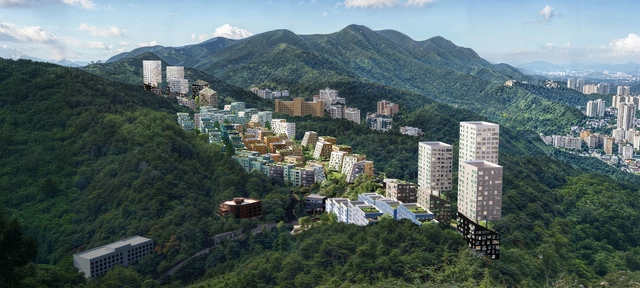
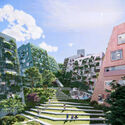
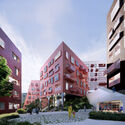
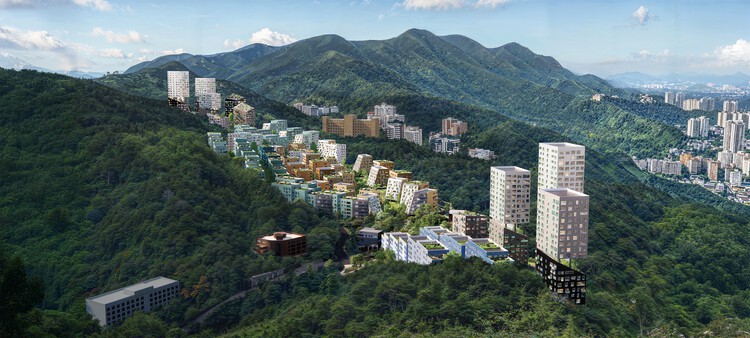
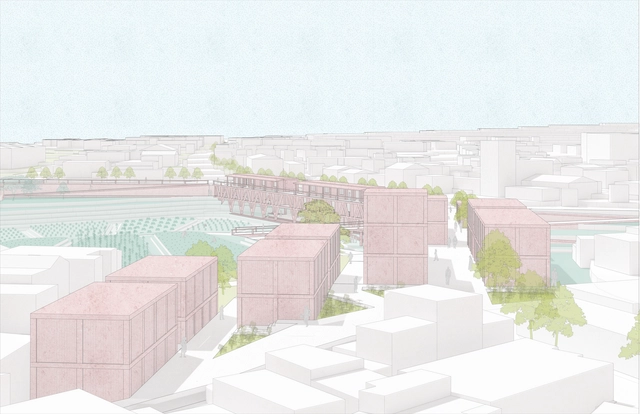
The Busan Slope Housing project by OMA addresses urban redevelopment on the steep hillsides of Busan, South Korea, drawing on the city's topographical complexity and historical settlement patterns. Developed in collaboration with the BusanArchitecture Festival and the Department of Housing and Architecture, the project explores strategies to rethink hillside neighborhoods while responding to both contemporaryhousing needs and the social and spatial legacies of these areas. Rather than replacing these areas with conventional high-rise estates, OMA envisions a flexible, context-responsive framework that integrates contemporaryhousing typologies with the site's inherited structure.
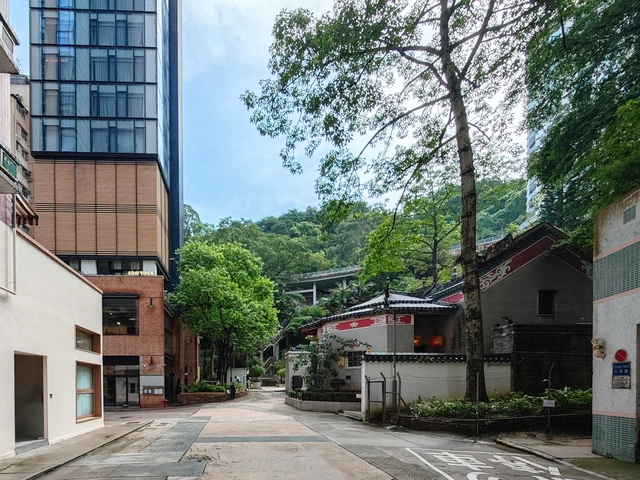
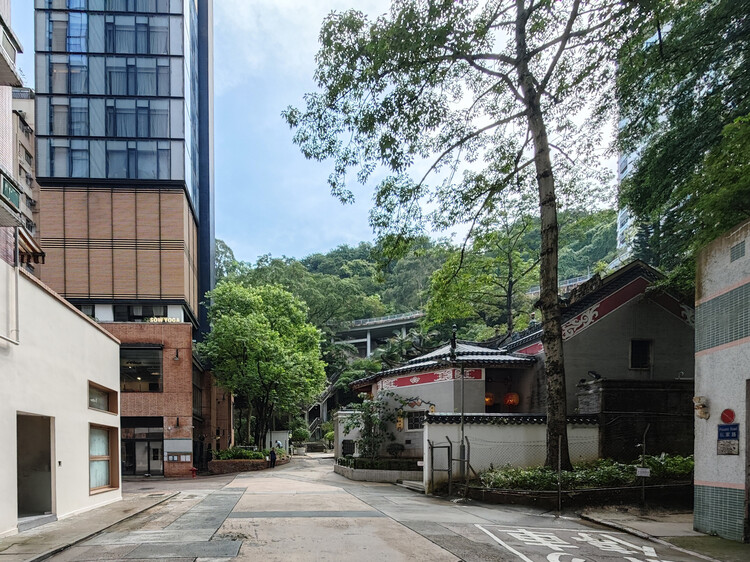
One notable example is Tai Hang, among the earlier settlements established by the Hakka people in Hong Kong. Originally located along a water channel that flowed from the nearby mountains to the sea, the area was once a vital washing site for villagers—hence its name, which literally means "Big Drainage." Before extensive land reclamation, Tai Hang sat quite close to the shoreline. Today, it lies nearly 700 meters inland.
As a result of the nation’s ardent aspirations for growth and development, the social, economic, and physical landscape of India has transformed. A significant portion of the region’s population is of working age and comprises a massive market size, making India a land of opportunity especially in the eyes of foreign investors.
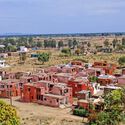
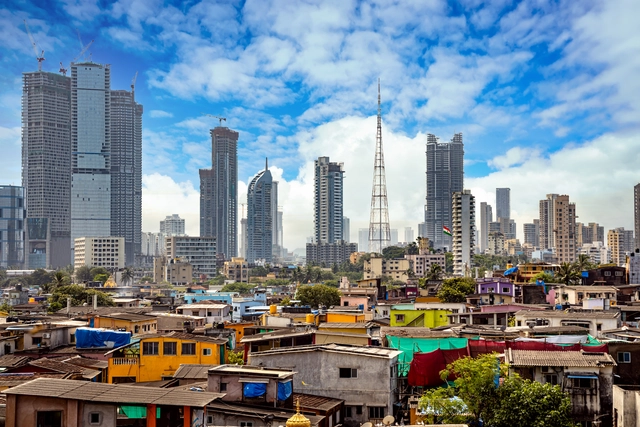
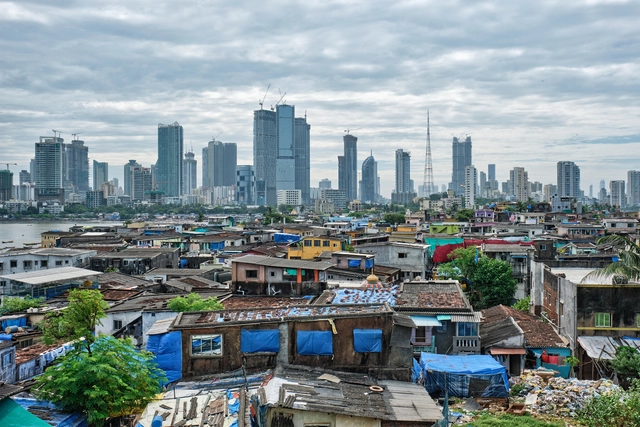
Reflecting this context, multiple mega-cities and mega-projects characterize the built environment and push the nation toward superpower status. On the flip side of the coin, these visionary projects along with the trend of rapid urbanization also bring in a range of side effects - the spread of informal settlements and in turn, the challenges to equitable development.
Recent news headlines from the African continent show a variety of urgent issues affecting urban centers: severe flooding threatens Kenya's capital, Nairobi; the light rail system in Addis Ababa, Ethiopia, is faltering after a successful start. Meanwhile, in Egypt's capital, Cairo, new infrastructure and housing expenditures proved too steep and necessitated a government bailout. African cities face a plethora of problems but they also hold the potential to improve countless lives. As South America shares stark similarities in its history with that of Africa, it could provide both a point of reference and a positive example for tackling these concerns at an urban level.
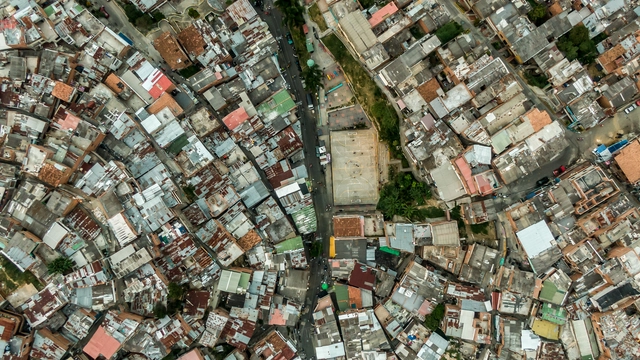
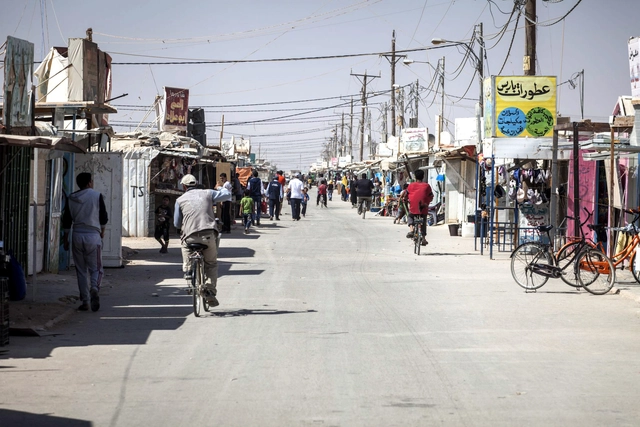
Informal architecture is the dominant mode of urbanization in rapidly growing and industrializing cities worldwide. In Delhi, the city with the largest population in India has half of its residents living in informal settlements. Lagos, with a population of over 22 million, also has 60% of its residents living in informal settlements. This pattern is also observed in Cairo, Johannesburg, Kinshasa, and other cities in the global south that face similar challenges of inequality and housing shortages. As their population grows and urbanization progresses, the exploration of informal architecture schemes to address the demand for affordable housing and basic services will only increase. While the primary purpose of design is to provide structure, lessons from informal architecture offer insights into how architects can respond to such schemes.
In this fourth feature, we met with co-chairs ofdesign for Health architectArif Hasan, former Visiting Professor NED University Karachi and member of UNs Advisory Group on Forced Evictions, and architectChristian Benimana, Senior Principal and Co-Executive Director atMASS Design Group
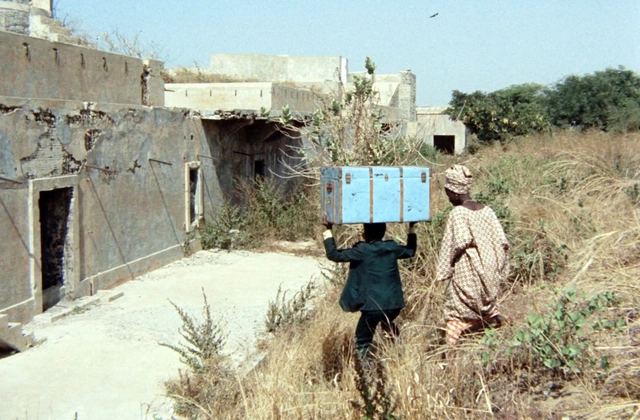
Abandoned house in "Touki Bouki". Image Courtesy of Janus Films
Simultaneously gripping, disconcerting, and chaotic, Djibril Diop Mambéty’s Touki Boukiis an exhilarating cinematic ride. The 1973 drama — the first full-length film by the Senegalese director — is the fantastical narration of a young couple in Dakar, eager to escape the Senegalese capital for the allure of Paris. It’s a character-driven film in many ways, primarily centered on the couple’s adventures, but it is also a subtle visual examination of the urbanism of post-independence Dakar, where the city and its architecture are essential fixtures in a surreal storyline.
"History of the villas in the city of Buenos Aires. From the origins to the present day" is the book by Valeria Snitcofsky that reconstructs the historical background of the villas in the city of Buenos Aires based on research that began in 2003 and whose advances were expressed in a bachelor's and a doctoral thesis. It is framed within the objective of the Tejido Urbano Foundation, which is focused on promoting research and the generation of knowledge on the problems of habitat and housing.
The luxury hotel, as an architectural typology, is distinctive. In effect, it's a self-contained community, a building that immerses the well-off visitor into their local context. Self-contained communities they might be, but these hotels are also vessels of the wider socioeconomic character of a place, where luxury living is often next door to informal settlements in the most extreme examples of social inequality.
An online search away from any computer are eye-level views of many of the world’s cities. This technology is powerful – allowing people to have an in-depth look at the cities they might one day visit, live in, or work in. It’s a useful tool for understanding buildings on a more comprehensive level than photographs. This technology is, of course, Google Street View – which recently turned fifteen years old.
It’s an essential architectural element, one we tend to immediately take note of when we look at buildings new to us – the roof. The roofs that shelter the buildings we see in our cities today are diverse in their typology. Flat roofs are a common sight in the city centers of urban metropolises, hip roofs are a popular choice for dwellings around the world, and the gable roof is arguably the most common of all, a roof type popular in stylized depictions of what a standard house looks like.
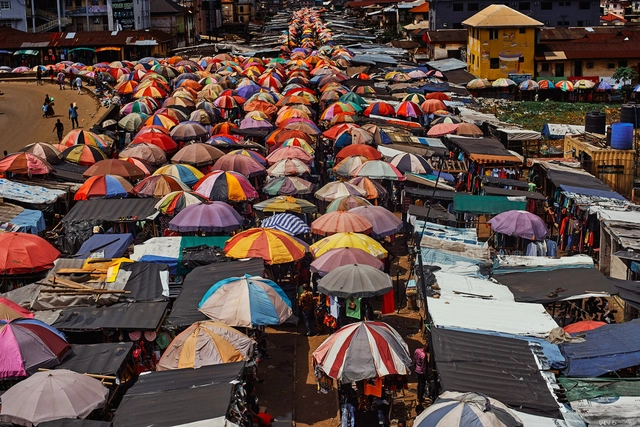
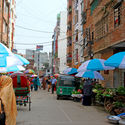
Almost seven kilometers from the green of Uhuru Park in central Nairobi, lies the informal settlement of Kibera. It is an area whose urban character consists of corrugated iron roofs, mud walls, and a complicated network of utility poles. Kibera, at this point in time, is a well-known place. Much has been written and researched on this “city within a city,” from its infrastructural issues to its navigation of the COVID-19 pandemic.
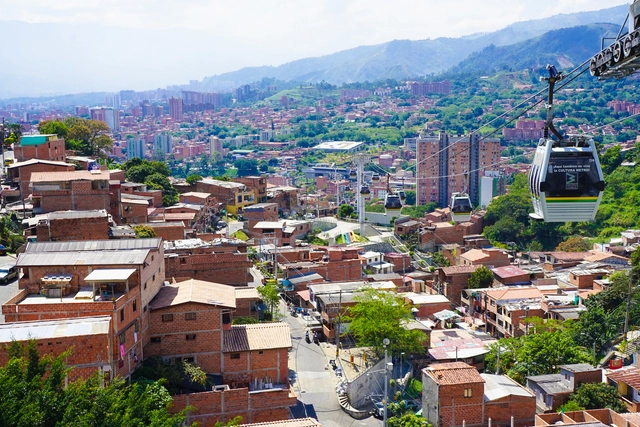
Distrito 13 en Medellín, Colombia. Imagen de JorgePM. Image via Shutterstock
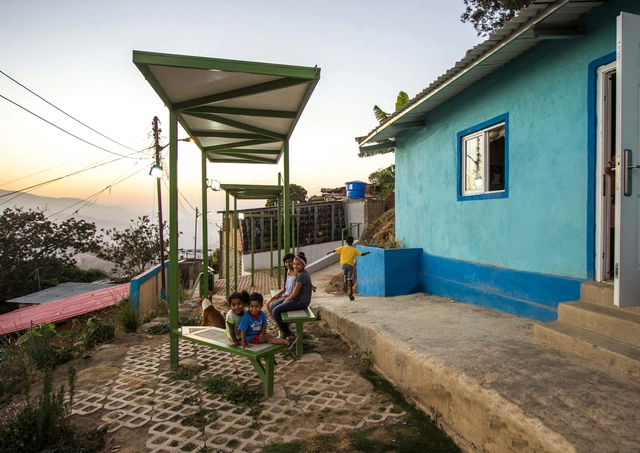
Within the Latin American and Caribbean region, it has been recorded that at least 25% of the population lives in informal settlements. Given that their expansion is one of the major problems afflicting these cities, a project is presented, supported by the IDB, which proposes how new technologies are capable of contributing to the identification and detection of these areas in order to intervene in them and help reduce urban informality.
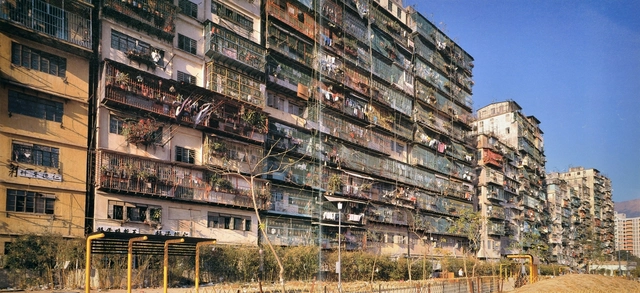
Kowloon Walled City, Hong Kong. Image Courtesy of 'City of Darkness Revisited’
Cities are growing, and they are growing upwards. This is far from just being a contemporary phenomenon of course – for more than a century, high-rises have been an integral part of urban settlements worldwide. This growing of cities encompasses a complex web of processes – advancements in transport links, urbanisation, and migration to mention a few. This growth of cities, however, is all too often linked with governmental failure to adequately support all facets of the urban population. Informal settlements are then born – people carving out spaces for themselves to live amidst a lack of state support.
COP26, The United Nations Climate Change Conference, is scheduled to be held in Scotland soon, in the last week of October 2021. Against the backdrop of this conference is a heightened global awareness of climate change, as discussions take place on how a sustainable, more equal future can be achieved. The present and future state of architecture is a key component of this conversation, as criticism is levelled at architecture firms that “greenwash” and questions are raised on if the term “sustainability” is increasingly merely being used as today’s buzzword.
Plaza Estacional, Caracas. Gabriel Visconti Stopello AGA estudio. Fotografía: José Bastidas.. Image Cortesía de Jeannette Sordi
Throughout the world's cities, in the midst of current and projected crises-- environmental, health, economic, and otherwise--one question looms: How can we prepare our urban centers' most vulnerable sectors?
Current data paints a bleak picture of cities and the impact of climate change. With urban populations skyrocketing as people around the globe seek opportunities for a better life in the world's urban centers, cities have become gluttons for energy and other resources while simultaneously producing more emissions than ever before. On top of this, 3 out of 5 cities are at high risk for natural disasters.
Mobile playground in Vietnam. Image Courtesy of UN-Habitat, Global Public Space Programme
The Un-Habitat or the United Nations agency for human settlements and sustainable urban development, whose primary focus is to deal with the challenges of rapid urbanization, has been developing innovative approaches in the urban design field, centered on the active participation of the community. ArchDaily has teamed up with UN-Habitat to bring you weekly news, article, and interviews that highlight this work, with content straight from the source, developed by our editors.
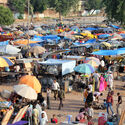
“During this pandemic, public spaces have played a vital role in the health and sustainability of urban communities around the world” states James Delaney, Block by Block chair. In fact, people need to go outside, now more than ever. In order to equip these public spaces to face the challenges of Covid-19, UN-Habitat with the Block by Block Foundation has been supporting ten cities, throughout this past year. With the help of local governments and the community, the initiatives helped covid-proof open urban entities, especially in poor neighborhoods, where there are few shared and green spaces. From creating mobile pop-up playgrounds for children in Hanoi, Vietnam, improving livelihood for street vendors in Dhaka and Khulna, Bangladesh to Covid Proofing of Public Spaces in Bhopalinformal settlements, India, these responses have provided help to those who need it the most.



















.jpg?1653990029 "Khayelitsha Township - Cape Town. Image © Olga Ernst under the Creative Commons Attribution-Share Alike 4.0 International license.")





.jpg?1651830269 "Khayelitsha Township - Cape Town. Image © Olga Ernst under the Creative Commons Attribution-Share Alike 4.0 International license.")






(1).jpg?1614161719&format=webp&width=640&height=580)
.jpg?1614161736 "Mobile playground in Vietnam. Image Courtesy of UN-Habitat, Global Public Space Programme")
(1).jpg?1614161719)