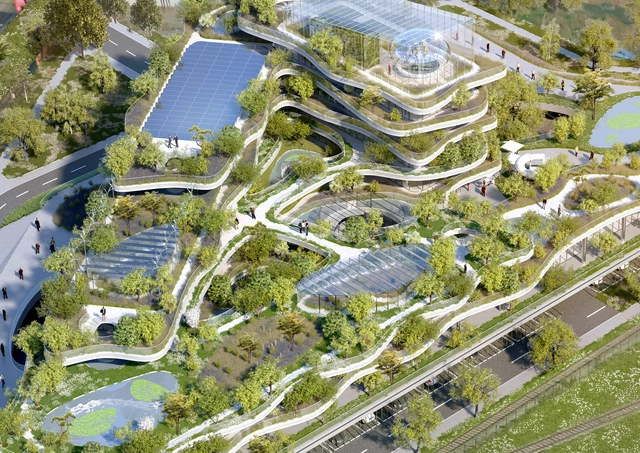
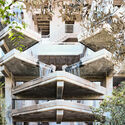
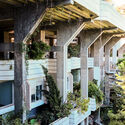
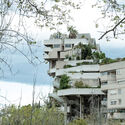
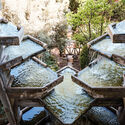
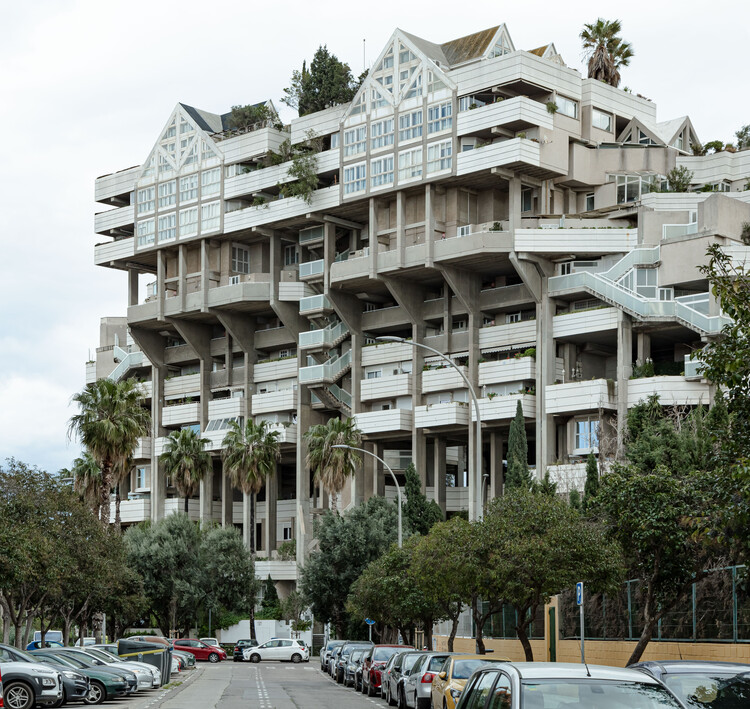
Even the most distracted passerby is captured by the monumental presence of this structure in Valencia’s established Benimaclet neighborhood. Before it, any attempt at rational apprehension quickly dissolves. Its constructive logic seems to escape comprehension as the space unfolds through tensions and deviations, where nothing is immediately given. Between masses of concrete and the insurgent force of vegetation, an almost choreographic play of planes, angles, and rotations emerges. In the vertigo of this encounter, one realizes that the building was not made to be understood, but to be experienced.
What does optimism feel like in cities that can no longer rely on perfection as their ultimate ambition? Across the world, urban environments bear the weight of overlapping pressures: climate volatility, spatial inequality, political fragmentation, public distrust, and chronic infrastructural disinvestment. These realities render the idea of an ideal city increasingly detached from lived experience. Yet the hope for building better systems persists. While utopian visions may seem like an escape from the growing complexities of the modern world, the greater challenge for contemporary city-making is to confront those complexities rather than avoid them.
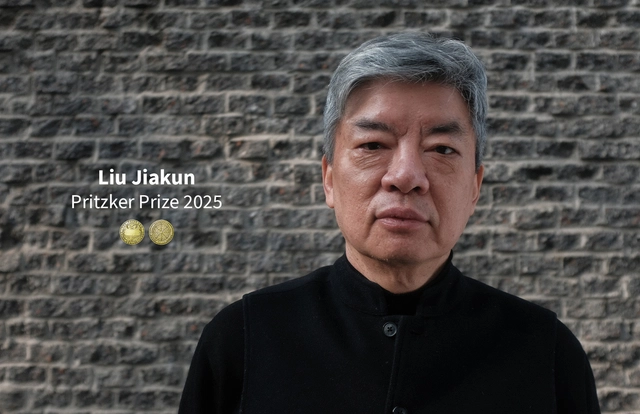
Chinese architect and educator Liu Jiakun has been announced as the laureate of the 2025 Pritzker Architecture Prize, the highest honor in the architecture field. This prestigious award recognizes Jiakun, founder of Jiakun Architects (established 1999), for his ability to blend traditional Chinese elements with contemporary design and for his commitment to social equity in the built environment. Born in Chengdu, China, where he continues to live and work, he becomes the second Chinese architect to receive the accolade, following Wang Shu (2012). Jiakun joins a distinguished list of previous laureates including Riken Yamamoto in 2024, David Chipperfield in 2023, and Francis Kéré in 2022. The award ceremony will be held this spring at the Jean Nouvel-designed Louvre Abu Dhabi, with a global video release of the presentation this fall, followed by the 2025 Laureates' Lecture and Symposium in May.
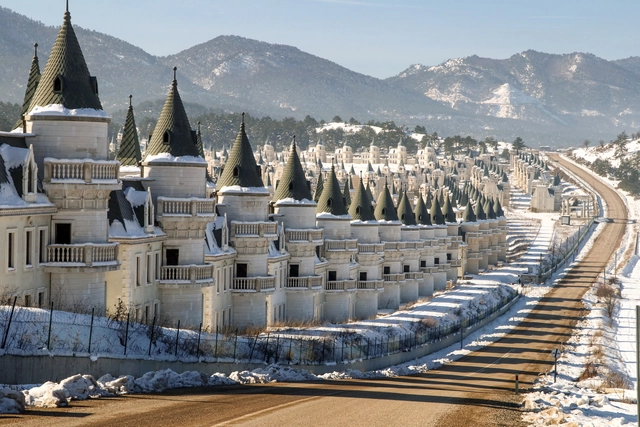
Most of us have probably imagined living in a castle at some point, whether during childhood, enchanted by fairy tales, or as adults studying European monarchies. Considering this fascination, what would you think if you had the chance to buy your castle? In mid-2014, you could make that dream a reality in Turkey for just $370,000. Each luxurious 325-square-meter castle came complete with blue turrets and spiral staircases. The only catch? Your castle would be one of 731 identical ones. But who cares about exclusivity when you have the chance to live in a Disney fairy tale?
After being awarded the prestigious Silver Lion for his contribution to this year's Venice Architecture Biennale, Brooklyn-based artist Olalekan Jeyifous shows no signs of slowing down. Currently in the midst of preparing his entry to the next Sharjah Architecture Triennial, he also recently celebrated the opening of Climate Futurism, a group exhibition that highlights the power and efficacy of artists’ methods and processes to imagine a more equitable future – and is working on a public monument to former United States Representative Shirley Chisholm as part of New York City's She Built NYC initiative, among other projects.
Nowadays, the term “utopia” is used to describe an idea that seems unattainable —at least in the contemporary context— intrinsically related to philosophical, scientific, urbanistic, and architectural concepts, among others. The close connection between utopias and architecture is evident, as this discipline is often associated with imagination. Some notable examples include “The Unreliable Utopia of Auroville's Architecture” and “The City in Space: A Utopia”by Ricardo Bofill. In this context, architects and designers alike use design as a means to develop innovative and disruptive ideas through various elements.
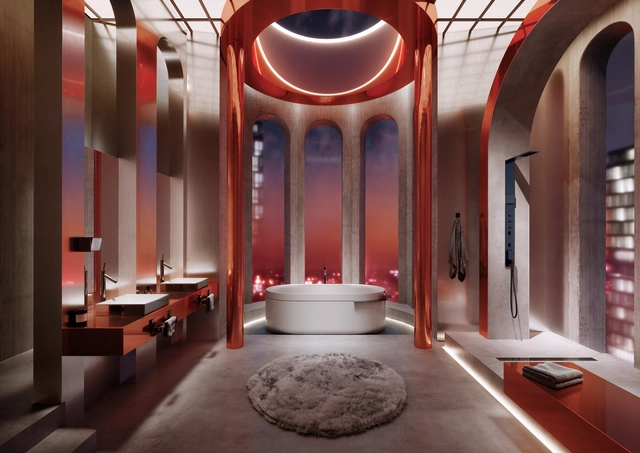
Although considered an idealized concept that does not exist, some designers have ventured into exploring the notion of utopia. AXOR, in conjunction with the Valencia-based design studio Masquespacio, has turned the page by conceiving and bringing to reality a new bathroom concept for a unique hotel suite that embodies their vision of personal luxury. Titled “Utopian Dream”, this design response blends vibrant colors with unexpected details, a combination that this duo defines as a mystic experience above the clouds.
https://www.archdaily.com/1007798/balancing-neoclassical-and-futuristic-design-the-utopian-dream-bathroom-conceptEnrique Tovar
The Law of Polarity holds good in relation to human society and cultures as well - everything has an opposite. Countercultures have erupted as condemnations of “the ways of the world”. A countercultural movement expresses the ethos and aspirations of a population during a specific time. As new lifestyles are explored, supporting architecture evolves to satiate the utopian ideals of new societies. Architecture is a product of the culture it is designed for.
Architecture, with all its practitioners, academics, and theorists, have long been exploring utopic ideas with hopes of turning them into something concrete for the sake of a better world. But as the world heads towards an even greater polarization than it currently has, the architecture practice found itself having to adapt to the current systems of the planet, constrained by its ever-growing conditions. Slowly, practitioners realized that utopia can not truly be seen as the ideal solution, and needed to be readapted or morphed with other concepts for it to actually work. DETAIL's latest monograph BIG. Architecture and Construction Details / BIG. Architektur und Baudetails, a rapport between BIG’s imaginative, unbuilt utopias and functional, built architecture, explores 20 projects from the firm's workshop.
The Twelve Ideal Cities- 1971. Image via Fondazione MAXXI
In the 1960s, Cristiano Toraldo di Francia and Adolfo Natalini, two Florence-based architecture students in their twenties, decided to undertake the substantial task of designing a new way for the citizens of the globe to inhabit the earth. Driven by the possibilities laid out in science fiction novels and the desire to prescribe design to solve the problems of their era, the duo, who dubbed themselves as Superstudio, sought to continuously reinvent their role in what it means to be an architect. Their solution was the creation of an “anti-design” culture as a means to provide commentary on politics, capitalism, and urbanism, by creating ideas in which everyone is given a functional space that frees itself of time, place, and the need for excessive objects.
As the forces shaping our built environment have shifted, engaging technology, networks, and complex systems, architects need to envision more than the physical space but produce narratives on how to best operate within this new societal landscape. In this context, speculative architecture seems to have never been more critical; therefore this article takes a closer look at the mediums that currently question the existing conditions of the built environment and explore new architectural possibilities.
Penelope Haralambidou, 'remodelling' The Book of the City of Ladies, study, 2019.
Penelope Haralambidou's project 'City of Ladies' studies 'The Book of the City of Ladies', 1405, by Italian/French medieval author Christine de Pizan (1364 – c.1430). The text is part of a compilation assembled for Queen Isabeau of Bavaria between 1410 – 1414 (Harley MS 4431) the largest surviving collected manuscript of her works and one of the foundation manuscripts at the British Library. In the book, de Pizan describes her visitation by three female Virtues, Reason, Rectitude and Justice, who commission her with the construction of an imaginary city inhabited solely by women. Conflating the act of writing a book and the construction of an imaginary city with building a thesis against misogyny, her work has been seen as a proto–feminist manifesto.
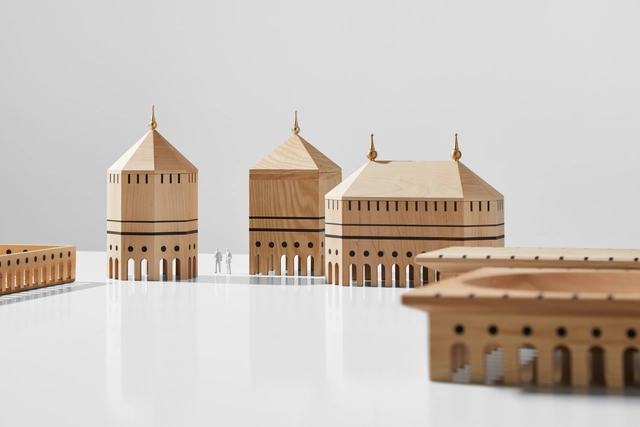
Antonio Serrano and Madrid-based Mad Lab have designed a collection of everyday objects inspired by Renaissance concepts of “Utopia.” The set of trays, boxes, and centerpieces are made from inlay maple and cedar wood, each telling “stories of entrepreneurship, design, craft, and technology.”
The collection, which manifests as a form of “scaled-down city,” considers Utopia as an imagined reflection on reality, rather than a yearning for an ideal city. The objects are full of “nods, winks, and gestures that leave us trapped in an illusion of a dream” conveyed through Renaissance architectural elements such as arches and spires.
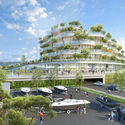
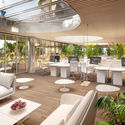
In a design proposal for Soprema’s new company headquarters in Strasbourg, France, Vincent Callebaut Architectures envisions an 8,225 square-meter ecological utopia. The building, called Semaphore, is described in the program as a “green flex office for nomad co-workers” and is dedicated to urban agriculture and employee well-being.
An eco-futuristic building, Semaphore is inspired by biomimicry and intended as a poetic landmark, as well as aiming to serve as a showcase for Soprema’s entire range of insulation, waterproofing, and greening products. The design is an ecological prototype of the green city of the future, working to achieve a symbiosis between humans and nature.
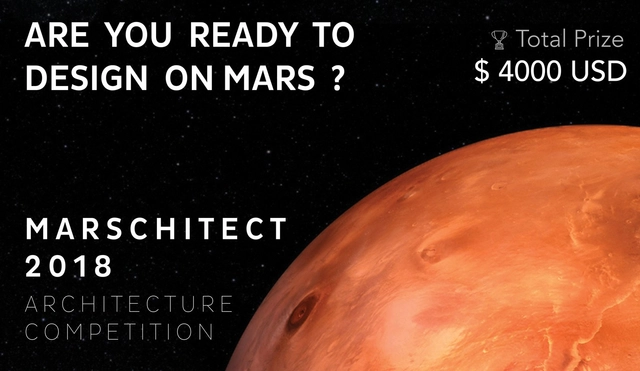
Volume Zero encourages you to come envision an unseen utopian future on ‘The Red Planet’!
Since the start of time, we humans have been captivated by the mystical nature of other celestial bodies surrounding our Planet Earth. This fascination has been translated to works of astronomy, astrology, architecture and many other studies from making a simple telescope to humankind’s first steps on the Moon. This unending drive for exploration has today led us to understanding our neighboring solar systems and galaxies, thousands of light years away.
While Moshe Safdie may be more well known for the bold forms defining his portfolio of built projects—ranging from the National Gallery of Canada and the horizontal Raffles City Chongqing to the iconic Habitat 67—the architect considers his unbuilt works as important, if not more. Safdie ponders the role of these projects and more in PLANE-SITE’s latest addition to the series Time-Space-Existence.
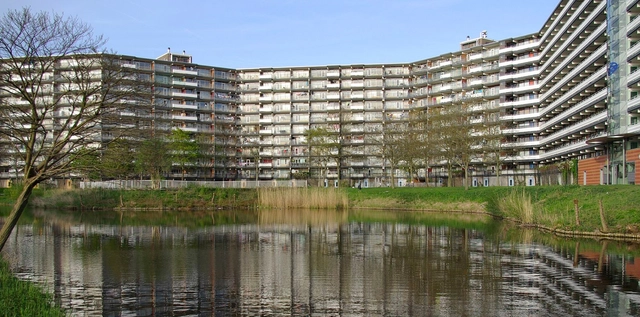
How can we plan a better city? The answer has confounded architects and urban planners since the birth of the industrial city. One attempt at answering came in the form of a spectacular modernist proposal outside of Amsterdam called the Bijlmermeer. And, as a new two-part episode by 99% Invisible reveals, it failed miserably. But, like all histories, the story is not as simple as it first appears.
Symposium: “Artificial Natures” Venice Biennale for Architecture, 2018 27 - 29 May 2018 Palazzo Rossini, Venice, Italy
Artificial Natures The topic for this year’s symposium is Artificial Natures, ranging from classical ones, such as parks and ideal cities, to garden cities, to new “natural “ environments like social media spaces as new public place. The symposium will take place as a combination of short panels and workgroups. The general questions are:
















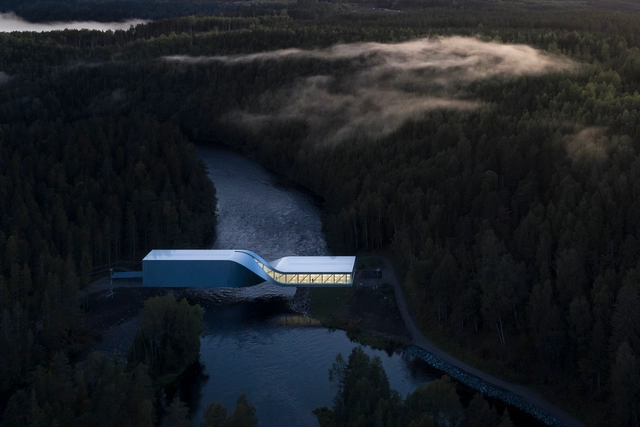


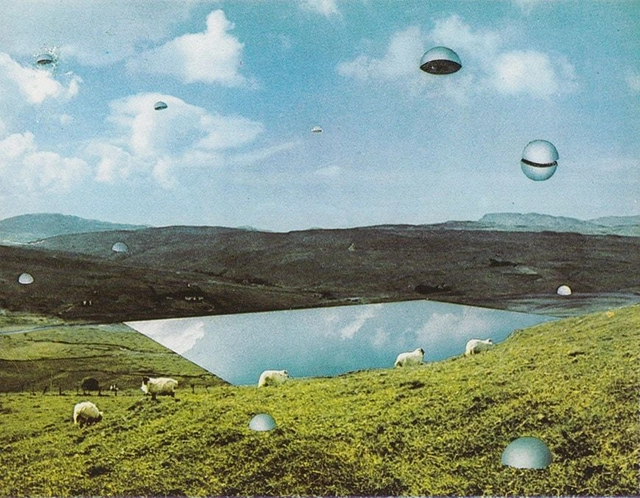
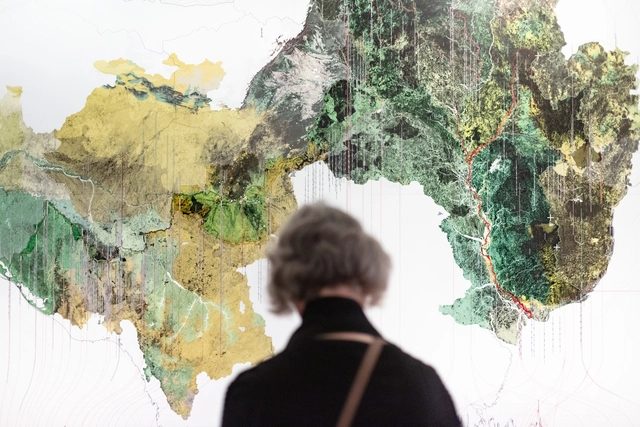


.jpg?1605822515 "Surface Ex-Tension by Jonathan Craig, Luis Arjona, Marco Nieto & Philip Elmore. Image Courtesy of Arch Out Loud. Image Courtesy of Arch Out Loud")



![[TRANS-] topia 2019 :: journal call for submissions - Featured Image](https://snoopy.archdaily.com/images/archdaily/media/images/5c65/646c/284d/d176/a900/0407/slideshow/open-uri20190214-19344-17ny7ws.jpg?1550148698&format=webp&width=640&height=580)