1. ArchDaily
  2. Vishaan Chakrabarti

Vishaan Chakrabarti: The Latest Architecture and News

PAU’s Domino Sugar Refinery Reopens as Brooklyn’s Newest Workspace

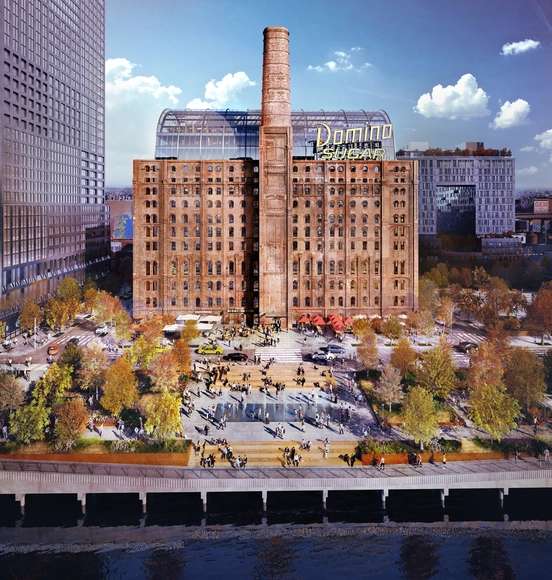
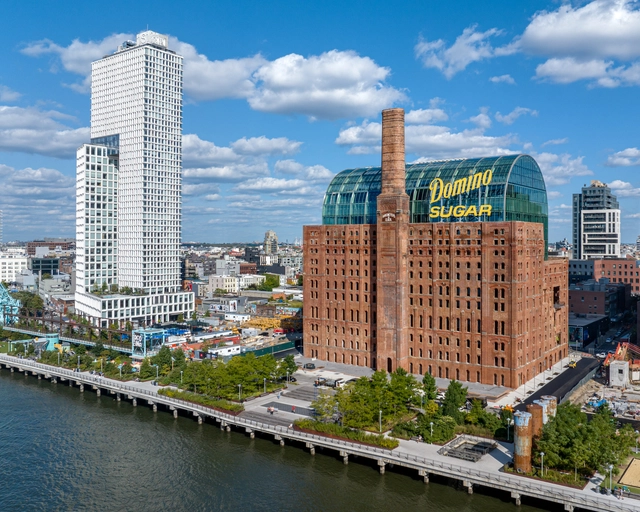
Two Trees Management announced the official reopening of The Refinery at Domino Sugar, one of Brooklyn’s most iconic buildings transformed into a modern workspace. The design of the adaptive reuse project, led by Practice for Architecture and Urbanism (PAU) began in 2017 with the purpose of reimagining the monument to become a point of connection between the existing neighborhood and the recaptured waterfront. The building now features 15 stories of office space, approximately 460,000 square feet, complete with retail spaces, communal workspaces, a private club, and event spaces.

PAU’s Domino Sugar Refinery Reopens as Brooklyn’s Newest Workspace - Image 1 of 4PAU’s Domino Sugar Refinery Reopens as Brooklyn’s Newest Workspace - Image 2 of 4PAU’s Domino Sugar Refinery Reopens as Brooklyn’s Newest Workspace - Image 3 of 4PAU’s Domino Sugar Refinery Reopens as Brooklyn’s Newest Workspace - Image 4 of 4PAU’s Domino Sugar Refinery Reopens as Brooklyn’s Newest Workspace - More Images+ 15

PAU’s Niagara Falls Gateways Project Reimagines a Former Hydraulic Canal as an Engaging Public Space

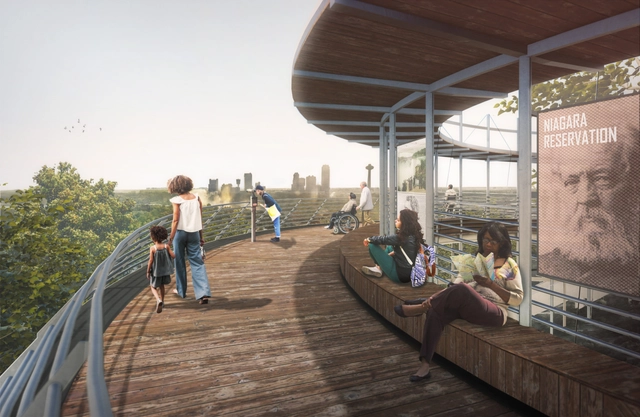
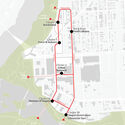
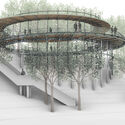
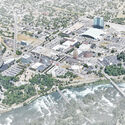
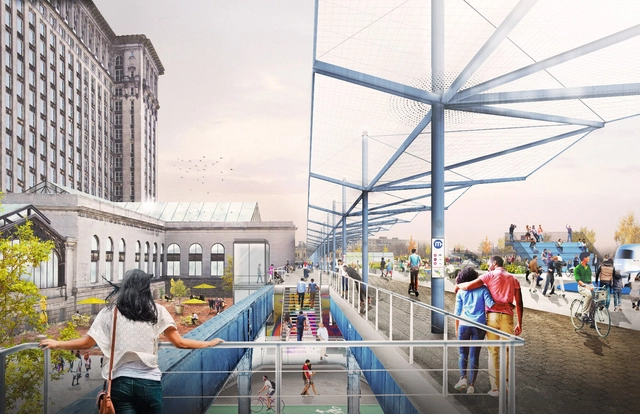
New York-based studio Practice for Architecture and Urbanism (PAU) has been selected to lead the design for the Niagara Falls Heritage Gateway project. This reimagined public gateway aims to reinvigorate the site, attract new visitors, and stimulate the local economy. As part of the “Downtown Niagara Falls Development Strategy,” the project also aims to strengthen the connections between downtown Niagara Falls and the Niagara Falls State Park. The project is expected to be completed in 2024.

PAU’s Niagara Falls Gateways Project Reimagines a Former Hydraulic Canal as an Engaging Public Space - Image 1 of 4PAU’s Niagara Falls Gateways Project Reimagines a Former Hydraulic Canal as an Engaging Public Space - Image 2 of 4PAU’s Niagara Falls Gateways Project Reimagines a Former Hydraulic Canal as an Engaging Public Space - Image 3 of 4PAU’s Niagara Falls Gateways Project Reimagines a Former Hydraulic Canal as an Engaging Public Space - Image 4 of 4PAU’s Niagara Falls Gateways Project Reimagines a Former Hydraulic Canal as an Engaging Public Space - More Images

On Community Preservation with Vishaan Chakrabarti in Urban Roots Podcast

Vishaan Chakrabarti
https://uncertain.substack.com/p/vishaan-chakrabarti-rough-transcript

On Community Preservation with Vishaan Chakrabarti in Urban Roots Podcast - Image 1 of 4On Community Preservation with Vishaan Chakrabarti in Urban Roots Podcast - Image 2 of 4On Community Preservation with Vishaan Chakrabarti in Urban Roots Podcast - Image 3 of 4On Community Preservation with Vishaan Chakrabarti in Urban Roots Podcast - Image 4 of 4On Community Preservation with Vishaan Chakrabarti in Urban Roots Podcast - More Images

PAU’s Vishaan Chakrabarti on How Progressives Ruin Cities in Uncertain Things Podcast

Adaam James Levin-Areddy and Vanessa M. Quirk, the hosts and producers of the Uncertain Things podcast, interview people from diverse backgrounds and a wide range of expertise to ask the question: “now what? What is happening and how did we get here?”. In this episode, they talk with urbanist, architect, and professor Vishaan Chakrabarti, founder of Practice for Architecture and Urbanism, to seek to understand how the cities got so expensive. Together they delve into the affordability crisis, the detrimental effect of progress, and what we need to do to have better cities.

PAU’s Vishaan Chakrabarti on How Progressives Ruin Cities in Uncertain Things Podcast - Image 1 of 4PAU’s Vishaan Chakrabarti on How Progressives Ruin Cities in Uncertain Things Podcast - Image 2 of 4PAU’s Vishaan Chakrabarti on How Progressives Ruin Cities in Uncertain Things Podcast - Image 3 of 4PAU’s Vishaan Chakrabarti on How Progressives Ruin Cities in Uncertain Things Podcast - Image 4 of 4PAU’s Vishaan Chakrabarti on How Progressives Ruin Cities in Uncertain Things Podcast - More Images+ 1

PAU's Vishaan Chakrabarti on Creating an Architecture of Belonging in Design and the City Podcast

Design and the City a podcast by reSITE, on how to make cities more livable and lovable, raising questions and proposing solutions for the city of the future. In the second episode of its second season, PAU's founder and creative director Vishaan Chakrabarti explains the possibility of creating an architecture of belonging, discussing social impact, climate change, infrastructure, and reimagining cities.

PAU's Vishaan Chakrabarti on Creating an Architecture of Belonging in Design and the City Podcast - Image 1 of 4PAU's Vishaan Chakrabarti on Creating an Architecture of Belonging in Design and the City Podcast - Image 2 of 4PAU's Vishaan Chakrabarti on Creating an Architecture of Belonging in Design and the City Podcast - Image 3 of 4PAU's Vishaan Chakrabarti on Creating an Architecture of Belonging in Design and the City Podcast - Image 4 of 4PAU's Vishaan Chakrabarti on Creating an Architecture of Belonging in Design and the City Podcast - More Images+ 22

Design Disruption Explores Architecture and the Public Realm with Benedetta Tagliabue and Vishaan Chakrabarti

The COVID-19 Pandemic is a disruptive moment for our world, and it’s poised to spur transformative shifts in design, from how we experience our homes and offices to the plans of our cities. The webcast series Design Disruption explores these shifts—and address issues like climate change, inequality, and the housing crisis— through chats with visionaries like architects, designers, planners and thinkers; putting forward creative solutions and reimagining the future of the built environment.

Episode 3 will be streamed online on ArchDaily Facebook, Monday, July 27, at 11:30 am EST, and will focus on the future of Architecture and the Public Realm. Our guests will be Benedetta Tagliabue, co-founder of Barcelona-based EMBT, and Vishaan Chakrabarti, founder of Practice for Architecture and Urbanism and incoming William W. Wurster Dean of the College of Environmental Design at the University of California, Berkeley.

Design Disruption Explores Architecture and the Public Realm with Benedetta Tagliabue and Vishaan Chakrabarti - Image 1 of 4Design Disruption Explores Architecture and the Public Realm with Benedetta Tagliabue and Vishaan Chakrabarti - Image 2 of 4Design Disruption Explores Architecture and the Public Realm with Benedetta Tagliabue and Vishaan Chakrabarti - Image 3 of 4Design Disruption Explores Architecture and the Public Realm with Benedetta Tagliabue and Vishaan Chakrabarti - Image 4 of 4Design Disruption Explores Architecture and the Public Realm with Benedetta Tagliabue and Vishaan Chakrabarti - More Images

PAU's Plans for the Domino Sugar Refinery Sent Back for Revisions Despite Popular Support

This article was originally published by The Architect's Newspaper as "Landmarks sends PAU’s Domino Sugar Refinery design back for revisions."

The New York City Landmarks Preservation Commission (LPC) has asked PAU to take its plans for the Domino Sugar Refinery back to the drawing board. While reactions from the public and commissioners were warm on the whole, commissioners debated whether the building, which has sat vacant for more than a decade, is a ruin or “armature” as Practice for Architecture and Urbanism (PAU) claimed, or whether the structure could—or should—be treated like an adaptable building.

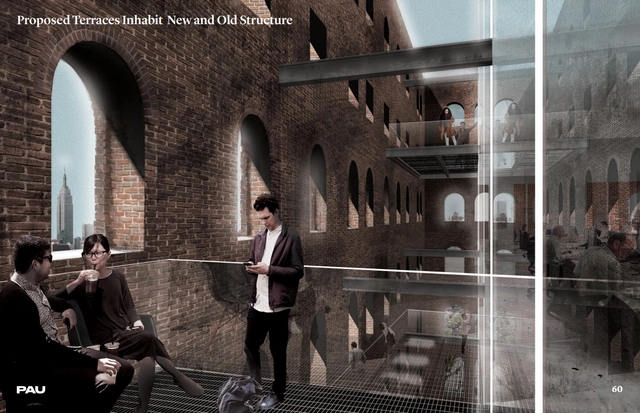
Essentially, PAU intended to use the facade as a mask for a glass office building. Instead of sitting right up against the old brick, the new building would be set back ten feet from the old, and workers could get outside and up close to the original walls via metal latticework terraces poking through the glass envelope. The approach, explained founding principal Vishaan Chakrabarti, would preserve the bricks by equalizing the temperature and humidity on both sides while allowing the architects flexibility within a challenging original structure. A round-arched glass roof would dialogue with the American Round Arch windows that define the facade, while on the ground floor, the designers proposed a through-access from the Kent Avenue smokestack to the park and water that would be open to the public.