1. ArchDaily
  2. Walt Disney

Walt Disney: The Latest Architecture and News

The Corporate City: Three Models of Company Town Design

Subscriber Access | 

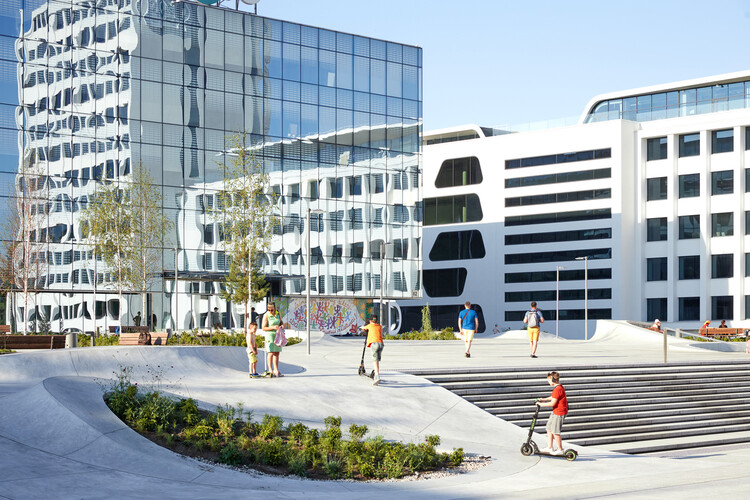
For over a century and a half, corporations have periodically taken on the role of city builders. Neighborhoods or even entire settlements that exist at the intersection of commerce and civic life, "company towns" are recurring urban types. The corporate city has long reshaped itself to match the spirit of each era, whether through the pastoral idealism of industrial England or the cinematic optimism of mid-century America. In its latest guise, the mixed-income campus district, architecture becomes a language of belonging, branding, and quiet persuasion.

The Corporate City: Three Models of Company Town Design - Image 1 of 4The Corporate City: Three Models of Company Town Design - Image 2 of 4The Corporate City: Three Models of Company Town Design - Image 3 of 4The Corporate City: Three Models of Company Town Design - Image 4 of 4The Corporate City: Three Models of Company Town Design - More Images+ 3

Dystopian Disneyland: The Story Behind Turkey’s Castle Ghost Town

Subscriber Access | 

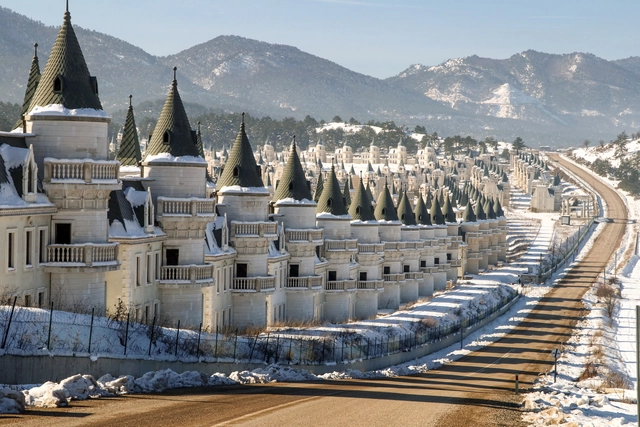
Most of us have probably imagined living in a castle at some point, whether during childhood, enchanted by fairy tales, or as adults studying European monarchies. Considering this fascination, what would you think if you had the chance to buy your castle? In mid-2014, you could make that dream a reality in Turkey for just $370,000. Each luxurious 325-square-meter castle came complete with blue turrets and spiral staircases. The only catch? Your castle would be one of 731 identical ones. But who cares about exclusivity when you have the chance to live in a Disney fairy tale?

Dystopian Disneyland: The Story Behind Turkey’s Castle Ghost Town - Image 1 of 4Dystopian Disneyland: The Story Behind Turkey’s Castle Ghost Town - Image 2 of 4Dystopian Disneyland: The Story Behind Turkey’s Castle Ghost Town - Image 3 of 4Dystopian Disneyland: The Story Behind Turkey’s Castle Ghost Town - Image 4 of 4Dystopian Disneyland: The Story Behind Turkey’s Castle Ghost Town - More Images+ 2

Walt Disney World Announces Construction Of Affordable Housing in Florida, USA

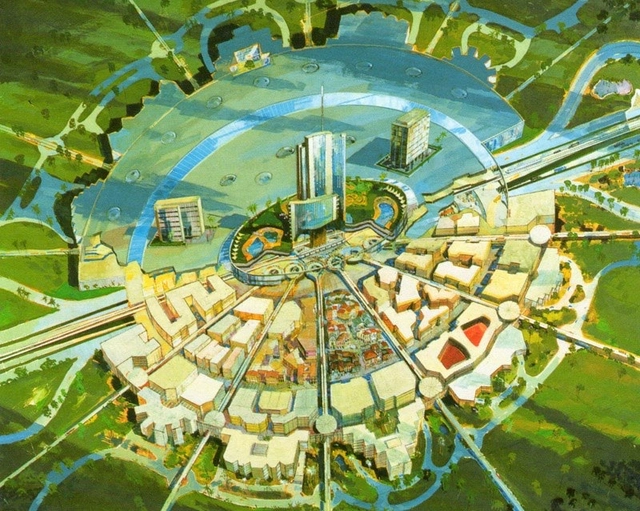
Community development proposals in Disney World come from back days. One of Walt Disney's last visionary projects was the Experimental Prototype Community of Tomorrow (EPCOT), a center for American enterprise and urban living. Disney advocated that the problems of cities were the most critical issues facing society and planned a city that could develop in a controlled manner, contrary to the urban expansion in the USA during the first half of the last century. After Disney died in 1966, the "EPCOT" concept was abandoned as the company was uncertain about the feasibility of operating a city. Fifty- five years later, after a thorough search, Walt Disney World chose The Michaels Organization for its experience in building and managing attainable housing communities.

EPCOT: Walt Disney's New Urbanist City

Subscriber Access | 

Beneath the Spaceship Earth geodesic sphere and the display of world cultures that symbolize Disney World’s EPCOT lies the buried vision for a utopian city. The original EPCOT - a community built around innovation - was one of Walt Disney’s last visionary projects. Bothered by haphazard urban sprawl, Disney had bold ideas for an urban fabric that would drive progress in the USA. The “Experimental Prototype Community of Tomorrow” was Walt Disney’s antidote to the decay of American cities.

EPCOT: Walt Disney's New Urbanist City - Image 1 of 4EPCOT: Walt Disney's New Urbanist City - Image 2 of 4EPCOT: Walt Disney's New Urbanist City - Image 3 of 4EPCOT: Walt Disney's New Urbanist City - Image 4 of 4EPCOT: Walt Disney's New Urbanist City - More Images+ 3

Disney Proposes "Magic in the Californian Desert" with New Mixed-Use Communities Project

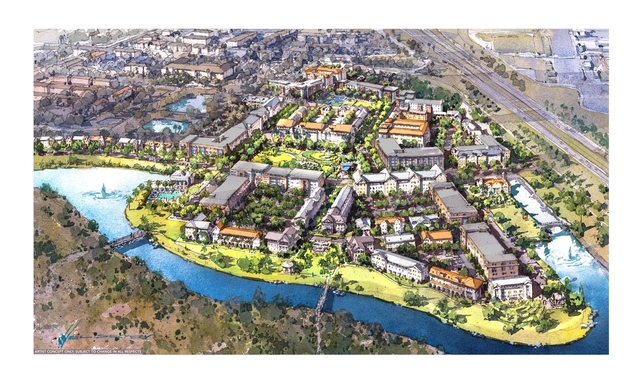
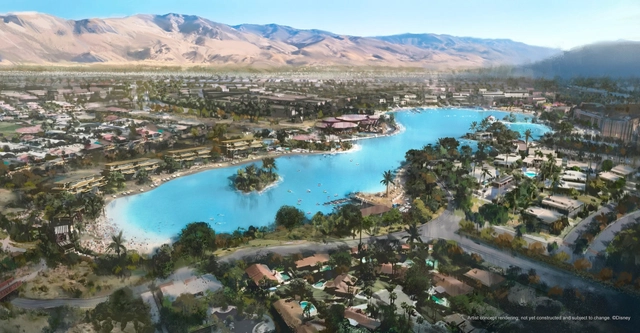
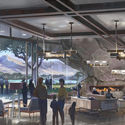
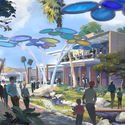
Disney, the multinational entertainment and media conglomerate announced its new addition to its Signature Experiences Program. Titled "Cotino", part of its new Storyliving by Disney venture, the master plan is Disney's first master-planned community project, and will feature distinctly-designed housing units and neighborhoods, along with commercial and civic amenities and man-made beaches in the heart of Rancho Mirage, California's Coachella Valley.

Disney Proposes "Magic in the Californian Desert" with New Mixed-Use Communities Project - Image 1 of 4Disney Proposes "Magic in the Californian Desert" with New Mixed-Use Communities Project - Image 2 of 4Disney Proposes "Magic in the Californian Desert" with New Mixed-Use Communities Project - Image 3 of 4Disney Proposes "Magic in the Californian Desert" with New Mixed-Use Communities Project - Image 4 of 4Disney Proposes Magic in the Californian Desert with New Mixed-Use Communities Project - More Images+ 2

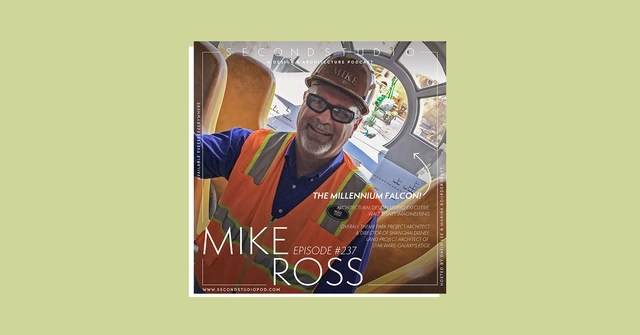
The Second Studio Podcast: Interview with Mike Ross, Architectural Design Studio Executive at Walt Disney Imagineering

The Second Studio (formerly The Midnight Charette) is an explicit podcast about design, architecture, and the everyday. Hosted by Architects David Lee and Marina Bourderonnet, it features different creative professionals in unscripted conversations that allow for thoughtful takes and personal discussions.

A variety of subjects are covered with honesty and humor: some episodes are interviews, while others are tips for fellow designers, reviews of buildings and other projects, or casual explorations of everyday life and design. The Second Studio is also available on iTunes, Spotify, and YouTube.

This week David and Marina are joined by Mike Ross, the Architectural Design Studio Executive at Walt Disney Imagineering, to discuss the design and construction of theme parks and theme park buildings, the Disney design process, technology's impact on how they build, creating theme parks in other countries, and much more.

The Second Studio Podcast: Interview with Mike Ross, Architectural Design Studio Executive at Walt Disney Imagineering - Image 1 of 4The Second Studio Podcast: Interview with Mike Ross, Architectural Design Studio Executive at Walt Disney Imagineering - Image 2 of 4The Second Studio Podcast: Interview with Mike Ross, Architectural Design Studio Executive at Walt Disney Imagineering - Image 3 of 4The Second Studio Podcast: Interview with Mike Ross, Architectural Design Studio Executive at Walt Disney Imagineering - Image 4 of 4The Second Studio Podcast: Interview with Mike Ross, Architectural Design Studio Executive at Walt Disney Imagineering - More Images+ 6

Walt Disney to Bring Star Wars to Life

Subscriber Access | 

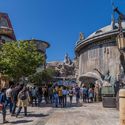
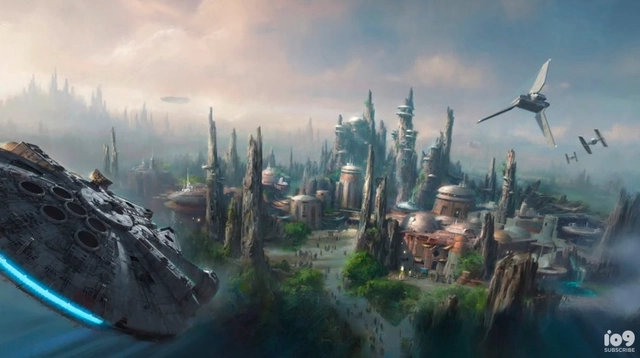
Walt Disney has unveiled the company's largest single theme land expansion ever: Star Wars Land. An extraterrestrial land of humanoids, aliens, and droids, the 14-acre development is expected to be built at Orlando, Florida's Disney World and Anaheim, California's Disneyland by 2020.

Nearby in Los Angeles, rumors are saying Star Wars director George Lucas may consider building his self-titled museum there, rather than in Chicago where Lucas is facing fierce opposition over his MAD museum design (more on that here).

Read on to see more images of Star Wars Land and to watch the unveiling of the project.

4 Lessons Pixar Films Can Teach Us About Architecture

Subscriber Access | 

Over the past 20 years, Pixar’s films have attracted vast audiences around the globe. In worldwide box office sales its first film, Toy Story (1995) boasted $362 million, followed by A Bug’s Life (1998) $363 million, Toy Story 2 (1999) $485 million, Monsters, Inc. (2001) $525 million, and Finding Nemo (2003) a whopping $865 million.[1] Factoring in additional home theater movie rentals and purchases, along with cable, theme parks, and consumer products, the influence of Pixar on generations of children and their parents around the world has been enormous. In terms of global impact, no educator, no author, and no architect even come close.

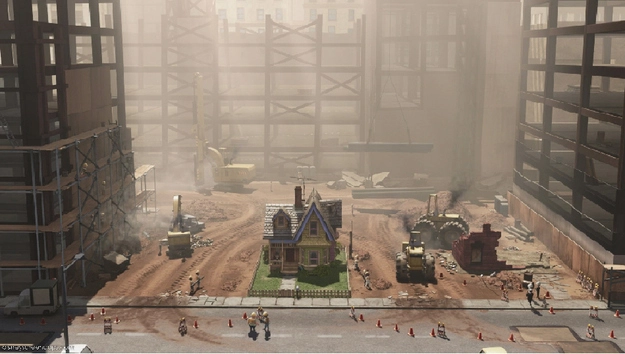
While Pixar’s pioneering role in the world of cinema, storytelling, and digital rendering is already well documented, its links with architecture have yet to be fully explored. One of Pixar’s greatest, and perhaps overlooked, talents is its ability to create convincing architectural worlds adjacent to and within the human world we inhabit every day. Pixar worlds could become a new tool to encourage critical thinking about our environment.