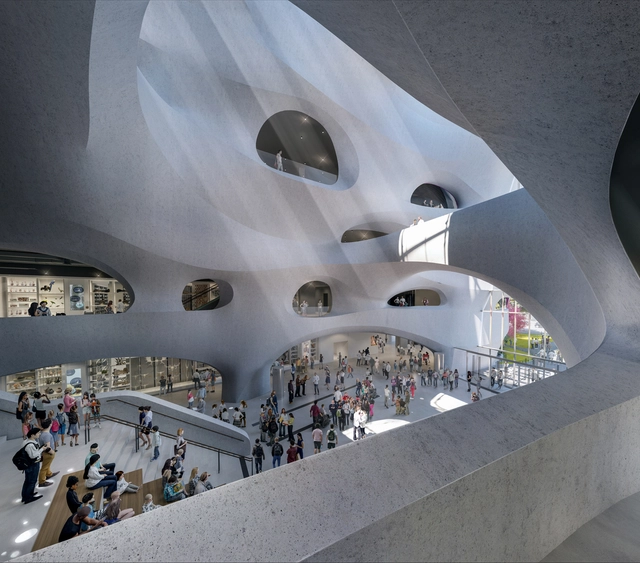
Jeanne Gang, Studio Gang's founder, has been named the 2023 recipient of the Charlotte Perriand Award by The Créateurs Design Awards. From skyscrapers to museums, including the Aqua Tower - the tallest woman-designed building in the world at the time of its completion- and the recently opened Arkansas Museum of Fine Arts, Gang has demonstrated her dedication to creating and implementing better practices in sustainable reuse, ecological biodiversity, and social equity. Jeanne Gang, the first woman architect to get the Charlotte Perriand prize, joins the CDA AWARDS laureates list along with Sir David Adjaye and Tadao Ando.
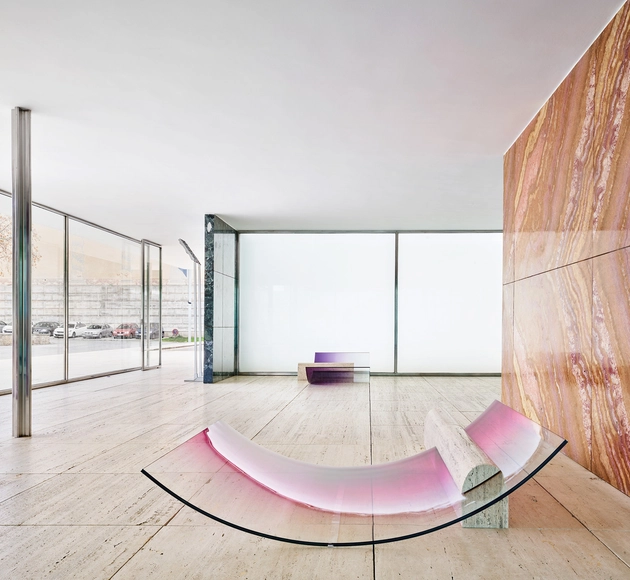
The Women Bauhaus is a new art collective of five female artists led by mentor Sabine Marcelis, who are taking inspiration from the legacy of women in the Bauhaus movement. The project was commissioned by luxury skincare brand La Prairie as part of its ongoing patronage of the arts. The projects developed are taking inspiration from Bauhaus icons such as textile artists Otti Berger, Benita Koch-Otte, and sculptor, metalsmith, and designer Marianne Brandt. The initiative also hopes to bring attention to the often-overlooked legacy of women who joined the Bauhaus movement, and whose struggles to affirm themselves as artists and designers are rarely recognized.
Architectural photography has historically been a male-dominated genre, as has architecture itself and the construction industry in general. But this scene is changing fast. Some of the most relevant names in architectural photography in the world are now women, and Brazil is no different. When facing gender barriers – one of the main difficulties being exposure to public space at unusual times, carrying valuable equipment, as photographer Ana Mello has already stated in an interview – these professionals are breaking paradigms and immortalizing the works with their sharp and sensitive eyes.
Each year, TIME publishes TIME100 Next, a list, inspired by its flagship TIME100, seeking to recognize 100 people from all industries around the world whose careers are on the rise. As a result, the 2022 TIME100 Next list features high-profile musicians and medical professionals, government officials, movement leaders and whistleblowers along with top CEOs, all selected by TIME journalists. However, in this year's list it is possible to recognize the only professional that represents the guild: the Mexican architect Frida Escobedo.
Studio Gang's founder, Jeanne Gang, is the winner of the 2022 ULI Prize for Visionaries in Urban Development, the most prestigious and respected honor in the real estate, land use, and development community. From museums and skyscrapers, including the Arkansas Museum of Fine Arts and the St. Regis Tower in Chicago, Gang has demonstrated her work in creating and implementing better practices in sustainable reuse, ecological biodiversity, and social equity. Gang, the first woman architect to get the prize for Visionaries in Urban Development, joins the ULI laureates list along with Alejandro Aravena, Richard Rogers, and Vincent Scully.
Have you ever thought that practically all the cities in the world, since the dawn of humanity, were and continue to be created and designed by men? From urban design to building projects, from public transport to chairs – women have not been part of the process of creating everything around us.
The National Building Museum has announced that Dolores Hayden, professor emerita of architecture, urbanism, and American studies at Yale University, is this year’s recipient of the Vincent Scully Prize. As an urban historian and architect, Dolores Hayden has focused throughout her career on the politics of place and the stereotypes of gender and race embedded in American-built environments. As the 24th recipient of the Vincent Scully Prize, Dolores Hayden joins esteemed past recipients, including Mabel O. Wilson, Elizabeth Meyer, Robert Campbell, and Inga Saffron.
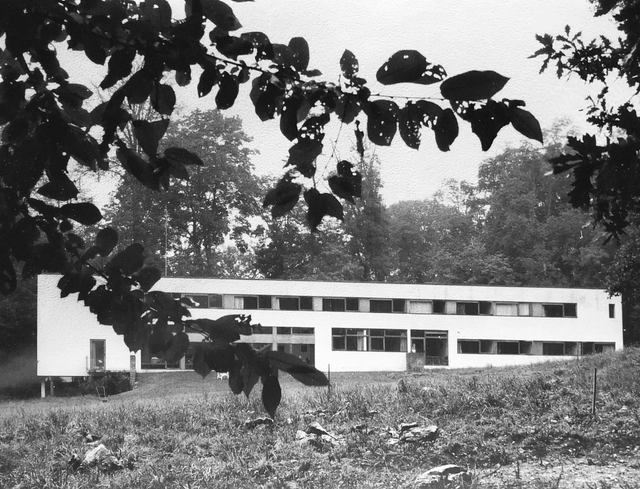
Exterior view of l’Eau Vive hospital, Soisy-sur-Seine, France, 1960s. Image Courtesy of Archives of Nicole Sonolet, collection of Christine de Bremond d’Ars
What would it mean to design buildings that exceed the economic accountings of liberal biopolitics, that instead offer an entirely different rationale for supporting health? In the years that Michel Foucault conceptualized the term biopolitics, he was part of a constellation of researchers and architects who developed care praxes that defined the value of life and its maintenance through a desire-based calculus. The welfare state institutions of architect Nicole Sonolet in particular—mental hospitals, public housing complexes, and new village typologies built mainly in postwar France and postcolonialAlgeria from the 1950s to the 1980s—were designed not only to support but to center the needs of people often excluded from design processes. Sonolet’s mental health centers for residents of Paris’s 13th arrondissement, in particular, were key projects for discovering a design practice tied to the provision of care for its own sake.
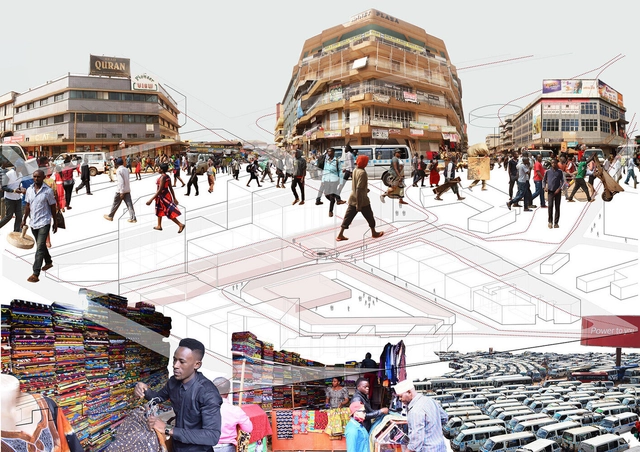
Doreen Adengo, Ugandan architect and trailblazer, passed away on July the 22nd of this year, after battling a long-term illness. She founded Adengo Architecture, a studio based out of her home city of Kampala. A designer who studied in the United States, worked in firms in New York, Washington, and London, and was teaching at Uganda Martyrs University – her legacy is nothing short of extraordinary. It is a legacy that spans disciplines and geographies – but a legacy, too, that is deeply rooted in the context of Africa, Uganda, and Kampala.
Doreen Adengo. Image Courtesy of Adengo Architecture
Doreen Adengo, architect from Kampala, Uganda has passed away, as reported by African Futures Institute’s Instagram Account, after a long battle with cancer. Founder of Adengo Architecture in 2015, a research-based multi-disciplinary practice operating out of her hometown Kampala, Doreen, a registered architect in the United States and Uganda, had earned her undergraduate at the Catholic University (Bachelor of Science in Architecture) and graduate studies at Yale (Masters of Architecture). She has taught at The New School and Pratt Institute in New York, the University of Johannesburg’s Graduate School of Architecture, and was currently teaching at Uganda Martyrs University. In celebration of International Women’s Day 2022, Doreen Adengo was recognized by ArchDaily as one of the established practitioners implicated in change.
AIA'S 2024 Ppresident-elect Kimberly Dowdell. Image Courtesy of Kimberly N. Dowdell
The American Institute of Architects has elected Kimberly Dowdell as the 100th president of the organization, making her the first Black woman to hold the position in AIA’s 165-year history. Delegates at the AIA’s annual meeting voted Dowdell to serve first as vice president for 2023. Afterward, she will become president in 2024.
During her campaign for president, Dowdell has expressed her support for minorities, while also making clear that she wants to be an AIA president for all. Her platform is based on four key areas of interest: supporting architects in practice, creating a sense of belonging and ensuring access to the architectural profession and education, addressing climate concerns, and designing for the future, considering rapid technological advances. “I firmly believe that the AIA has the power and potential to better serve our profession” she declared in a video made prior to the election.
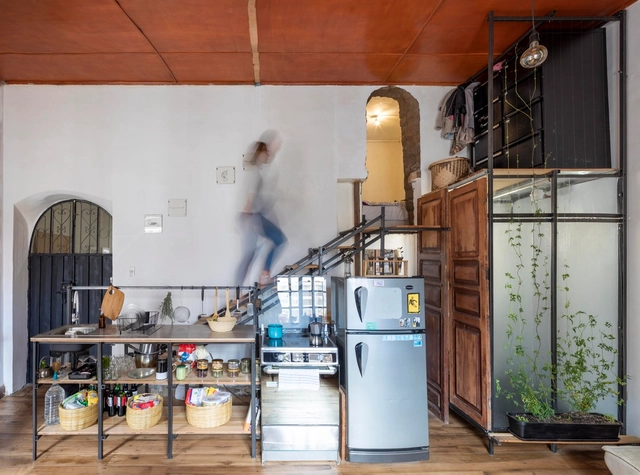
In the field of design and construction, the question of gender is a point of conflict: who has the possibility of building? What are the alternatives for us architecture professionals? These are the questions that Taller General (re)think about. It is from these questions that Femingas, a participatory construction conference with a gender perspective, arose. These are manifested as an alternative to the construction of "mingas", days of joint work between the members of a community to achieve a common good.
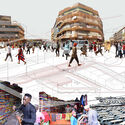
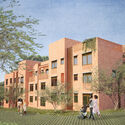
French architect Renée Gailhoustet has been awarded the 2022 Royal Academy Architecture Award for her pioneering work designing public housing and neighborhoods in and around Paris. The award is given annually by London's Royal Academy to individuals or practices whose idea or body of work has positively contributed to the public.
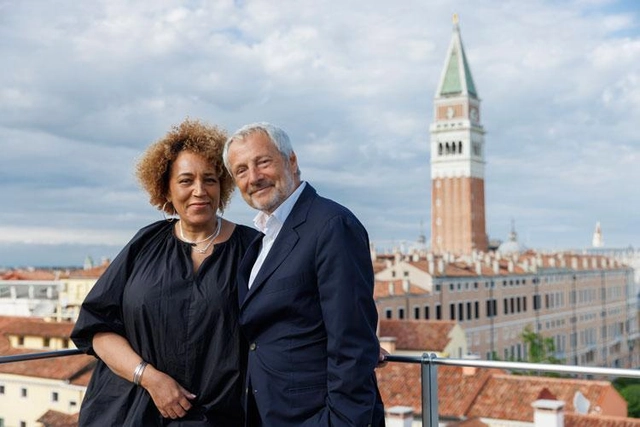
The President of La Biennale di Venezia, Roberto Cicutto, and the Curator of the 18th International Architecture Exhibition, Lesley Lokko by Jacopo Salvi. Image Courtesy of La Biennale di Venezia
Running from May 20th to November 26th, 2023 in the Giardini, at the Arsenale, and at various sites around Venice, the 18th International Architecture Exhibition will be titled: The Laboratory of the Future. Announced today by the President of La Biennale di Venezia, Roberto Cicutto, and the Curator of the exhibition, Lesley Lokko, the theme and title of this edition will consider the African continent as the protagonist of the future. “There is one place on this planet where all these questions of equity, race, hope, and fear converge and coalesce. Africa. At an anthropological level, we are all African. And what happens in Africa happens to us all”, explains Lokko.
The Graham Foundation has announced the award of 56 new grants to individuals exploring ideas that expand contemporary understandings of architecture. The recipients have been selected from an open call that resulted in nearly 500 submissions. The selected projects are led by 81 individuals with diverse backgrounds. The funded projects, including exhibitions, publications, films, and podcasts, among other formats, encourage experimentation and foster critical discourse in architecture.
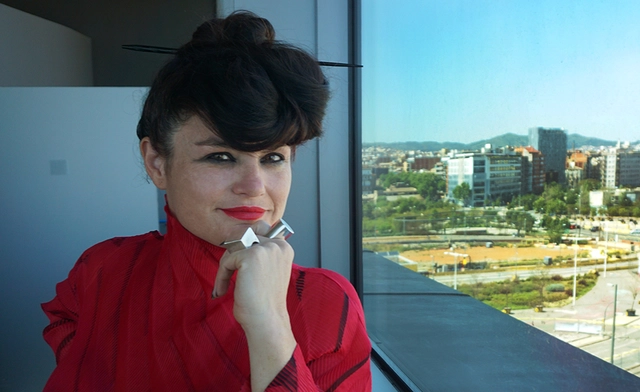
Eva Franch I. Gilabert is one of the three artistic directors of Model. Barcelona Architectures Festival, together with Beth Galí I. Camprubí and José Luis de Vicente. The first edition of a project that has taken the city of Barcelona as a place for experimentation and debate.
From the 5th to the 15th of May, they took the public space and transformed it into both a playground and platform for international voices, local architects, policymakers, politicians and citizens, to engage and discuss what the future of Barcelona and other cities could be.
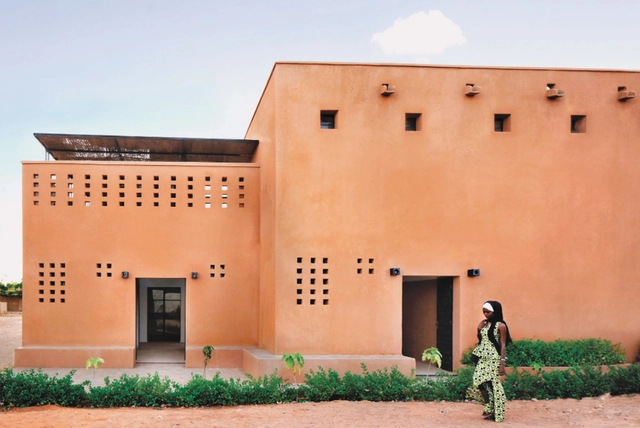
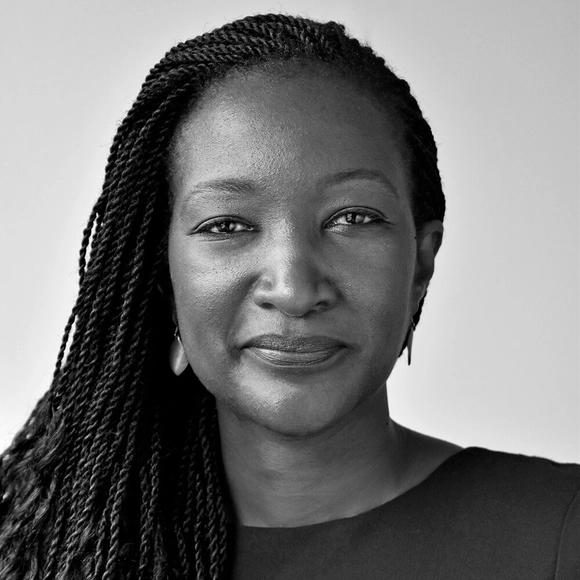
Architect Mariam Kamara—founder of Niamey, Niger-based firm Atelier Masōmī—is a contrarian of design pedagogy as it is largely practiced today. To Kamara, modern is not synonymous with European forms, architecture is not only for Westerners to define, and the so-called canon of great buildings actually ignores most of the built world. The Niger-based architect's rapidly growing practice informs a series of lectures she has delivered recently at MIT, Columbia University GSAPP, the African Futures Institute in Ghana, and Harvard GSD.































.jpg?1654020023&format=webp&width=640&height=580)
.jpg?1654020013 "Aubervilliers by Renée Gailhoustet . Image © Marc Pataut")
.jpg?1654020163 "Le Liegat Ivry sur Seine by Renée Gailhoustet. Image © Valerie Sadoun")
.jpg?1654020006 "Aubervilliers by Renée Gailhoustet . Image © Marc Pataut")

.jpg?1654020023)









.jpg?1652860288&format=webp&width=640&height=580)
.jpg?1652860800 "Danish Architecture Center Exhibition. Image © Laura Stamer")
.jpg?1652860271 "Danish Architecture Center Exhibition. Image © Laura Stamer")
.jpg?1652861441 "Helen & Hard installation, Women in Architecture at DAC. Image © Laura Stamer")
.jpg?1652860454 "Helen & Hard installation, Women in Architecture at DAC. Image © Laura Stamer")
.jpg?1652860288)