

Liminal spaces are everywhere, both literally, and as a popular topic of intrigue on Reddit and other image-sharing platforms. Posting photographs of empty dilapidated spaces followed by collective reminiscing of childhood experiences is proving to be a popular activity these days. At one time or another, the spaces depicted in these eerie photos seemed like a good idea, a useful solution to the problem of providing shelter for crowds in the act of movement or commerce. Architecture had specific terms for these spaces too and defined them through theories that explained their role in our culture. In this video, architectural professor Stewart Hicks presents how architects think about liminal spaces, what goes into them, why they exist, and why some architects and artists still work to produce their effect.
YouTube: The Latest Architecture and News
The Architecture of Liminal Spaces
The Fundamentals of Projecting Plans
Architectural plans require training in order to read, understand, and produce. Mastering their codes can unlock the most powerful tool that architects have to imagine and construct new buildings. It is not only important to learn the intricate formal and geometric operations to produce these types of drawings, but also to interrogate the traces they leave on the buildings we design. In this video, architecture professor and designer, Stewart Hicks talks about the basics of architectural plans: where they came from, how they are made and used, and what they are good at representing. Using a three-dimensional model of a basic house, he goes through the steps of transforming it into a plan projection while discussing the implications of each step and offering precedents to reveal their nuanced implications.
The Fascinating History and Hidden Ugliness of Curb Appeal

What is the danger of making something pretty? Well, when it comes to homes it can be complicated. Curb appeal seems like an innocent concept, but architects have been quoted calling it “empty signifiers of good design” or even eerie or creepy. Curb appeal privileges superficial visual composition over deeper, more spatial considerations. Further, the overregulation of visual propriety easily strays into practices that are exclusionary and oppressive. This video takes a close look at the history, evolution, and consequences of curb appeal from an architect’s perspective using examples from popular culture, art, film, and architecture. Unexpected origins and peculiar turns through picturesque gardens, mirrors for viewing the landscape, and exhibitions like Venturi Scott Brown’s ‘Signs of Life’ serve as waypoints in our journey for understanding people’s views of what houses should look like.
How Architects Build Character
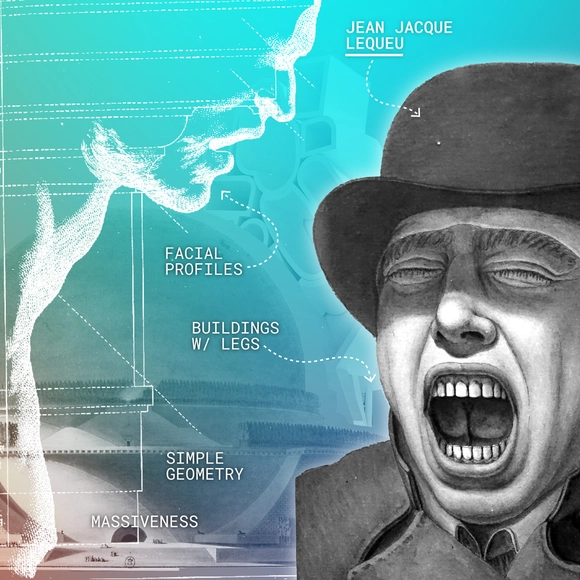
We’ve all commented on a building’s character before. An apartment might have it because of some special oak trim, or a building might not fit with the ‘character’ of its neighborhood. In this video, architectural designer and professor Stewart Hicks takes a close look at the meaning and origins of this elusive concept. Why do we use this word for both people and for buildings? Characters also occur in fiction, does that help explain how buildings tell stories? From the Enlightenment architects Ledoux, Boullée, and Lequeu, to the Beetlejuice house, to contemporary practices exploring what it might mean for a building to have a face or a posture, we get to the bottom of why architects might consider architectural character to be a good idea.
What Makes Mies van der Rohe’s Open Plans
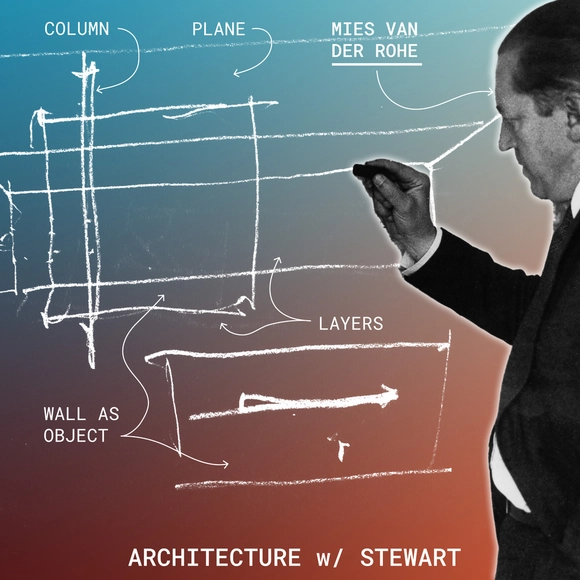
Ever wondered (or forgotten) the difference between open plans and free plans? In this video, architectural designer and professor Stewart Hicks breaks down what makes Open Plans a unique form of ‘open concept.’ It is part of a series that explores terms from real estate using contemporary, historical, and theoretical examples from architecture. In this case, the spatial strategies of Mies van der Rohe are explained, beginning with his early unbuilt houses, through the Barcelona Pavilion, to the Farnsworth House. Each one features a particular, but evolving, use of walls, columns, and roof planes that add up to what we call ‘Open Plans.’ Other videos in the series are dedicated to things like Free or Organic Plans and can help anyone sharpen their understanding of architectural concepts.
Open Concepts: Le Corbusier's Free Plan
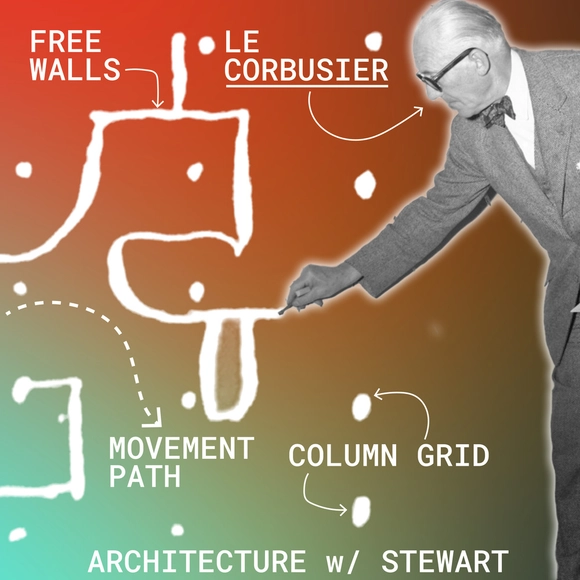
The term ‘open concept’ is popular with house-flipping television shows and real estate descriptions for lofts or contemporary style homes. However, the phrase is absent from the architect’s lexicon, likely due to a much more robust vocabulary and archive of precedents for describing the continuity of space in a domestic environment. This video is the second in a series that breaks down various ‘open concepts’ in architecture. The first video was dedicated to the ‘Organic Plan’ of Frank Lloyd Wright and this one takes a closer look at the ‘Free Plan’ of Le Corbusier. Through comparisons with Wright and supported with examples from the Five Points of a Modern Architecture, ‘Free Plans’ are presented as a unique way of understanding the coherence of space.
Architecture Plagiarism: Are We Being Inspired or Are We Cheating?
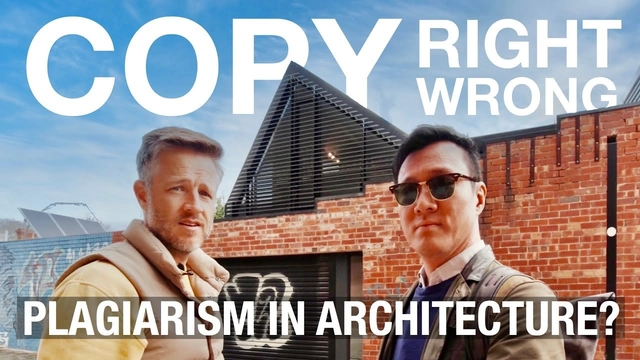
There’s always an ongoing debate on whether some designs are stolen or “modified” to become original. Most people assume that if we post pictures of our designs online, we would be giving away our work and other designers and architects will eventually steal them. But should we really hide our designs from the public? Are plans and sections so sacred and innovative to the extent that architects are applying copyrights to them?
Kevin Hui and Andrew Maynard of Youtube’s Archimarathon chat about copying designs, how students and architects can learn from existing designs, and whether plagiarism exists in the field of architecture.
The Best Bauhaus Documentaries Available to Watch Online

2019 marks a century of Bauhaus, the school-turned-movement whose influence withstood forced relocations, political meddling, and eventual closure. Despite dramatic shifts in technology, taste, and style in architecture in the years since, Bauhaus remains one of the most significant subjects of architectural/design education and has even captured the interest of the wider public.
As part of our celebrations of the Bauhaus movement - and to satiate your thirst to learn more - we have selected some of the best Bauhaus documentaries available online now. Featuring largely-unseen footage, exclusive interviews, and/or unique perspectives on the Bauhaus, these films provide an excellent way to get up to speed.
The Abandoned Architecture Series for your Next YouTube Binge
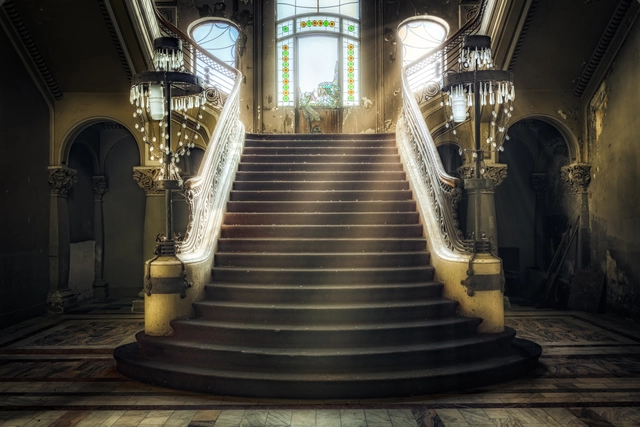
Designers and the general public alike have an endless fascination with abandoned architecture. Throughout history shifting economies, disasters, regime changes, and utter incompetence have all caused the evacuation of impressive architectural structures, which today serve as curious, sometimes eerie monuments to a bygone era.
Such is our fascination with these structures, YouTube is awash with videos and series of curious explorers documenting their daring, sometimes dubious adventures within abandoned architecture. One such channel, with a keen eye for architectural cinematography, is The Proper People.
Experience Cities From Above With Crystal Clear Drone Videos

With rapid advancements in technology and crystal clear imagery, drones have allowed us to experience our cities and landscapes from unimaginable vantage points and perspectives. In its series of videos, YouTube channel Mingomatic uses drones to capture the sights and scenes of predominantly American cities and various locations from above, offering glimpses of skylines, oceans, highways and terrains (and seals!). Check out the 10 videos below for some spectacular views, and find Mingomatic’s full selection, here.
Sketching Tutorials to Keep You Filling up Your Moleskine
In an increasingly paperless world, architecture still relies on channeling ideas by hand. Sketching has endured as the method of choice for designers to communicate with clients, the public, and each other. As we have previously reported, the George Architect YouTube channel, managed by Reza Asgaripour and Avdieienko Heorhii, is devoted to bringing sketching techniques and ideas to the wider world, with a series of tutorials on everything from light and shade to three-point perspectives.
6 Reasons Cities Are Located Where They Are
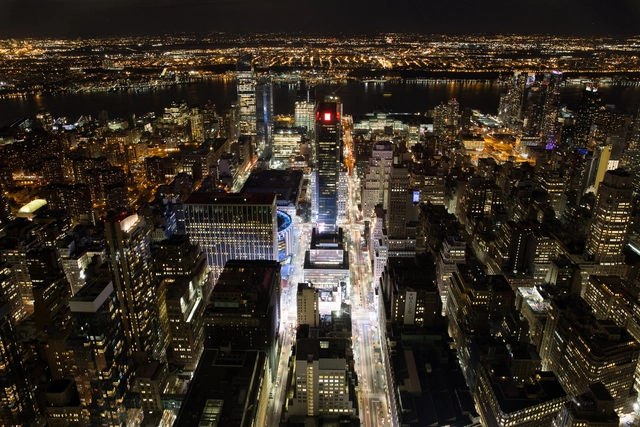
Frank Lloyd Wright once described cities as both ‘our glory and our menace’. With more than half of the world’s population now living in cities, architects are becoming increasingly interested in their origins. Many fields of historical, geographical, and spatial research are devoted to exploring the evolution of cities, revealing a set of similarities across the globe. In a recent video, Wendover Productions described a common set of characteristics linking some of our largest cities, six of which we have outlined below.
Taking the six factors below into account, where is the perfect ‘world city’? Watch the video after the break: