1. ArchDaily
  2. Africa

Africa: The Latest Architecture and News

The Colonial Legacy of Concrete in the Global South

Subscriber Access | 

Concrete towers dominate the skylines of Asian and African cities - looming edifices embodying development. With access to the tools and materials of industrial modernity, the Global South steps onto the world stage showcasing its bounty. Yet, at the depths of rising ambitions, the construction material speaks to colonial legacies and extractive economics that result in power imbalances in the geopolitical sphere. A climate crisis on the horizon only intensifies the complicated relationship between building materials, sustainability demands, and sovereignty of many countries.

The Colonial Legacy of Concrete in the Global South - Image 1 of 4The Colonial Legacy of Concrete in the Global South - Image 2 of 4The Colonial Legacy of Concrete in the Global South - Image 3 of 4The Colonial Legacy of Concrete in the Global South - Image 4 of 4The Colonial Legacy of Concrete in the Global South - More Images+ 3

Rooted in Tradition, Nature, and Community: Wellness and Healing Spaces from the North to the South Africa

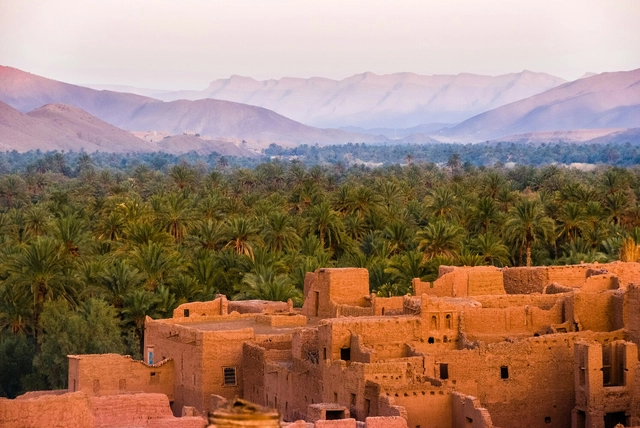
Wellness and healing spaces are shaped by cultural traditions, geographical contexts, and social structures. Across the world, certain practices have been deeply rooted for centuries, like Roman baths, Turkish hammams, and Japanese onsens, while others evolve by drawing inspiration from rituals or redefining their own concept and image of a healing environment. Europe, North America, and Oceania are characterized by a focus on personal journeys, self-care, and often luxurious wellness spaces. Asia shapes the prevailing global perception of wellness through meditation-based healing, inner reflection, and holistic retreats. In Africa, wellness is deeply rooted in ancestral traditions, integrated with nature, and centered around community and social interaction. The commonality worldwide lies in sensory engagement, relaxation, and holistic healing, often tied to nature. But what does wellness look like in Africa? What are the healing spaces that shape it, and what architectural languages define wellness from north to south?

Rooted in Tradition, Nature, and Community: Wellness and Healing Spaces from the North to the South Africa - Image 1 of 4Rooted in Tradition, Nature, and Community: Wellness and Healing Spaces from the North to the South Africa - Image 2 of 4Rooted in Tradition, Nature, and Community: Wellness and Healing Spaces from the North to the South Africa - Image 3 of 4Rooted in Tradition, Nature, and Community: Wellness and Healing Spaces from the North to the South Africa - Image 4 of 4Rooted in Tradition, Nature, and Community: Wellness and Healing Spaces from the North to the South Africa - More Images+ 2

Building the Engine: Industry & the African Urban Agenda

The next generation of Sub-Saharan Africa’s green and inclusive cities is just around the corner, but only if designers embrace the opportunity. Can small-scale entrepreneurship drive new sustainable housing, or will the overburdened sector fail to meet the challenge of climate change?

Why the 2025 Pritzker Prize Matters: Liu Jiakun and the Shift Toward Socially Responsible Architecture

Subscriber Access | 

For nearly the past two decades, cities around the world embraced "starchitecture"—futuristic, eye-catching buildings designed by globally renowned architects. In China, this trend was particularly pronounced as rapid urbanization fueled the construction of iconic megastructures like Zaha Hadid's Galaxy SOHO, OMA's CCTV Headquarters, and Herzog & de Meuron's Bird's Nest Stadium in Beijing. At the time of their construction, these were all celebrated as symbols of progress and global ambition. However, architecture worldwide has begun shifting toward a more context-driven, human-centered approach, with China emerging as one of the key contributors to this transformation. This year, Liu Jia Kun's 2025 Pritzker Prize further underscores that shift.

Why the 2025 Pritzker Prize Matters: Liu Jiakun and the Shift Toward Socially Responsible Architecture - Image 1 of 4Why the 2025 Pritzker Prize Matters: Liu Jiakun and the Shift Toward Socially Responsible Architecture - Image 2 of 4Why the 2025 Pritzker Prize Matters: Liu Jiakun and the Shift Toward Socially Responsible Architecture - Image 3 of 4Why the 2025 Pritzker Prize Matters: Liu Jiakun and the Shift Toward Socially Responsible Architecture - Image 4 of 4Why the 2025 Pritzker Prize Matters: Liu Jiakun and the Shift Toward Socially Responsible Architecture - More Images+ 4

International Women’s Day 2025: The Diverse Approaches of Emerging Woman-Led Architecture Practices

Subscriber Access | 

This International Women's Day, we celebrate the contributions of women in architecture, a field traditionally dominated by men. While dominant narratives may overlook their significant impact, as the history of architecture is replete with examples of women subtly but powerfully shaping the profession. When limited to a draftsman position, Ester McCoy took a step back not to disengage but to better observe. She became the first architectural critic and historian to notice the unique flavor of Modernism developing along the West Coast during the 1950s, bringing names such as Richard Neutra, or Luis Barragan to the forefront of architectural discussions. Similarly, the name Aline Louchheim may not be a widely recognized one among architects, but, because of her, the name Eero Saarinen surely is. The profession of architectural publicist also emerged through this collaboration. These stories remind us that recognizing women's achievements in architecture is not about celebrating gender, but about acknowledging a historical bias that has hindered the entire field's progress.

International Women’s Day 2025: The Diverse Approaches of Emerging Woman-Led Architecture Practices - Image 1 of 4International Women’s Day 2025: The Diverse Approaches of Emerging Woman-Led Architecture Practices - Image 2 of 4International Women’s Day 2025: The Diverse Approaches of Emerging Woman-Led Architecture Practices - Image 3 of 4International Women’s Day 2025: The Diverse Approaches of Emerging Woman-Led Architecture Practices - Image 4 of 4International Women’s Day 2025: The Diverse Approaches of Emerging Woman-Led Architecture Practices - More Images+ 5

Constructed Democracy: How African Countries Embraced Modernism with their National Assemblies

Subscriber Access | 

As, one by one, the African nations gained their independence in the middle of the twentieth century, building programs were central to the process of nation-building. In several of those countries, this included the construction of the state's institutions such as their respective national assembly. These buildings not only facilitate the legislative process but also symbolize the new nation's governance, identity, and aspirations. The period of independence movements also coincided with the introduction of the Modern Movement across the continent, which was associated with progress and a break from the colonial past. Across Africa, some national assemblies were constructed early and were part of the nationalization process that preceded independence, while some were constructed long after.

Constructed Democracy: How African Countries Embraced Modernism with their National Assemblies - Image 1 of 4Constructed Democracy: How African Countries Embraced Modernism with their National Assemblies - Image 2 of 4Constructed Democracy: How African Countries Embraced Modernism with their National Assemblies - Image 3 of 4Constructed Democracy: How African Countries Embraced Modernism with their National Assemblies - Image 4 of 4Constructed Democracy: How African Countries Embraced Modernism with their National Assemblies - More Images+ 3

Kéré Architecture Unveils Design for a Spiritual and Community Center in Notsé, Togo

Kéré Architecture has revealed the design of a masterplan and series of buildings dedicated to the cultural and spiritual heritage of the Ewé people in the town of Notsé, in Togo. Commissioned by the Kothor Foundation, the center incorporates a sanctuary, several temples, a large-scale open-air amphitheater, as well as cultural functions such as exhibition halls, an auditorium, restaurants, and a reconstruction of the ancient royal palace of the Ewé Kingdom. The project, Francis Kéré's first in Togo, started construction in October 2024 and is scheduled for completion in February 2026.