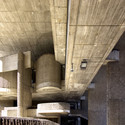
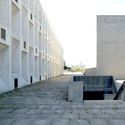
The need to substantially reduce our impact on the planet must be translated into a significant change to our lifestyle and habits. One of these is to consume responsibly and consider that waste does not exist, but that all material can be transformed into something useful again following a circular ecological system.
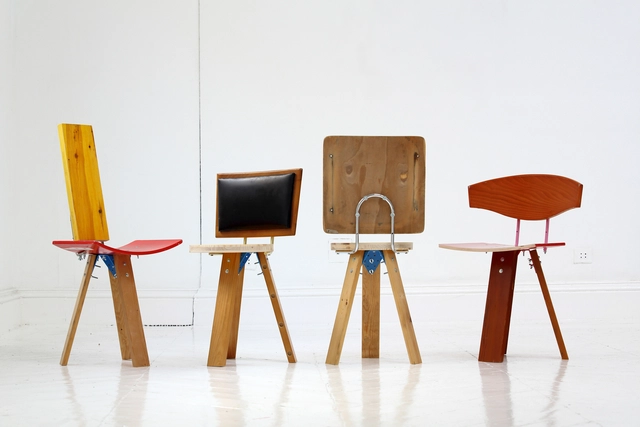
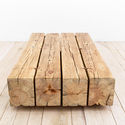
In his book Upcycling Wood, Reutilización creativa de la madera, the architect and artist Bruno Sève writes and edits a non-exhaustive guide of the uses and possibilities of recovered wood, as a framework for responsible reuse; from small scale, such as furniture or artists' canvases, to medium scale, with its use in interiors and facades. This book seeks to raise awareness among professionals and citizens in general through analysis of the life cycle, examples of uses and finishing processes, leading to an ecological and responsible framework. The book is illustrated by numerous design and architecture teams who follow the guidelines of ecological design with reclaimed wood.
Erieta Attali has devoted two decades to exploring the relationship between architecture and the landscape at the edges of the world. Attali’s photography interrogates how extreme conditions and demanding terrains provoke humankind to re-orient and center itself through architectural responses. Her unrelenting and highly physical expedition has seen her traverse four continents, working in isolated and remote terrains from Iceland to the Indian Ocean.
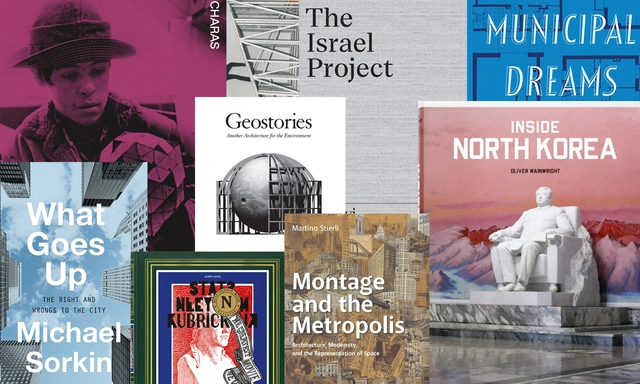
Metropolis Magazine has released a curated list of 19 new books to read this spring, with topics ranging from the evolution of social housing to Stanley Kubrick's unfilmed masterpiece to a fascinating tome on the architecture of Zionism. Not simply volumes detailing well-tread histories, these chosen titles explore every niche category through the lens of architecture. Ever wondered how Buckminster Fuller inspired six former gang members to construct his geodesic dome? Or what metro stations in North Korea look like?
The MIT Press, in collaboration with the Andrew W. Mellon Foundation, is set to digitize landmark out-of-print architecture and urban studies books published by the MIT Press, making them freely accessible online for discovery and research. Aided by a $157,000 grant by the Andrew W. Mellon Foundation, MIT Press are enabled to digitize a collection of “image-rich and intellectually prized architecture and urban studies titles” complete with the commissioning of new forewords for the works. Following the project’s completion, MIT Press intends to distribute a minimum of 25 titles for free on several platforms, including its own ebook service.
Among the titles to be released are Francoise Choay’s “The Rule and the Model: On the Theory of Architecture and Urbanism,” which links modern theory with classical and Renaissance architecture, and John Templer’s “The Staircase,” regarded as the first theoretical and historical analysis of the elemental stair. Books on the subject of famous architects will also be released, such as Donald Leslie Johnson’s “Frank Lloyd Wright vs. America: The 1930s” and Grant Hildebrand’s “On Leon Battista Alberti: His Literary and Aesthetic Theories.”
https://www.archdaily.com/893543/mit-press-to-make-landmark-architecture-books-freely-accessible-onlineNiall Patrick Walsh
Everyone knows that becoming an architect translates to a lot of time in front of a computer screen, or on-site or in the model shop—or waiting for renders to finish. But we also know that being a good architect is about much more; truly savvy architects and really thoughtful projects often spring from strong theoretical, philosophical or practical trains of thought (and they are not always directly inspired by architecture itself!).
Have you registered for your free library card? If you haven't, you're missing out on some serious perks! The Internet Archive has a lending feature that allows users to electronically "borrow" books for 14 days. With over 2,000 borrowable books on architecture, patrons from across the globe can read works by Reyner Banham, Walter Gropius, Ada Louise Huxtable and Jonathan Glancey. There are also helpful guides, dictionaries and history books.
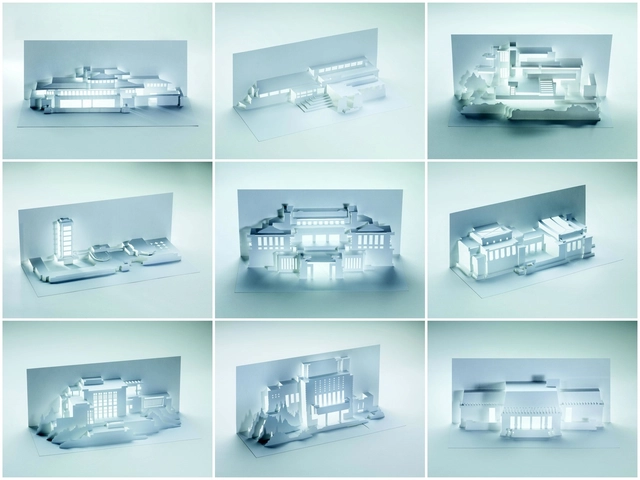
Created by paper engineer and artist Marc Hagan-Guirey, the book contains templates for creating 14 Wright-designed structures using the Japanese art of kirigami. The book leads you through the assembly of each model, which providing photographs, drawings and information for each building, including favorites like Fallingwater and the Solomon R. Guggenheim Museum in New York.
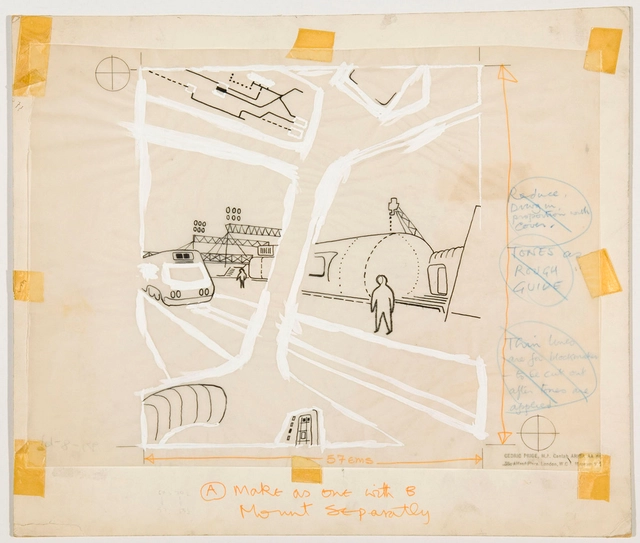
Cedric Price's "Potteries Thinkbelt" project. Image Courtesy of Canadian Centre for Architecture
Samantha Hardingham's recently-published work, A Forward-Minded Retrospective: Cedric Price Works—1953-2003, traces the architect's career through a comprehensive collection of his drawings and renders. The exhaustive two-volume work acknowledges Cedric Price not just as the entertaining novelty he is often regarded as, but as a great mind who was ahead of his time. While the vast majority of work produced during his lifetime was never built, Hardingham draws out the radical genius behind such projects as the hybrid office complex-highway "Officebar," a zoo restaurant whose column-less interior paved the way for its later conversion to a giraffe habitat, and many others—built and unbuilt.
In addition to the uncanny future forecasting expressed in many of Price's works, they are also known for serving as inspiration for the functionalist designs of Renzo Piano and Richard Rogers, making them necessary to a complete understanding of the modern architectural canon. In an article on Metropolis Magazine, Samuel Medina takes a whistle-stop tour of some of the most intriguing works presented in Hardingham's new book.
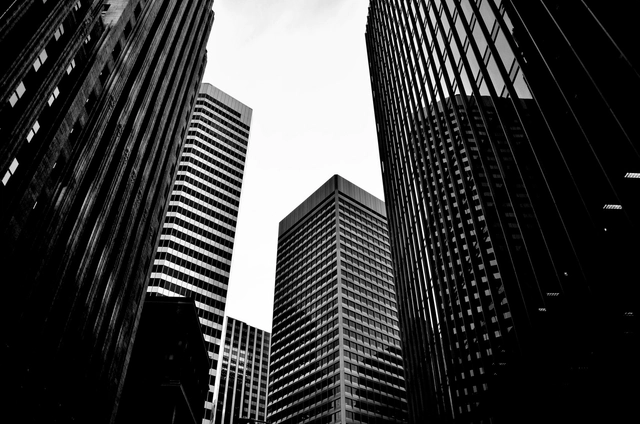
Professor Alan Short of the University of Cambridge has published a book advocating for the revival of 19th-century architectural ideas to address the crippling energy use of modern skyscrapers. The Recovery of Natural Environments in Architecture proposes an end to the architectural fetish for glass, steel, and air conditioning, instead drawing inspiration from forgotten techniques in naturally ventilated buildings of the 1800s. The book is a culmination of 30 years’ research and design by Prof. Short and his colleagues at the University of Cambridge.
https://www.archdaily.com/866864/new-book-calls-for-an-end-to-our-fetish-for-conditioned-skyscrapersNiall Patrick Walsh
An installation of nearly 100 books in the James Stirling-designed Book Pavilion at the Venice Biennale serves as a collection of documents that asks us to consider how climate intersects with architectural ideas.
For the architecture-obsessed reader, it can sometimes be tough to keep up with the publishing world. With architecture-related interests spanning from photography to philosophy, new books are released at an alarming rate and it can be difficult to spot the good from the bad. Fortunately, the good folks at Metropolis Magazine are here to help. In this article, excerpted from their list of 50 Architecture and Design Books to Read This Spring, Metropolis editors select the top architecture titles to come out this year to give you a helping hand in rounding out your reading list.
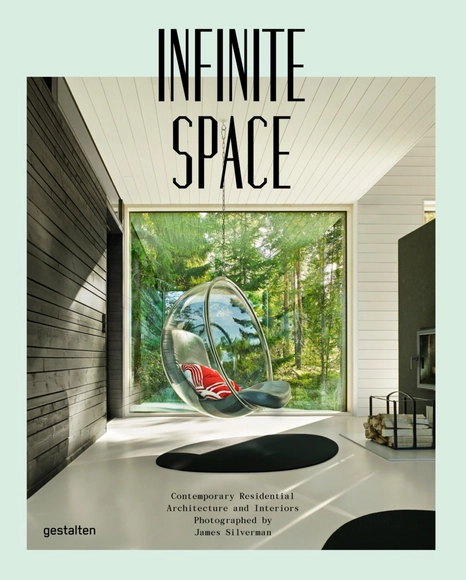
'Infinite Space' / James Silverman. Image Courtesy of Gestalten
In this extract from the introductory essay to Infinite Space, a new compilation of dream houses photographed by James Silverman over the course of his travels, Alan Rapp discusses the photographer's approach to architectural image-making in the 'age of the globalized residence'.
Whether of a remote mountain cabin in Norway, a sensuous desert oasis in Morocco, or a monolithic concrete home in Switzerland, Silverman’s photographs capture the seemingly uninterrupted flow between interior and exterior space. The architecture documented in this book is often defined by elements that absorb, reflect, or deliberately break with their surroundings. Together they show how 'infinite space has become a key precept of contemporary architecture across the world.
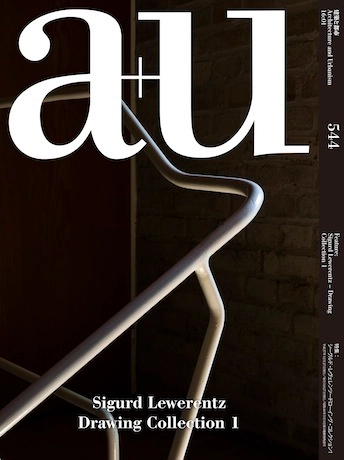
From the publisher: January 2016 issue of a+u is a special issue focused on the drawing collection of Swedish architect Sigurd Lewerentz (1885–1975).
Working with the guest editor Wilfried Wang, Professor at the University of Texas at Austin, who conducted an extensive research at the Lewerentz archive of the Swedish Center for Architecture and Design, this 200-page special issue gives a comprehensive view on two of the architect's earlier works: Malmö Eastern Cemetery (1916–1969) and Social Security Institute (1928–1932).
February 2016 issue will feature Lewerentz's later works: Villa Edstrand and St. Petri Church. We hope our readers will enjoy the rich collection of rare drawings by one of the most important architects of 20th century.
First published in May, Six Canonical Projects by Rem Koolhaas by Ingrid Böck reveals the logic behind Koolhaas’ projects and the ideas and themes running through his career. Incredibly thorough in her analysis, Böck aims to correct what she views as an absence of complete studies on an architect who has had an enormous influence on the theory and practice of architecture. Böck presents these six projects, which include Koolhaas’ thesis project “Exodus, or the Voluntary Prisoners of Architecture,” Ville Nouvelle Melun-Sénart, Maison Bordeaux, the Dutch Embassy in Berlin, the Seattle Central Library, and the CCTV Headquarters, because they most directly explore six concepts prominent throughout Koolhaas’ work: Wall, Void, Montage, Trajectory, Infrastructure, and Shape.
In 2007, when the late Mayor Thomas Menino announced his intentions to demolish Kallmann, McKinnell and Knowles' iconic Boston City Hall, he gave voice to a tragic but all-too-common popular discomfort with midcentury concrete architecture. Concerned that this threat was only the latest symptom of a pervasive misunderstanding of the significance of the concrete tradition, three architects - Mark Pasnik, Chris Grimley, and Michael Kubo - joined forces shortly thereafter to launch "The Heroic Project" and share their appreciation for this unfairly maligned chapter of architectural history. In addition to creating an internet web archive, Pasnik, Grimley, and Kubo jointly authored a forthcoming historical survey, Heroic: Concrete Architecture and the New Boston, scheduled to be released by The Monacelli Press in October 2015, which recasts the cultural and political story behind America's concrete heritage.
The monograph is a popular platform for dissemination and debate in the art and design world, yet architectural monographs are often treated with suspicion – viewed more as a self-serving PR exercise. But do monographs actually have a more substantive role within the practice of architecture? This was the backdrop for a discussion entitled ‘Why a Monograph?’ held at Waterstones Piccadilly as part of this year’s London Festival of Architecture. The participants included Jay Merrick, architecture correspondent of The Independent; Simon Henley of Henley Halebrown Rorrison (HHbR); David Grandorge, architectural photographer and Senior Lecturer at London’s CASS; and Ros Diamond of Diamond Architects. The session was chaired by ArchDaily Editor James Taylor-Foster.






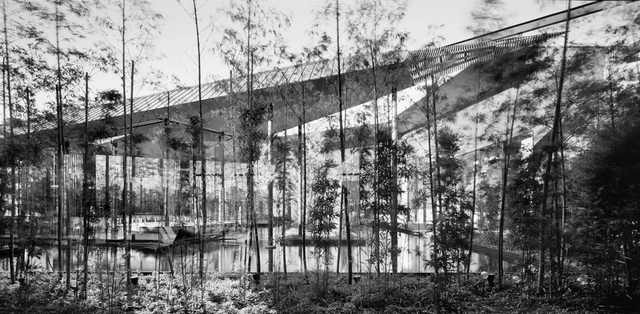











_Paolo_Rosselli_DSC_8101.jpg?1489090441 "Professor Short argues that skyscraper design must depart from its current reliance on glass and steel, and begin to harness natural ventilation. Boeri Studio's Bosco Verticale. Image Courtesy of Paolo Rosselli")