This article is part of our new Opinion section, a format for argument-driven essays on critical questions shaping our field.
Traditionally, a museum visit is a calendared occasion with a clearly scripted sequence. Arrival is ceremonially marked—by grand stairs or thresholds, by ticketing and information desks, by an audio guide and a concise institutional preface about mission and history. That deliberate "special occasion" quality extends from how museums were long conceived: deliberately exceptional, tightly curated, and organized around a specific narrative arc. In this model, the museum assumes an authoritative voice—its knowledge deep, vetted, and to be respected rather than contested—while architecture and choreography reinforce a rather singular way of entering, learning, and remembering.
Following the news of Frank Gehry's passing at age 96, renewed attention has been directed toward a career that significantly shaped architectural discourse from the late 20th century onward. Over more than seven decades, Gehry developed a design language defined by material experimentation, iterative model-making, and an interest in fluid, expressive forms. His work ranges from early residential interventions in Southern California to major cultural institutions that have contributed to the identity of cities around the world. Together, these projects outline a trajectory that intersected with shifts in fabrication technologies, museum typologies, and urban redevelopment strategies.
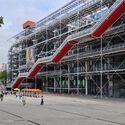
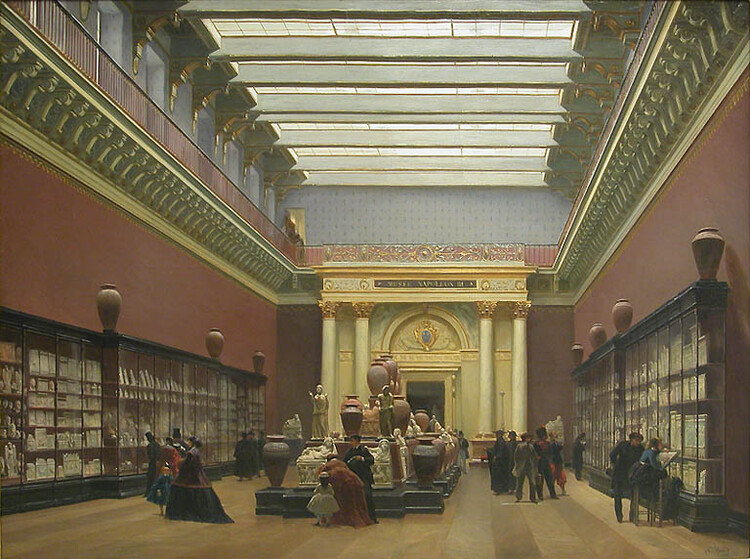
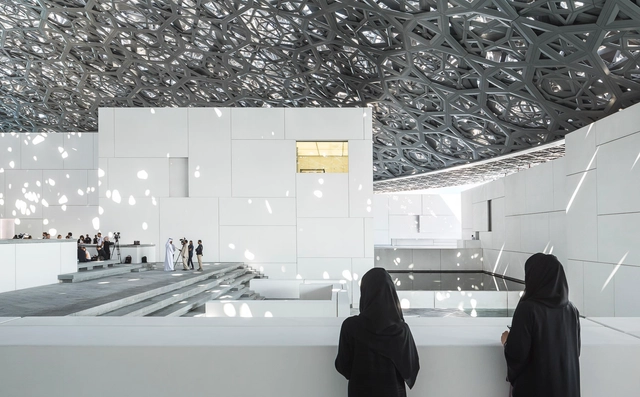
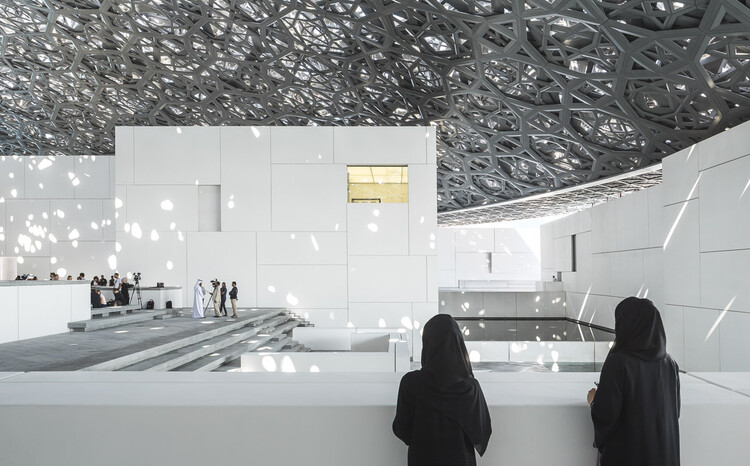
It is undeniable that, at first glance, the idea of a Louvre in Abu Dhabi or a Centre Pompidou in Brazil may seem somewhat disconcerting. The image of these museums, internationally renowned, appears in many ways inseparable from their original cultural contexts. And to some extent, it truly is. The Louvre, deeply rooted in the history of France as a former fortress and later royal residence, embodies a set of invaluable heritage values, further amplified by I. M. Pei’s iconic glass pyramid intervention in 1989. The Pompidou, meanwhile, is remembered as a historic turning point: by redefining the concept of public infrastructure through radically unconventional architecture, it marked the first time culture drew in mass audiences.
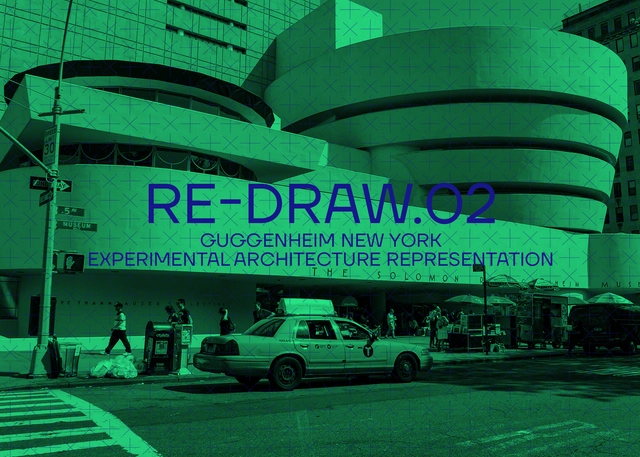
The aim of the RE-DRAW competition is to develop one drawing to ‘represent’ an iconic architecture. The participants are asked to draft one image, with absolute freedom of scale, technique and level of abstraction.
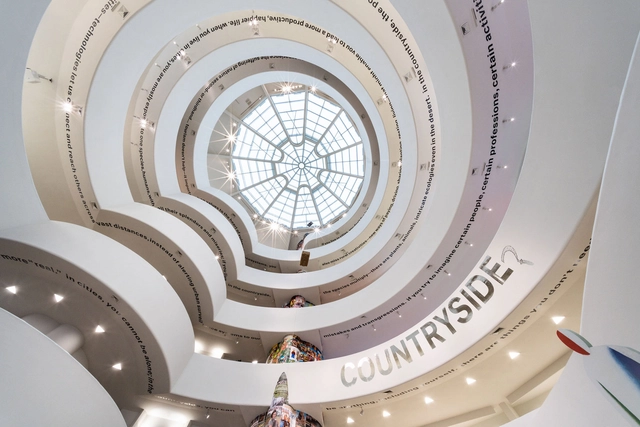
Entering the Guggenheim Museum, visitors find themselves surrounded by a feast of vivid colors and mismatched fonts. Passing the gigantic green tractor at the entrance, they move across the ground floor, littered with stickers, like a lunchbox, or a lid of a laptop. A thick pillar that pierces the internal atrium has become a garish advertising column. A bale of hay, a drone, and some other object (impossible to identify) levitate high overhead. A cardboard cutout of Joseph Stalin on robot wheels moves down the ramp, scaring off visitors. Big reflective letters say: “Countryside, The Future”.
Architect Rem Koolhaas, the founder of the Office of Metropolitan Architecture (OMA) and Samir Bantal, director of OMA’s internal think-tank AMO, created this utterly confusing environment to exhibit years of research on the space beyond the boundaries of the 21st-century city.
Videos
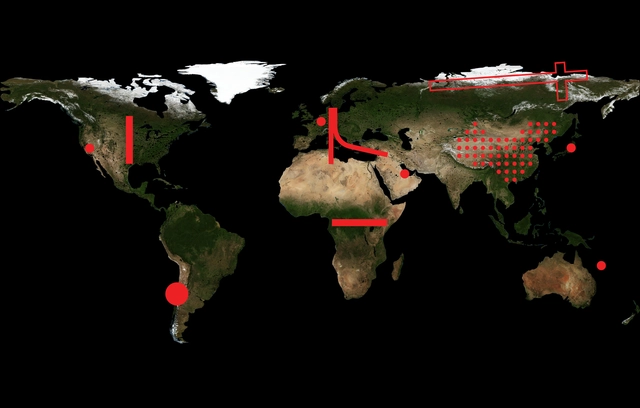
AMO’s selection of unique and highly specific conditions distributed over the globe serves as a framework for their research and represents where the world is headed.. Image Courtesy of OMA
Opening in February 2020, the Solomon R. Guggenheim Museum is showcasing an exhibition by Rem Koolhaas and AMO, the think tank of the Office for Metropolitan Architecture (OMA). Entitled Countryside, The Future the exhibition seeks to investigate urgent environmental, political, and socioeconomic transformations in the nonurban areas.
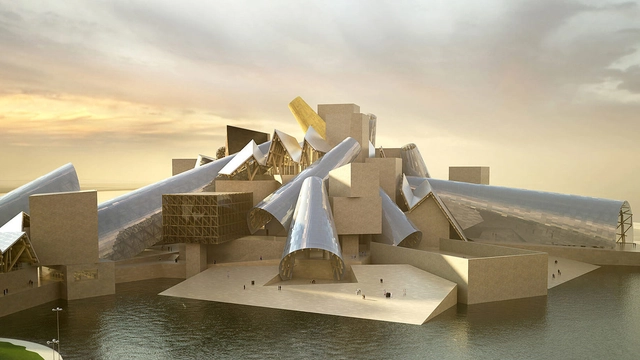
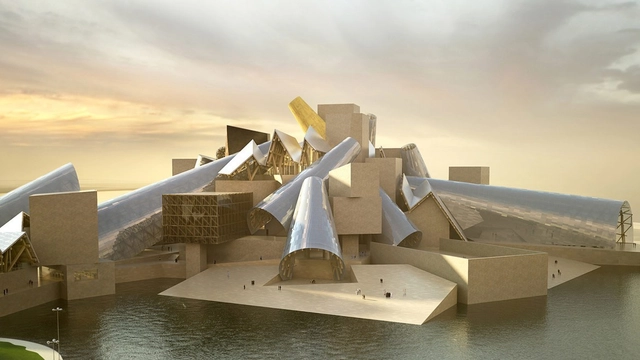
Frank Gehry's Guggenheim Abu Dhabi is finally set to begin construction on Saadiyat Island in the Persian Gulf. First announced in 2007, the Guggenheim project is over a decade in the making for the United Arab Emirates. Situated next to the Louvre Abu Dhabi, the sculptural project will showcase art from around the world within a mountain of plaster blocks and self-cooling translucent cones.
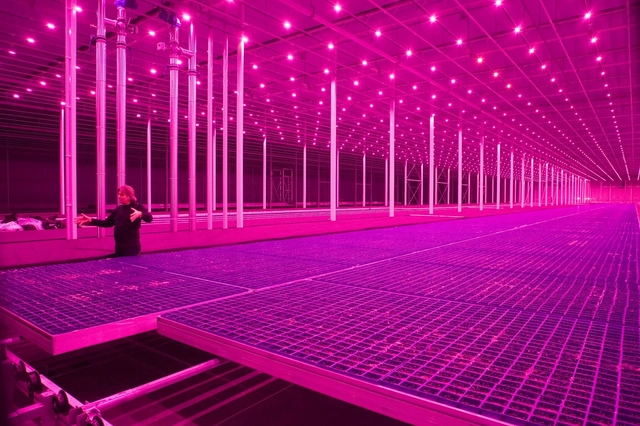
Countryside: Future of the World, a collaboration between Guggenheim and AMO / Rem Koolhaas examines radical changes transforming the non-urban landscape opens Fall 2019. Photo: Pieternel van Velden (Koppert Cress, The Netherlands 2011). Image Courtesy of Guggenheim
The Solomon R. Guggenheim Museum has announced a new research project exploring the “radical changes in the countryside, the vast nonurban areas of Earth” that will culminate in an exhibition at the museum’s Frank Lloyd Wright-designed New York home in Fall 2019.
Collaborating with Rem Koolhaas and his firm AMO, the think tank wing of OMA, the project will continue research already conducted by the Dutch architect and students from the Harvard Graduate School of Design.
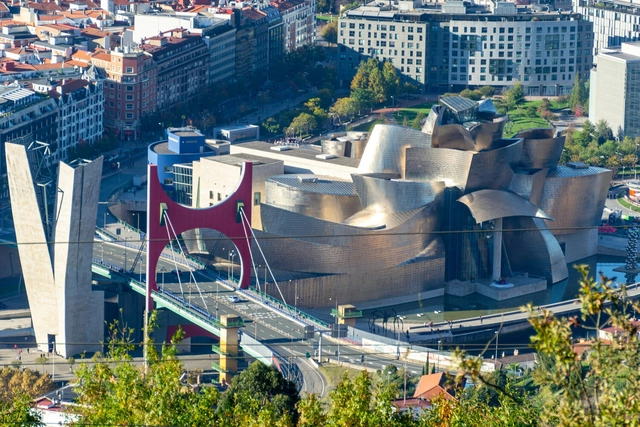
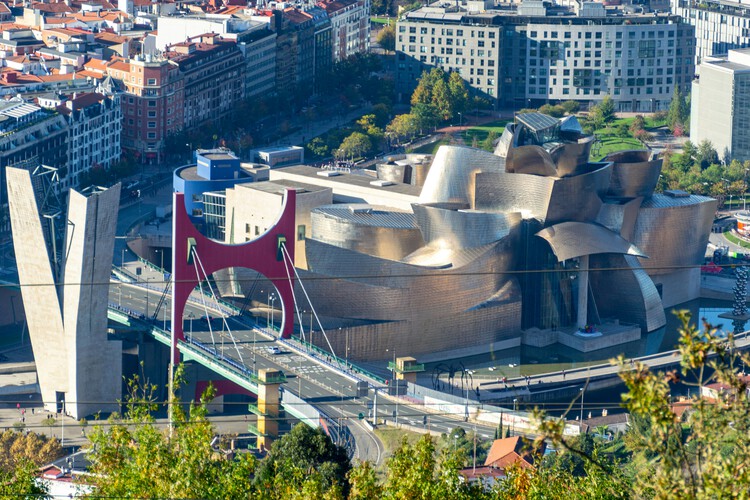
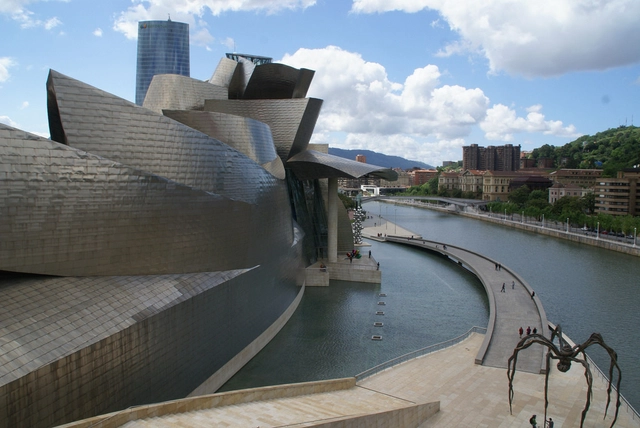
In celebration of the 20th Anniversary of the Frank Gehry-designed Guggenheim Museum Bilbao, creative production studio 59 Productions has put on a 4-day projection mapping light show, transforming the museum’s iconic shimmering surfaces into a canvas for a dazzling light display.
From October 11-14th, the 20-minute-long multisensory production Reflections combined music, light and projection, creating a show on the building’s north-facing titanium facades that told the story of the museum’s genesis and design.
On October 15th four languages, three countries, and three astounding architectural projects will be brought together through a series of events and workshops to celebrate the 20th anniversary of the Guggenheim Museum Bilbao. The Solomon R. Guggenheim Foundation seeks to commemorate the event with a full day program of activities entitled Drawing the Guggenheim. Visitors can explore and sketch the museums during a variety of public drawing exercises, architectural tours, films and family events at each of the Guggenheim locations.
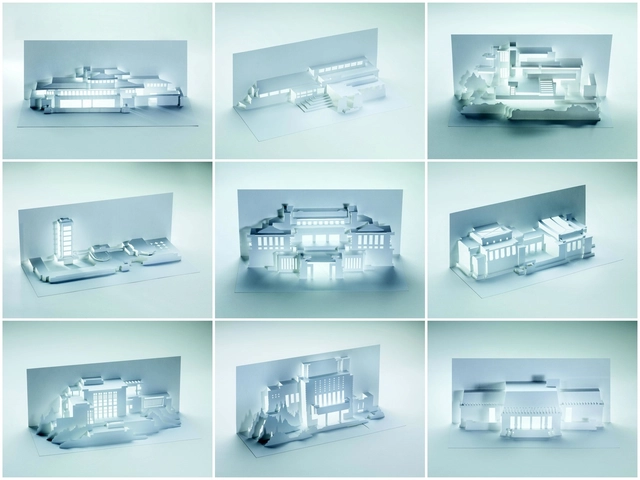
Created by paper engineer and artist Marc Hagan-Guirey, the book contains templates for creating 14 Wright-designed structures using the Japanese art of kirigami. The book leads you through the assembly of each model, which providing photographs, drawings and information for each building, including favorites like Fallingwater and the Solomon R. Guggenheim Museum in New York.
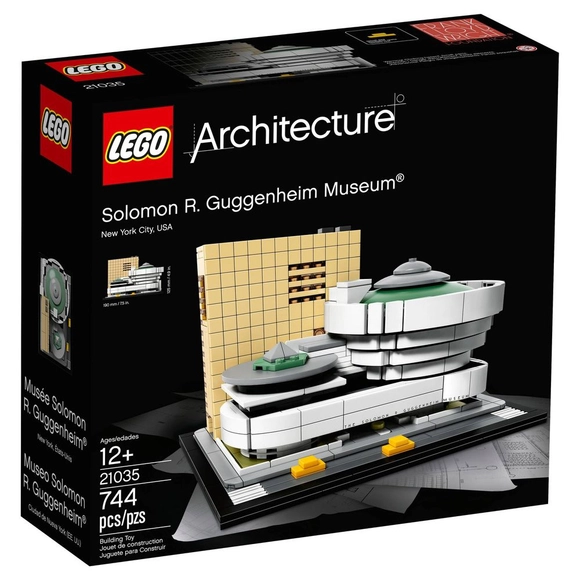
The 744-piece set features a new rendition of the building made from the classic plastic blocks, following a 208-piece interpretation released in 2009. The new set provides a much more realistic portrayal of the Wright's original building as well as the 10-story limestone tower added by Gwathmey Siegel & Associates Architects in 1992 (based on Wright's original sketches).
What is the place of the museum in the modern city? What role does architecture play? How can these buildings be effectively interpreted?
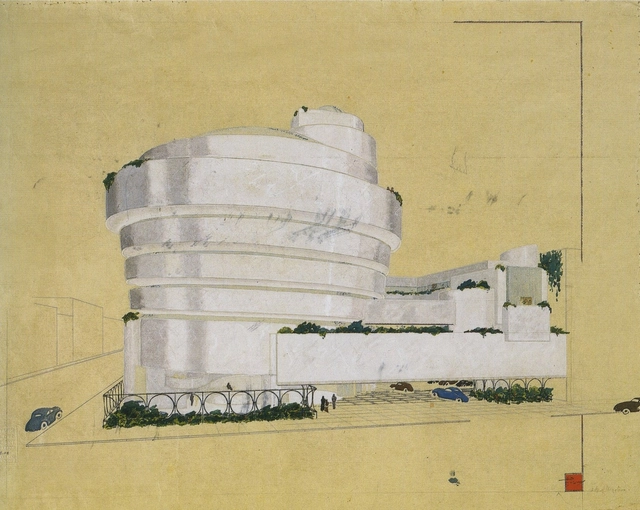
Frank Lloyd Wright’s design for the Guggenheim Museum in Manhattan broke with all existing conventions, setting a new standard for the postwar art museum and, together with the Museum of Modern Art, firmly establishing the city of New York as the cultural capital of the 20th century. A decade later, the significance of this new architectural genre was not lost on Georges Pompidou when he commissioned the cultural center that would eventually carry his name—and launch the successful careers of its architects, Renzo Piano and Richard Rogers—hoping that it would position Paris as New York’s cultural rival.
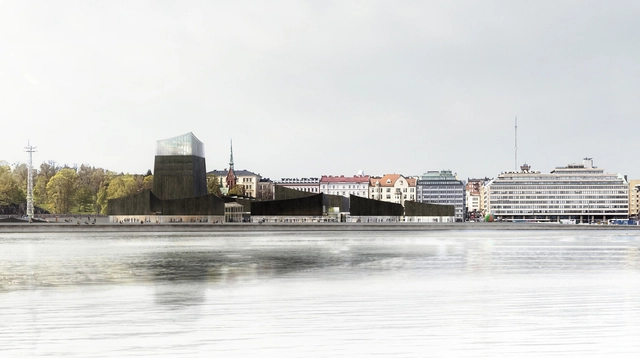
The Solomon R. Guggenheim Foundation is abandoning plans for a museum in the Finnish capital after a proposal for funding was rejected by the Helsinki City Council, 53-32.
“We are disappointed that the Helsinki City Council has decided not to allocate funds for the proposed Guggenheim Helsinki museum, in effect bringing this project to a close,” Richard Armstrong, the director of the Solomon R. Guggenheim Foundation, told the Helsinki Times.
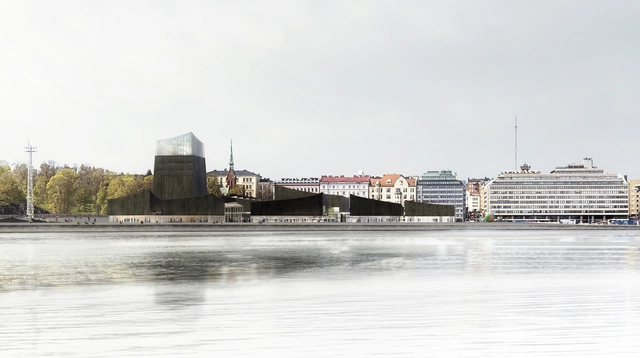
Two months after the Finnish government vetoed funding for the Guggenheim Helsinki project, following an international competition won by Paris-based practice Moreau Kusunoki, it has been reported that supporters of the scheme have presented an updated proposal for the construction of the museum. According to The New York Times, "of its expected $144 million building costs, the City of Helsinki’s investment would cover a maximum of $89 million."
https://www.archdaily.com/799074/following-funding-defeat-supporters-of-the-guggenheim-helsinki-submit-a-revised-planAD Editorial Team
This article originally appeared on guggenheim.org/blogs under the title "Nine Guggenheim Exhibitions Designed by Architects," and is used with permission.
Exhibition design is never straightforward, but that is especially true within the highly unconventional architecture of Frank Lloyd Wright’s Guggenheim Museum. Hanging a painting in a traditional “box” gallery can be literally straightforward, whereas every exhibition at the Guggenheim is the reinvention of one of the world’s most distinctive and iconic buildings. The building mandates site-specific exhibition design—partition walls, pedestals, vitrines, and benches are custom-fabricated for every show. At the same time, these qualities of the building present an opportunity for truly memorable, unique installations. Design happens simultaneously on a micro and macro scale—creating display solutions for individual works of art while producing an overall context and flow that engages the curatorial vision for the exhibition. This is why the museum’s stellar in-house exhibition designers all have an architecture background. They have developed intimate relationships with every angle and curve of the quarter-mile ramp and sloping walls.
For a few months spanning from 2014 to last year, the Guggenheim Helsinki museum competition was the hottest topic in architectural media. Even as Moreau Kusunoki's more contextually-driven design was selected as the competition winner, debate raged on over whether the search by yet another city for an iconic building to call their own was ultimately good or bad for architecture as a whole. But now, funding for the project has been rejected by the Finnish government, putting the museum in danger of not being built at all.

















.jpg?1478677977&format=webp&width=640&height=580)