1. ArchDaily
  2. Fallingwater

Fallingwater: The Latest Architecture and News

Frank Lloyd Wright’s Fallingwater Restoration and Salone del Mobile.Milano 2026: This Week’s Review

This week marked World Health Day, observed annually on April 7 by the World Health Organization. This year's edition issued the call to "Stand with science," inviting renewed engagement with scientific knowledge as a foundation for collective action across disciplines. In architecture and urban design, this imperative resonates through projects that translate research into spatial strategies: from the deployment of digital twins to inform urban planning and decision-making, to rewilding initiatives that integrate biodiversity as a tool to mitigate climate change, and materially informed practices that engage resource-conscious construction. Within this broader framework, recent works also foreground architecture's social agency at multiple scales, including a landscape-driven cancer support center in Kent that aligns wellbeing with environmental sensitivity, an urban installation in Brescia operating as a civic awareness device around life in prison and pathways to reintegration, and the transformation of a street in Mantua into a pedestrian-oriented, biodiversity-rich public space.
Frank Lloyd Wright’s Fallingwater Restoration and Salone del Mobile.Milano 2026: This Week’s Review - Image 1 of 4Frank Lloyd Wright’s Fallingwater Restoration and Salone del Mobile.Milano 2026: This Week’s Review - Image 2 of 4Frank Lloyd Wright’s Fallingwater Restoration and Salone del Mobile.Milano 2026: This Week’s Review - Image 3 of 4Frank Lloyd Wright’s Fallingwater Restoration and Salone del Mobile.Milano 2026: This Week’s Review - Image 4 of 4Frank Lloyd Wright’s Fallingwater Restoration and Salone del Mobile.Milano 2026: This Week’s Review - More Images+ 30

Frank Lloyd Wright’s Fallingwater Reopens After Restoration, Celebrating Its 90th Anniversary

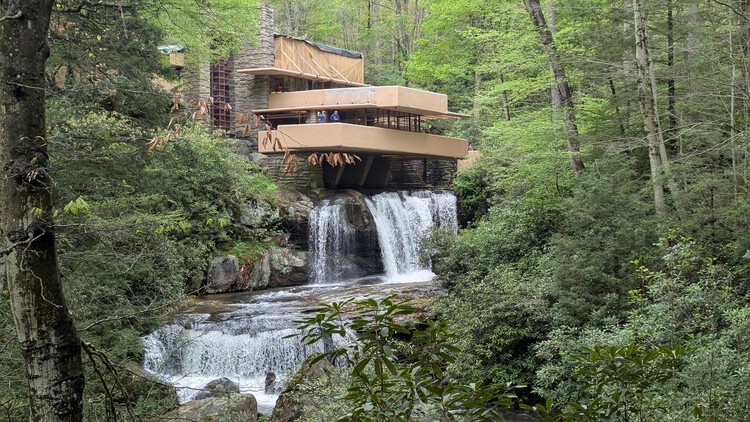
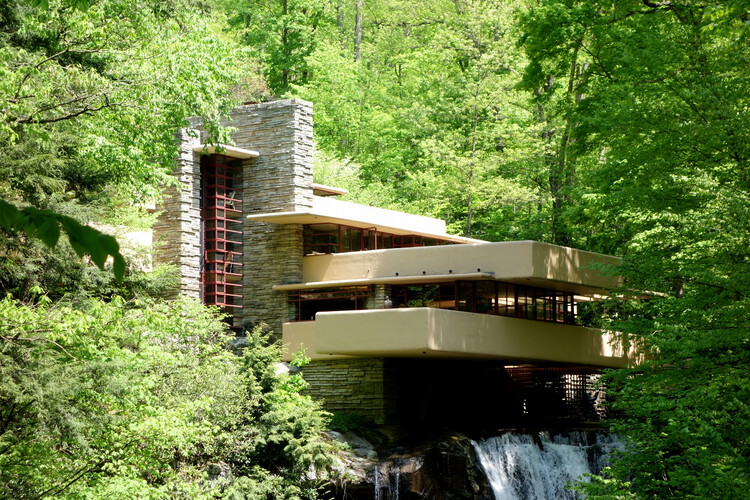
Fallingwater, the iconic residence designed by Frank Lloyd Wright, has reopened to the public following the completion of a three-year preservation project. The reopening coincides with the building's 90th anniversary and the start of its 63rd tour season, marking a key moment in the ongoing conservation of one of the most widely recognized works of modern architecture. The intervention, led by the Western Pennsylvania Conservancy, focused on addressing structural and environmental challenges while maintaining the integrity of Wright's original design.

Frank Lloyd Wright’s Fallingwater Reopens After Restoration, Celebrating Its 90th Anniversary - Image 1 of 4Frank Lloyd Wright’s Fallingwater Reopens After Restoration, Celebrating Its 90th Anniversary - Image 2 of 4Frank Lloyd Wright’s Fallingwater Reopens After Restoration, Celebrating Its 90th Anniversary - Image 3 of 4Frank Lloyd Wright’s Fallingwater Reopens After Restoration, Celebrating Its 90th Anniversary - Image 4 of 4Frank Lloyd Wright’s Fallingwater Reopens After Restoration, Celebrating Its 90th Anniversary - More Images

Modernism Reconsidered: Revisiting the Movement’s Complex Relationship with Sustainability

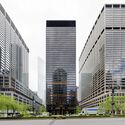
Modernism emerged in the early 20th century as a revolutionary movement that rejected historical styles, prioritizing functionality, innovation, and rationality. Grounded in the promise of industrial progress, architects like Walter Gropius, Le Corbusier, and Ludwig Mies van der Rohe championed using new materials and construction methods, striving for a universal architectural language. Their work introduced radical ideas: open floor plans, expansive glazing for natural light, and pilotis that elevated structures, symbolizing a new architectural era. However, alongside its groundbreaking ideas, modernism's relationship with sustainability has sparked ongoing debates.

While modernist architects sought to address social and economic challenges through affordable housing and efficient design, their reliance on energy-intensive materials like concrete and steel created unintended environmental consequences. The large-scale industrialization celebrated by modernists often disregarded local climates and ecological systems, leading to inefficiencies. Yet, the principles of functionality and adaptability embedded in modernist architecture laid the groundwork for what we now recognize as sustainable practices. From Le Corbusier's rooftop gardens to Frank Lloyd Wright's integration of nature, the seeds of environmentally conscious design were undeniably present, albeit limited in their execution.

Modernism Reconsidered: Revisiting the Movement’s Complex Relationship with Sustainability - Image 1 of 4Modernism Reconsidered: Revisiting the Movement’s Complex Relationship with Sustainability - Image 2 of 4Modernism Reconsidered: Revisiting the Movement’s Complex Relationship with Sustainability - Image 3 of 4Modernism Reconsidered: Revisiting the Movement’s Complex Relationship with Sustainability - Image 4 of 4Modernism Reconsidered: Revisiting the Movement’s Complex Relationship with Sustainability - More Images+ 25

Cutaway America: Discover 8 United States Landmarks in Cross-Section

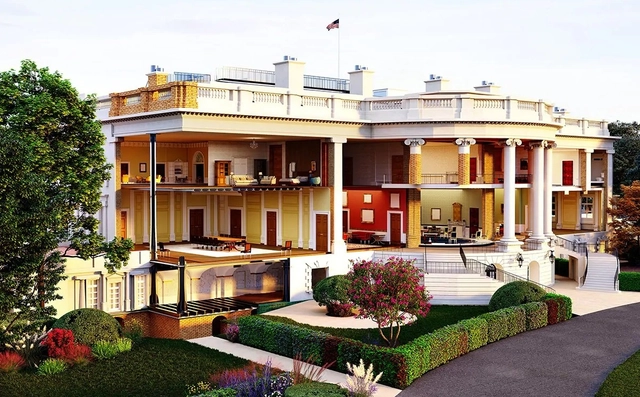
American home services website Angie's List has released a series of commissioned images showcasing eight United States landmarks in cross-section. Dubbed Cutaway America, the project takes a new perspective on projects that people are used to seeing from the outside. From idealistic designs that attempt to become one with nature to complex infrastructure, these cutaways hint at a longer story of America and its history.

10 Hard-To-Reach Masterpieces And How To Get There

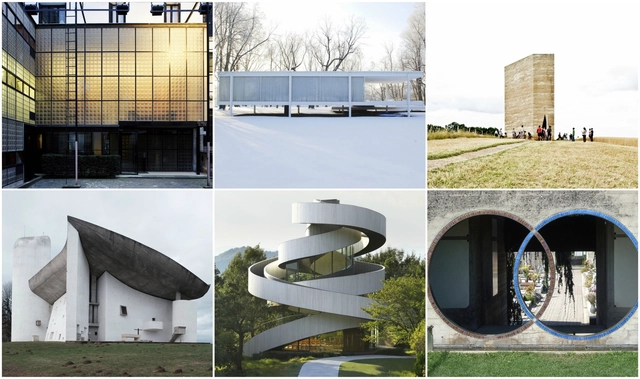
Visiting architectural masterpieces by the greats can often feel like a pilgrimage of sorts, especially when they are far away and hard to find. Not everyone takes the time to visit these buildings when traveling, which makes getting there all the more special. With weird opening hours, hard-to-reach locations and elusive tours we thought we’d show a selection from our archives of masterpieces (modernist to contemporary) and what it takes to make it through their doors. Don’t forget your camera! 

Frank Lloyd Wright's Fallingwater Damaged from Flooding

Frank Lloyd Wright's Fallingwater Damaged from Flooding - Featured Image
© Flickr user pablosanchez licensed under CC BY 2.0

Frank Lloyd Wright’s most famous house, Fallingwater, was the recipient of minor damage after heavy rainfall caused the creek that gives the house its name, Bear Run, to flood last weekend.

According to Fallingwater director Lynda Waggoner, a fallen log picked up by the overflow rammed into the stone wall of the lower plunge pool, breaking off the wall’s capstone and dislodging one of the home’s signature sculpture pieces, the Jacques Lipchitz’s “Mother and Child.” The cast bronze sculpture was selected for Fallingwater by Wright, and installed soon after its completion in 1939.

This Book Lets You Fold Your Own Paper Models of Iconic Frank Lloyd Wright Buildings

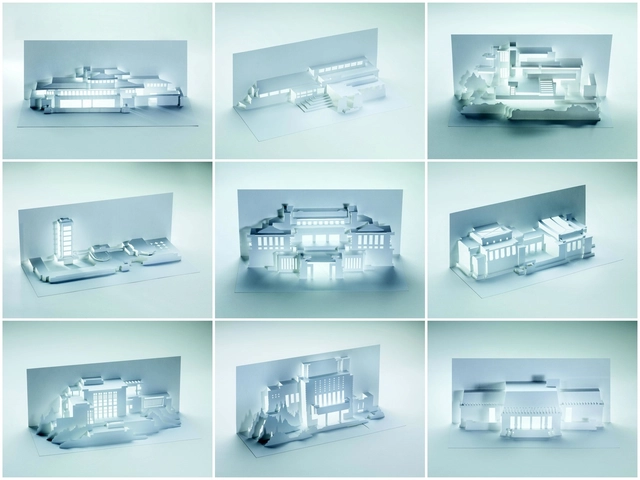
With celebrations of Frank Lloyd Wright’s 150th Birthday in full swing in architectural institutions throughout the country, a new book is giving Wright fanatics the chance to recreate some of the architect’s most notable works through a series of cut-and-fold paper models.

Created by paper engineer and artist Marc Hagan-Guirey, the book contains templates for creating 14 Wright-designed structures using the Japanese art of kirigami. The book leads you through the assembly of each model, which providing photographs, drawings and information for each building, including favorites like Fallingwater and the Solomon R. Guggenheim Museum in New York.

In Seasonal Harmony - The Changing Nature of Frank Lloyd Wright's Fallingwater

Subscriber Access | 

This month marks the 150th anniversary of the birth of acclaimed American architect, visionary, and social critic Frank Lloyd Wright -considered by many to be one of the greatest architects of his time.

As a pioneer of the term 'organic architecture', one of his most iconic representative works is Fallingwater, set upon a waterfall in rural Pennsylvania. From its unveiling, the scheme has evoked enduring reflection on the relationship between man, architecture, and most prominently in Frank Lloyd Wright's mind - nature.