As Athens hosts The Architect Show (TAS) 2024, the event brings together global and local voices to highlight the latest innovations in architecture and design. Against this backdrop, the city's evolving urban narrative is exemplified by The Ellinikon, Europe's largest urban regeneration project. Encompassing 6.2 million square meters, this €8 billion development has already attracted globally renowned architects such as Bjarke Ingels Group (BIG), Kengo Kuma, Foster + Partners, and Aedas. Together, they are shaping the smart city that integrates sustainability, connectivity, and community-focused design into the heart of Athens.
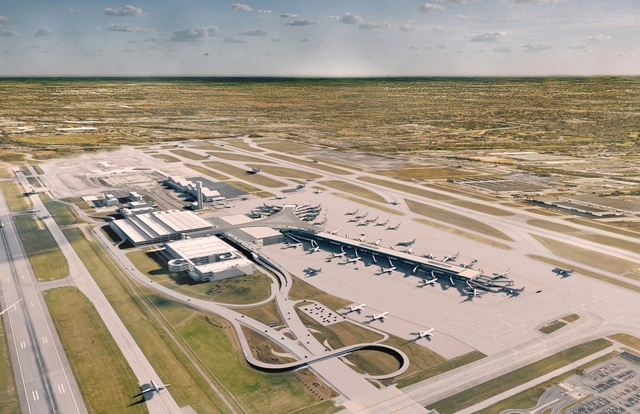
As the fastest-growing metropolitan city in the Midwest region, Columbus is situated amidst Central Ohio’s exciting blend of infrastructure and natural landscape. Columbus and its surroundings are currently undergoing a significant phase of cultural expansion and anticipate a population surpassing 3 million by 2050. In collaboration with Columbus-based Moody Nolan, Gensler has just revealed their design for the new terminal at John Glenn Columbus International Airport in Ohio, a facility to grow the city and support it in reaching these goals of expansion.
Courtesy of Practise for Architecture and Urbanism
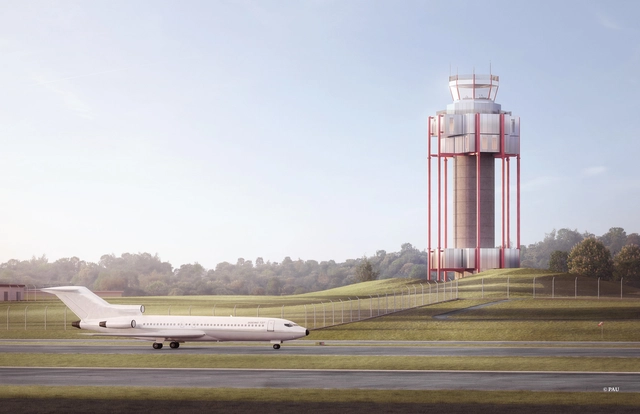
The Federal Aviation Administration has chosen the New York-based Practice for Architecture and Urbanism (PAU) studio to design the country's newest air traffic control towers. I.M. Pei's iconic mid-century towers will be replaced by PAU's adaptable and highly sustainable prototype, which offers a unique architectural solution that combines form and function for the twenty-first century. The new towers are vital to U.S. Transportation Secretary Pete Buttigieg's goal to reach net-zero greenhouse gas emissions from the U.S. aviation sector by 2050. They have been updated to reflect aviation technology, safety development, and changing environmental and climatic conditions.
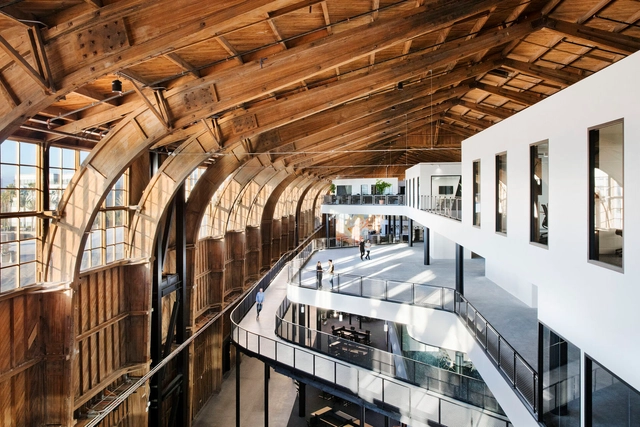
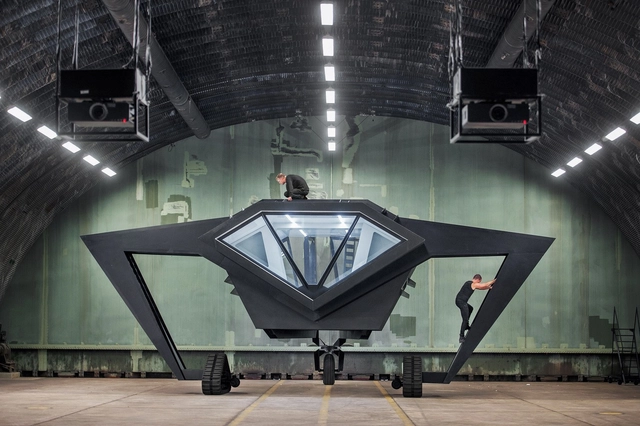
Hangar architecture is a relatively new building type. Ever since the Wright brothers stored and repaired their aircraft in a wooden hangar constructed in 1902, designers and builders have continued to rethink what these structures can be. Beyond actual airports and terminals, hangars are unique in that they're purpose-built to hold an aircraft or spacecraft. Today, how can this building type be challenged and reimagined?
When the first commercial planes took flight, so did architecture. Like many other moments of technological advancement, the fascination with soaring through the skies heavily influenced the design movements of the last fifty years- not only in terms of how we design airports and think about the airline passenger experience, but the aesthetics of aviation and how the fabrics, textures, and high-end details would influence our lives on the ground.
Aviation architecture has radically transformed. While airports themselves have grown to accommodate countless programs and increasingly higher traffic volumes each year, modern building projects are going beyond this familiar typology to explore the nature of hangars, airfield taxonomy and reuse. While airports have really only emerged within the last century, aviation has captured the imagination of designers for centuries. Today, contemporary aviation designs are being conceptualized as explorative and creative works.
The COVID-19 pandemic has transformed how we travel and come together. As streets and buildings became empty and people practice social distancing, so too have airports experienced a tremendous decline in passengers and flights. As the aviation industry shaped globalization, it has also contributed to how quickly the disease spread. In a new aerial series, photographer Tom Hegen explores the pandemic's impact on aviation from above.
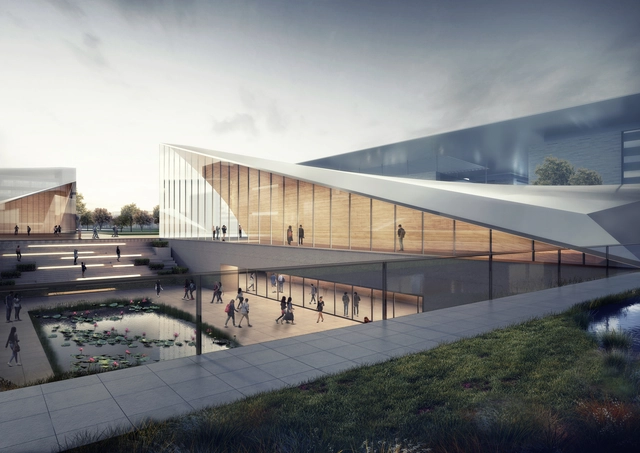
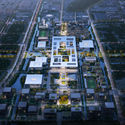
HENN has designed the first Sino-French aeronautics campus plan for Hangzhou, China. Supported by the French Government, the public project aims to welcome 10,000 students and researchers. Balancing contemporary design with traditional Chinese cultural heritage, the project was designed to integrate the masterplan with the natural topography of the site.
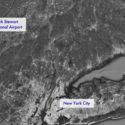
A new video by AERIAL FUTURES explores how New York's Stewart International Airport could become a catalyst for urban regeneration. Situated 60 miles north of Manhattan, the city is aiming to create a transformation. The video proposes ways in which the airport could positively impact Newburgh’s economy, agriculture, mobility, and civic life, and expand on its function as a travel hub.
The AERIAL FUTURES: Living Laboratories Symposium examines the confluence of urban elements within the airport landscape—transportation, commerce, public space and technological interfaces—and how Asian airports introduce alternatives for life in transit.
A public event at Harvard GSD examines the lower sky as a site of mobility
Increasing congestion and advances in autonomous technology are set to transform how we move around our cities. Many are now looking to the sky — the third dimension — as an expansive space for new kinds of mobility. Autonomous flying vehicles, such as cargo drones and flying taxis, have the capacity to disrupt how we move goods and passengers around urban space. Responding to these real-world changes, AERIAL FUTURES: The Third Dimension examines Urban Air Mobility (UAM), asking how scalable and on-demand UAM models could reduce road traffic, pollution, accidents and the strain on existing public transport networks. Within these opportunities are also challenges to overcome: noise, community acceptance, safety, cyber security and seamless integration with existing aircraft operations.
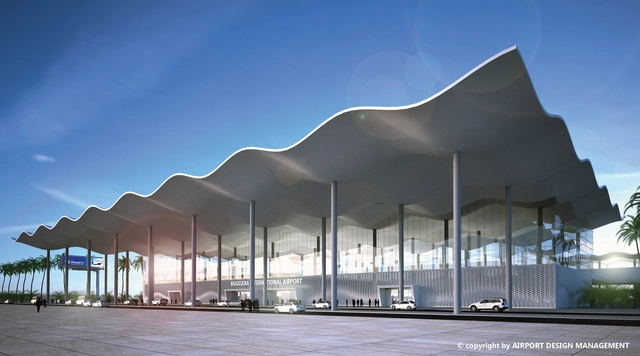
Rwanda’s largest publicly funded project, Bugesera International Airport is on track to be the first certified green building in the region. A few pieces of this net zero emission complex include: a 30,000 square metre passenger terminal, 22 check-in counters, ten gates, and six passenger boarding bridges. Funded by Public Private Partnership, the project is cost estimated at $414 million USD. The international hub was only one of several initiatives discussed by the AfricaGreen Growth Forum (AGGF) in Kigali at the end of last year.




















_Google_Earth.jpg?1569612128 "Courtesy of AERIAL FUTURES")