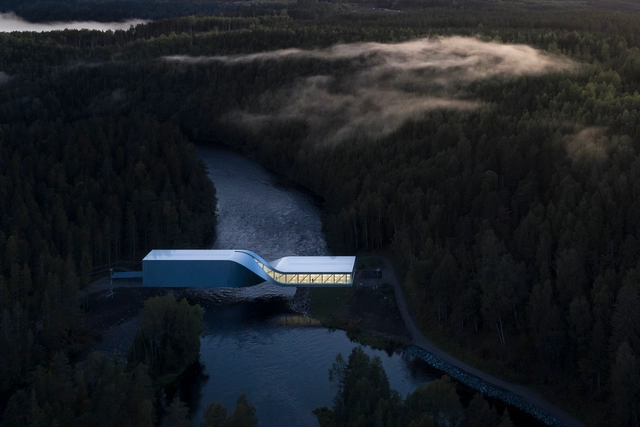
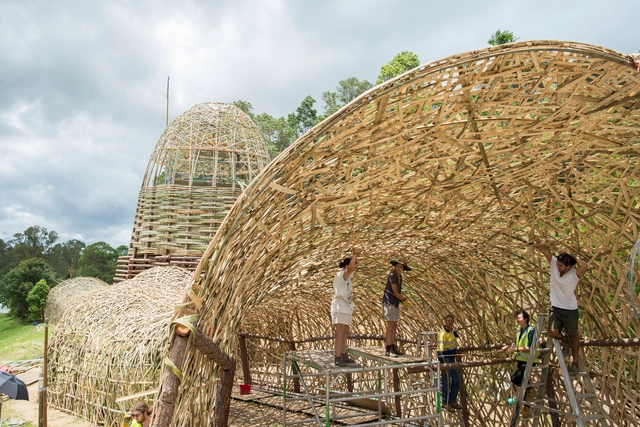
Cantercel, France, 2022. Image Courtesy of forty five degrees
When talking about space-making practices, architects and urban planners are usually thinking about participatory planning and collaborative processes, often overlooking the ways in which the communities themselves can become their own agents of change. As the people poses an intimate knowledge of not only their environment, but also of social and cultural norms, the needs of their communities and latent opportunities within their surroundings, they are often the ones initiating actions, supporting their peers and contributing positively to their locality. Research-focused office forty five degrees set out to explore these grass-roots initiatives, to meet the locals and gather their stories in an effort to gain a better understanding of the complex and diverse cultural territories across Europe. Their journey, organized under the “Radical Rituals” project, follows the 45°N parallel line that transverses Europe from East to West. The office has been selected as part of ArchDaily's 2023 New Practices, an annual survey aimed at showcasing those who adress the ever-growing challanges of our times and take architecture to new directions.
What we build can be metaphoric—often intentionally, sometimes subliminally. But architecture is seldom the intentional commentary of architects, crafting symbolism; more often it is a direct reflection of its time and the culture that made it.
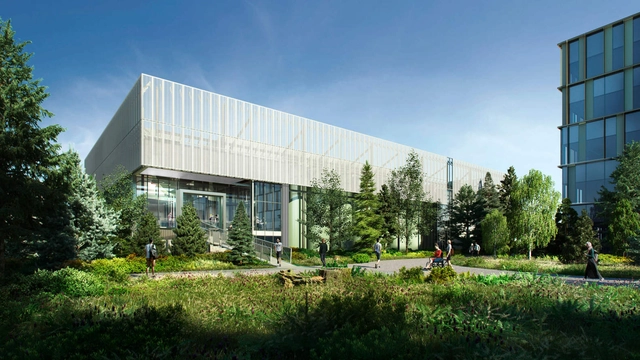
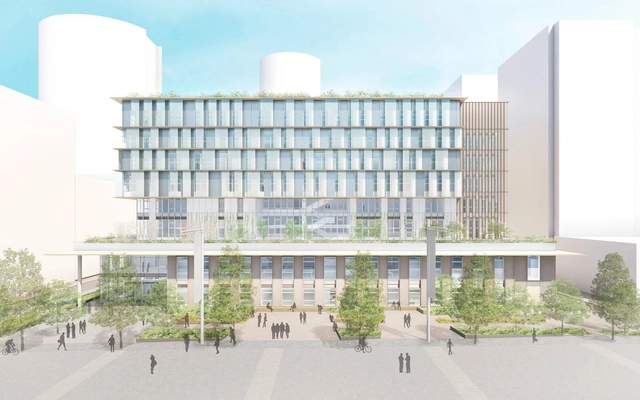
WilkinsonEyre has been selected to design a new college campus on the Olympic Way in Wembley, London, to serve as the new educational facility for the College of North West London. The project is designed to cater to over 300 students per week in addition to the 250 staff members. The new facility will offer classes in engineering, the built environment, and green skills, as well as digital technology, computing, health, and social care. The new campus scheme has recently been granted planning permission at the Council’s Planning Committee meeting and has now been passed to the Greater London Authority for final approval.
Roland Halbecame into photographyentirely by accident, discovering it at the age of 15 in a class on optics. His physics teacher presented camera obscura effects, which immediately triggered his fascination. He then started borrowing his father’s old camera quite regularly. While still in high school, Roland worked part-time at a camera shop, eagerly discovering everything there is to know about photography. Those were the circumstances that kindled Halbe’s lifelong romance, first with black and white, and, eventually, color photography with a focus on the built environment.
In this third feature, we met with co-chairs of Design for Resilient CommunitiesAnna Rubbo, Senior Researcher, Center for Sustainable Urban Development (CSUD), The Climate School, Columbia University, and Juan Du, Professor and Dean of the John H. Daniels Faculty of Architecture, Landscape and Design, University of Toronto.
Architecture is a continually evolving form of human expression influenced by cultural and contextual factors. While many of the problems we face today aren't directly linked to architecture, it has the ability to provide or facilitate solutions to these challenges. This has been evident throughout history, as societal issues have played a significant role in shaping our built environments. For instance, during the Victorian era, the infamous "Great Stink" led to the modernization of London's drainage system and urban layout. Similarly, the 2008 recession gave rise to the sharing economy and coworking spaces. Nowadays, the climate crisis is transforming the way we conceive architecture, seeking to reduce the carbon footprint of buildings and cities to achieve the Paris Agreement objectives. Given this backdrop, what challenges should we expect in the future?
https://www.archdaily.com/1000810/energetic-retrofitting-a-solution-for-environmental-obsolescence-in-architectureEnrique Tovar
Was there ever a time when architects felt properly valued? Probably not. Certainly not since the profession became dependent on the business of America, which is business. With economic growth as the country’s prime directive through the 20th century, architects—as members of the construction industry—played their part. How? By designing buildings of all kinds that were lighter, cheaper, and quicker to erect. Architects’ values might have been social, artistic, even cosmic, but their value to society has been primarily economic.
Participatory design is a democratic process that aims to offer equal input for all stakeholders, with a particular focus on the users, not usually involved directly in the traditional method of spatial creation. The idea is based on the argument that engaging the user in the process of designing spaces can have a positive impact on the reception of those spaces. It eases the process of appropriation, helps create representative and valuable spaces, and thus creates resiliency within the urban and rural environment.
Architecture, with all its practitioners, academics, and theorists, have long been exploring utopic ideas with hopes of turning them into something concrete for the sake of a better world. But as the world heads towards an even greater polarization than it currently has, the architecture practice found itself having to adapt to the current systems of the planet, constrained by its ever-growing conditions. Slowly, practitioners realized that utopia can not truly be seen as the ideal solution, and needed to be readapted or morphed with other concepts for it to actually work. DETAIL's latest monograph BIG. Architecture and Construction Details / BIG. Architektur und Baudetails, a rapport between BIG’s imaginative, unbuilt utopias and functional, built architecture, explores 20 projects from the firm's workshop.
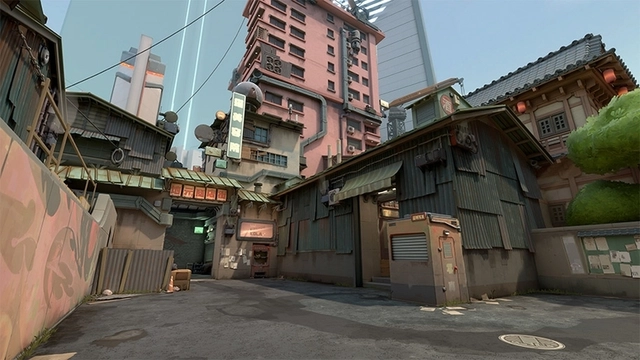
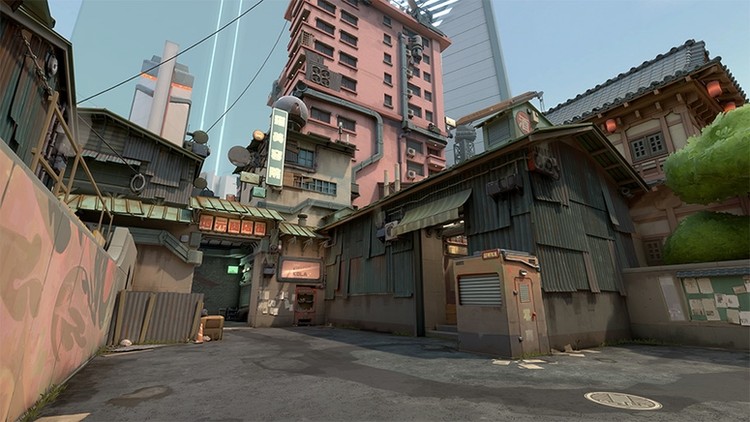
Map design and the significance of built environments continue to be inherently integral to gameplay within the realm of virtual worlds and video games, specifically in the genre of first-person shooters, and Riot Games’ VALORANT is no exception to this. Defying former expectations of its predecessors within the tactical shooter genre, Riot continually endeavors to make fundamental changes to decades of old formulas that have been implemented in practice all these years.
The Royal Institute of British Architects (RIBA) released a short educational film meant to teach young students aged 13 to 16 about the relationship between climate change and the built environment, exploring notions of sustainable design. The film introduces concepts such as embodied carbon, brownfield, green infrastructure, sustainable mobility and explains ideas such as adaptive reuse, retrofit, and the use of local materials. The scope of this learning resource is to empower young people to think creatively about how to address the climate crisis through design, helping raise a generation well versed in sustainability principles.
The Thermal Energy Center at Microsoft’s headquarters in Redmond, Washington, powers the campus almost entirely through electricity provided by geothermal energy exchanges. The project acts as a pilot program for the Embodied Carbon in Construction Calculator (EC3), a free database of construction EPDs and matching building impact calculator.. Image Courtesy of NBBJ
The growing consumer demand for transparency—especially around sustainability and environmental practices—has implications for industries from apparel to healthcare products. Mars Inc. recently released a cocoa sourcing map to tackle deforestation and increase accountability, and the Fashion Transparency Index pushes apparel companies to be more forthcoming about their social and environmental efforts.
Now it’s time for the building industry, characterized by a lack of information around the materials and practices used in construction and throughout a building’s lifecycle, to catch up. The cost of inaction is too high to ignore. That’s because buildings account for 39 percent of total global carbon emissions. Traditionally, most carbon reduction efforts in the building sector focus on operational carbon—a building’s everyday energy use, which accounts for roughly 28 percent of emissions. The remaining 11 percent comes from what is often ignored: embodied carbon.
https://www.archdaily.com/976015/strategies-to-reduce-embodied-carbon-in-the-built-environmentPeter Alspach, Margaret Montgomery
The 26th UN Climate Change Conference of the Parties (COP 26) debuted yesterday in Glasgow, bringing together more than 190 world leaders, with the aim of accelerating action to reach the goals of the Paris Agreement and UN's Convention on Climate Change. Leading architecture organizations and figures are attending the two-week summit to show the AEC's industry's commitment to reduce carbon emissions and urge decision-makers to implement clear targets to achieve global climate goals.
Only 18 months ago, everyone around the globe had their life upended by the COVID-19 pandemic. Almost immediately, architects and designers began to speculate on how they could design for a better world that would be flexible, functional, and healthy. While the pandemic is far from over, with many scientific advancements and public health policies still needed to truly allow us to live out our “new normal”, perhaps its time to reflect on our predictions and examine what aspects of the pandemic were short-term reactions, and which aspects of life might be permanently reflected in how we think about the built environment.
When we look at African architecture, we see the architectural diversity of a continent which has been shaped and moulded into its present form by a combination of internal and external factors. When we look at African architecture, there is also a tendency for certain regions to take precedence over other parts of the continent. The Tropical Modernist works of Maxwell Fry and Jane Drew in Ghana and Nigeria, for example, are extremely well documented. So is the extremely well-preserved colonial-era architecture of the Eritrean capital of Asmara. Yet, there seems to be parts of the continent that “slip under the radar” in African architectural conversations – and the book Architectural Guide: Sub Saharan Africa is a welcome addition to African architectural scholarship.
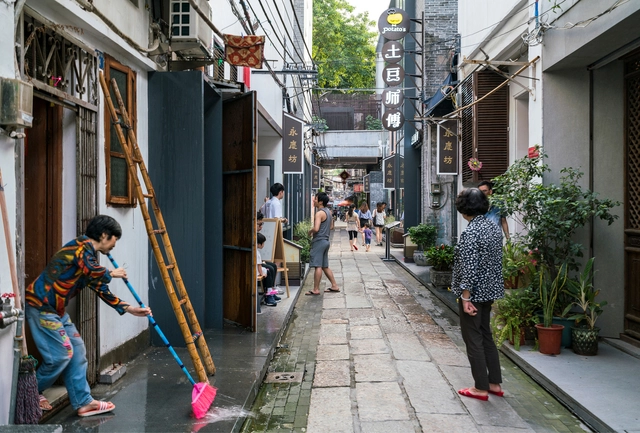
ASLA 2020 Urban Design Honor award. Yongqing Fang Alleyways: An Urban Transformation. Guangzhou, China. Lah D+H Landscape and Urban Design. Image Courtesy of The Dirt
People living in dense cities are among the least happy. Their rates of depression are 40 percent higher than other populations, and their rates of anxiety are 20 percent higher. Why? Because the built environment is directly linked with happiness and well-being, and too often urban environments fail to put people at ease.














.jpg?1654436110 "Sanjaynagar Slum Redevelopment Project - Technical team holding a meeting with members of the Slum Committee. Image Courtesy of Community Design Agency")