1. ArchDaily
  2. Carlo Scarpa

Carlo Scarpa: The Latest Architecture and News

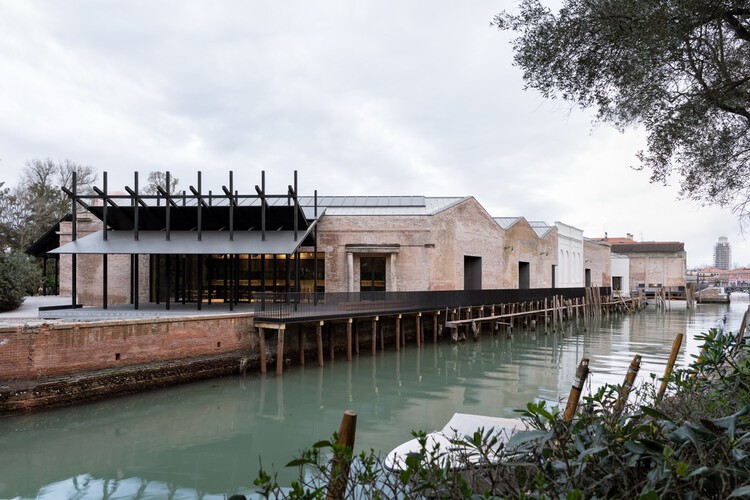
La Biennale di Venezia Unveils Renovated Central Pavilion at the Giardini

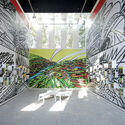
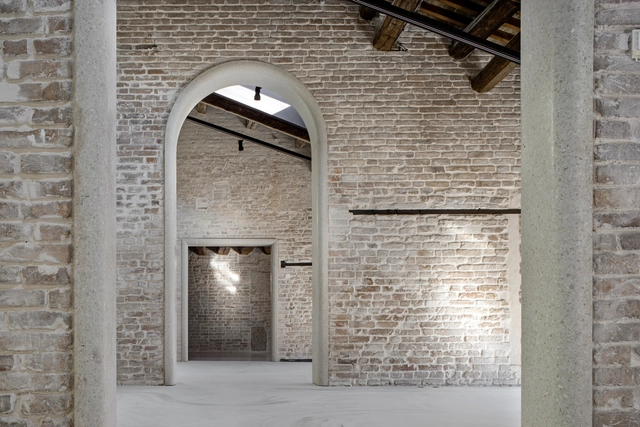
La Biennale di Venezia has unveiled the renovated Central Pavilion at the Giardini, completing a comprehensive intervention delivered between December 2024 and March 2026 as part of a broader national program to enhance cultural infrastructure. Funded by the Italian Ministry of Culture under the National Recovery and Resilience Plan (PNRR) and its complementary investment program (PNC), the project contributes to the development of a permanent hub for cultural production and exchange in Venice. The works form part of a wider initiative involving multiple sites associated with the Biennale, including the Giardini, the Arsenale, and other locations across the city, developed in coordination with local authorities and heritage institutions.
La Biennale di Venezia Unveils Renovated Central Pavilion at the Giardini - Image 1 of 4La Biennale di Venezia Unveils Renovated Central Pavilion at the Giardini - Image 2 of 4La Biennale di Venezia Unveils Renovated Central Pavilion at the Giardini - Image 3 of 4La Biennale di Venezia Unveils Renovated Central Pavilion at the Giardini - Image 4 of 4La Biennale di Venezia Unveils Renovated Central Pavilion at the Giardini - More Images+ 19

Revisiting 2025: 20 Classic Projects and Defining Stories in Architecture

Every architectural project is the result of deliberate choices. Beyond form and function, buildings embody technical, political, and cultural decisions that shape their relationship with both their surroundings and the people who inhabit them. ArchDaily’s AD Narratives series explores these processes by bringing together accounts that trace projects from initial conception to built realization. In parallel, the AD Classics series turns to works of historical significance, presenting not only the stories behind these buildings but also technical drawings that allow for a deeper, more informed reading of their architecture.

Revisiting 2025: 20 Classic Projects and Defining Stories in Architecture - Image 1 of 4Revisiting 2025: 20 Classic Projects and Defining Stories in Architecture - Image 2 of 4Revisiting 2025: 20 Classic Projects and Defining Stories in Architecture - Image 3 of 4Revisiting 2025: 20 Classic Projects and Defining Stories in Architecture - Image 4 of 4Revisiting 2025: 20 Classic Projects and Defining Stories in Architecture - More Images+ 18

The Venice Biennale Over Time: Classic Projects and Stories from Architecture’s Most Iconic Exhibition

Since 1895, the Venice Biennale has invited the world to witness the evolving landscape of contemporary art. In 1980, the event expanded its reach with the launch of the Architecture Biennale, which quickly became one of the discipline’s most influential global platforms. Today, alternating annually between contemporary art and architecture, the Biennale affirms itself as a space where disciplines and ideas intersect. Always timely and provocative, it fuels essential debates on the role of art and architecture in the contemporary world. Among its most recent editions are the 17th Architecture Biennale, themed How Will We Live Together? (2021), curated by Hashim Sarkis; The Laboratory of the Future (2023), by Lesley Lokko; and Intelligens. Natural. Artificial. Collective (2025), curated by Carlo Ratti and open to the public until the end of November.

The Venice Biennale Over Time: Classic Projects and Stories from Architecture’s Most Iconic Exhibition - Image 1 of 4The Venice Biennale Over Time: Classic Projects and Stories from Architecture’s Most Iconic Exhibition - Image 2 of 4The Venice Biennale Over Time: Classic Projects and Stories from Architecture’s Most Iconic Exhibition - Image 3 of 4The Venice Biennale Over Time: Classic Projects and Stories from Architecture’s Most Iconic Exhibition - Image 4 of 4The Venice Biennale Over Time: Classic Projects and Stories from Architecture’s Most Iconic Exhibition - More Images+ 10

The Silent Pavilion: Carlo Scarpa and the Giardino delle Sculture at the Venice Biennale

When we think of Venice, familiar images come to mind: Piazza San Marco, winding canals, and the reflection of Byzantine domes on still waters. Few, however, imagine that among those reflections lies a discreet chapter of Italian modernity — the architecture of Carlo Scarpa.

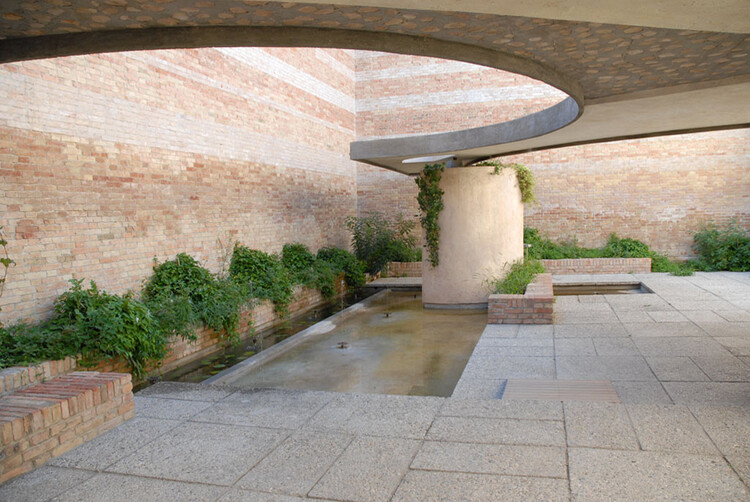
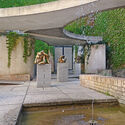
More than an architect, Scarpa was a craftsman of light and matter, a poet of detail who knew how to listen to the Venetian tradition and respond to it with gestures of surprising delicacy. The city where he was born and worked is now an open-air museum of his legacy, including projects such as the Fondazione Querini Stampalia, the Venezuelan Pavilion, the Olivetti Showroom, and, more quietly, the Giardino delle Sculture — a small courtyard hidden in the heart of the Giardini della Biennale.

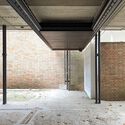
The Silent Pavilion: Carlo Scarpa and the Giardino delle Sculture at the Venice Biennale - Featured ImageThe Silent Pavilion: Carlo Scarpa and the Giardino delle Sculture at the Venice Biennale - Image 1 of 4The Silent Pavilion: Carlo Scarpa and the Giardino delle Sculture at the Venice Biennale - Image 2 of 4The Silent Pavilion: Carlo Scarpa and the Giardino delle Sculture at the Venice Biennale - Image 3 of 4The Silent Pavilion: Carlo Scarpa and the Giardino delle Sculture at the Venice Biennale - More Images+ 4

From Little Venice to Venice: The Narrative of Carlo Scarpa’s Venezuela Pavilion

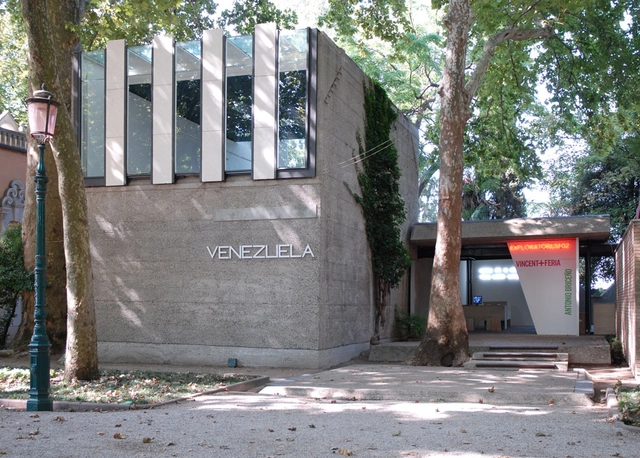
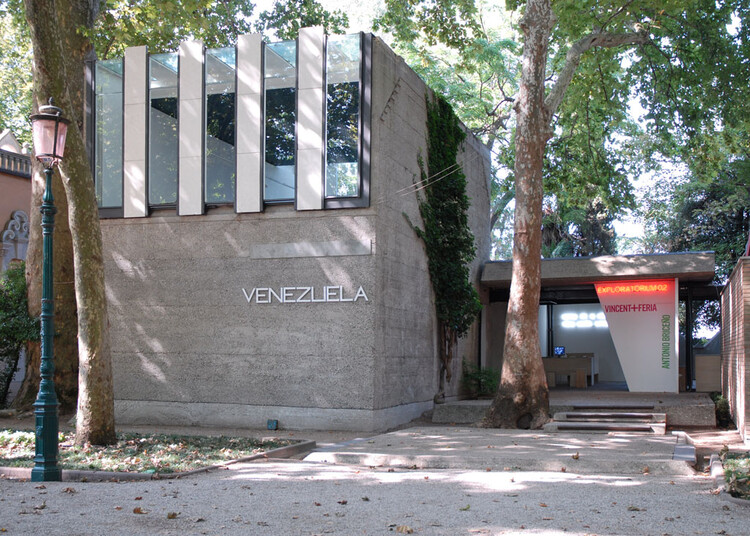
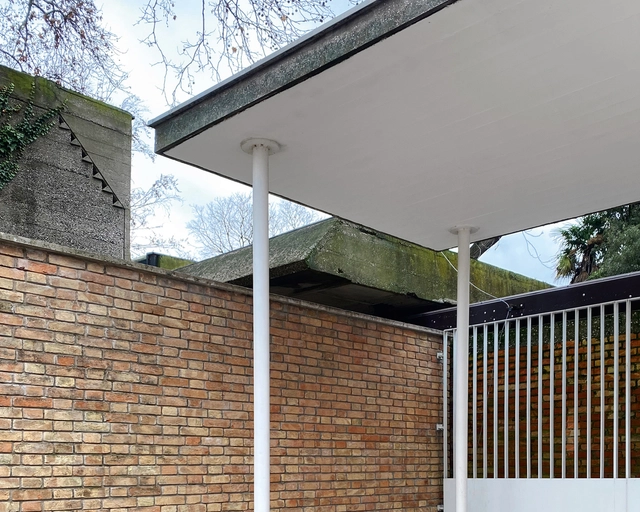
Nestled amongst the plethora of grandiose and carefully crafted national pavilions in the Giardini della Biennale in the Italian city of Venice is one pavilion by the city's perhaps most well-known modern architect. Sited between the pavilions of Russia and Switzerland is the Venezuela Pavilion, by architect Carlo Scarpa. In many ways, the structure typifies the design approach of its architect but has its idiosyncrasies. Built for Europe's most important biennial art exhibition, it is a member of a cohort of Modernist pavilions that came after the earlier, more classicist pavilions. This is its story.

From Little Venice to Venice: The Narrative of Carlo Scarpa’s Venezuela Pavilion - Image 1 of 4From Little Venice to Venice: The Narrative of Carlo Scarpa’s Venezuela Pavilion - Image 2 of 4From Little Venice to Venice: The Narrative of Carlo Scarpa’s Venezuela Pavilion - Image 3 of 4From Little Venice to Venice: The Narrative of Carlo Scarpa’s Venezuela Pavilion - Image 4 of 4From Little Venice to Venice: The Narrative of Carlo Scarpa’s Venezuela Pavilion - More Images+ 20

Between Matter and Gesture, Architectures that Think Through Details

Subscriber Access | 

A project can be drawn in broad strokes, but it's built in details. Simple as it may seem, a staircase involves a significant degree of engineering. Some are noticeably more tiring, or more difficult to climb and descend. To address this, in the 17th century, architect François Blondel proposed a formula to ensure the ideal proportion between riser and tread, an equation that, when respected, offers a comfortable path. But there's another equally decisive factor: all steps must be identical. This may sound trivial and logical, yet executing anything with precision is always a construction challenge. Our bodies quickly adapt to the dimensions of the steps, and any variation (even minimal) can lead to repeated stumbles or missteps. A seemingly insignificant detail, when poorly resolved, can compromise the well-being and safety of an entire building.

AD Classics: Olivetti Showroom / Carlo Scarpa

Venice, Italy

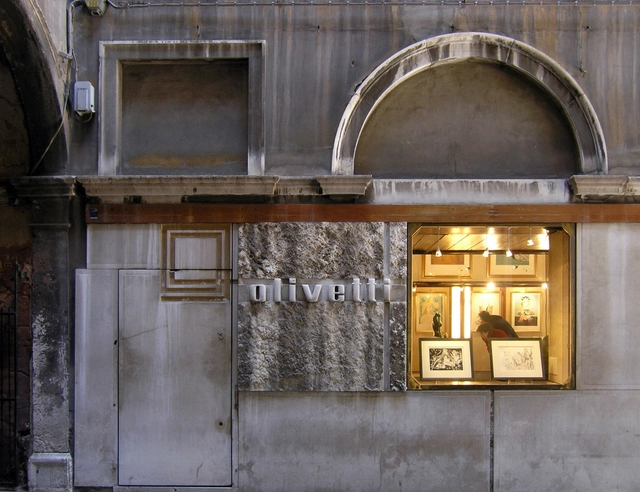
Tucked discreetly beneath the colonnade of Saint Mark's Square in Venice, Carlo Scarpa's Olivetti Showroom exerts a quiet yet unmistakable presence. Though often overshadowed by the grandeur of nearby landmarks—St. Mark's Basilica, the Clocktower, the Loggetta, and the Procuratie Vecchie—it attracts a particular kind of visitor: those who seek out one of Scarpa's architectural gems hidden in plain sight. Modest in scale but rich in detail, the showroom is meticulously maintained by FAI (Fondo Ambiente Italiano), the National Trust for Italy.

AD Classics: Olivetti Showroom / Carlo Scarpa - Interior Photography, Showroom, Stairs, HandrailAD Classics: Olivetti Showroom / Carlo Scarpa - ShowroomAD Classics: Olivetti Showroom / Carlo Scarpa - Interior Photography, ShowroomAD Classics: Olivetti Showroom / Carlo Scarpa - ShowroomAD Classics: Olivetti Showroom / Carlo Scarpa - More Images+ 17

Architecture Details 101 in Venice: Carlo Scarpa and David Chipperfield in Dialogue Across Time

In Venice, surrounded by an overwhelming abundance of architectural beauty—the grandeur of landmarks like the Basilica di San Marco, St. Mark's Square, and the Rialto Bridge, to name just a few—it is easy to become swept up in the iconic imagery and spatial majesty of the city. One could lose sight of the quieter, yet equally masterful, moments found in the execution of details across its built fabric. Beyond the grandeur, the city offers a richness in its winding alleyways, narrow canals, and vibrant street life—each contributing to the cultural tapestry that makes Venice so unique. Amidst these celebrated elements, however, lie subtle but remarkable architectural details that often go unnoticed. These deserve closer observation and reflection, as they offer their own kind of mastery—one grounded in material precision, craft, and the lived rhythms of the city.

Just steps away from the iconic Piazza San Marco, a quiet architectural dialogue unfolds between two celebrated figures. Within a one-minute walk, two projects—each meticulously crafted—sit in close proximity: the Olivetti Showroom by Carlo Scarpa, a long-revered pilgrimage site for architects and designers, and the recently reopened Procuratie Vecchie, restored by David Chipperfield Architects. A closer look at the architectural details embedded within each work reveals a compelling exchange across time—one that unfolds through material language, spatial precision, and an unwavering commitment to craft.

Architecture Details 101 in Venice: Carlo Scarpa and David Chipperfield in Dialogue Across Time - Image 1 of 4Architecture Details 101 in Venice: Carlo Scarpa and David Chipperfield in Dialogue Across Time - Image 2 of 4Architecture Details 101 in Venice: Carlo Scarpa and David Chipperfield in Dialogue Across Time - Image 3 of 4Architecture Details 101 in Venice: Carlo Scarpa and David Chipperfield in Dialogue Across Time - Image 4 of 4Architecture Details 101 in Venice: Carlo Scarpa and David Chipperfield in Dialogue Across Time - More Images+ 11

Venice Architecture City Guide: 15 Historical and Contemporary Attractions to Discover in Italy’s City of Canals

Built on a cluster of 118 small islands in the shallow Venetian Lagoon, the city of Venice, Italy, has captivated the imagination of architects and tourists alike. The area has been inhabited since ancient times, becoming a major financial and maritime power during the Middle Ages and Renaissance, as proven through the rich architecture that characterizes the city to this day. With influences from the Byzantine, Gothic, and Renaissance styles, the city represents a palimpsest of architectural narratives, overlapping and influencing each other. In recent years, Venice has become a major attraction for architects drawn to the La Biennale di Venezia, the most important Architectural Exhibition featuring national pavilions, exhibitions, and events to explore new concepts and architectural innovations.
Beyond the Biennale, Venice itself is an open-air museum for architecture lovers. While the city is best known for its historical buildings, Modernist and contemporary interventions add a new layer of interest, with many contemporary architects working with the historical fabric, like OMA's intervention and rehabilitation of Fondaco dei Tedeschi, or David Chipperfield's renovation of Procuratie Vecchie, one of the buildings that define Piazza San Marco. In addition to what the city has to offer, the site of the Venice Biennale is also marked by interventions by famous architects such as Carlo Scarpa, Sverre Fehn, and Alvar Aalto, made permanent due to their outstanding qualities.

Venice Architecture City Guide: 15 Historical and Contemporary Attractions to Discover in Italy’s City of Canals - Image 1 of 4Venice Architecture City Guide: 15 Historical and Contemporary Attractions to Discover in Italy’s City of Canals - Image 2 of 4Venice Architecture City Guide: 15 Historical and Contemporary Attractions to Discover in Italy’s City of Canals - Image 3 of 4Venice Architecture City Guide: 15 Historical and Contemporary Attractions to Discover in Italy’s City of Canals - Image 4 of 4Venice Architecture City Guide: 15 Historical and Contemporary Attractions to Discover in Italy’s City of Canals - More Images+ 11

Beyond Form: How Light and Shadow Define Architectural Atmosphere

Architecture is often defined by its physical form, materials, and structural elements, but light and shadow truly shape the experience of space. These elements influence perception, guide movement, and evoke emotional responses, transforming static structures into dynamic environments. Throughout history, architects have harnessed the interplay of light and shadow, using it as a fundamental design tool to create atmosphere and meaning.

Beyond Form: How Light and Shadow Define Architectural Atmosphere - Image 1 of 4Beyond Form: How Light and Shadow Define Architectural Atmosphere - Image 2 of 4Beyond Form: How Light and Shadow Define Architectural Atmosphere - Image 3 of 4Beyond Form: How Light and Shadow Define Architectural Atmosphere - Image 4 of 4Beyond Form: How Light and Shadow Define Architectural Atmosphere - More Images+ 48

The Architecture of Dune: Leveraging the Past to Create a Myth of the Future

Subscriber Access | 

Imagine a world thousands of years into the future, one where humanity has conquered planets from galaxies away, only to default to a neofeudalistic social order in a constant power struggle, all built upon an intricate tapestry of cultures and religions and set in a harsh yet vivid landscape that becomes a character in and of itself. This was the challenge faced by director Denis Villeneuve and production designer Patrice Vermette in creating the cinematic adaptation of Frank Herbert's 1965 novel. The two Dune movies, released in 2021 and 2024, were conceived as a whole and therefore share a coherent style and cinematic expression. Beyond aesthetics, the environment and architecture of Dune present a lived-in, believable world, one that anchors the action and characters, silently offering invaluable insights into the values and mythology of each civilization.

The Architecture of Dune: Leveraging the Past to Create a Myth of the Future - Image 1 of 4The Architecture of Dune: Leveraging the Past to Create a Myth of the Future - Image 2 of 4The Architecture of Dune: Leveraging the Past to Create a Myth of the Future - Image 3 of 4The Architecture of Dune: Leveraging the Past to Create a Myth of the Future - Image 4 of 4The Architecture of Dune: Leveraging the Past to Create a Myth of the Future - More Images+ 19

What Does Midcentury Modern Even Mean These Days?

This article was originally published on Common Edge.

Auction houses, secondhand furniture stores, and realtors make small fortunes from a nomenclature that, despite the fuzziness surrounding its indeterminate span and whether everything made during its indefinite duration ought to be stamped with the same label, continues to demand attention. Years from now, serious collectors of architectural magazines may search for that single issue of the 21st century magazine Dwell, absent a major spread of a house designed in the midcentury modern (MCM) manner or a restoration of a building from that era. MCM is the very blood that pulses through the publication’s arteries, promulgating a view of a squeaky-clean and well-lighted lives lived almost invariably by (often childless) ectomorphic couples, blissfully happy under a flat roof with floor-to-ceiling windows affording fine views of distant landscapes best enjoyed behind insulated glass in an ambient temperature of 72 degrees Fahrenheit. But what are we to make of this term, this period—some even call it a “movement”—so well-known globally it goes by initials?

“I Think of My Work as Imploding Rather than Exploding:” in Conversation with Michael Rotondi of Roto Architects

Michael Rotondi’s buildings—museums, civic centers, education facilities, monasteries, restaurants, and residences—evoke kinetic mechanisms that fold, hinge, twist, and split open. They express the architect’s feelings, thinking, and mood at the time they had been designed, and, on some occasions, during their assembly and construction. Rotondi was born in 1949 in Los Angeles.

He established his RoTo Architects, a research-based firm in his native city, in 1991 after co-heading Morphosis for 16 years with Thom Mayne. Parallel to his practicing career, the architect has been teaching and lecturing at SCI-Arc, Southern California Institute of Architecture, which he co-founded in 1972, led its graduate program from 1978-1987, and was the school’s second director for a decade from 1987 to 1997.

“I Think of My Work as Imploding Rather than Exploding:” in Conversation with Michael Rotondi of Roto Architects - Image 1 of 4“I Think of My Work as Imploding Rather than Exploding:” in Conversation with Michael Rotondi of Roto Architects - Image 2 of 4“I Think of My Work as Imploding Rather than Exploding:” in Conversation with Michael Rotondi of Roto Architects - Image 3 of 4“I Think of My Work as Imploding Rather than Exploding:” in Conversation with Michael Rotondi of Roto Architects - Image 4 of 4“I Think of My Work as Imploding Rather than Exploding:” in Conversation with Michael Rotondi of Roto Architects - More Images+ 21

The Poetry of Water: Symbolic Meanings in Built Space

In a world of extravagant textures, colors, and flavors, who would have thought that a substance that has no color, no smell, and no taste is precisely the most essential for human existence? Antagonistic in itself, water carries an ambiguity of values and meanings that confer a high degree of complexity sustained by the versatile and soluble profile that distinguishes it in a complex simplicity. In this sense, water, as a source of life, has become an object of devotion and study over time. This has fostered a continuous effort focused on understanding, transporting, and controlling this element.

The Poetry of Water: Symbolic Meanings in Built Space - Image 1 of 4The Poetry of Water: Symbolic Meanings in Built Space - Image 2 of 4The Poetry of Water: Symbolic Meanings in Built Space - Image 3 of 4The Poetry of Water: Symbolic Meanings in Built Space - Image 4 of 4The Poetry of Water: Symbolic Meanings in Built Space - More Images+ 7

Carlo Scarpa, a Virtuous Architect of Water

Even as a child, the Venetian architect Carlo Scarpa was very aware of the fundamental element that would describe and underpin his work many years later: water. When he played and ran around the maze of streets and canals, Scarpa listened to everything around him, especially the richness of stimuli that his hometown offered him. A sensitive reader of places, he found his great text in Venice. This culture, subtle and almost academic, except for that devotion to scenography and the esoteric, is built over time; art, space, history, all compiled in his readings, trips to knowledge, and in his contact with artists and writers.

Scarpa would base his evolution as an architect on his extraordinary visual culture and his respect for tradition and the way of doing things in past eras; taking up the baton of that time and converting his reality into architectural space where all the pieces are independent units, dialoguing with each other or, as he liked to say, singing. He positions himself before what exists, whether it be an artistic piece or architectural space, from knowledge and sensitivity. He will apprehend the history and place in which it occurs and accentuate the existing beauty in things, showing the prominence of the new as a precious element.

Carlo Scarpa: The Master of Sculpture and Light

Natural light is one of the most critical elements in architecture. Although unbuilt and difficult to control, it plays a crucial part in defining how space is perceived in terms of scale, textures, materiality, and overall atmosphere. Natural light also impacts the emotions people feel in a space, whether lack of light makes us feel fear and anxiety or ample light makes us feel safe and ethereal. As much as light impacts architecture, architecture also impacts light. Through framing vistas, creating 3D massings that cast sculptural shadows, and carving voids from solids that create unique light projections, many architects have mastered design techniques that utilize light in a way that seamlessly integrates it within a building- and perhaps one of the best to do this was the Venetian architect, Carlo Scarpa.

Exploring Territorial Relations: The Swiss Pavilion at the 2023 Venice Biennale is Curated by Karin Sander and Philip Ursprung

Switzerland’s project for its national pavilion at the 18th International Architecture Exhibition–La Biennale di Venezia will be curated by Karin Sander and Philip Ursprung to explore territorial relationships within the Giardini of La Biennale. Titled “Neighbours,” their project is focused on the spatial and structural proximity between the Swiss Pavilion and its Venezuelan neighbor. By turning architecture itself into the exhibit, the project also highlights the bond between the architects of the two structures: the Swiss Bruno Giacometti (1907 - 2012) and the Italian Carlo Scarpa (1906 - 1978). The exhibition will be on display from May 20 to November 26, 2023.

Exploring Territorial Relations: The Swiss Pavilion at the 2023 Venice Biennale is Curated by Karin Sander and Philip Ursprung - Image 1 of 4Exploring Territorial Relations: The Swiss Pavilion at the 2023 Venice Biennale is Curated by Karin Sander and Philip Ursprung - Image 2 of 4Exploring Territorial Relations: The Swiss Pavilion at the 2023 Venice Biennale is Curated by Karin Sander and Philip Ursprung - Image 3 of 4Exploring Territorial Relations: The Swiss Pavilion at the 2023 Venice Biennale is Curated by Karin Sander and Philip Ursprung - Image 4 of 4Exploring Territorial Relations: The Swiss Pavilion at the 2023 Venice Biennale is Curated by Karin Sander and Philip Ursprung - More Images+ 1

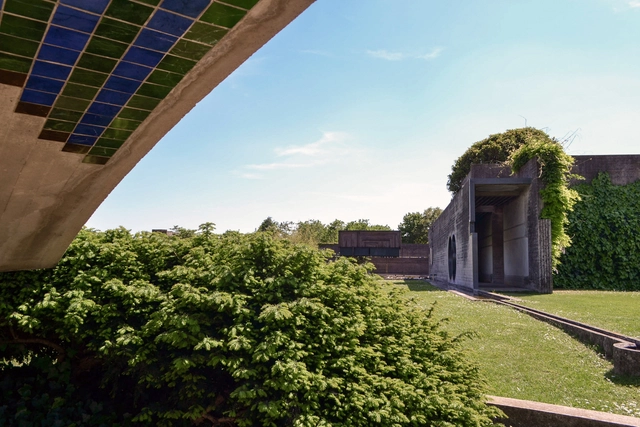
Architecture That Hides Stories: A Look at the Brion Tomb by Carlo Scarpa

Subscriber Access | 

As human beings we cannot live without stories, we need them to fill those gaps in our reality, to live in our imagination those thousands of lives that are different from ours and, in some cases, impossible.

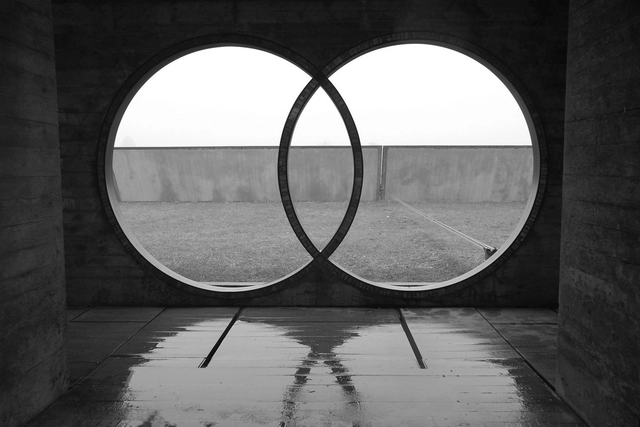
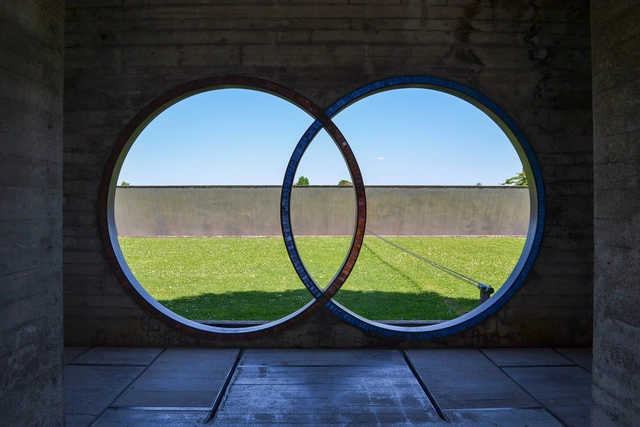
Could we qualify as "good architecture" that which has a story, or several stories, to tell us? That which is a story in itself? Such a subjective question undoubtedly generates different answers, but one possible answer is "yes". And one example is the Brion Tomb project, one of Venetian architect Carlo Scarpa's major masterpieces.