1. ArchDaily
  2. Cedric Price

Cedric Price: The Latest Architecture and News

The Soft Control of Space: Design for Decision-Making

Subscriber Access | 

"There is no space without event, no architecture without action." When Bernard Tschumi wrote these words, he was articulating a fundamental principle of the architect's practice. Architecture is about behavior. Every stroke of a pen on a floor plan is a proposition about how occupants will move or what actions become possible.

To draw is to architect a reality. Though with this power, architecture does not command. It does not issue instructions or enforce compliance, but it operates through a soft control — a mode of influence that shapes behavior by structuring perception and guiding attention.
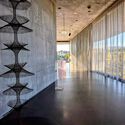
The Soft Control of Space: Design for Decision-Making - Image 1 of 4The Soft Control of Space: Design for Decision-Making - Image 2 of 4The Soft Control of Space: Design for Decision-Making - Image 3 of 4The Soft Control of Space: Design for Decision-Making - Image 4 of 4The Soft Control of Space: Design for Decision-Making - More Images+ 2

How Not to Build: Architecture by the Absence of Intervention

Subscriber Access | 

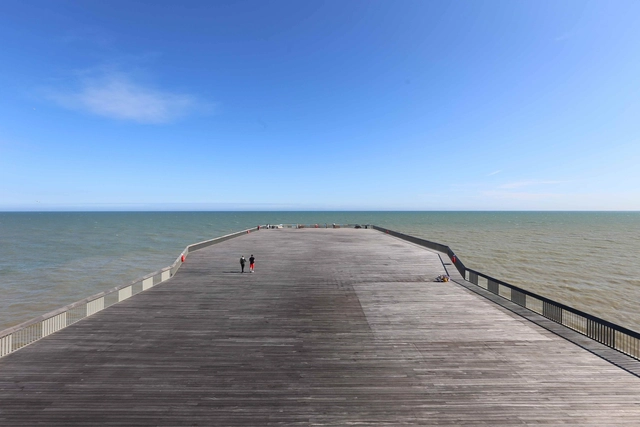
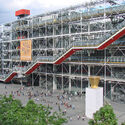
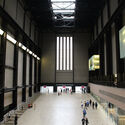
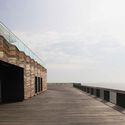
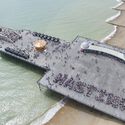
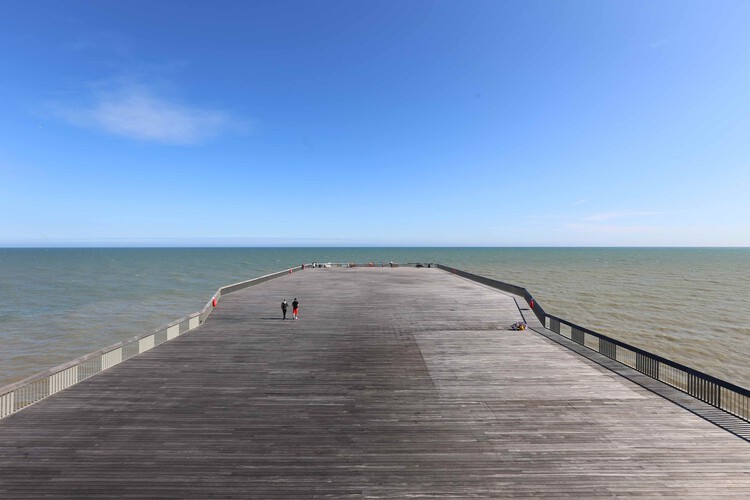
Whether for design competitions or architectural awards, buildings are often judged for what they offer–the programmed functions, the form, or the visual delight. In a minority of cases, it is the absence or the reduction of intervention that made a project successful. In 1971, a high-profile architectural competition in Paris was won by a proposal that only utilized half the available site, giving the rest as an urban space to the city. In London, a proposal to convert a disused power station with minimal additions, leaving large spaces untouched, won a design competition in 1994. The Stirling Prize, the UK's most prestigious architectural award, in 2017 was won by a proposal that was little more than an empty platform. These examples of cultural buildings from Northwestern Europe illustrate how the absence of intervention can provide more.

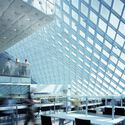
How Not to Build: Architecture by the Absence of Intervention - Image 1 of 4How Not to Build: Architecture by the Absence of Intervention - Image 2 of 4How Not to Build: Architecture by the Absence of Intervention - Image 3 of 4How Not to Build: Architecture by the Absence of Intervention - Image 4 of 4How Not to Build: Architecture by the Absence of Intervention - More Images+ 14

Understanding Soft Architecture: The Shift from Monument to Moment

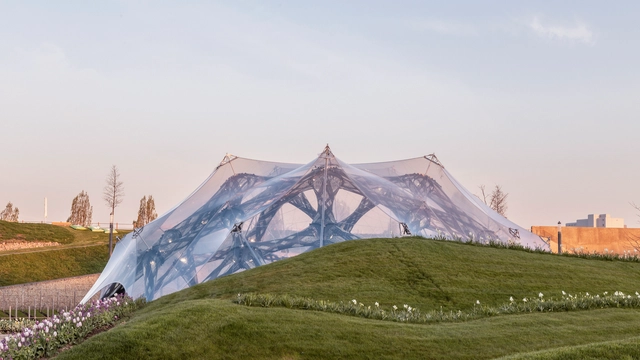
In recent years, architecture has increasingly embraced adaptability, flexibility, and responsiveness as core design principles. This evolution reflects a shift from traditional notions of static, permanent structures to dynamic environments that can adjust to changing needs and conditions. Central to this transformation is the concept of "soft architecture", which leverages pliable materials and innovative systems to create spaces that are functional, sustainable, and user-centric. Soft architecture takes shape through membranes that breathe, façades that move, structures that inflate or fold, and surfaces that bend rather than break. It involves designing for transformation — not only in how a building performs environmentally, but also in how it can accommodate shifting functions, user interactions, or temporary occupations. This approach to building challenges traditional notions of durability and control, proposing instead a more responsive and open-ended architecture. It reflects a growing awareness that buildings, like the societies they serve, must be able to evolve.

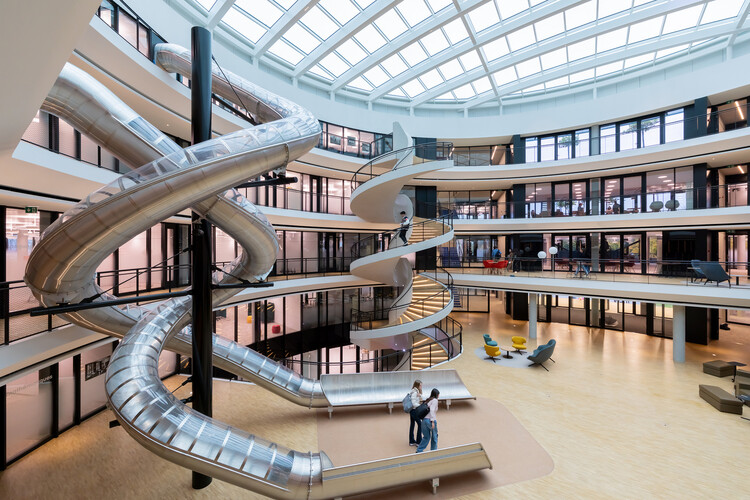
Understanding Soft Architecture: The Shift from Monument to Moment - Image 1 of 4Understanding Soft Architecture: The Shift from Monument to Moment - Image 2 of 4Understanding Soft Architecture: The Shift from Monument to Moment - Image 3 of 4Understanding Soft Architecture: The Shift from Monument to Moment - Image 4 of 4Understanding Soft Architecture: The Shift from Monument to Moment - More Images+ 53

The Timeless Appeal of Modernism in Technology and Digital Architecture

Modernism, a movement that sought to break away from traditional forms and embrace the future, laid the groundwork for many technological and digital advancements in contemporary architecture. As the Industrial Revolution brought about mass production, new materials, and technological innovation, architects like Le Corbusier, Walter Gropius, and Mies van der Rohe championed the ethos of "form follows function" and a rational approach to design. Their principles resonate in the digital age, where computational design and high-tech materials redefine form and construction.
The 20th century's modernist ideals — efficiency, simplicity, and functionality — created a foundation for architects to experiment with structural clarity and material honesty. High-tech architecture, which emerged in the late 20th century, evolved from these principles, merging modernism's clean lines with advanced engineering and technology. This paved the way for parametricism and algorithm-driven design processes, revolutionizing architecture and enabling complex forms previously thought impossible.

The Timeless Appeal of Modernism in Technology and Digital Architecture - Image 1 of 4The Timeless Appeal of Modernism in Technology and Digital Architecture - Image 2 of 4The Timeless Appeal of Modernism in Technology and Digital Architecture - Image 3 of 4The Timeless Appeal of Modernism in Technology and Digital Architecture - Image 4 of 4The Timeless Appeal of Modernism in Technology and Digital Architecture - More Images+ 45

Why It's Important Architects Make Things Move

Subscriber Access | 

All buildings move — of course, some more than others. There are a host of design considerations that architects keep in mind that allow for, or even promote movement in almost every building. But some architects fall back on their training as broad-based thinkers and problem solvers to devise solutions that literally roam the earth. From tiny homes on wheels, to train-based educational institutions, to design programs in a truck, sometimes buildings and architecture need to travel to the people it serves or to other environments. This video features a few examples on this spectrum, beginning with how architects typically deal with movement in structures and foundations, to Cedric Price’s Potteries Thinkbelt, and finally Chicago Mobile Makers, a traveling maker workshop for children founded by Maya Bird Murphy.

Framing Indeterminacy: The Incorporation of Uncertainty Into Architecture

Subscriber Access | 
Framing Indeterminacy: The Incorporation of Uncertainty Into Architecture - Featured Image
OMA's transformation of Post Houston. Image © Leonid Furmansky

By definition, architecture and urban planning operate within a certain degree of indeterminacy, using present context to find viable answers for an unknown future. As a result, design is a constant search for a balance between prescribing and taking a step back to make room for alternate yet unforeseeable scenarios. Uncertainty is an inherent condition in present-day society, and recent rapid social, economic, and even environmental changes prompt a closer look at how architecture can incorporate indeterminacy. The following reviews some precedents and contemporary examples that programmatically operate with indeterminacy, highlighting several strategies for designing for uncertainty and change.

Framing Indeterminacy: The Incorporation of Uncertainty Into Architecture - Image 1 of 4Framing Indeterminacy: The Incorporation of Uncertainty Into Architecture - Image 2 of 4Framing Indeterminacy: The Incorporation of Uncertainty Into Architecture - Image 3 of 4Framing Indeterminacy: The Incorporation of Uncertainty Into Architecture - Image 4 of 4Framing Indeterminacy: The Incorporation of Uncertainty Into Architecture - More Images

Foster + Partners Gains Planning Permission for Snowdon Aviary Transformation at the London Zoo

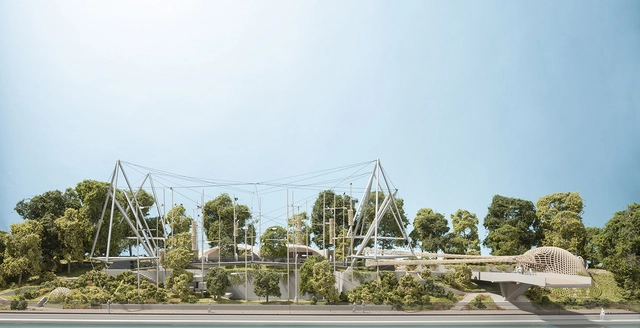
The Westminster Council has approved plans for the Foster + Partners-led transformation of the Snowdon Aviary at ZSL London Zoo. Designed by English architect and theorist Cedric Price in collaboration with Frank Newby and Lord Snowdon, the Grade II-listed structure became the first aviary in the UK to allow visitors to walk through a natural bird habitat when it opened to the public in 1962.

The revamp will preserve many of the original design qualities from the original structure, while updating safety and viewing strategies for its new inhabitants: a family of colobus monkeys and parrots. To make the monkeys feel at home, the design features a series of platforms and vertical elements, allowing visitors to learn about the animals as they swing, jump and explore their surroundings.

A Glimpse of the Forward-Thinking, Humorous Work of Cedric Price

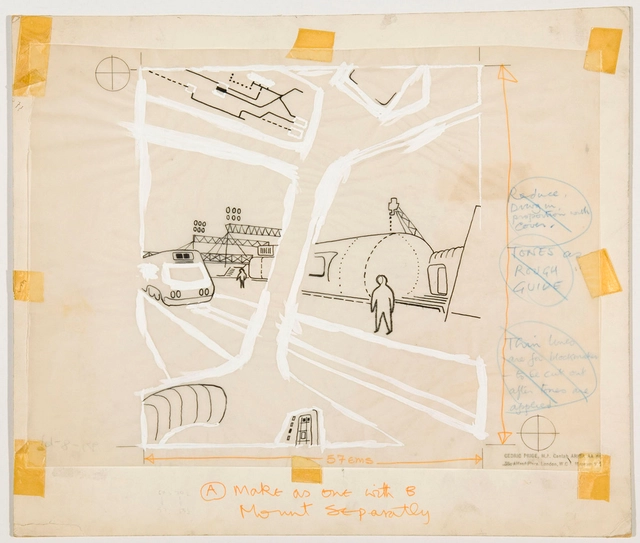
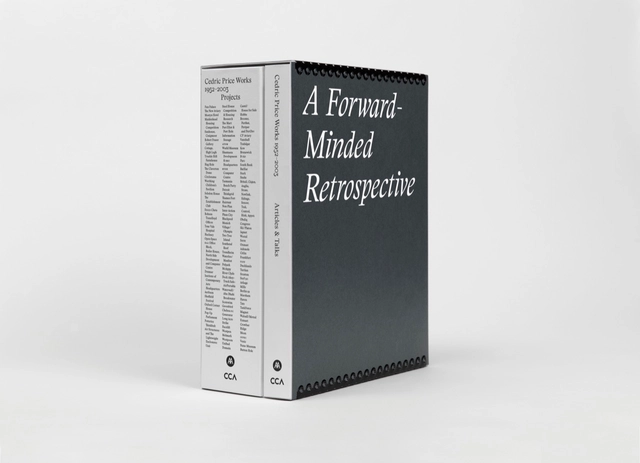
Samantha Hardingham's recently-published work, A Forward-Minded Retrospective: Cedric Price Works—1953-2003, traces the architect's career through a comprehensive collection of his drawings and renders. The exhaustive two-volume work acknowledges Cedric Price not just as the entertaining novelty he is often regarded as, but as a great mind who was ahead of his time. While the vast majority of work produced during his lifetime was never built, Hardingham draws out the radical genius behind such projects as the hybrid office complex-highway "Officebar," a zoo restaurant whose column-less interior paved the way for its later conversion to a giraffe habitat, and many others—built and unbuilt.

In addition to the uncanny future forecasting expressed in many of Price's works, they are also known for serving as inspiration for the functionalist designs of Renzo Piano and Richard Rogers, making them necessary to a complete understanding of the modern architectural canon. In an article on Metropolis Magazine, Samuel Medina takes a whistle-stop tour of some of the most intriguing works presented in Hardingham's new book.

A Forward-Minded Retrospective: Cedric Price Works – 1953-2003

Cedric Price Works 1952-2003: A Forward-Minded Retrospective, written and edited by Samantha Hardingham, is a two-volume anthology bringing together for the first time all of the projects, articles and talks by British architect Cedric Price. Co-published by the Architectural Association (AA) and the Canadian Centre for Architecture (CCA), the publication will be launched on 14th October 2016, celebrating Price's illustrious career as an influential thinker, philosopher, teacher and architect.

Cedric Price Exhibition Opens In Maastricht

A new exhibition and accompanying digital documentary on Cedric Price, a British architect, writer and educator who had a formative influence on architects such as Renzo Piano, Richard Rogers, and Bernard Tschumi, is open in The Netherlands. The exhibition, curated by members of Bureau Europa, introduces the work of Price by "presenting a cross-section of the elements of his inventive and singular practice" through sketches, project drawings, recorded talks, and first-hand accounts by staff, colleagues and friends. In addition, a series of selected projects present his "innovative models for industry, education, government, tourism, ecology and the house."

Bernard Tschumi On His Education, Work and Writings

Subscriber Access | 
Bernard Tschumi On His Education, Work and Writings - Image 8 of 4

In this extended interview between Bernard Tschumi and The Architectural Review's Paul Finch, the pre-eminent Swiss-born architect discusses his education, writing, design and wider critical position. Speaking candidly, Tschumi explains how a visit to Chicago when he was seventeen years old sparked a life-long passion for architectural design - something that had been somewhat repressed due to his father who was, at that time, one of the world's most highly respected architects. His friendship with British architect and theorist Cedric Price led to the start of a career that saw his proposals for Paris's Parc de la Villette foreshadow the age of Deconstructivism. Ending with his take on the future of the profession, Tschumi also offers advice to students and young practices looking to make their mark.