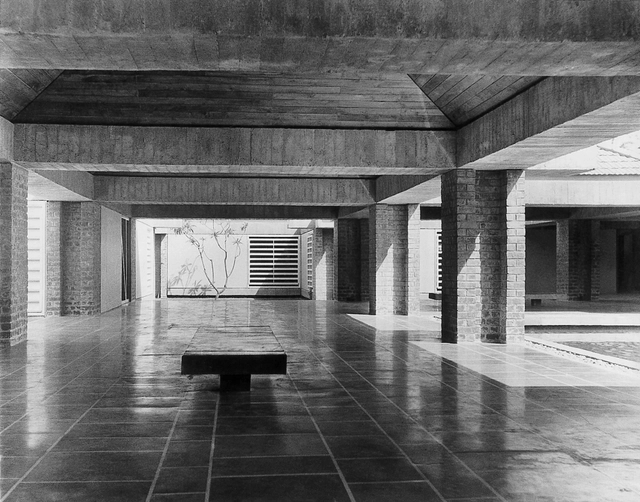
Indian modernism is often narrated through a narrow lens: a handful of iconic institutions, master architects, and formally radical experiments that came to symbolize the nation's post-Independence aspirations. Yet this version of history overlooks the far larger body of modernist architecture that quietly shaped everyday life across the country. Beyond celebrated campuses and canonical buildings exists a vast, dispersed landscape of housing blocks, offices, hostels, hospitals, markets, and townships — structures that were designed to function and endure.
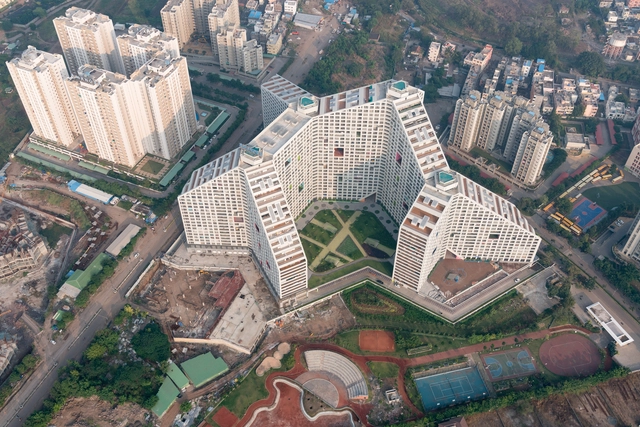
Like most countries, India faces a perpetual housing crisis. As the world’s most populous nation, with an urban population expected to grow from 410 million in 2014 to 814 million by 2050, this becomes a pressing concern. The Indian built landscape brings further complexities in the form of a pervasive market-driven approach and the need for socially relevant housing. Looking into the future, how will India address the needs of its growing population to house the next million urbanites?
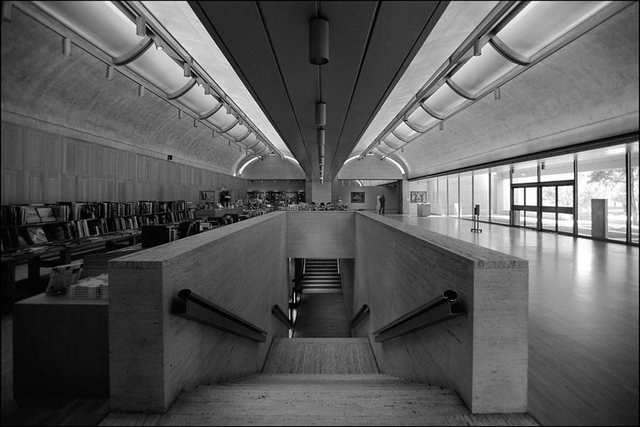
Kimbell Art Museum / Louis Kahn. Image Courtesy of Xavier de Jauréguiberry
AD Classics presents you with some of the greatest buildings of the past that have influenced and shaped architecture today. Throughout ArchDaily's 13 years, more than 200 classics were published, and for this edition, we have rounded up the top 20 most visited Architecture Classics to date.
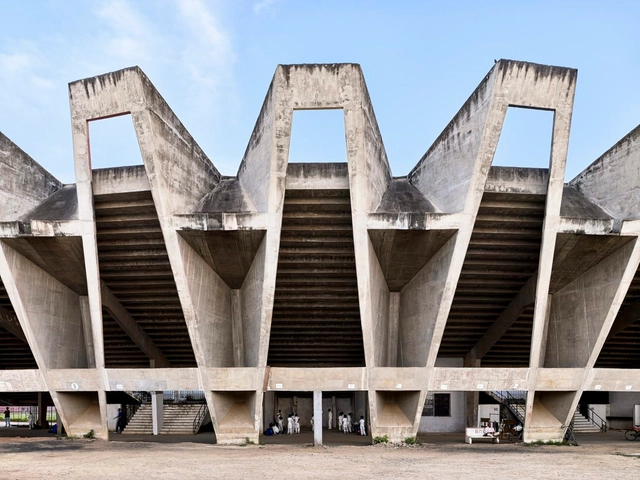
The structure was originally built to host international and domestic cricket matches. In the 1950s, the Cricket Club of Ahmedabad was granted 67,000 sqm of land to construct a Cricket Stadium. It was the country’s first “turf ground,” hosting the first cricket match in India. For the cricket community in the country, the SVP represents a venue that has nurtured and honed young cricketers from all over the state, and it has been graced by several of India's legendary players in both test and one-day cricket matches.
Walking through the streets of Mumbai, India, is an experience unmatched anywhere else. The energy of India’s largest and most populous city is palpable through the people, their activities, and most importantly, the built environment. The city’s dynamic culture is evidently expressed through the structures that dot its landscape.
Mumbai is an eclectic mix of buildings large and small, old and new, and traditional and modern. The city of contrasts boasts an architectural legacy that goes back over 2000 years. Located in the state of Maharashtra along the west coast of India, Mumbai hosts a variety of architectural styles such as Victorian, Gothic, Art Deco, Indo-Saracenic, Modern and Post-modern. The city is characterized by its old charm and liveliness, a diverse stage for people to pursue their dreams.
Rahul Mehrotra is a practicing architect based in Boston and Mumbai and he has been teaching at Harvard’s GSD where he is currently Chair of the Department of Urban Planning and Design and Director of the Master in Architecture in Urban Design Degree Program. Born in 1959, Mehrotra grew up in Lucknow, a city in Northern India and an important cultural and artistic hub. His father was a manager at a large machine tool company. The family moved a lot following Mehrotra senior’s frequent promotions, which led to changing residences owned by his company. Besides a few years in Lucknow and Delhi, they lived in different neighborhoods within Mumbai.
Upon becoming a sovereign country, free from British Rule, the people of India found themselves faced with questions they had never needed to answer before. Coming from different cultures and origins, the citizens began to wonder what post-independence India would stand for. The nation-builders now had the choice to carve out their own future, along with the responsibility to reclaim its identity - but what was India's identity? Was it the temples and huts of the indigenous folk, the lofty palaces of the Mughal era, or the debris of British rule? There began a search for a contemporary Indian sensibility that would carry the collective histories of citizens towards a future of hope.
The Royal Institute of British Architects (RIBA) and the Jencks Foundation announced renowned Indian architect Anupama Kundoo as the winner of this year's RIBA Charles Jencks Award. The accolade given in recognition of significant contributions to the theory and practice of architecture acknowledges Kundoo's holistic practice that marries theoretical investigations, material research and sustainable building methods.
India is rethinking the future of housing through new typologies. Defined by historical and cultural influences, the country's contemporary architecture centers on discussions of how best to modernize. Built over millennia, India's housing projects are made to address diverse scales, programs and functions. Exploring a revitalized urban landscape, these modern housing projects have begun to set a new tone for the future.
Architecture school is a place of experiment and a testing ground for innovative ideas. The academic work and student projects can bring to light the focus of an entire career, shape the backbone for an architectural theory, and crystalize values. How do their studies and formative years reflect on the later work of different architects? Taking a journey along decades, we explore the transition from architecture school to practice, the reverberance of academic explorations and early projects in the work of several architects and practices, highlighting the different pivotal steps that have shaped the beginning of their architectural journey.
Charles Correa Foundation has recently released several snippets of ‘You & Your Neighbourhood’, Charles Correa’s 1955 Master Thesis at MIT, an animation film for which the architect was scriptwriter, animator, photographer and director. The thesis put forward the idea of a participatory process for the betterment of neighbourhoods, with a strong emphasis on creating a framework for improving urban conditions in a bottom-up approach.
Kala Academy. Image Courtesy of Charles Correa Foundation
A new petition has been started to save Charles Correa's Kala Academy from demolition by the State Government in India. The project has become one of the only government-run arts institution with a diverse set of cultural offerings across Western and Indian programming. As Goa’s cultural center, the late 1970's structure is a rare example of an equitable public building in India.
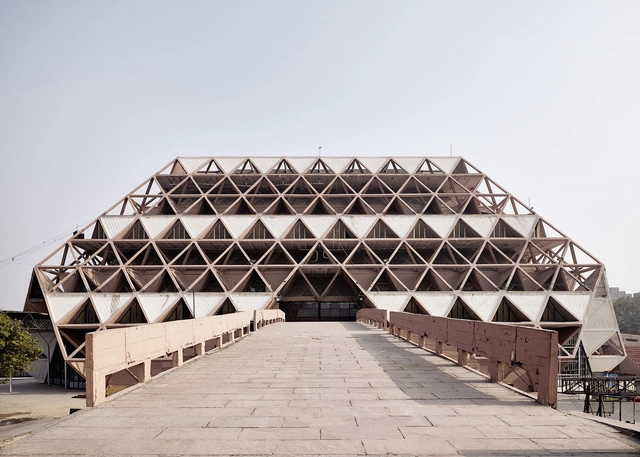
India, Post-Independence Architecture of Delhi. The Hall of Nations, a complex of exhibition halls built for the 1972 International Trade Fair, was demolished in April 2017. Ariel Huber, Lausanne/World Monuments Fund
The World Monuments Fund has announced their 2018 World Monuments Watch, highlighting 25 cultural sites from across the globe currently at risk due to economic, political or natural threats. Covering more than 30 countries and territories, these monuments represent sites of exceptional cultural value dating from prehistory to the 20th century.
This episode of Monocle 24'sOn Design podcast, which briefly surveys the state of Indian architecture and suggests a blueprint for a 21st Century vernacular, was written and recorded by ArchDaily's European Editor at Large,James Taylor-Foster.
In the first half of 2016 an exhibition was opened in Mumbai. The State of Architecture, as it was known, sought to put contemporary Indian building in the spotlight in order to map trends post-independence and, more importantly, provoke a conversation both historical and in relation to where things are heading.
https://www.archdaily.com/802970/is-india-building-the-wrong-sort-of-architectureAD Editorial Team
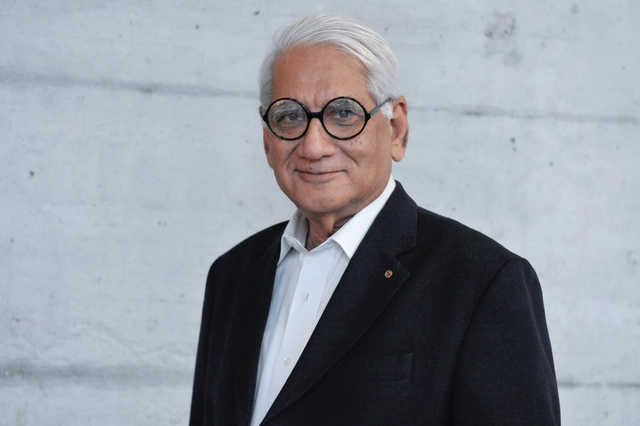
Charles Correa, widely considered to be one of India's greatest living architects, died yesterday in Mumbai at the age of 84. Correa, who was also a respected urban planner and renowned activist for the quality of cities, had been the recipient of the RIBA Gold Medal in 1984, the Praemium Imperiale in 1994, and the 7th Aga Khan Award for Architecture in 1998. His work had also been recognised with one of India's highest civilian honours, the Padma Shri, in 1972. In 2013 Correa donated over 6000 drawings and 150 models from his archives to the RIBA in London.
Mr. Charles Correa's architectural marvels are widely cherished, reflecting his brilliance, innovative zeal & wonderful aesthetic sense: PM
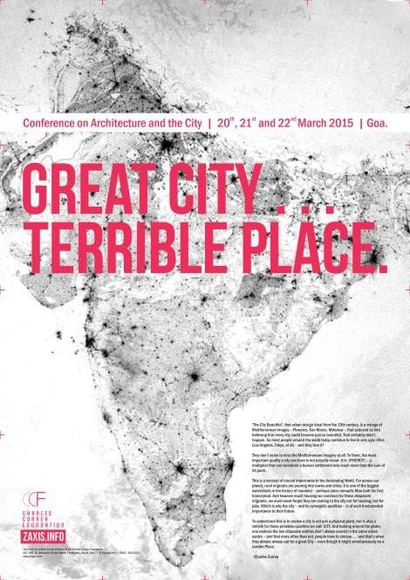
Curated by the Charles Correa Foundation, the Z Axis is an annual conference bringing together pioneers, thought leaders, influencers, professionals, and students in the fields of architecture and urban design to create an intellectual community focused on issues related to the context of India and the developing world. Fifteen speakers will gather from across the globe to explore the theme of Great City…Terrible Place, including Charles Correa, David Adjaye, Alfredo Brillembourg of Urban Think Tank, Spain's "guerrilla architect"Santiago Cirugeda, Simone Sfriso of Studio TAM Associati and more.
Charles Correa, considered one of India's greatest architects, is celebrated for his post-war work in India in which he connects modernism with local traditions. Digital magazine, uncube, has dedicated a full issue to this renowned architect and includes reviews of the RIBA exhibition currently on view in London, a look at his most influential architectural projects, assesses his role as urbanist and planner, and an interview in which Correa reflects on his own career.
After generously donating an archive of over 6000 drawings and 150 projects, architect Charles Correa sat down with RIBA President Angela Brady to discuss his life and work as one of “India’s greatest architects.” The short interview touches on a wide range of topics, from the inspiration behind some of his greatest projects to advice for future architecture students.
“The thing about architecture is that you cannot teach it. You can learn it, but you cannot teach it. And a good school is a school which makes you passionate about architecture and that teaches you how to ask questions. [...] If you know how to ask the right questions, you will develop your own philosophy and your own visual vocabulary.”








.jpg?1570002957 "La Muralla Roja / Ricardo Bofill. Image Courtesy of Ricardo Bofill")