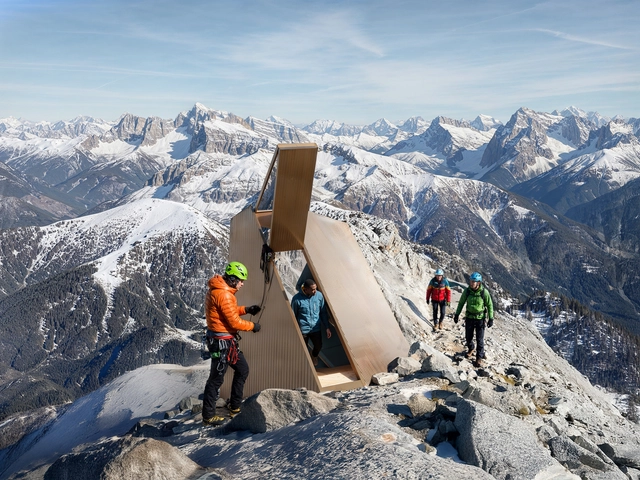
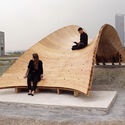
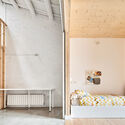
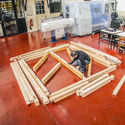
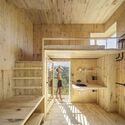
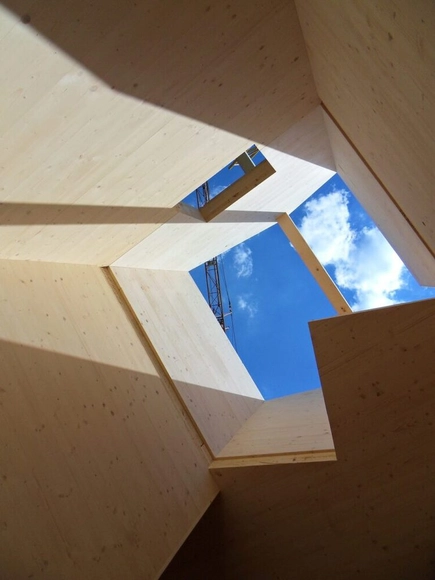
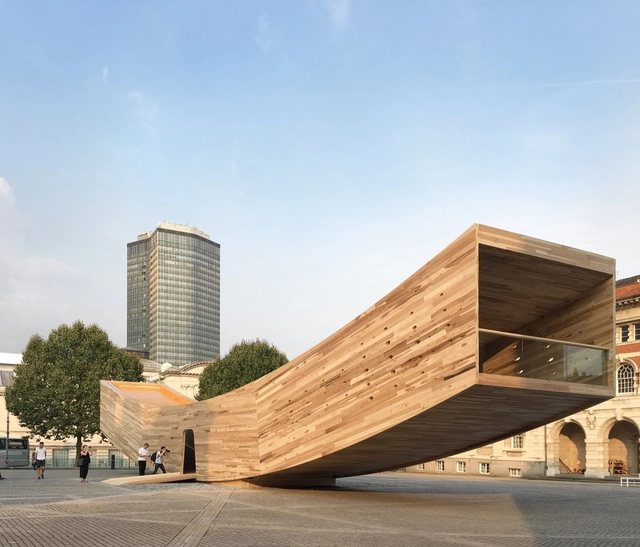
CRA–Carlo Ratti Associati, in collaboration with Salone del Mobile.Milano, recently unveiled the design of a digitally fabricated bivouac set to debut as an urban pavilion during the 2026 Winter Olympics in Milan. The digitally fabricated wooden structure is designed to be self-sufficient, incorporating systems for energy production and storage, as well as water harvesting through air condensation. After its debut at Milano Cortina 2026, the structure is planned to be airlifted by helicopter to its permanent high-altitude location in the Italian Alps, where it will serve as a refuge for mountaineers.
Wood, one of the oldest building materials, has been continuously reinvented throughout history. As contemporary architecture becomes more and more concerned with sustainability and environmental responsibility, the popularity of the material has also increased. As trees absorb carbon dioxide during their growth, their wood stores that carbon, keeping it out of the atmosphere. The materials derived from wood are thus associated with less greenhouse gas emissions on the condition of trees being harvested from sustainably managed forests. But in order to capture the full potential of this material, a plethora of techniques and modifications have evolved with the purpose of adapting and customizing wood's characteristics to the demands of modern design and construction. From thermal modification to engineered wood or versatile particle boards, these methods not only enhance wood's suitability for the rigors of contemporary architecture but also expand the usability of this sustainable material to an unprecedented scale.
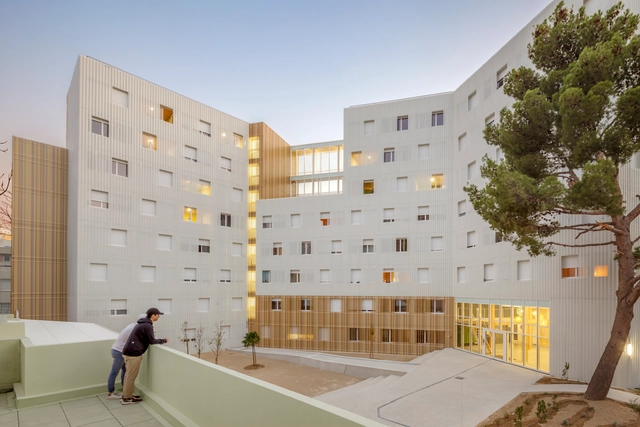
Student housing has undergone a remarkable transformation over the last century. Once seen as a utilitarian necessity, providing shelter and basic amenities for students, this architectural typology has evolved to address increasingly complex societal, cultural, and urban demands. Starting with Le Corbusier's modernist approach at the Cité Universitaire in Paris, student housing has reflected broader trends in architecture, urbanism, and social change.
Today, these buildings must cater to a highly diverse and transient population, navigating the pressures of affordability, density, and the evolving living standards of young adults. With rapid urbanization and increasing student mobility, universities now face the challenge of designing housing that is not only functional but also adaptable to different cultural and social contexts. This has led to more flexible, innovative solutions that promote both privacy and community living.
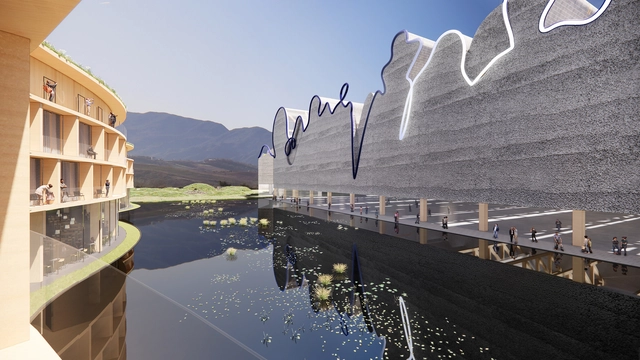
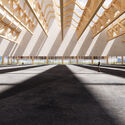
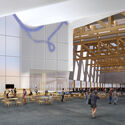
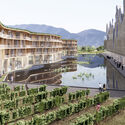
Following an international competition, Steven Holl Architects has been selected as the winner of the commission for the Expo Albania convention center and hotel in Tirana, Albania. The winning team, comprised of Steven Holl Architects, artist Agnieszka Kurant, Atelier 4, Atelier Markgraph, Stoss, and Arup, proposes an iterative process, collecting signatures from local Tirana communities and fusing them into a single wandering line, a continuation of artist Agnieszka Kurant’s project “End of Signature”.
Working within the restrictions of a limited carbon footprint can be one of the hardest – but also most rewarding – parts of a modern architect’s role. Whether to suit a large multinational corporation’s sustainability report, to achieve LEED status or similar for a commercial developer, or to build an eco-home for a climate-conscious private client – or even one who just wants to spend less on energy, it’s imperative to keep up-to-date with the latest carbon-neutral and low-carbon building practices and materials.
Whether looking at a project’s structural beginnings, its high-grade finishes, or thinking more holistically about its entire lifetime, there are huge gains to be made with sustainable substitutes and alternatives to traditional materials and techniques.
Housing is a fundamental aspect of architecture, providing shelter, which is essential for everyone. In urban environments, addressing the housing challenge is both urgent and complex. Social housing initiatives aim to provide a substantial portion of the population with access to this fundamental architectural concept: a home.
The growth of the world's population has led to an increase in housing and building construction around the globe. Considering that today the construction industry is responsible for 40% of the planet's CO2 emissions, and according to the Chilean Chamber of Construction, by 2035, Chile will need housing for 2.6 million people, it is necessary to guide this sector toward an environmentally friendly alternative. The answer to this challenge can be found in nature itself, where there are various efficient and sustainable construction solutions. Such is the case with wood: a noble and renewable material capable of capturing CO2 and contributing to a better environmental future.
Today, thanks to technological advances, engineered wood or laminated wood, composed of layers of structural wood oriented perpendicularly to each other, has positioned itself as a trending construction material worldwide, and Chile should not be the exception.
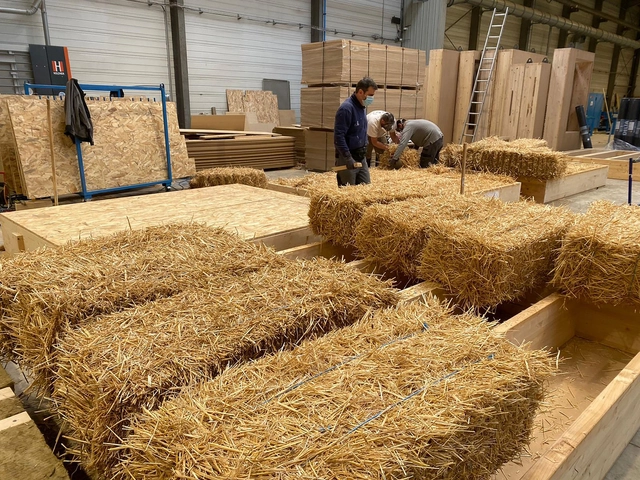
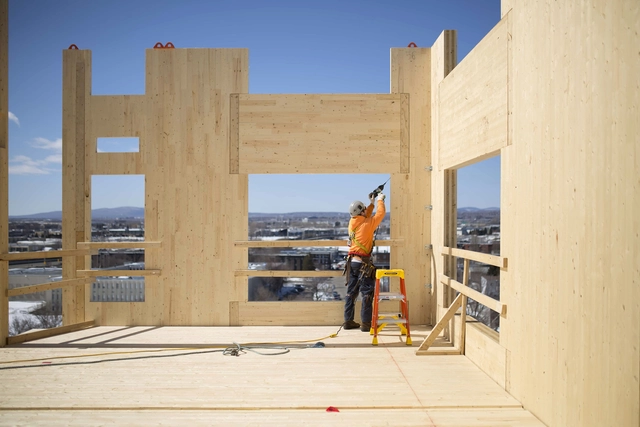
Timber is a natural, renewable material, easy to fabricate, and with low-carbon emissions. As a construction material, however, when put under enough directional force along its grain, sawn timber is structurally unstable, so deemed unsuitable under higher loads. In comparison, the manufacture of cross-laminated timber (CLT) involves simply gluing multiple layers of timber together at right angles. By crossing the direction of the grains, CLT achieves a far higher level of structural rigidity along both axes. CLT boards start with a minimum of three layers but can be strengthened further with the addition of more. Simply put, due to the complex physics involved in the perpendicular lamination, the strength of CLT board is similar to that of reinforced concrete, and has proven performance under seismic forces.
So what’s new? Wood’s been around for long enough now, and we’ve been using it as a building material for centuries. Surely this isn’t the first time someone’s realized it gets stronger the more you use it? Well… as you’d expect, the changing popularity of cross-laminated timber in construction does coincide with a greater understanding and focus on environmental causes, but the relationship hasn’t always been positive.
Wood is the concrete of the future. As timber construction becomes increasingly popular, you have probably heard this phrase. However, we are not talking about traditional construction techniques using timber, but rather about this well-known material combined with cutting-edge technology.
When it comes to seismic resistance, there are a number of myths that question the ability of wood to adequately perform in the event of an earthquake. However, its ductility allows it to deform plastically without breaking, absorbing and dissipating the energy generated by movement and vibration. Furthermore, unlike steel or concrete, wood is a lightweight material with a good strength-to-weight ratio, enabling it to withstand seismic forces without adding excessive load to the construction. This has been extensively verified in smaller-scale structures around the world, but how does a high-rise mass timber building behave in the face of an earthquake?
To dispel doubts, the Tallwood Project recently erected a 10-story building made of cross-laminated timber (CLT) at the University of California, San Diego (UCSD). The structure was tested on a shake table that simulated the 1994 Northridge earthquake in Los Angeles, magnitude 6.7, and the 1999 Chi-Chi earthquake in Taiwan, magnitude 7.7.
Urbanization and the evolution of modern cities have led to the development of high-rise building constructions, but what is the real environmental impact of these buildings? Traditionally designed with concrete as the main structural material, their construction implies an increase of CO2 emissions released into the atmosphere, air pollution and a rise in energy and water consumption. These consequences call for the development of new sustainable strategies outside of the industry’s comfort zone, such as the incorporation of wood as a structural element. Cross Laminated Timber (CLT) has emerged as a new structural strategy that Chilean architects have begun to incorporate into the country’s architecture, adapted to local conditions and norms.
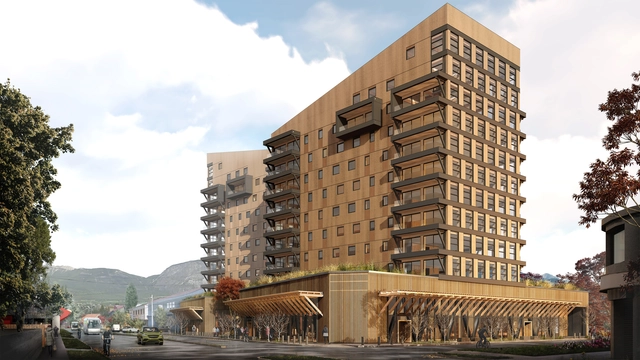
The ‘Tamango Project’ by Tallwood architects is an example of the challenges and opportunities of wood construction in the country and the region, as it might potentially be the first 12-storey building with an engineered timber structure. Changing the traditional construction paradigms of the area, Tamango represents a step into sustainable solutions that follow an integrated design process through all the stages of an architectural project.
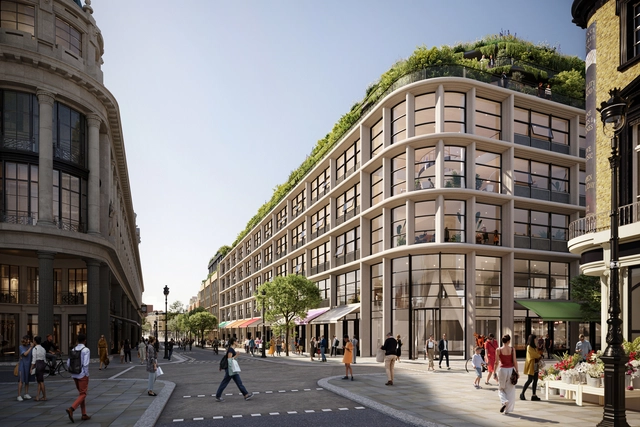
Foster + Partners has revealed the design for a new mixed-use development in the northern end of the central London high street. The building is located on Queensway, opposite the Whitley, the famous department store, which is also being transformed by Foster + Partners as part of a larger redevelopment scheme. Named The William, after William Whiteley, the eponymous founder of the famous Whiteleys, the project includes six floors of office space, shops, and 32 new homes, 11 of which will be affordable.
In the complex trade of architecture and construction, you are never alone. And behind every great building there is a strong team of professionals combining their expertise.
Hanif Kara OBE is a structural engineer and one of the founders of AKT II, one of the top engineering firms in the world. Based in London, he has been closely collaborating with some of the world’s most innovative architects, including Grafton Architects, David Chipperfield, Norman Foster, BIG, Zaha Hadid, Thomas Heatherwick, and many more.
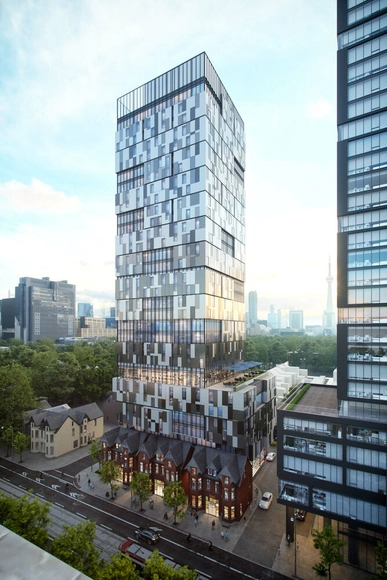
Icon Architects unveiled the design of a 90 meters tall timber tower in Toronto, Canada, which would become, once completed, North America's tallest building made of wood. Named the "191-199 College Street," the project is aligned with the master plan led by Alison Brooks Architects, Adjaye Associates, Henning Larsen, and SLA to develop Toronto's Waterfront that seeks to turn the Canadian city into a hub of affordable housing, robust public spaces, and new business opportunities. The construction of the CLT tower will cut over 3,300 metric tons of greenhouse gas emissions and accommodate around 400 affordable rental units.
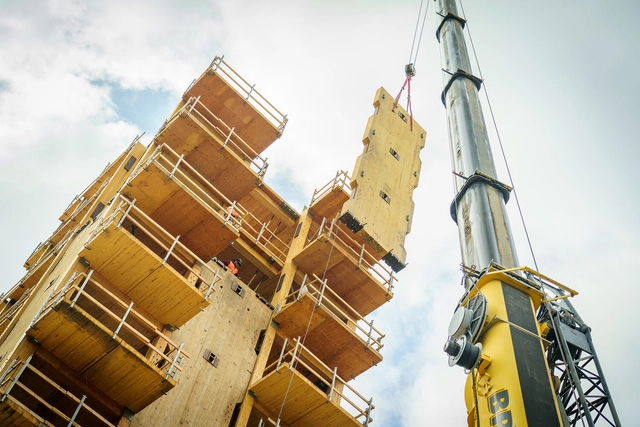
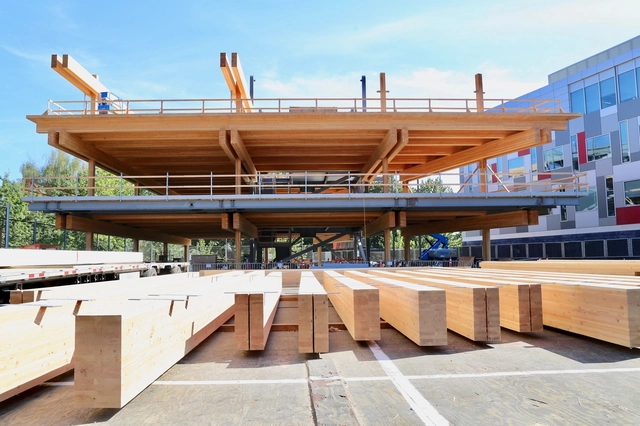
Adidas North American Headquarters Expansion in Portland, OR. South Building under construction showing the timber and steel system. Image Courtesy of LEVER Architecture
The family of products that encompass mass timber –including Cross-Laminated Timber (CLT), Glue-Laminated Timber (Glulam), and Mass Plywood– is increasingly becoming a viable construction alternative for the AEC industry. Timber has been a structural material for thousands of years, but these engineered wood products have broadened the field of options and provided a solid basis for architectural designers to work with, expanding upon their range of materials and finishes.
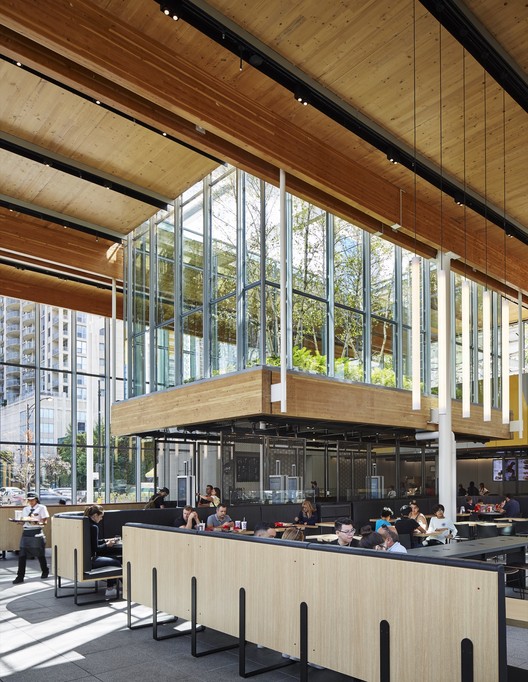
In an effort to reinvent an iconic American fast-food brand, McDonald’s U.S. has announced a new direction for the corporation, beginning with rethinking the restaurant’s current archetypal design both in its interior eating spaces and exterior urban landscape. A primary example of this commitment can be seen in the recently completed design for McDonald’s Global Flagship in Chicago by Ross Barney Architects.
The structure, which fills an entire city block in the heart of Chicago, was envisioned as a hallmark example of both the architect and the corporation's shared commitment to environmentally sustainable design. Cross Laminated Timber (CLT), an essential material for the project, replaced many of the commonly-used building materials such as steel, concrete, and plastics that have a larger environmental footprint.
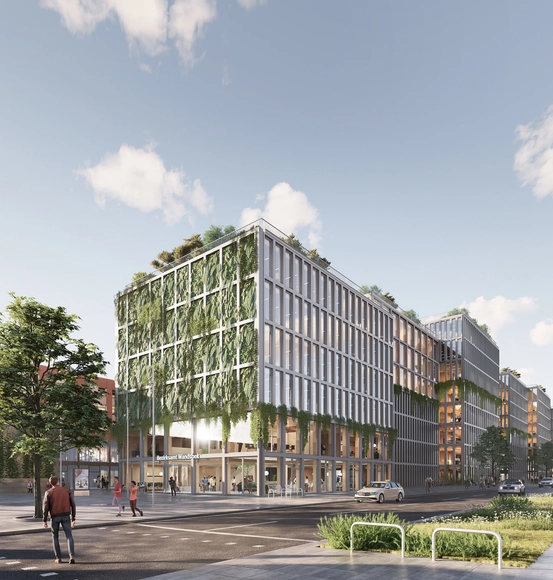
Danish design studio ADEPT has won a competition to design one of Germany’s largest fully-wooden construction buildings in the Wandsbek district of Hamburg, Germany. The building, which counts almost 34,000 sqm, is expected to open in 2026 and will house public administration facilities.