1. ArchDaily
  2. East Africa

East Africa: The Latest Architecture and News

Kéré Architecture Designs Healthcare Center in Burundi Using Regional Materials and Community-Based Construction

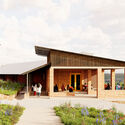
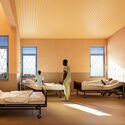
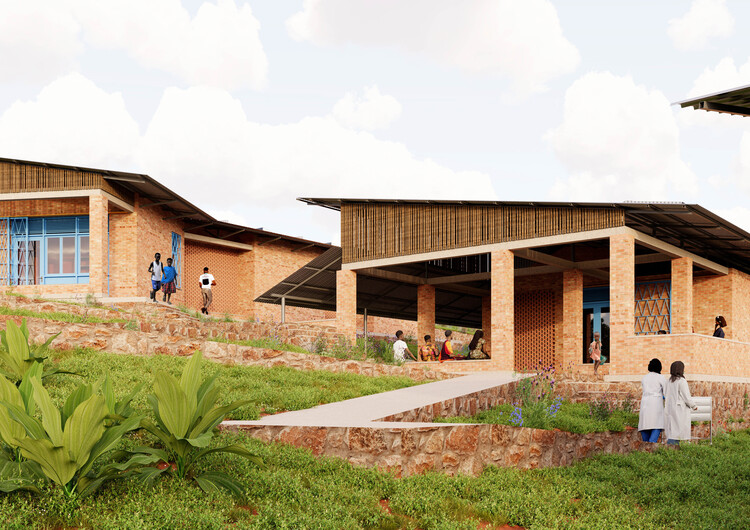
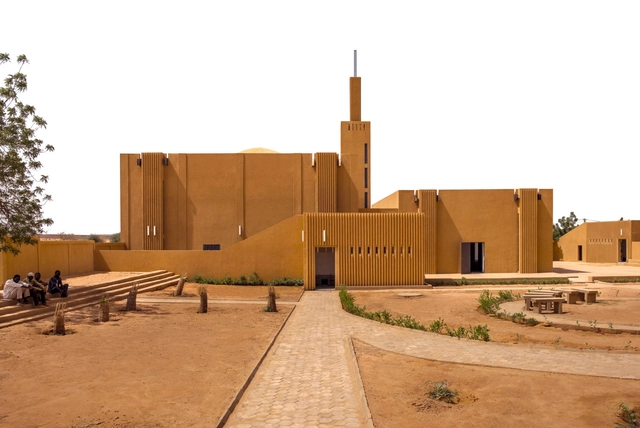
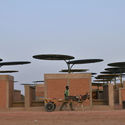
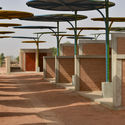
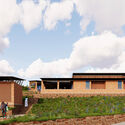
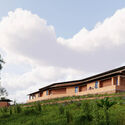
Kéré Architecture has designed a new healthcare center in the Bubanza region of Burundi, about 40 kilometers north of the country's former capital, Bujumbura. Commissioned by the NGO Ineza Clinic, the project aims to improve access to healthcare for the region's rural population, complementing the services of the existing general hospital, with a focus on maternity and specialized surgical care. Francis Kéré's plan distributes the program across ten pavilions connected by a road that zigzags up the hillside toward a visitor center, forming a 3,000 m² complex. The project combines materials sourced from the surrounding region, traditional craftsmanship, and knowledge transfer, minimizing its carbon footprint, supporting the local economy, and strengthening local teams. Construction has already started, with the first phase scheduled for completion this year.
Kéré Architecture Designs Healthcare Center in Burundi Using Regional Materials and Community-Based Construction - Image 1 of 4Kéré Architecture Designs Healthcare Center in Burundi Using Regional Materials and Community-Based Construction - Image 2 of 4Kéré Architecture Designs Healthcare Center in Burundi Using Regional Materials and Community-Based Construction - Image 3 of 4Kéré Architecture Designs Healthcare Center in Burundi Using Regional Materials and Community-Based Construction - Image 4 of 4Kéré Architecture Designs Healthcare Center in Burundi Using Regional Materials and Community-Based Construction - More Images+ 15

From the Hills of Athens to the Craters of Mars, Discover 8 Award-Winning Competition Proposals from the ArchDaily Community

Subscriber Access | 

Architectural competitions have long offered a space for experimentation: platforms where ideas can be tested, typologies reimagined, and critical questions addressed through design. Freed from some of the constraints of commercial commissions, competition entries often reflect ambitious visions for how architecture can respond to environmental, cultural, and social challenges. Whether focused on future habitats, public institutions, or small-scale community infrastructure, these proposals give shape to the values and priorities driving architectural thinking today.

This month's Unbuilt selection brings together eight competition-winning projects submitted by the ArchDaily community. Each received first, second, or third place in recent local and international competitions. The featured proposals span a wide range of programs and geographies: a sustainable library in Lima, a Martian habitat exploring closed-loop systems, an adult orphanage designed for empowerment in India, a new French school in Athens, and a placemaking initiative in Singapore rooted in local folklore. While varied in scale and scope, they all highlight architecture's capacity to engage context, foster inclusion, and propose new ways of inhabiting space.

From the Hills of Athens to the Craters of Mars, Discover 8 Award-Winning Competition Proposals from the ArchDaily Community - Image 7 of 4From the Hills of Athens to the Craters of Mars, Discover 8 Award-Winning Competition Proposals from the ArchDaily Community - Image 8 of 4From the Hills of Athens to the Craters of Mars, Discover 8 Award-Winning Competition Proposals from the ArchDaily Community - Image 33 of 4From the Hills of Athens to the Craters of Mars, Discover 8 Award-Winning Competition Proposals from the ArchDaily Community - Image 41 of 4From the Hills of Athens to the Craters of Mars, Discover 8 Award-Winning Competition Proposals from the ArchDaily Community - More Images+ 44

The Legacy of Modernist Architecture in Tanzania: Anthony Almeida and Beda Amuli

Subscriber Access | 

The legacy of the Modernist movement is a complicated one. Spanning a diverse assortment of fiercely debated sub-categories and styles, the Modernist style has established its presence in virtually every continent. Although the movement's origins may be rooted in Europe and the U.S., outside of the Eurocentric canon architects have redefined and re-established the definition of a "Modernist" building. In Sri Lanka, for example, architect Geoffrey Bawa's sensitive, nature-inspired architectural responses gave rise to the "Tropical Modernism" label. Over in the African continent, it is in the East-African country of Tanzania that some highly unique examples of Modernist architecture are found – headed by architects Anthony Almeida and Beda Amuli.

The Legacy of Modernist Architecture in Tanzania: Anthony Almeida and Beda Amuli - Image 1 of 4The Legacy of Modernist Architecture in Tanzania: Anthony Almeida and Beda Amuli - Image 2 of 4The Legacy of Modernist Architecture in Tanzania: Anthony Almeida and Beda Amuli - Image 3 of 4The Legacy of Modernist Architecture in Tanzania: Anthony Almeida and Beda Amuli - Image 4 of 4The Legacy of Modernist Architecture in Tanzania: Anthony Almeida and Beda Amuli - More Images+ 12

Abandoned Modernism in Liberia and Mozambique: The Afterlives of Luxury Hotels

Subscriber Access | 

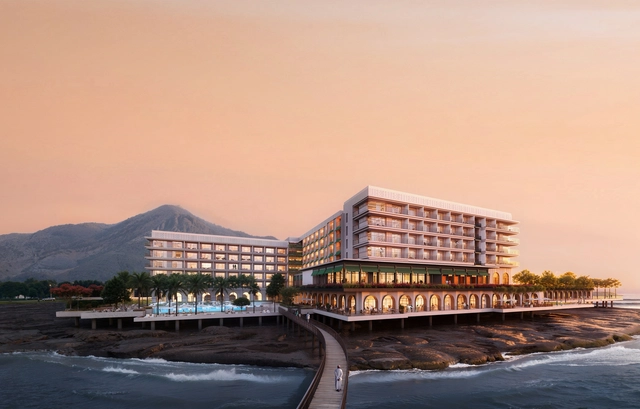
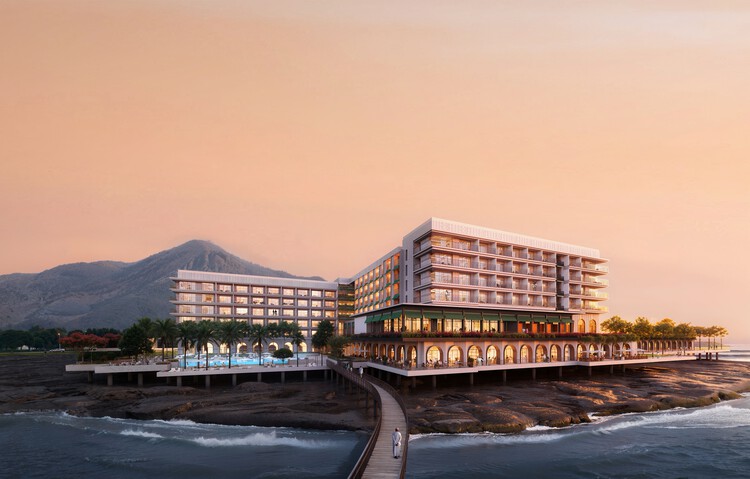
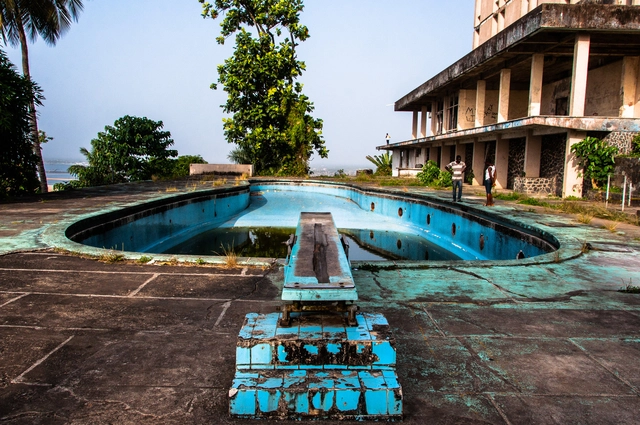
The luxury hotel, as an architectural typology, is distinctive. In effect, it's a self-contained community, a building that immerses the well-off visitor into their local context. Self-contained communities they might be, but these hotels are also vessels of the wider socioeconomic character of a place, where luxury living is often next door to informal settlements in the most extreme examples of social inequality.

Abandoned Modernism in Liberia and Mozambique: The Afterlives of Luxury Hotels - Image 1 of 4Abandoned Modernism in Liberia and Mozambique: The Afterlives of Luxury Hotels - Image 2 of 4Abandoned Modernism in Liberia and Mozambique: The Afterlives of Luxury Hotels - Image 3 of 4Abandoned Modernism in Liberia and Mozambique: The Afterlives of Luxury Hotels - Image 4 of 4Abandoned Modernism in Liberia and Mozambique: The Afterlives of Luxury Hotels - More Images+ 9

A Remarkably Comprehensive New Guide to the Architecture of Sub-Saharan Africa

This article was originally published on Common Edge.

Compared to that of the West and East, awareness and knowledge of the architecture of sub-Saharan Africa—Africa south of the Sahara Desert—is scant. A new book intends to mitigate this oversight, and it’s a significant accomplishment. Architectural Guide Sub-Saharan Africa (DOM publishers, 2021), edited by Philipp Meuser, Adil Dalbai, and Livingstone Mukasa, was more than six years in the making. The seven-volume guide presents architecture in the continent’s 49 sub-Saharan nation-states, includes contributions by nearly 340 authors, 5,000 photos, more than 850 buildings, and 49 articles expressly devoted to theorizing African architecture in its social, economic, historical, and cultural context. I interviewed two of the editors—Adil Dalbai, an architectural researcher and practitioner specializing in sub-Saharan Africa, and Livingstone Mukasa, a native Ugandan architect interested in the intersections of architectural history and cultural anthropology—about the challenges of creating the guide, some of its revelations about the architecture of Africa, and its potential impact.

Adulation and Demonisation: Materiality vs. Morality

Subscriber Access | 

For centuries and centuries we’ve built – and the diversity in our global built environment is a testament to that. The many different cultures around the globe have had different ways of building throughout history, adapting locally found materials to construct their structures. Today, in our globalized present, building materials are transported across the globe far from their origins, a situation that means two buildings on completely opposites sides of the world can be more or less identical. 

Adulation and Demonisation: Materiality vs. Morality  - Image 1 of 4Adulation and Demonisation: Materiality vs. Morality  - Image 2 of 4Adulation and Demonisation: Materiality vs. Morality  - Image 3 of 4Adulation and Demonisation: Materiality vs. Morality  - Image 4 of 4Adulation and Demonisation: Materiality vs. Morality  - More Images+ 5

Uncovered Ground: Architectural Elements, Urbanism and Cities

The year 2021 has been a turbulent one –coronavirus rages on, and the design and construction industries have been forced to keep adapting two years into a global pandemic. As virtual methods of working and communicating continue to be tweaked and honed, a plethora of virtual events has meant that architectural discourse outside the western canon and Eurocentric gaze, in a small way, has been able to claim space front and center in the global architectural conversation.

Uncovered Ground: Architectural Elements, Urbanism and Cities  - Image 1 of 4Uncovered Ground: Architectural Elements, Urbanism and Cities  - Image 2 of 4Uncovered Ground: Architectural Elements, Urbanism and Cities  - Image 3 of 4Uncovered Ground: Architectural Elements, Urbanism and Cities  - Image 4 of 4Uncovered Ground: Architectural Elements, Urbanism and Cities  - More Images+ 9

Socialising, Commerce, and Trade: The African Market Hall in a Modernised World

Subscriber Access | 

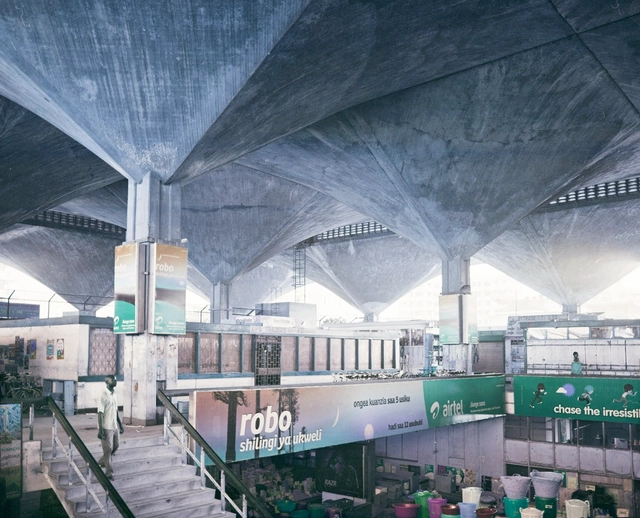
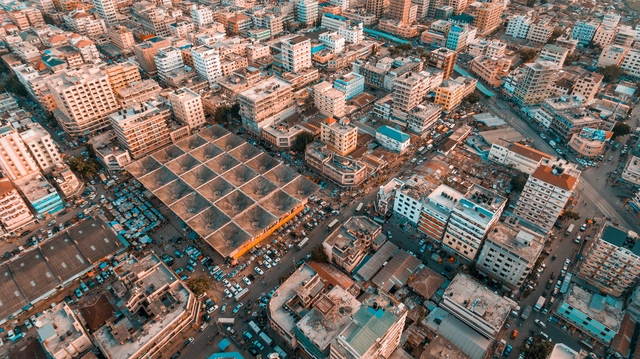
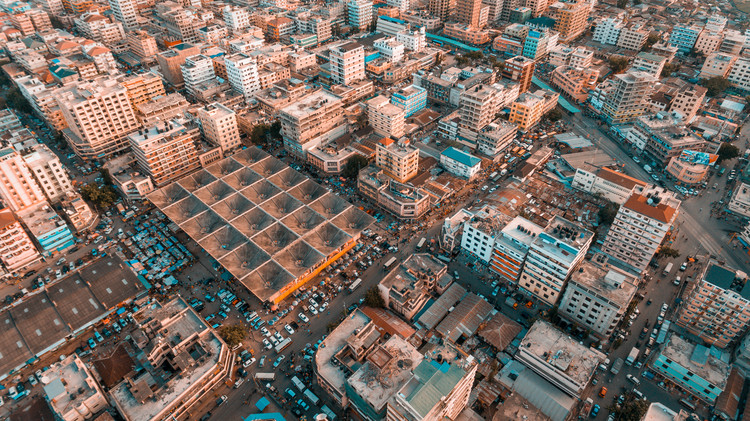
A few months ago – in July 2021, the 47-year-old Kariakoo Market went up in flames in Dar es Salaam. Designed by Tanzanian architect Beda Amuli, the market is a central landmark – a key part of Dar es Salaam’s commercial hub. Early images of a new Kariakoo Market show a taller structure, with six floors compared to the three in Amuli’s design. Conversations on social media have abounded on the new design, and if a “tower” typology is really the appropriate choice considering the unpopular nature of other similar “tower” market halls in Dar es Salaam.

Socialising, Commerce, and Trade: The African Market Hall in a Modernised World - Image 1 of 4Socialising, Commerce, and Trade: The African Market Hall in a Modernised World - Image 2 of 4Socialising, Commerce, and Trade: The African Market Hall in a Modernised World - Image 3 of 4Socialising, Commerce, and Trade: The African Market Hall in a Modernised World - Image 4 of 4Socialising, Commerce, and Trade: The African Market Hall in a Modernised World - More Images+ 6

A Climate Conversation: The Role of Architecture in Shaping a Sustainable African Future

When we think of migration, we think of movement. We think of the movement of people simply looking for greener pastures – a better life for themselves. But we also think of war, of conflict, of an unstable situation in a specific place forcing the hand of a location’s residents to seek safety elsewhere. Historically and into present day, war has been the reason for the increased presence of refugees. Instability in places such as Syria, Iraq, or the Central African Republic have caused millions to flee their homes. Lurking amongst this migration due to conflict, however, is the migration of people at mercy of the changing environmental conditions of the Earth – climate migration.

A Climate Conversation: The Role of Architecture in Shaping a Sustainable African Future  - Image 1 of 4A Climate Conversation: The Role of Architecture in Shaping a Sustainable African Future  - Image 2 of 4A Climate Conversation: The Role of Architecture in Shaping a Sustainable African Future  - Image 3 of 4A Climate Conversation: The Role of Architecture in Shaping a Sustainable African Future  - Image 4 of 4A Climate Conversation: The Role of Architecture in Shaping a Sustainable African Future  - More Images+ 4

Aerial Futures Explores Droneports in East Africa and the Global South

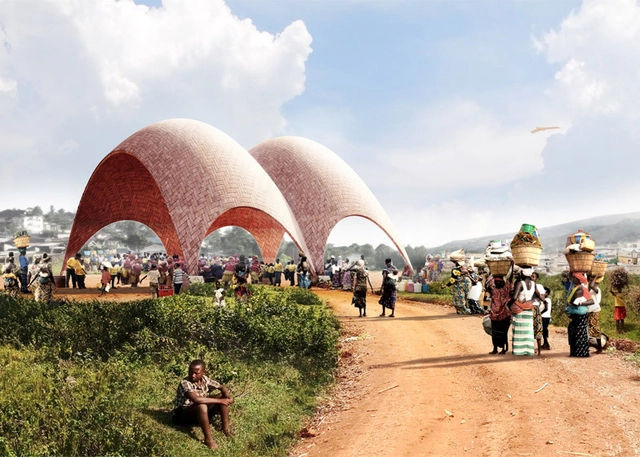
A new video by AERIAL FUTURES explores the potential of droneports in East Africa and the Global South. The Norman Foster Foundation was one of the first groups to propose the creation of a droneport network to deliver medical supplies and other necessities to areas of Africa that are difficult to access due to a lack of roads or other infrastructure. The project aspires to have droneports across small towns in Africa and in other emerging economies by 2030.

Aerial Futures Explores Droneports in East Africa and the Global South - Image 1 of 4Aerial Futures Explores Droneports in East Africa and the Global South - Image 2 of 4Aerial Futures Explores Droneports in East Africa and the Global South - Image 3 of 4Aerial Futures Explores Droneports in East Africa and the Global South - Image 4 of 4Aerial Futures Explores Droneports in East Africa and the Global South - More Images+ 2