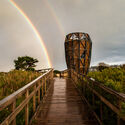
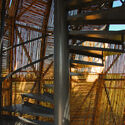
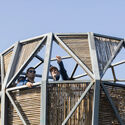
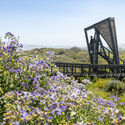
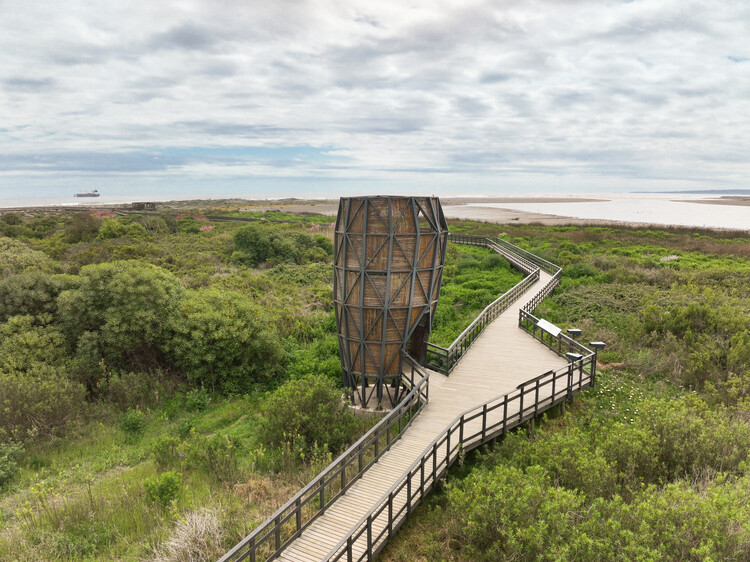
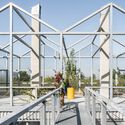
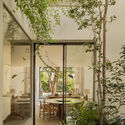
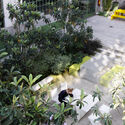
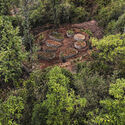
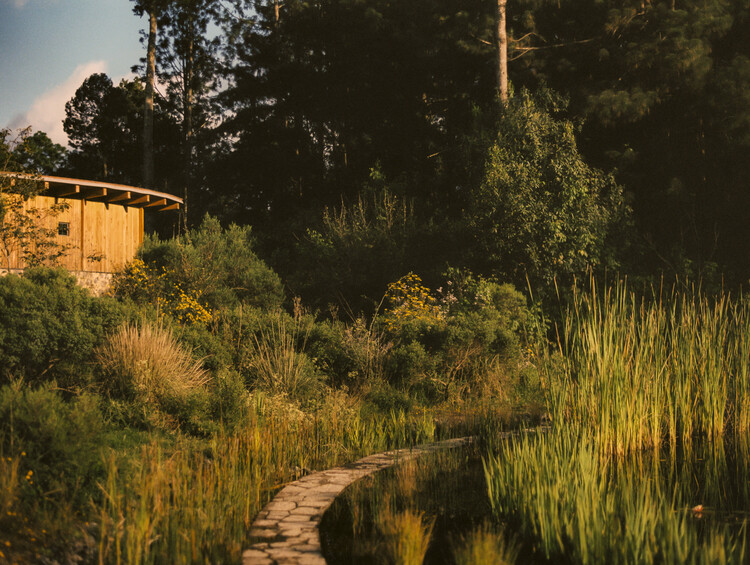
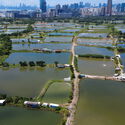
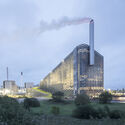
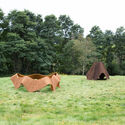
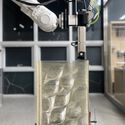
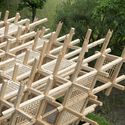
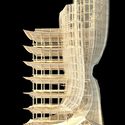
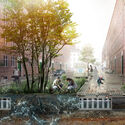
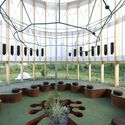
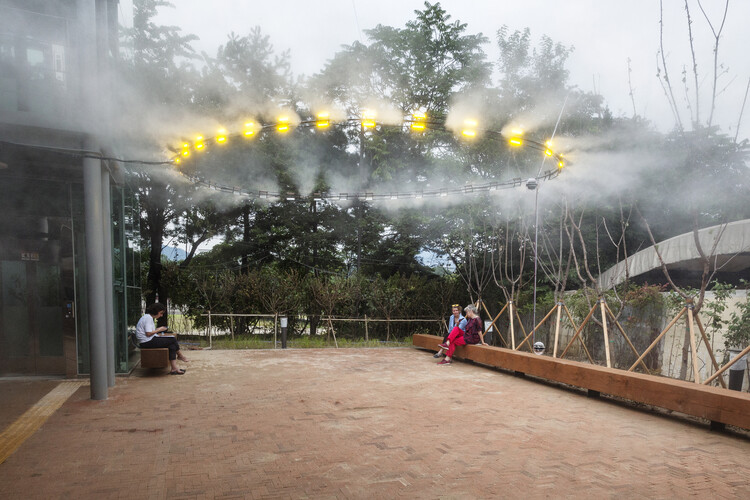
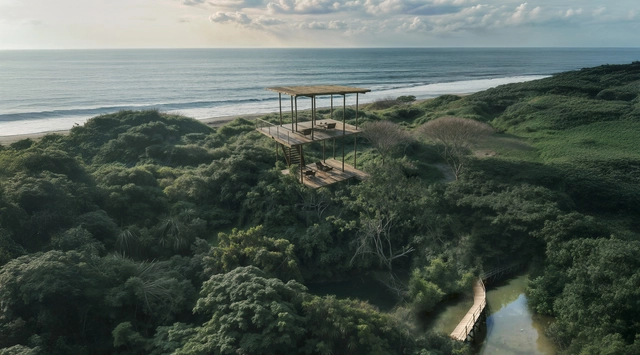
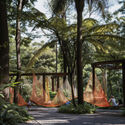
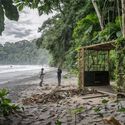
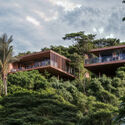
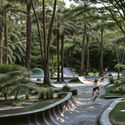
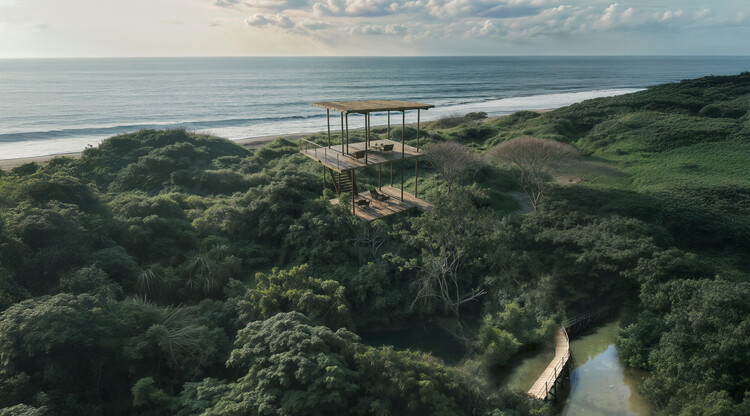
Siete Colores Observation Tower. Image Courtesy of Fundación Cosmos
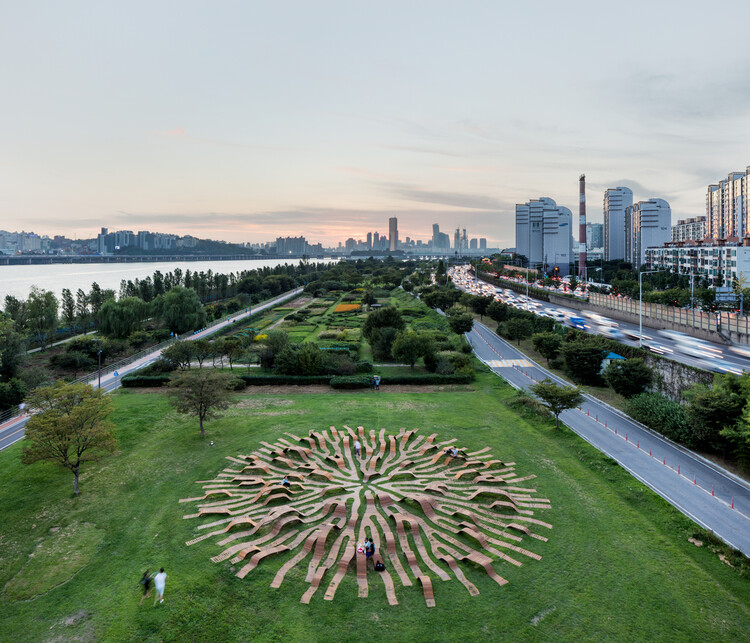
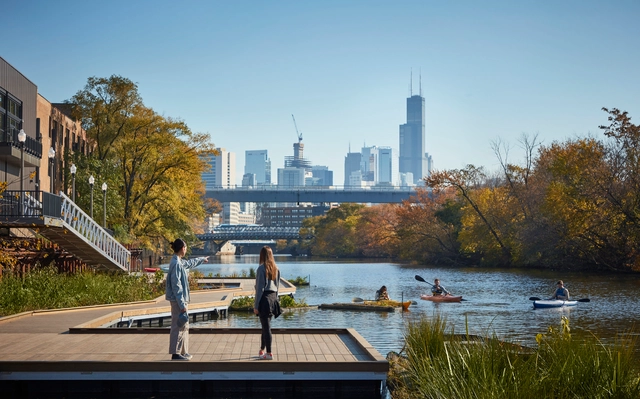
How can architectural design become an active tool for conservation? By considering nature as an inexhaustible source of inspiration, a harmonious connection with it frames the countless interrelationships that exist among humans, living organisms, and natural cycles. Designing with the landscape means learning to coexist with its temporal dynamics without controlling its processes. Traditions, ecology, and the past and present of a place all contribute to creating spaces that interpret their communities. Landscape architecture can draw inspiration from birds, plants, and other natural elements to shape the complex, dynamic network of ecosystems and human activities that make up the environment.
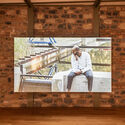
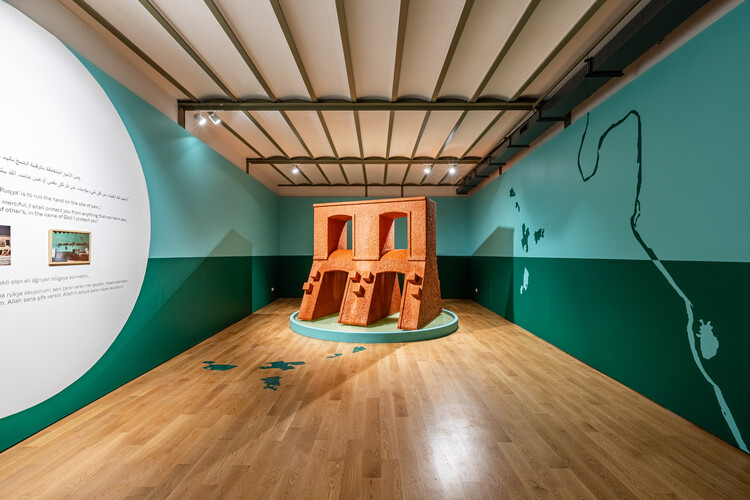
Tell the Water What the Clay Kept Secret. Image Courtesy of Ola Hassanain
Ola Hassanain is a Sudanese architect and artist operating in the Netherlands, and will be exhibiting at the Pan-African Architecture Biennale in Nairobi, Kenya, later in 2026. All three locations tell stories of the built environment's relationship with water. These illustrate the continuous battles between the amorphous forces of nature that are the rivers and seas, and human attempts to shape and control them. In most cases, they are attempts at extraction. Catastrophes happen as a result of the overreach of these attempts or of their mismanagement, or both.
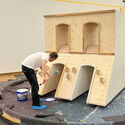
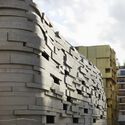
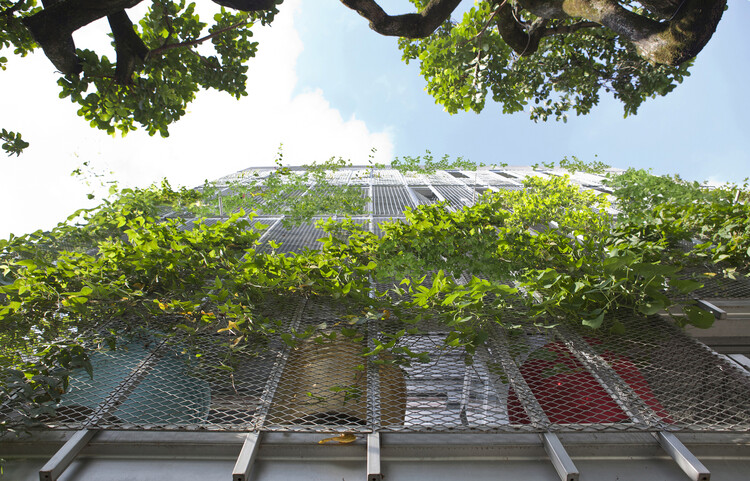
When we think of façades, we rarely think of them as habitats. We see them as the elements that separate interior from exterior, regulate temperature, reduce noise, and protect buildings from external conditions. They give architecture its visual language, but they are also expected to keep the outside world at a distance. In doing so, façades have often been understood as barriers: surfaces that define where human comfort begins and where the environment is meant to remain outside.
But the outside of a building is never empty. For centuries, architecture has unintentionally created opportunities for other forms of life. Birds nested beneath roof tiles, insects occupied cracks in masonry walls, and mosses or plants took root along ledges, gutters, and rough stone surfaces. These conditions were rarely designed with other species in mind, but they created small opportunities for life to inhabit them.
Western philosophical tradition has long placed culture in opposition to nature. This dual thinking has shaped the canon of the sciences and humanities, and architecture was not left aside. Under that logic, everything that is not human exists to be exploited by them and is named "natural resource". This extractivist mindset has shaped the development of many parts of the world in the last centuries, leaving deep—sometimes irreparable—marks on the planet. Nevertheless, other ways of living have always existed. From West-African religious practices based on animism to the herbal sciences of the masters of the Sacred Jurema in Brazil; from indigenous communities in India whose life rhythm mirrors the monsoons, to the Arctic's Inuits who can see dozens of shades of white: humans and nature bear no distinction, what exists is life.
Contemporary authors bring this discussion to the realms of philosophy and, more specifically, architecture. Donna Haraway, Antônio Bispo dos Santos, Achille Mbembe, and Beatriz Colomina are only a few whose work has helped expand the narrow Western perspective, shedding light on alternative ways of living together—with other humans and more-than-humans—on this planet.
Based in Mexico City, Estudio Ome, founded by Susana Rojas Saviñón and Hortense Blanchard, is an architectural and landscape practice working across forests, volcanic terrains, urban fragments, and former industrial sites. Winner of the ArchDaily 2025 Next Practices Awards, the studio develops projects through sustained observation of ecological and territorial conditions, where design decisions arise directly from the behavior of soil, water, vegetation, and ground.
Each project begins with repeated encounters. The terrain is first approached through walking and prolonged observation, letting drainage patterns, erosion, and seasonal shifts become legible before any formal measurement occurs. These visits form the basis for interpreting both visible and subterranean layers—hydrology and historical transformations that continue to exert force on the surface.
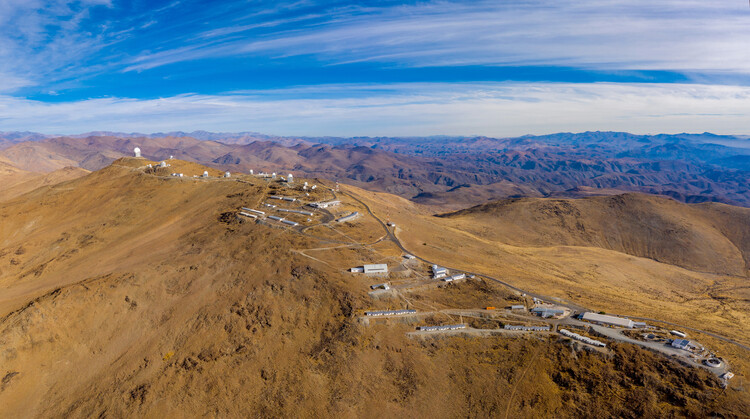
Chilean Atacama Desert. Image by European Southern Observatory with known IDsCC-BY-4.0European Southern Observatory Images ESO files uploaded by OptimusPrimeBot licensed under the Creative Commons Attribution 4.0 International license
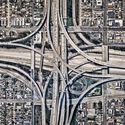
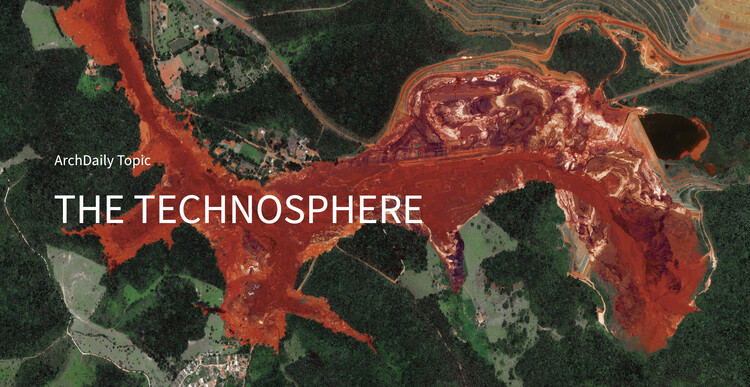
Architecture can no longer be conceived as an isolated object, detached from the technical networks that sustain contemporary life — a condition that calls for new readings and approaches. It is within this context that, in March, ArchDaily’s monthly theme focused on The Technosphere, a topic both broad and inherently complex. Drawing on the concept of the technosphere, coined by geoscientist Peter Haff to describe the totality of human-made artifacts, a landscape emerges in which contemporary life is deeply intertwined with machines, data, and energy networks.
The Cosmogony of (Racial) Capitalism. Image Courtesy of Dele Adeyemo
Having thrown a stone today, Eshu kills a bird of yesterday. The Yoruba proverb tells both a story of reparation and of ancestrality by joyfully bending spacetime conventions and accessing subjects from the past with present actions. The saying offers a poetic entry point to broader West African traditions and to the practice of Scottish-Nigerian artist and architect Dele Adeyemo. Named one of the winners of the ArchDaily 2025 Next Practices Awards, Adeyemo's work brings together ecology, spirituality, dance, and territory, examining how embodied cultural practices can generate alternative spatial possibilities within and against the architecture of racial capitalism.
Born in Nigeria and raised in the United Kingdom, Adeyemo has been visiting Lagos for many years. Through this engagement, he has developed an extensive body of research on collective movement practices that predate capitalism and offer distinct, often imaginative spatial intelligences operating alongside dominant systems. ArchDaily spoke with Dele about his artistic and pedagogical practices, and how he identifies design sophistication where architects often perceive deficiency.
How heavy is a house? In his 1965 essay A Home Is Not a House, Reyner Banham observed that modern American dwellings were becoming structurally lighter while growing heavier in mechanical services, such as plumbing, wiring, heating, and cooling. The true weight of architecture, he argued, was no longer in walls and roofs, but in the energy-intensive systems that sustained comfort.
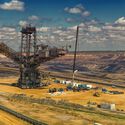
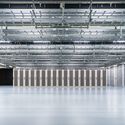
Decades later, the question was updated at the 7th Lisbon Architecture Triennale. Curators Ann-Sofi Rönnskog and John Palmesino asked: How heavy is a city? The scale shifted from the domestic interior to the territory. The technosphere, materialized in the estimated 30 trillion tons of human-made matter on Earth, reframes the discussion entirely. Cities, data centers, oil fields, logistics hubs, satellites, cables, and waste streams form a planetary system in which architecture is neither object nor backdrop, but participant.
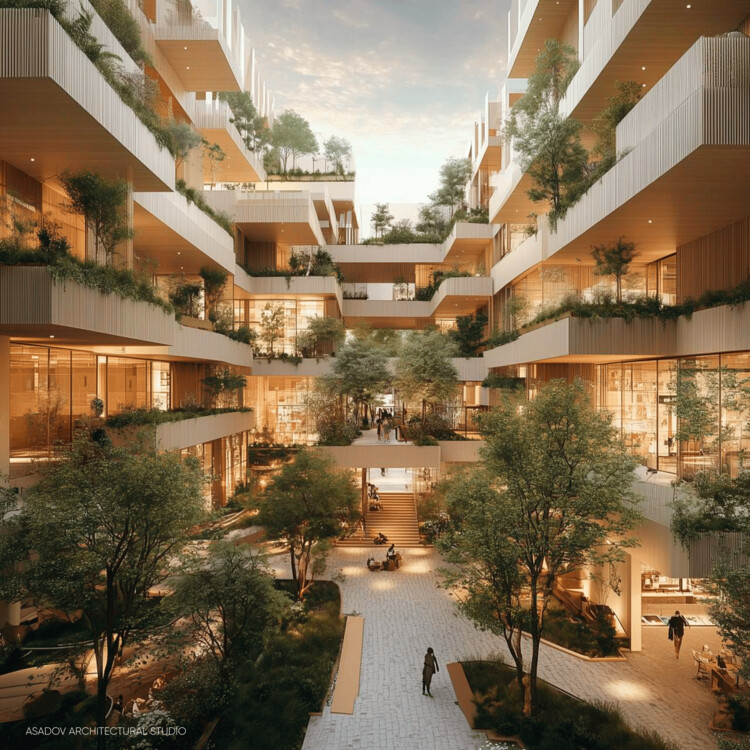
Urban masterplans remain an exploratory ground for unbuilt speculation, offering insight into how cities might recalibrate mobility, ecology, and collective life in response to accelerating environmental and social pressures. In this Unbuilt edition, submitted by the ArchDaily community, the selected projects bring together a range of large-scale proposals that examine urban centers, waterfront districts, infrastructural corridors, and cultural landscapes as spatial frameworks for reconnection and resilience. Rather than treating the masterplan as a rigid blueprint, these projects approach urbanism as an adaptive system shaped by climate, topography, infrastructure, and public space.
Across varied geographies, from Northern European town centers and Mediterranean coastal districts to Central Asian polycentric hubs and Gulf megacities, the proposals explore diverse architectural and urban strategies. They range from park-led civic transformations built over highway tunnels to elevated pedestrian networks above active transport systems, mixed-use blocks structured by historic planning logics, marina developments integrating environmental stewardship, and research-driven models for equitable landscape urbanization.
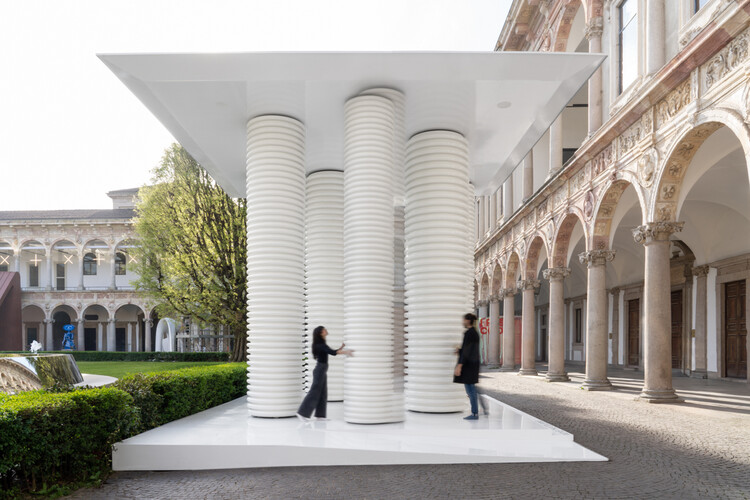
Meet the architects and designers of the future as their newest work comes together, and take a peek behind the doors of the world's #1 university for art and design.
Across recent years, architectural discourse has been shaped by the emergence of new voices, rediscovered territories, and a growing commitment to shared forms of knowledge. These concerns remain fully present in 2025 as ongoing debates that continue to gain density and nuance. Questions of who produces architecture, from which contexts, and under what conditions remain central, increasingly informed by practices that operate collectively, across disciplines, and beyond singular authorship.
This continuity is reflected in how architecture is understood less as a finished object and more as an ongoing process embedded in social, cultural, and environmental systems. Discussions around agency, participation, and knowledge production persist, alongside sustained attention to rural, peripheral, and historically marginalized contexts. Rather than privileging a single scale or geography, architecture is approached as a practice that moves between territories, acknowledging the unequal conditions that shape how spaces are designed, built, maintained, and inhabited.
This past year marked a period of introspection for architecture. As 2025 unfolded, the discipline, confronted with evolving environmental and social realities, entered a broader turning point in how it understands its role and how users engage with it. Throughout the year, exhibitions shifted focus away from buildings as isolated objects toward a broader understanding of relationships between ecology, equity, everyday life, and collective imaginaries. Across institutions and cities, they operated less as showcases and more as discursive platforms: places where architecture was not only presented, but also imagined, questioned, and collectively redefined.
While exhibitions have long functioned as sites of discourse, politics, and community, this role became more explicit in 2025. As Carlo Ratti noted in an ArchDaily interview during the pre-opening of the Venice Architecture Biennale 2025, exhibitions today can "hybridize the way that people come together," an ambition that echoed across cities and institutions as exhibitions evolved into spaces for debate, experimentation, and collective reflection. Exhibitions are places where architects and designers meet, where conversations unfold openly with the public, and where ideas emerge through spontaneous exchanges among passersby. Exhibitions became spaces where architectural discourse extended beyond professional circles, opening conversations to broader publics through everyday encounters, shared experiences, and informal exchanges.
The future of cities has long been defined by intelligence: networks of sensors, data, and engineered systems. From traffic-flow algorithms to climate dashboards, the smart city promised to make urban life optimized, measurable, and predictable. Yet amid this technological abundance, something essential feels absent: sensitivity. Cities are becoming increasingly equipped to process information but less able to perceive atmosphere, emotion, or care.
As recent global debates on urban innovation reveal, the next challenge is not about adding more devices but cultivating new forms of awareness. A sensitive city listens to its climate, adapts to its inhabitants, and responds to the subtle rhythms of the environment. In this shift from computation to perception, architecture and urban design are rediscovering intelligence as a form of empathy.
The conversation with VOID emerges within the framework of the 2025 Latin American Architecture Biennial, offering an opportunity to explore a practice that listens, cares, and accompanies. Their work unfolds as an act of mediation: through interdisciplinary research and attention to the plurality of natural and social factors, they seek to understand the many natures of a place. Since its beginning in 2012, this process has evolved, consolidating a stance that seeks to design architecture from and for the place—caring for it, healing it, and regenerating it—opening spaces where territories sustain and unfold their own adaptive processes.
Chimneys are among the most quietly persistent elements in architectural history. Yet their presence persists in nearly every cultural and climatic context, serving as a technical feature and a spatial, atmospheric, and symbolic device. It populates dense city skylines and anchors rural horizons alike, its vertical silhouette as ordinary as a window or a doorframe. This apparent ordinariness is deceptive. The chimney is one of the few architectural components that links the intimate scale of interior life with the expansive forces of the environment. For architects and designers, the necessity of the chimney presents a choice: to let it recede quietly into the building's functional fabric or to amplify it as a central, expressive element that shapes a project's identity.
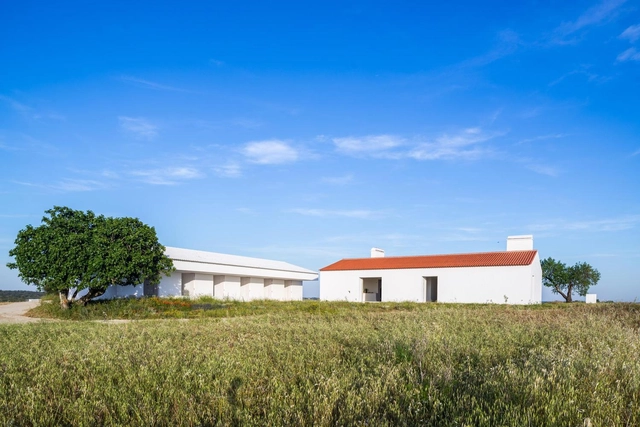
Tourism in Portugal began to develop in the late 1950s, initially centered on key destinations such as the Algarve coast, Lisbon, and the religious hub of Fátima. This focus made tourism largely a coastal activity. However, rapid growth and overburdened infrastructure in these areas led to saturation and a crisis in the sector. To address this, efforts were made to promote alternative destinations, appealing to a new wave of tourists looking for more sustainable, authentic, and locally immersive experiences.