1. ArchDaily
  2. Environmental Design

Environmental Design: The Latest Architecture and News

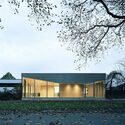
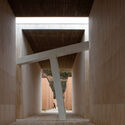
Thick Walls and Deep Openings: When Architecture Rediscovers Mass

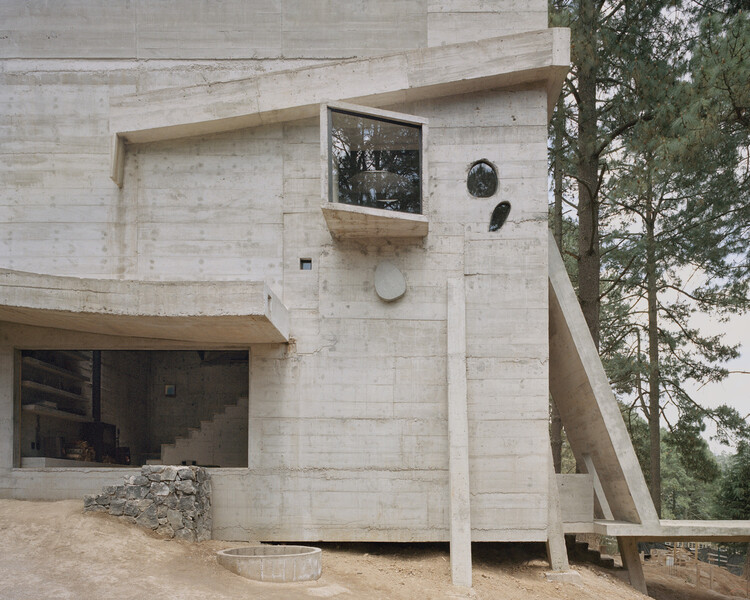
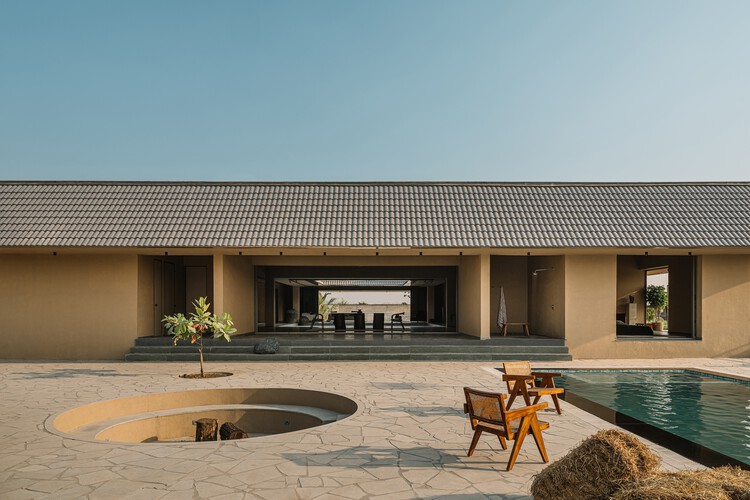
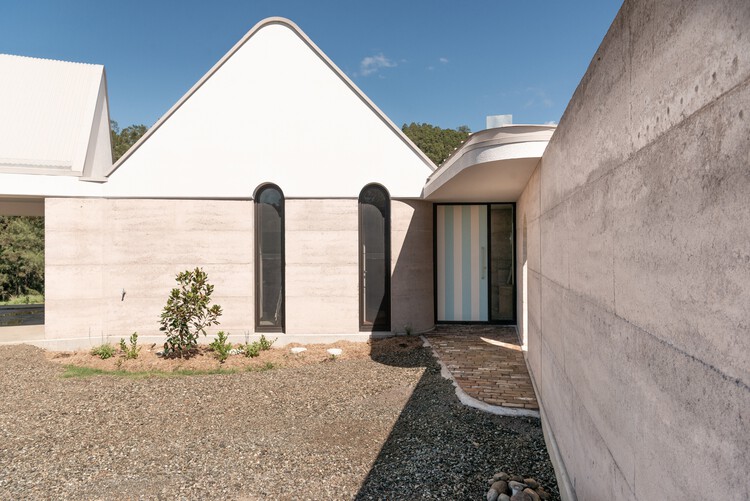
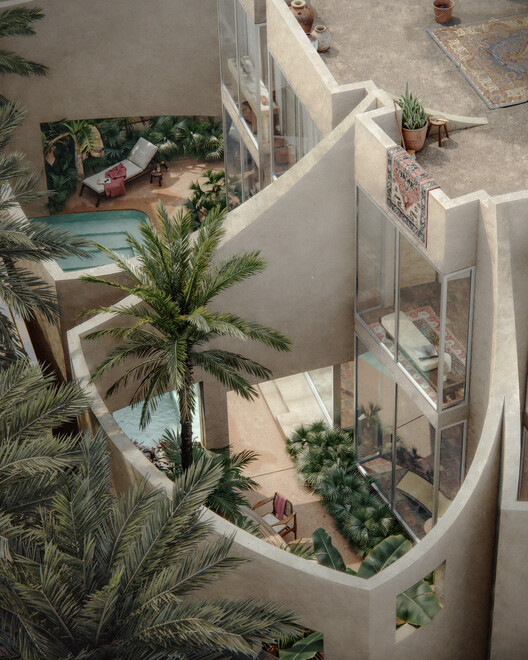
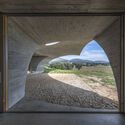
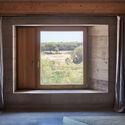
For much of the twentieth century, architectural culture was shaped by the pursuit of lightness. Steel structures and curtain walls reduced the building envelope to a thin layer separating interior from exterior, while façades became smooth, continuous surfaces where windows were cut as precise openings within an abstract plane. But for centuries, buildings were conceived as bodies of mass; walls possessed depth, windows were recessed within thick masonry, and space was often experienced as something carved from the solidity of construction. In recent years, several contemporary projects appear to revisit this older spatial logic, reintroducing thickness as an architectural condition through deep openings, monolithic volumes, and heavy envelopes.

This shift does not imply a rejection of modern construction technologies, nor does it represent a nostalgic return to historical forms. Instead, it reflects a renewed interest in the fundamental relationship between material, mass, and void. By reintroducing thickness into the architectural vocabulary, these buildings reconnect contemporary practice with long-standing traditions in which space was inseparable from the weight and depth of construction.
Thick Walls and Deep Openings: When Architecture Rediscovers Mass - Image 1 of 4Thick Walls and Deep Openings: When Architecture Rediscovers Mass - Image 2 of 4Thick Walls and Deep Openings: When Architecture Rediscovers Mass - Image 3 of 4Thick Walls and Deep Openings: When Architecture Rediscovers Mass - Image 4 of 4Thick Walls and Deep Openings: When Architecture Rediscovers Mass - More Images+ 19

World Environment Day 2026 Coincides with Record Heatwaves, Renewing Focus on Climate Adaptation in Cities

As Europe experiences one of its earliest and most intense heatwaves in recent years, World Environment Day 2026 arrives amid renewed discussions about climate adaptation, urban resilience, and the capacity of cities to respond to increasingly extreme temperatures. Across Portugal, France, Italy, Spain, Germany, Switzerland, Ireland, and the United Kingdom, temperatures have surged well above seasonal averages, prompting heat alerts, school closures, emergency planning measures, and growing concerns about the performance of buildings and public infrastructure under prolonged heat stress. The convergence of these highlights a reality that is becoming increasingly worldwide: climate change is no longer solely an environmental concern but an issue that is fundamentally reshaping the spaces where people live, work, and gather.

World Environment Day 2026 Coincides with Record Heatwaves, Renewing Focus on Climate Adaptation in Cities - Image 1 of 4World Environment Day 2026 Coincides with Record Heatwaves, Renewing Focus on Climate Adaptation in Cities - Image 2 of 4World Environment Day 2026 Coincides with Record Heatwaves, Renewing Focus on Climate Adaptation in Cities - Image 3 of 4World Environment Day 2026 Coincides with Record Heatwaves, Renewing Focus on Climate Adaptation in Cities - Image 4 of 4World Environment Day 2026 Coincides with Record Heatwaves, Renewing Focus on Climate Adaptation in Cities - More Images+ 3

Design as Repair: How Architecture Is Advancing Environmental Justice

Subscriber Access | 

Environmental justice confronts a simple but uncomfortable truth: the benefits and burdens of the environment are not shared equally. Marginalized communities bear a disproportionate share of polluted air, unsafe water, toxic land uses, extreme heat, and the accelerating risks of climate change in cities around the world. These are the consequential products of decades of policy decisions, investment patterns, exclusionary planning practices, and planning choices that have consistently favored certain communities over others.

In cities and landscapes alike, these injustices are written into the physical fabric of places, even revealing extreme differences in environmental conditions between neighborhoods and districts. Dense neighborhoods with little tree canopy, for example, absorb and hold heat, exposing residents to higher rates of heat-related illness. Highways, industrial corridors, ports, and waste facilities cluster near low-income neighborhoods and communities of color, shaping conditions of health, air and soil quality, and long-term safety.

Design as Repair: How Architecture Is Advancing Environmental Justice - Image 1 of 4Design as Repair: How Architecture Is Advancing Environmental Justice - Image 2 of 4Design as Repair: How Architecture Is Advancing Environmental Justice - Image 3 of 4Design as Repair: How Architecture Is Advancing Environmental Justice - Image 4 of 4Design as Repair: How Architecture Is Advancing Environmental Justice - More Images+ 35

Building Autonomy: Latin American Communities Bringing Life’s Systems Into Architecture

Subscriber Access | 

Before a building can be inhabited, many other things need to happen. Water has to arrive, energy has to be generated, food has to be grown or transported, and waste has to go somewhere. These processes are usually treated as something outside architecture, even though they shape the most basic conditions of everyday life.

This is why the idea of self-sufficient communities is more complex than it first appears. It can suggest a place that provides more of what it needs: energy, water, food, shelter, and waste management. Yet, in many Latin American contexts, autonomy is not a complete separation from the world. It is a way of bringing the systems of daily life closer to the people who use, maintain, and care for them.

Building Autonomy: Latin American Communities Bringing Life’s Systems Into Architecture - Image 1 of 4Building Autonomy: Latin American Communities Bringing Life’s Systems Into Architecture - Image 2 of 4Building Autonomy: Latin American Communities Bringing Life’s Systems Into Architecture - Image 3 of 4Building Autonomy: Latin American Communities Bringing Life’s Systems Into Architecture - Image 4 of 4Building Autonomy: Latin American Communities Bringing Life’s Systems Into Architecture - More Images+ 1

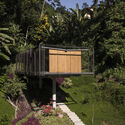
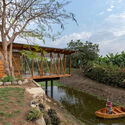
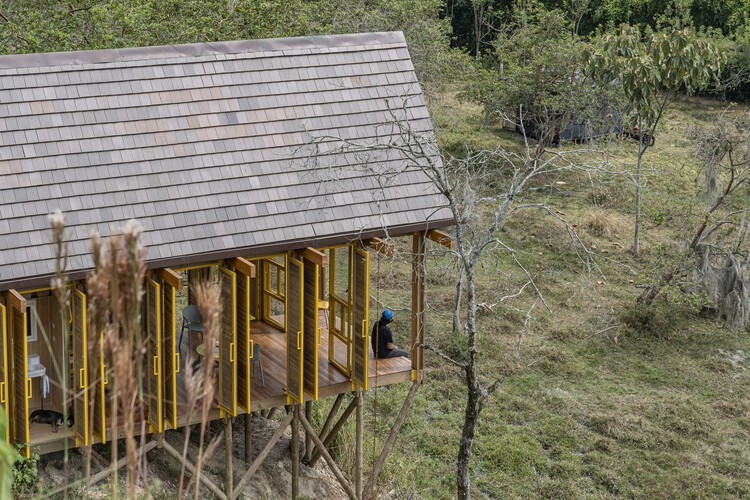
Above Water, Slope, and Forest: Elevated Architecture in Latin America

In Latin America, the ground is rarely just a surface to build on. It can be a river edge, a steep slope, a humid forest floor, a floodable landscape, or a territory under ecological pressure, and in many cases, it carries a history of communities that already knew how to respond to it, building on stilts, on platforms, over water, long before contemporary architecture asked the same questions.

These projects continue that conversation. They engage with conditions that move, absorb, erode, and grow, rather than treating the ground as something to level or control. Elevation allows architecture to adapt without fully taking over: water can pass below, vegetation can remain, and slopes can keep their original condition. In each case, the decision to rise is tied to something specific: water, humidity, topography, vegetation, or ecological recovery, and the knowledge of how to build within it and not against it.

Above Water, Slope, and Forest: Elevated Architecture in Latin America - Image 1 of 4Above Water, Slope, and Forest: Elevated Architecture in Latin America - Image 2 of 4Above Water, Slope, and Forest: Elevated Architecture in Latin America - Image 3 of 4Above Water, Slope, and Forest: Elevated Architecture in Latin America - Image 4 of 4Above Water, Slope, and Forest: Elevated Architecture in Latin America - More Images+ 12

In Other Worlds by Liam Young Reimagines Cities, Landscapes, and Climate Futures at the Barbican Centre

The Barbican Centre has announced In Other Worlds, a major immersive exhibition by speculative architect, filmmaker, and artist Liam Young, opening from May 21 through September 6, 2026. Occupying three distinct locations within the Barbican complex, the Silk Street Entrance, The Curve gallery, and Car Park 5, the exhibition will transform the Brutalist cultural landmark into a sequence of cinematic environments examining architecture, infrastructure, climate futures, and planetary urbanism. Developed in collaboration with writers, scientists, filmmakers, musicians, and performers, the project brings together large-scale projections, LED installations, sound environments, graphic narratives, costumes, and speculative artifacts to explore how fiction and spatial storytelling can shape conversations around environmental and technological change.

In Other Worlds by Liam Young Reimagines Cities, Landscapes, and Climate Futures at the Barbican Centre - Image 1 of 4In Other Worlds by Liam Young Reimagines Cities, Landscapes, and Climate Futures at the Barbican Centre - Image 2 of 4In Other Worlds by Liam Young Reimagines Cities, Landscapes, and Climate Futures at the Barbican Centre - Image 3 of 4In Other Worlds by Liam Young Reimagines Cities, Landscapes, and Climate Futures at the Barbican Centre - Image 4 of 4In Other Worlds by Liam Young Reimagines Cities, Landscapes, and Climate Futures at the Barbican Centre - More Images+ 9

Climate and Collective Use: Architectural Permeability in Latin America

Architecture is often understood as a matter of enclosure. Walls define space, separating interior from exterior and establishing clear limits. Yet across many projects in Latin America, this distinction becomes less precise. Rather than operating as closed objects, buildings often remain open, allowing air, light, and movement to pass through them.

This condition is tied to more than form. Across the region, architecture has long responded to climates marked by heat, humidity, strong solar exposure, and seasonal rainfall, as well as to building cultures shaped by adaptation, collective labor, and direct engagement with the environment. In these contexts, fully sealed interiors are not always the most effective response. Space is often organized through shade, ventilation, and intermediate zones that regulate rather than isolate.

Climate and Collective Use: Architectural Permeability in Latin America - Image 1 of 4Climate and Collective Use: Architectural Permeability in Latin America - Image 2 of 4Climate and Collective Use: Architectural Permeability in Latin America - Image 3 of 4Climate and Collective Use: Architectural Permeability in Latin America - Image 4 of 4Climate and Collective Use: Architectural Permeability in Latin America - More Images+ 8

Designing with Air: Rethinking Architecture Beyond the Wall

Architecture is traditionally chronicled through the persistence of the solid. We define the discipline by the weight of the lintel, the mass of the pier, and the resistance of the wall. Even when lightness is invoked, it is usually understood as a subtractive act, the thinning of a section or the precarious reduction of a load. Yet there is a parallel history, less visible and harder to isolate, in which the primary material of construction is not what occupies space, but what moves through it.

To treat air as a medium is to move past the binary of the envelope. The boundary between the interior and the world ceases to be a line of absolute separation and becomes, instead, a site of filtration and pressure. We begin to see the building as a thermal valve, a series of gradients where moisture, velocity, and heat are not merely background "conditions" to be mitigated by mechanical systems, but are the very substances being shaped.

Designing with Air: Rethinking Architecture Beyond the Wall - Image 1 of 4Designing with Air: Rethinking Architecture Beyond the Wall - Image 2 of 4Designing with Air: Rethinking Architecture Beyond the Wall - Image 3 of 4Designing with Air: Rethinking Architecture Beyond the Wall - Image 4 of 4Designing with Air: Rethinking Architecture Beyond the Wall - More Images+ 6

The Courtyard as Architecture’s Lightest Cooling System

The courtyard is often remembered as a figure from the past, an inward-looking space of nostalgia, culture, and domestic ritual. But this framing misses its primary role. Before it was symbolic, the courtyard was operational. It organized air, moderated light, and absorbed heat. It did not decorate architecture; it made it habitable. In contemporary housing, these functions are normally delegated to mechanical systems, applied after form is fixed. In courtyard houses, they are resolved spatially, before a wall is even built.

What appears as a recurring typology across regions is, in fact, a set of highly specific responses to climate. The courtyard in Egypt does not behave like the courtyard in Morocco, nor like the courtyard in India. Each is calibrated to a different environmental problem, using the same spatial device. To read them as a single type is to flatten their intelligence. To compare them is to understand how climate can be embedded directly into form.

The Courtyard as Architecture’s Lightest Cooling System - Image 1 of 4The Courtyard as Architecture’s Lightest Cooling System - Image 2 of 4The Courtyard as Architecture’s Lightest Cooling System - Image 3 of 4The Courtyard as Architecture’s Lightest Cooling System - Image 4 of 4The Courtyard as Architecture’s Lightest Cooling System - More Images+ 10

Ideology of Performance: Sustainability and the Limits of Efficiency

This article is part of our new Opinion section, a format for argument-driven essays on critical questions shaping our field.

The modern sustainability project is built on the promise that evolving technologies can reconcile urban and economic growth with ecological responsibility. By the metrics developed by the built environment professions and the policies adopted by governments, progress is tangible and accelerating: buildings consume less energy per square foot than they did a generation ago, vehicles emit fewer pollutants per mile, and urban infrastructure is more integrated and measurably cleaner in many cities. And yet total resource consumption continues to rise. Sustainability, as currently practiced across the built environment professions, has become a strategy for optimizing consumption rather than reducing it. Until the profession is willing to question the scale and structure of demand rather than the efficiency with which that demand is met, its most celebrated achievements will continue to fall short of the problem they claim to address.

Ideology of Performance: Sustainability and the Limits of Efficiency - Image 1 of 4Ideology of Performance: Sustainability and the Limits of Efficiency - Image 2 of 4Ideology of Performance: Sustainability and the Limits of Efficiency - Image 5 of 4Ideology of Performance: Sustainability and the Limits of Efficiency - Image 3 of 4Ideology of Performance: Sustainability and the Limits of Efficiency - More Images+ 23

No Solid Ground: Three Approaches to Building Below Sea Level in Rotterdam

Architects carefully calibrate their relationship to the earth, adjusting foundations to soil, groundwater, climate, risk, and culture. Driven timber piles, rammed-earth platforms, and poured concrete slabs are each a response to a specific set of ground conditions, and each shapes the architecture that rises from it. The way a building meets the earth determines its durability and its limits because foundations are among the most consequential design choices an architect makes.

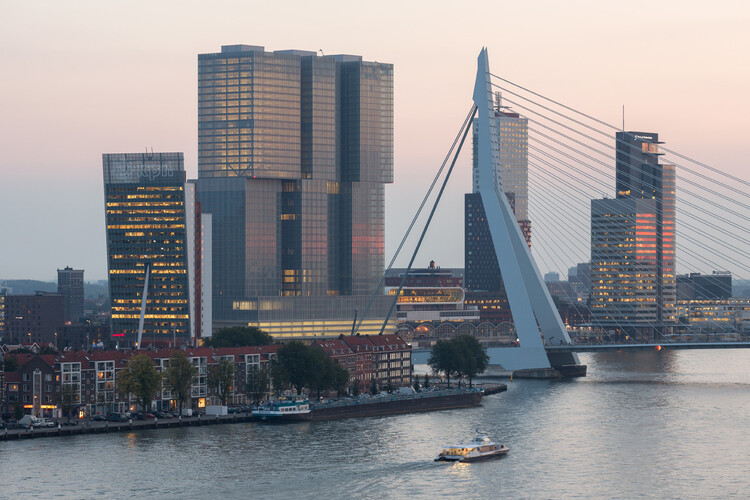
The city of Rotterdam sits approximately one meter below sea level, an organizing condition that shapes daily life in the Netherlands' second-largest city and is a growing preoccupation amid unstable coastal conditions. The city occupies the delta of the Rhine and Maas rivers, a landscape that was never naturally dry but has been kept functional through centuries of hydraulic intervention. The water boards in this region are among the oldest democratic institutions in the world, created in the thirteenth century to manage shared water drainage and still operating today as elected bodies with technical capacity. As sea levels rise and rainfall across Northern Europe grows less predictable and more extreme, Rotterdam faces a significantly increased risk of coastal storm surges and urban flooding driven by overwhelmed drainage infrastructure.

No Solid Ground: Three Approaches to Building Below Sea Level in Rotterdam - Image 16 of 4No Solid Ground: Three Approaches to Building Below Sea Level in Rotterdam - Image 57 of 4No Solid Ground: Three Approaches to Building Below Sea Level in Rotterdam - Image 25 of 4No Solid Ground: Three Approaches to Building Below Sea Level in Rotterdam - Image 54 of 4No Solid Ground: Three Approaches to Building Below Sea Level in Rotterdam - More Images+ 65

On World Health Day: How Architecture Shapes Well-Being in Everyday Spaces

Observed annually on April 7, World Health Organization's World Health Day draws attention to global health priorities while situating them within broader environmental and societal contexts. Established following the first World Health Assembly in 1948 and observed since 1950, the day has evolved into a platform for addressing the shifting conditions that shape health, from local systems of care to planetary-scale challenges. The 2026 edition, held under the theme "Together for health. Stand with science," calls for renewed engagement with scientific knowledge as a basis for collective action. The year-long campaign emphasizes collaboration in protecting the health of people, animals, plants, and the planet, foregrounding the One Health approach as a framework for understanding their interdependence.

On World Health Day: How Architecture Shapes Well-Being in Everyday Spaces - Image 1 of 4On World Health Day: How Architecture Shapes Well-Being in Everyday Spaces - Image 2 of 4On World Health Day: How Architecture Shapes Well-Being in Everyday Spaces - Image 3 of 4On World Health Day: How Architecture Shapes Well-Being in Everyday Spaces - Image 4 of 4On World Health Day: How Architecture Shapes Well-Being in Everyday Spaces - More Images+ 9

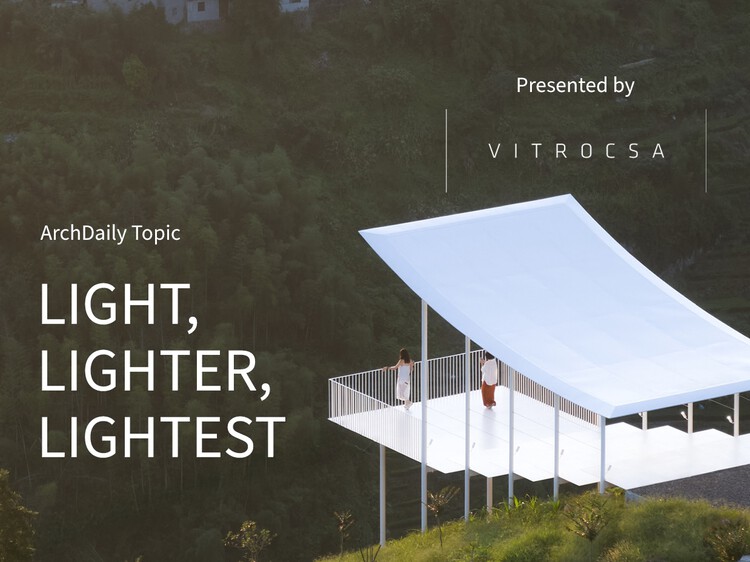
Light, Lighter, Lightest: ArchDaily’s April Editorial Focus

Architecture has long been drawn upward. In Air and Dreams, Gaston Bachelard writes about an imagination shaped by movement; by the urge to rise, to drift, to escape the pull of the ground. Air, for him, invites imagination to distort, to invent, to go beyond what is given rather than simply reproduce it. In that sense, lightness is not only a physical condition, but a feeling: a desire to transcend the weight of the earth and move toward something less tangible. This impulse can be traced across architecture's enduring attempts to lift itself, from pilotis and long spans to suspended systems and tensile membranes. To build lightly, then, is not only a technical ambition, but also a cultural one – a way of reaching toward the sky.

Today, this pursuit of lightness takes on renewed urgency. As environmental concerns, climate risks, and technological advancements reshape the built environment, building lightly is no longer only an aesthetic or structural ambition; it is increasingly framed as an ecological and ethical imperative.

Light, Lighter, Lightest: ArchDaily’s April Editorial Focus - Image 1 of 4Light, Lighter, Lightest: ArchDaily’s April Editorial Focus - Image 2 of 4Light, Lighter, Lightest: ArchDaily’s April Editorial Focus - Image 3 of 4Light, Lighter, Lightest: ArchDaily’s April Editorial Focus - Image 4 of 4Light, Lighter, Lightest: ArchDaily’s April Editorial Focus - More Images+ 6

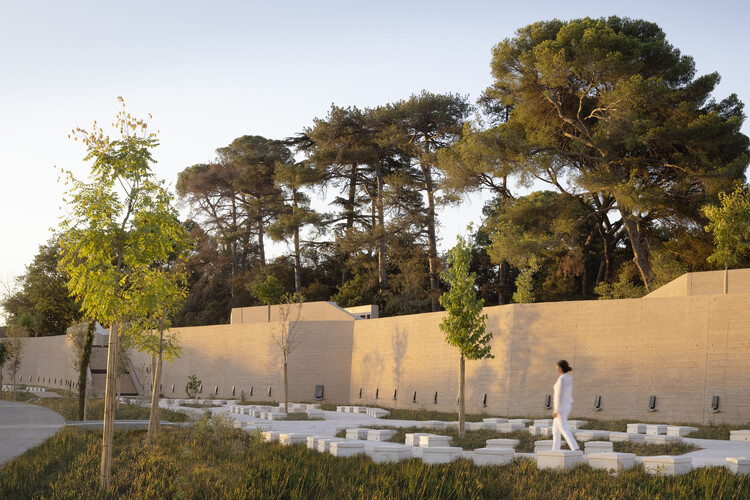
Cities of the Dead: 10 Projects Exploring Burial Architecture

Subscriber Access | 

Death is a certainty, but its architecture has never been stable. Every period and culture has invented a different way of placing the dead in the world (close or far, visible or screened, monumental or almost anonymous), and those choices have always carried social and political weight. Cemeteries are where that weight becomes legible in space, turning belief and regulation into boundaries, paths, and names.

In that sense, a cemetery behaves like a piece of city-making. It needs access, limits, and an internal order that can grow without losing clarity. It depends on ground and water management as much as on symbolism, and on administration as much as on form. But its real architectural problem is how to make a large, evolving territory readable while preserving the intimacy of a visit. Names must be locatable; routes must remain legible; trees grow, paths shift, stones weather, records accumulate. What looks fixed is, in practice, a living system designed to be used and revisited, long after the first grief has passed.

Cities of the Dead: 10 Projects Exploring Burial Architecture - Image 1 of 4Cities of the Dead: 10 Projects Exploring Burial Architecture - Image 2 of 4Cities of the Dead: 10 Projects Exploring Burial Architecture - Image 3 of 4Cities of the Dead: 10 Projects Exploring Burial Architecture - Image 4 of 4Cities of the Dead: 10 Projects Exploring Burial Architecture - More Images+ 14

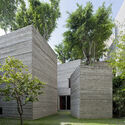
Building with Trees: Rethinking Architecture’s Relationship to Site

Subscriber Access | 

Trees are often the first things to vanish when construction starts. Clearing a site has long been one of architecture's most immediate acts, removing what already exists to make room for something new. When vegetation is preserved, it is typically treated as a secondary layer, added back as landscape rather than shaping the project itself.

However, some projects begin elsewhere. Instead of starting from a blank site, they work with what is already there. Trees remain in place, not as elements to frame, but as conditions that influence how space is organized, how light enters, and how architecture takes form.

Building with Trees: Rethinking Architecture’s Relationship to Site - Image 1 of 4Building with Trees: Rethinking Architecture’s Relationship to Site - Image 2 of 4Building with Trees: Rethinking Architecture’s Relationship to Site - Image 3 of 4Building with Trees: Rethinking Architecture’s Relationship to Site - Image 4 of 4Building with Trees: Rethinking Architecture’s Relationship to Site - More Images+ 8

Building with Earth: Traditional Knowledge in Contemporary Architecture 

Subscriber Access | 

In recent years, earthen construction has gained renewed attention in architecture. Materials such as adobe, rammed earth, and compressed earth blocks, once mainly associated with vernacular traditions, are increasingly being explored by contemporary architects. Rather than representing a simple return to the past, this renewed interest reflects a broader reconsideration of how architecture engages with materials, local resources, and environmental conditions.

For centuries, building with earth was part of everyday construction across many regions of the world. Techniques such as adobe, rammed earth, cob, and other soil-based systems developed gradually through adaptation to climate, available resources, and local construction practices. These methods responded directly to environmental conditions while shaping cultural ways of building. This knowledge circulated through collective practices rather than formal architectural education, allowing techniques to evolve through continuous experimentation.

Building with Earth: Traditional Knowledge in Contemporary Architecture  - Image 1 of 4Building with Earth: Traditional Knowledge in Contemporary Architecture  - Image 2 of 4Building with Earth: Traditional Knowledge in Contemporary Architecture  - Image 3 of 4Building with Earth: Traditional Knowledge in Contemporary Architecture  - Image 4 of 4Building with Earth: Traditional Knowledge in Contemporary Architecture  - More Images+ 13

Setbacks as Courtyards: How Civil Architecture Reimagines the Gulf House in Bahrain

For centuries, domestic architecture throughout the Gulf has been organized around the courtyard. Houses presented thick exterior walls and limited openings to the street, turning inward toward a shaded garden that structured everyday life. This spatial arrangement responded to both climate and culture. The courtyard brought daylight into deep plans, enabled cross-ventilation, and provided a protected outdoor environment within dense urban fabrics. In the House with Seven Gardens, in Diyar Al Muharraq, Bahrain, the Bahrain-based practice Civil Architecture, one of the winners of the ArchDaily 2025 Next Practices Awards, revisits this spatial tradition through the conditions of contemporary suburban housing. Rather than reproducing the courtyard house as a historical model, the project reinterprets its environmental logic within the regulatory frameworks and spatial conditions that shape much of today's urban development in the Gulf.

Setbacks as Courtyards: How Civil Architecture Reimagines the Gulf House in Bahrain - Image 1 of 4Setbacks as Courtyards: How Civil Architecture Reimagines the Gulf House in Bahrain - Image 2 of 4Setbacks as Courtyards: How Civil Architecture Reimagines the Gulf House in Bahrain - Image 3 of 4Setbacks as Courtyards: How Civil Architecture Reimagines the Gulf House in Bahrain - Image 4 of 4Setbacks as Courtyards: How Civil Architecture Reimagines the Gulf House in Bahrain - More Images+ 3

Thermal Memory: How Climate Shapes Architectural Heritage

On a hot afternoon in May, when the air over western India turns metallic with heat, no one remembers façade composition. They remember where the shade falls. They remember which corridor breathed. They remember the house that was cooler than the street. What stays in memory is comfort beyond the form. Repeated thermal preference stabilizes into spatial configuration, and over time, those configurations become building types.
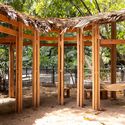
Heritage is usually catalogued by what can be drawn, not by what changed temperature. In heat, buildings are learned first through skin, only later through sight. Generations learn, through their bodies, what works. Shade reduces glare and radiant heat. Air movement shifts perception by several degrees. Thick walls slow temperature swings. Over time, these experiences accumulate into a spatial preference. What feels right is repeated. What is repeated stabilizes into type.

Thermal Memory: How Climate Shapes Architectural Heritage - Image 1 of 4Thermal Memory: How Climate Shapes Architectural Heritage - Image 2 of 4Thermal Memory: How Climate Shapes Architectural Heritage - Image 3 of 4Thermal Memory: How Climate Shapes Architectural Heritage - Image 4 of 4Thermal Memory: How Climate Shapes Architectural Heritage - More Images+ 8