1. ArchDaily
  2. Green Building

Green Building: The Latest Architecture and News

Barangaroo South Masterplan by RSHP and Lendlease Completes a 15-Year Transformation of Sydney’s Western Waterfront

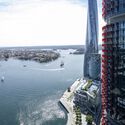
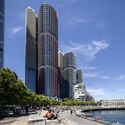
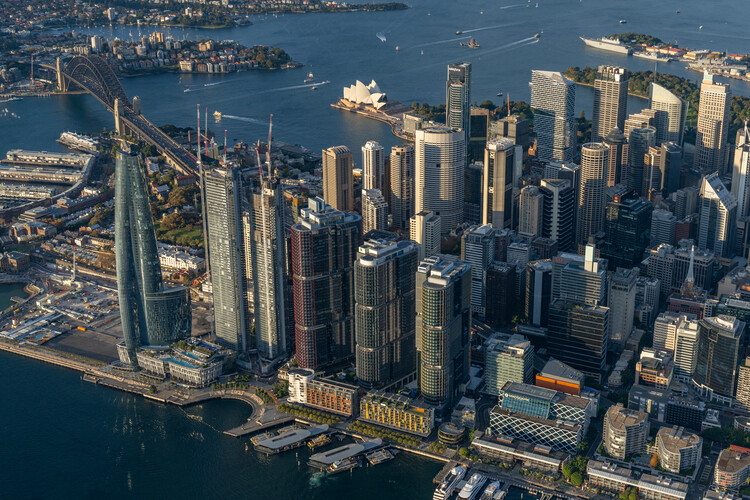
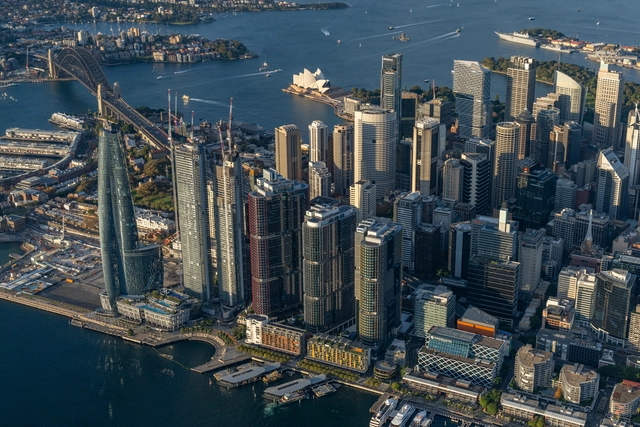
RSHP has announced the completion of the Barangaroo South Masterplan in Sydney, marking the realization of a 15-year redevelopment that has reconnected the city's north-western harbour edge to its urban core. Once a disused container port, the 22-hectare site has been transformed into a mixed-use, carbon-neutral precinct, integrating commercial, residential, and public spaces along the waterfront. Developed in collaboration with Lendlease following an international design competition, the masterplan is organized into three zones: Barangaroo South, a high-density extension of the Central Business District; Barangaroo Reserve, a reconstructed natural headland that reintroduces native landscapes to the harbour; and Barangaroo Central, a low-density residential area linking the northern and southern ends of the development.
Barangaroo South Masterplan by RSHP and Lendlease Completes a 15-Year Transformation of Sydney’s Western Waterfront - Image 1 of 4Barangaroo South Masterplan by RSHP and Lendlease Completes a 15-Year Transformation of Sydney’s Western Waterfront - Image 2 of 4Barangaroo South Masterplan by RSHP and Lendlease Completes a 15-Year Transformation of Sydney’s Western Waterfront - Image 3 of 4Barangaroo South Masterplan by RSHP and Lendlease Completes a 15-Year Transformation of Sydney’s Western Waterfront - Image 4 of 4Barangaroo South Masterplan by RSHP and Lendlease Completes a 15-Year Transformation of Sydney’s Western Waterfront - More Images+ 10

Zaha Hadid Architects Completes the Shenzhen Science & Technology Museum

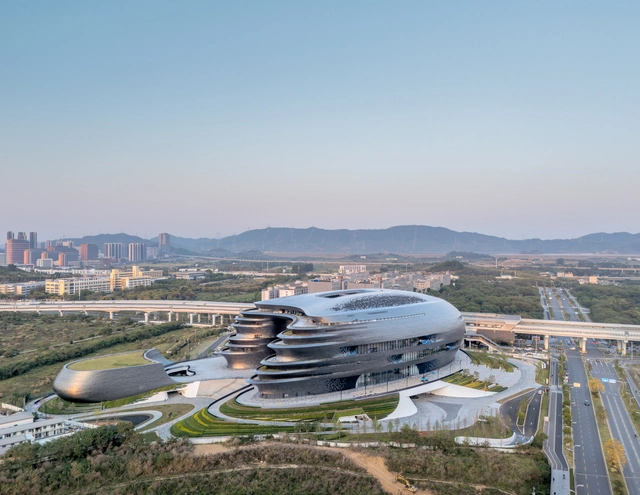
Zaha Hadid Architects has just revealed that the Shenzhen Science & Technology Museum, located in the Guangming District, has officially opened. Designed as a platform to highlight scientific research and technological innovation, the institution will explore the role of science in shaping the future. Adjacent to Guangming Station on Shenzhen's metro network, the design responds to its location as a solid, spherical volume facing the city, defining the southeast corner of the new Science Park. The museum aims to provide a space for public engagement with current developments in science and technology.

Zaha Hadid Architects Completes the Shenzhen Science & Technology Museum - Image 1 of 4Zaha Hadid Architects Completes the Shenzhen Science & Technology Museum - Image 2 of 4Zaha Hadid Architects Completes the Shenzhen Science & Technology Museum - Image 3 of 4Zaha Hadid Architects Completes the Shenzhen Science & Technology Museum - Image 4 of 4Zaha Hadid Architects Completes the Shenzhen Science & Technology Museum - More Images+ 13

Cultivating Green Apartments: A Guide to Integrating Nature in Small Urban Spaces

Subscriber Access | 

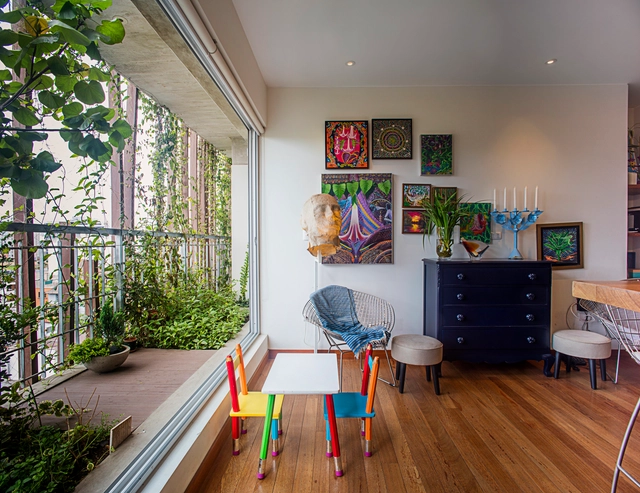
Urban living has become synonymous with limited space and creativity for compact apartments. As cities become more dominated by concrete and steel, there is an exciting, yet unsurprising, rise in interest in embracing the green thumb, even within the constraints of a dense urban environment. This interest is not purely to tend aesthetic tastes, as studies consistently show that exposure to nature reduces stress, improves focus, and enhances overall well-being. However, in dense urban environments, the challenge lies in finding innovative ways to make this vision a reality for apartments where every inch matters.

Cultivating Green Apartments: A Guide to Integrating Nature in Small Urban Spaces - Image 1 of 4Cultivating Green Apartments: A Guide to Integrating Nature in Small Urban Spaces - Image 2 of 4Cultivating Green Apartments: A Guide to Integrating Nature in Small Urban Spaces - Image 3 of 4Cultivating Green Apartments: A Guide to Integrating Nature in Small Urban Spaces - Image 4 of 4Cultivating Green Apartments: A Guide to Integrating Nature in Small Urban Spaces - More Images+ 4

Exclusive Interview: WOHA on the Holcim Foundation Award-Winning BRAC University Campus – A Benchmark in Sustainable Architecture

 | Sponsored Content

Over the past two decades, the Holcim Foundation Awards has committed USD 20M to spotlight transformative projects by architects, designers, and engineers who pioneer sustainable design and construction practices. To capture these stories, the Foundation launched a short film series titled Words with Winners.

This series provides an in-depth look at award-winning sustainable design projects through exclusive interviews with their creators. It includes the first film to showcase BRAC University campus, recently completed in Dhaka, featuring an exclusive interview with the lead architect and co-founder of Singaporean green building specialists WOHA Wong Mun Summ.

Straw, Earth and Bamboo: Innovative Use of Natural Materials in 2024 Projects from the Global South

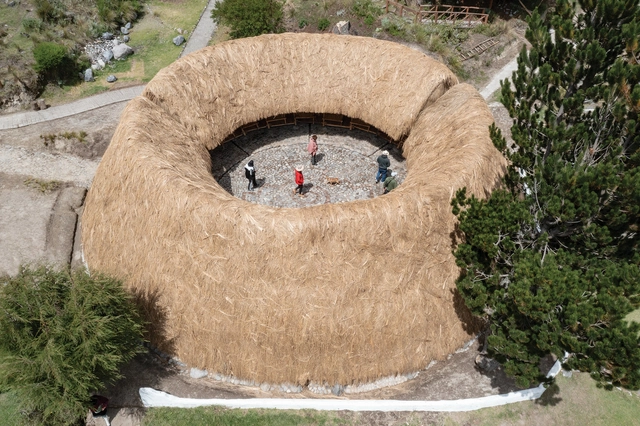
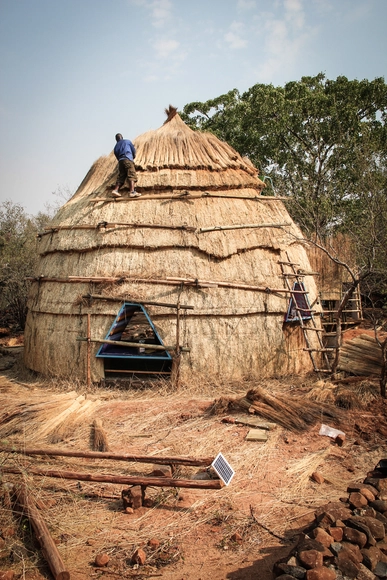
Sustainability has been a central theme in architectural discussions for years, encompassing not only the profession’s role in combating climate change and transitioning to low-carbon economies but also preserving cultural heritage and celebrating vernacular traditions. In 2024, a wave of projects and studies stood out for their innovative use of natural materials, particularly in the Global South. These initiatives skillfully blend creativity and technology with renewable resources, demonstrating how architecture can deliver high-quality spaces that align with contemporary demands for sustainability and environmental responsibility.

Straw, Earth and Bamboo: Innovative Use of Natural Materials in 2024 Projects from the Global South - Image 1 of 4Straw, Earth and Bamboo: Innovative Use of Natural Materials in 2024 Projects from the Global South - Image 2 of 4Straw, Earth and Bamboo: Innovative Use of Natural Materials in 2024 Projects from the Global South - Image 3 of 4Straw, Earth and Bamboo: Innovative Use of Natural Materials in 2024 Projects from the Global South - Image 4 of 4Straw, Earth and Bamboo: Innovative Use of Natural Materials in 2024 Projects from the Global South - More Images+ 9

MVRDV Reveals Construction Progress of the Terraced LAD Headquarters in Shanghai

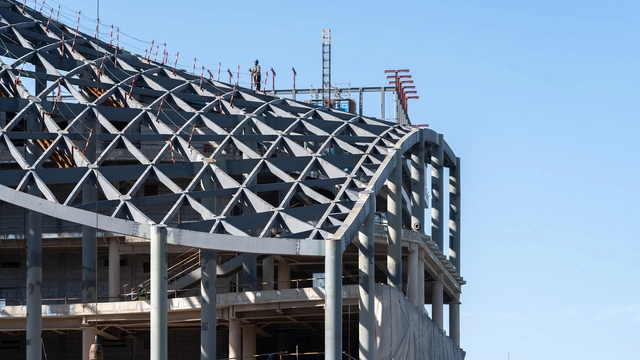
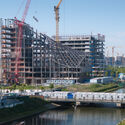
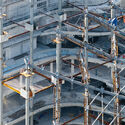
In 2021, MVRDV unveiled the design of a terraced office building created for the agriculture company Lankuaikei. Set within a rapidly developing area of Shanghai, the 11-storey structure is covered by a curved technological roof that follows the stepping structure. The project is conceived as a showcase of the company's vision of food production, with an extensive sustainability agenda encompassing various strategies. These include extensive use of greenery, integration of renewable energy, and the use of low-carbon materials. The construction process is now captured by StudioSZ Photo / Justin Szeremeta, revealing an intermediary state where the bare-bone structure begins to reveal the shape and scale of the building. Structural construction details are also visible at this stage,

MVRDV Reveals Construction Progress of the Terraced LAD Headquarters in Shanghai - Image 1 of 4MVRDV Reveals Construction Progress of the Terraced LAD Headquarters in Shanghai - Image 2 of 4MVRDV Reveals Construction Progress of the Terraced LAD Headquarters in Shanghai - Image 3 of 4MVRDV Reveals Construction Progress of the Terraced LAD Headquarters in Shanghai - Image 4 of 4MVRDV Reveals Construction Progress of the Terraced LAD Headquarters in Shanghai - More Images+ 17

MVRDV Announces New Residential Complex for Tencent’s Campus in Shenzhen, China

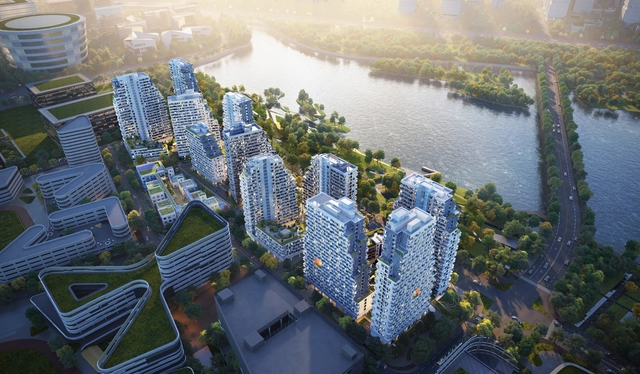
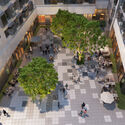
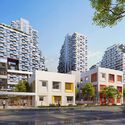
MVRDV has revealed a large-scale residential complex to take shape as part of a new smart city campus built by technology company Tencent in Qianhai Bay, Shenzhen, China. MVRDV’s intervention, named Tencent P5, is comprised of 11 apartment towers arranged around four courtyards. The project also includes amenities such as an adjacent kindergarten, to offer all the necessary facilities for the company’s employees. Construction began in early 2022 and is scheduled for completion in 2024.

MVRDV Announces New Residential Complex for Tencent’s Campus in Shenzhen, China - Image 1 of 4MVRDV Announces New Residential Complex for Tencent’s Campus in Shenzhen, China - Image 2 of 4MVRDV Announces New Residential Complex for Tencent’s Campus in Shenzhen, China - Image 3 of 4MVRDV Announces New Residential Complex for Tencent’s Campus in Shenzhen, China - Image 4 of 4MVRDV Announces New Residential Complex for Tencent’s Campus in Shenzhen, China - More Images+ 8

Thatched Roofs: History, Performance and Possibilities in Architecture

Subscriber Access | 

At first glance, Dorte Mandrup's design for the Wadden Sea Center seems to mimic the landscape. Its low height, its horizontal lines and, above all, its materiality make it a modern building in perfect harmony with the local nature. But its connection also encompasses the built heritage of the region, more specifically because of its covering with straw, harvested and dried close to the land. This is an extremely traditional and historic building technique, but which is rarely attributed to contemporary buildings. In this article we will rescue some of the history of this natural material, its constructive characteristics and some examples of use.

The Future Beneath Our Feet: Soil-Cement Bricks and the Path to Sustainable Construction

Subscriber Access | 

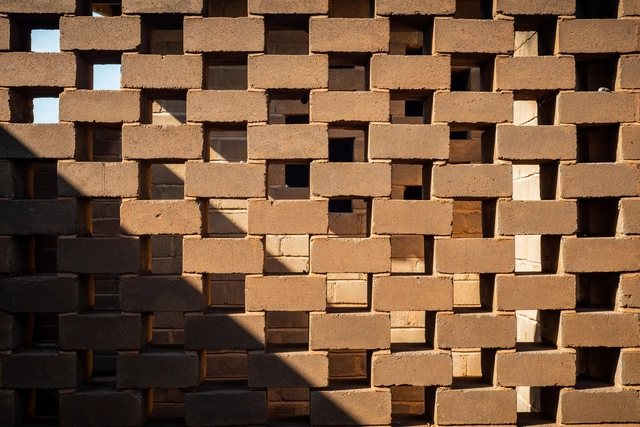
Bricks are part of the collective imagination when thinking about construction. These are elementary, ubiquitous, modular, light, and reliable materials for erecting buildings. However, traditional ceramic block manufacturing relies on burning clay in kilns at high temperatures, often powered by non-renewable fossil fuels such as coal or natural gas. Furthermore, the transportation process significantly increases its environmental footprint, as the materials are heavy and bulky. In light of this, there is a growing interest in alternative construction materials that offer a lower environmental impact and greater sustainability. Soil cement bricks –or Compressed Stabilized Earth Blocks– are a good example of an existing alternative, as they have a smaller environmental footprint due to their use of local raw materials and the elimination of the burning process, while maintaining many of the intrinsic qualities of traditional bricks.

Bill McKibben on COP28, Maintaining Hope, and Walking in the Woods

This article was originally published on Common Edge.

The biennale UN climate conference, COP28, concluded in Dubai this week with a commitment to the eventual “phasing out” of fossil fuels. It was a classic glass-half-empty/glass-half-full gesture. Yes, as optimists pointed out, it was the first time any reference to moving away from fossil fuels had made it into the text of the final communique. But, like previous COPs, this resolution, too, is nonbinding and was reached over howls of protest from both oil-producing countries and developing countries reliant on existing energy supply chains for future growth. The tortuous nature of the outcome, watered down and officially toothless, left me feeling glum. If we can’t agree on the nature of the problem, it will be exceptionally difficult to fix it.
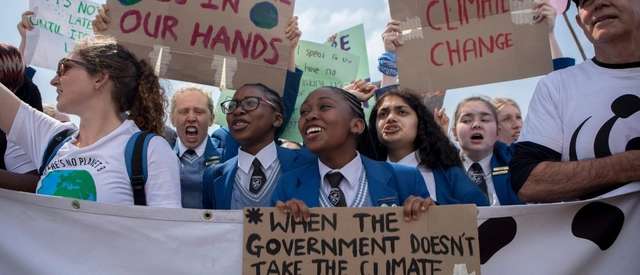
To offer perspective, I reached out to longtime activist Bill McKibben. A professor at Middlebury College, he has published 20 books; his first, The End of Nature, appeared in 1989. He was, along with Dr. James Hansen, one of the first to sound the climate alarm. McKibbin is a contributing writer to the New Yorker, and a founder of Third Act, which organizes people over the age of 60 to work on climate and racial justice. In collaboration with seven Middlebury students, he founded 350.org, the first global grassroots climate campaign.

Are Carbon-Neutral Buildings Expensive?

Decarbonization of the building sector is no longer a choice but a necessity. As nations strive to curb their greenhouse gas emissions by 2050, it is increasingly clear that current building standards do not go far enough to drive tangible change. Achieving climate goals requires economies to advocate measures that drive carbon neutrality while managing associated costs effectively. How would net-zero performance strategies impact building costs?

Are Carbon-Neutral Buildings Expensive? - Image 1 of 4Are Carbon-Neutral Buildings Expensive? - Image 2 of 4Are Carbon-Neutral Buildings Expensive? - Image 3 of 4Are Carbon-Neutral Buildings Expensive? - Image 4 of 4Are Carbon-Neutral Buildings Expensive? - More Images+ 1

Architects Must Address the Issue of Toxic Building Materials

This article was originally published on Common Edge.

By the time I was 17 years old, I had moved 11 times. Because of my own experience relocating from one place to another, I’ve spent the better part of the last several decades focused on making sure that everyone has a place to call home, that everyone enjoys the human right to housing. But it was not until my time at Enterprise Community Partners, a nonprofit focused on community development and affordable housing, that I realized the methods and materials we employ to realize that human right matter. 

Embodied Carbon in Real Estate: The Hidden Contributor to Climate Change

Subscriber Access | 

The window for solving climate change is narrowing; any solution must include embodied carbon. The Sixth Assessment Report published by the IPCC (Intergovernmental Panel on Climate Change) concludes that the world can emit just 500 gigatonnes more of carbon dioxide, starting in January 2020, if we want a 50 percent chance of staying below 1.5 degrees. In 2021 alone, the world emitted about 36.3 gigatonnes of carbon, the highest amount ever recorded. We’re on track to blow through our carbon budget in the next several years. To quote the IPCC directly: “The choices and actions implemented in this decade will have impacts now and for thousands of years (high confidence).”

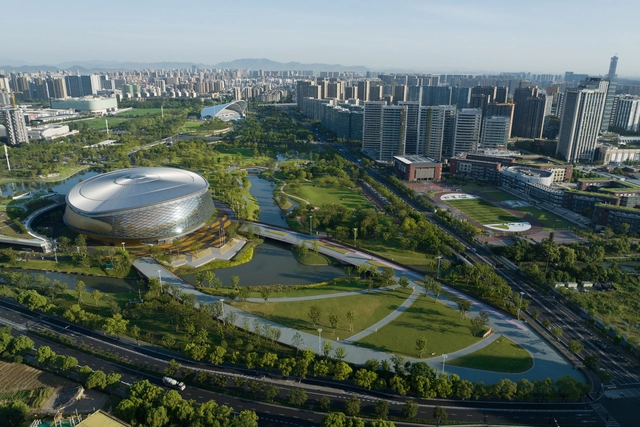
Archi-Tectonics' Asian Games Park Rethinks Hangzhou's Ecological Future in China

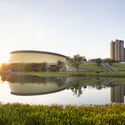
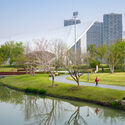
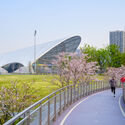
In 2018, Archi-Tectonics NYC and !Melk were announced as the winners of a competition to develop a masterplan transformation for the Hangzhou Asian Games Park 2022. Spanning 116 Acres, the now-completed project includes an expansive Eco Park and seven buildings. Although its initial purpose was to serve as a venue for the Hangzhou Asian Games 2022, the team extended its vision far beyond this event, charting a new path for the city’s environmental future.

Archi-Tectonics' Asian Games Park Rethinks Hangzhou's Ecological Future in China  - Image 1 of 4Archi-Tectonics' Asian Games Park Rethinks Hangzhou's Ecological Future in China  - Image 2 of 4Archi-Tectonics' Asian Games Park Rethinks Hangzhou's Ecological Future in China  - Image 3 of 4Archi-Tectonics' Asian Games Park Rethinks Hangzhou's Ecological Future in China  - Image 4 of 4Archi-Tectonics' Asian Games Park Rethinks Hangzhou's Ecological Future in China  - More Images+ 19

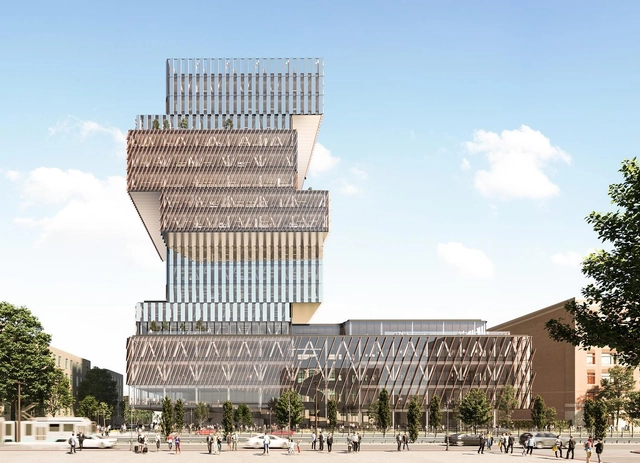
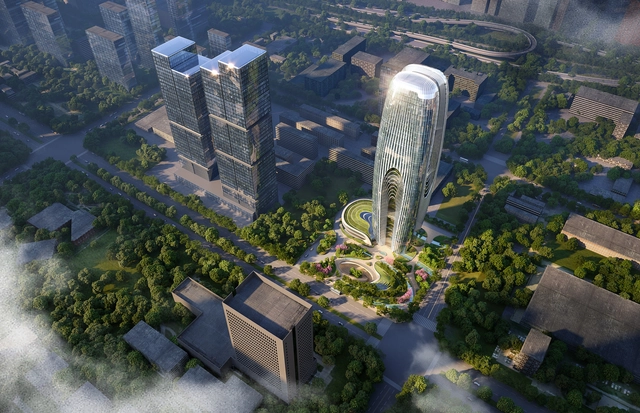
Zaha Hadid Architects Unveils the Design of the Daxia Tower in China

Zaha Hadid Architects has revealed the design of the Daxia Tower, to be built in the High-Tech Economic and Technological Development Zone of Xi’an, one of China’s largest inland cities with a population nearing nine million people. The tower will mark the center of Xi’an’s business district and will include offices, retail, and ancillary facilities, all designed with data analytics and behavior modeling to ensure a balanced disposition of spaces.

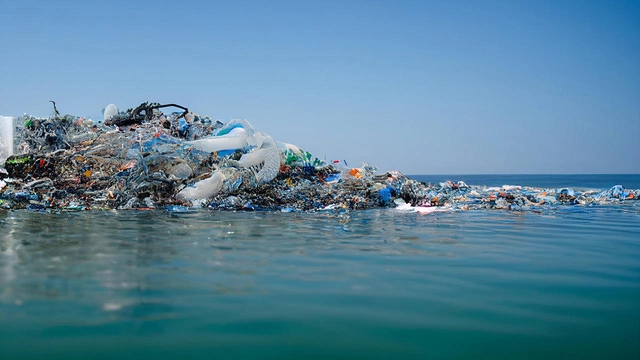
The Story of the World's Largest Floating Plastic Island (and What to Do With It)

Environmental issues urgency and increasing temperatures on the planet are nothing new. There are many factors contributing to environmental degradation. However, two can be viewed as representative of critical points in the current world system: plastic and waste disposal, better known as garbage.

The environmental crisis cannot be attributed solely to these two examples. They are used here as examples to mobilize issues involving multiple agents, materials, and diverse methods. These issues lead to devastating consequences, increasingly irreversible.

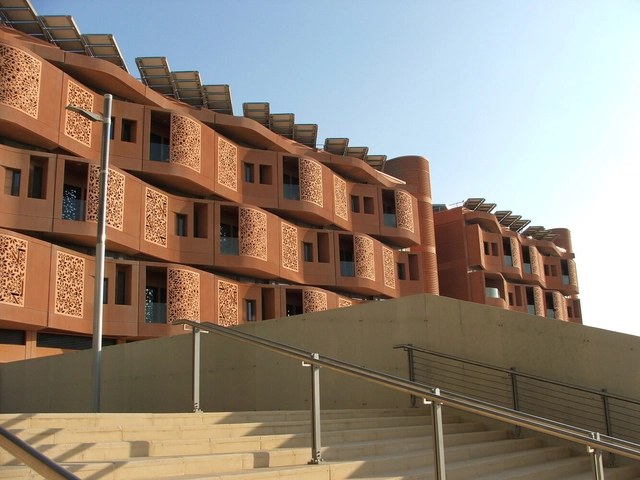
Why the Global South Needs Different Sustainability Benchmarks

As world governments grapple with environmental crises, the construction industry rushes to reevaluate sustainable design and develop new ways of measuring its efficiency. Consequently, green building certification systems (GBCS) started gaining traction in the 20th century to evaluate and promote sustainable construction practices. The Global South faces distinctive challenges in building sustainable cities. Its developing nations demand an exclusive approach to designing an appropriate, economical, and inspiring architecture for their promising futures.

Why the Global South Needs Different Sustainability Benchmarks  - Image 1 of 4Why the Global South Needs Different Sustainability Benchmarks  - Image 2 of 4Why the Global South Needs Different Sustainability Benchmarks  - Image 3 of 4Why the Global South Needs Different Sustainability Benchmarks  - Image 4 of 4Why the Global South Needs Different Sustainability Benchmarks  - More Images

The Bioclimatic Skyscraper: Kenneth Yeang's Eco-Design Strategies

Subscriber Access | 

Rising over global cities, the modern skyscraper has long been a symbol of economic growth and environmental decline. For years, they have been reviled by environmentalists for being uncontrolled energy consumers. Malaysian architect Kenneth Yeang acknowledged the skyscraper as a necessity in modern cities and adopted a pragmatic approach to greening the otherwise unsustainable building typology. Yeang’s bioclimatic skyscrapers blend the economics of space with sustainability and improved living standards.

The Bioclimatic Skyscraper: Kenneth Yeang's Eco-Design Strategies  - Image 1 of 4The Bioclimatic Skyscraper: Kenneth Yeang's Eco-Design Strategies  - Image 2 of 4The Bioclimatic Skyscraper: Kenneth Yeang's Eco-Design Strategies  - Image 3 of 4The Bioclimatic Skyscraper: Kenneth Yeang's Eco-Design Strategies  - Image 4 of 4The Bioclimatic Skyscraper: Kenneth Yeang's Eco-Design Strategies  - More Images+ 2