1. ArchDaily
  2. Incremental Housing

Incremental Housing: The Latest Architecture and News

PREVI Lima and the Politics of Resident Authorship in Social Housing

Subscriber Access | 

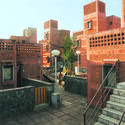
Architects are accustomed to being credited for buildings long after construction ends. Names remain attached to projects through photographs, publications, and histories, often decades after the original drawings were produced. Buildings, on the other hand, rarely remain faithful to that narrative for long. Families grow, technologies change, businesses emerge, and daily life introduces demands that no plan can fully anticipate. Over time, architecture accumulates modifications, repairs, additions, and improvisations that gradually distance it from its original form.

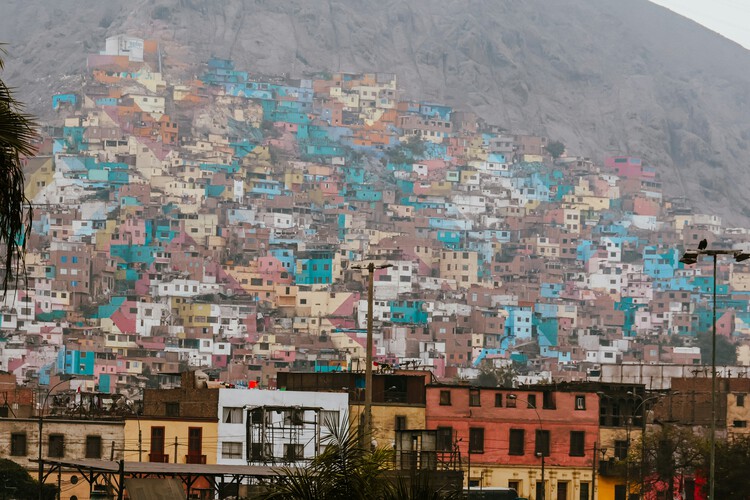
Few projects confront this question as directly as PREVI Lima. Conceived in the late 1960s as Peru's Experimental Housing Project, PREVI invited an international group of architects to develop housing prototypes capable of accommodating growth over time. The project is often remembered for its ambitious roster of designers, which included figures such as James Stirling, Aldo van Eyck, and Christopher Alexander. More than fifty years later, the neighborhood has become a record of resident decisions, revealing a form of architecture designed to remain unfinished.
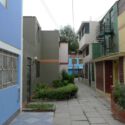
PREVI Lima and the Politics of Resident Authorship in Social Housing - Image 1 of 4PREVI Lima and the Politics of Resident Authorship in Social Housing - Image 2 of 4PREVI Lima and the Politics of Resident Authorship in Social Housing - Image 3 of 4PREVI Lima and the Politics of Resident Authorship in Social Housing - Image 4 of 4PREVI Lima and the Politics of Resident Authorship in Social Housing - More Images+ 14

Designed to Repeat, Forced to Adapt: The Parallel Architecture of Socialist Housing

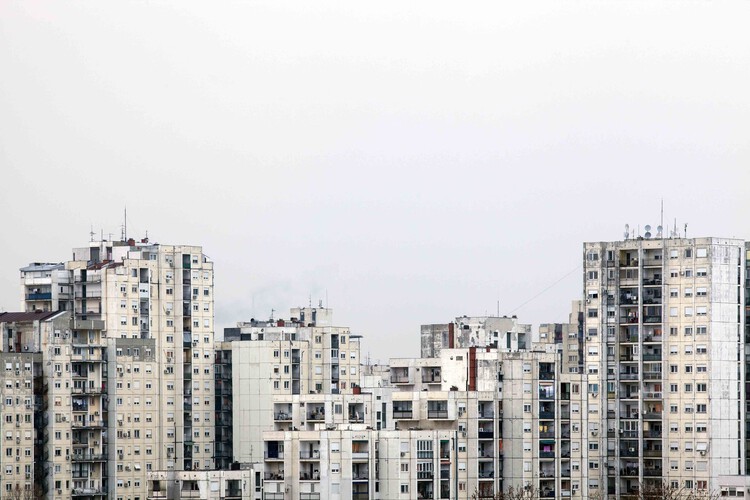
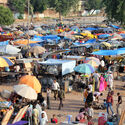
A housing block in New Belgrade appears orderly from a distance. Concrete slabs repeat with disciplined consistency, windows align into measured grids, and balconies stack with the confidence of a system certain of itself. However, proximity changes the reading. One balcony is enclosed in aluminum glazing, another softened with improvised shading. Insulation thickens part of a façade while laundry frames another edge like an accidental elevation study. The district still reads as planned, though occupation has made its order less uniform. Within that order, repetition has gradually been rewritten through occupation.

Designed to Repeat, Forced to Adapt: The Parallel Architecture of Socialist Housing - Image 1 of 4Designed to Repeat, Forced to Adapt: The Parallel Architecture of Socialist Housing - Image 2 of 4Designed to Repeat, Forced to Adapt: The Parallel Architecture of Socialist Housing - Image 3 of 4Designed to Repeat, Forced to Adapt: The Parallel Architecture of Socialist Housing - Image 4 of 4Designed to Repeat, Forced to Adapt: The Parallel Architecture of Socialist Housing - More Images+ 10

Legacy in Matter: Material Traditions in South American Architecture

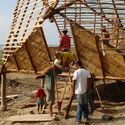
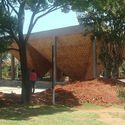
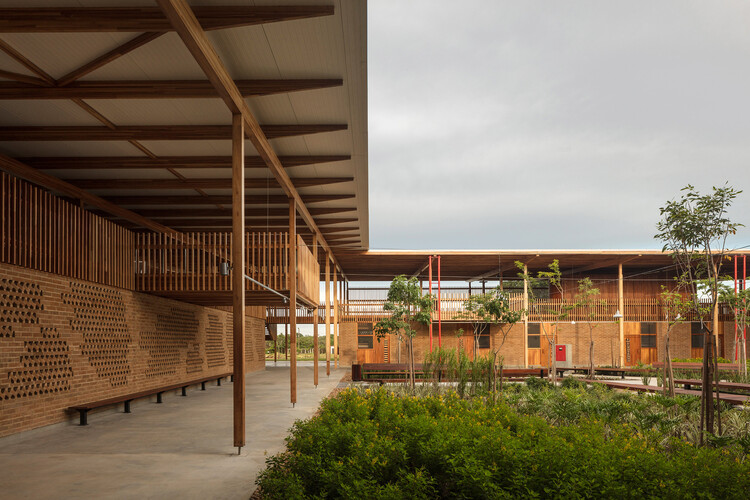
Across South America, architecture endures through the materials it uses, those that persist over time. Bamboo, brick, wood, and concrete appear across regions, connecting climate, labor, and culture in ways that ensure their persistence through generations. Their continuity does not depend solely on preservation or heritage. It depends on use.

In this context, cultural memory does not reside primarily in monuments or images, but in practice. It survives in repeated gestures: laying bricks, tying guadua joints, assembling wood frames, casting slabs that anticipate another floor. These actions are transmitted less through manuals than through participation. Over time, they form systems of knowledge embedded in habit and necessity. Materials endure not because they symbolize the past, but because they continue to work.

Legacy in Matter: Material Traditions in South American Architecture - Image 1 of 4Legacy in Matter: Material Traditions in South American Architecture - Image 2 of 4Legacy in Matter: Material Traditions in South American Architecture - Image 3 of 4Legacy in Matter: Material Traditions in South American Architecture - Image 4 of 4Legacy in Matter: Material Traditions in South American Architecture - More Images+ 12

Denver Affordable Housing Challenge Winners Revealed by Buildner and AIA Colorado

 | Sponsored Content

Buildner, in collaboration with the City and County of Denver and AIA Colorado, has announced the winners of the Denver Affordable Housing Challenge, an international ideas competition exploring how affordability and design excellence can reinforce one another within the specific urban, social, and environmental context of Denver.

As the nineteenth edition in Buildner's Affordable Housing Challenge series, the competition invited architects and designers from around the world to respond to Denver's housing crisis through proposals operating at architectural, urban, and systemic scales. The brief did not prescribe a single site or typology but, rather, encouraged flexible strategies capable of addressing affordability, climate resilience, and community impact while contributing positively to Denver's urban identity.

What Informality and Incrementality Reveal About Sustainable Urbanism in India

Subscriber Access | 

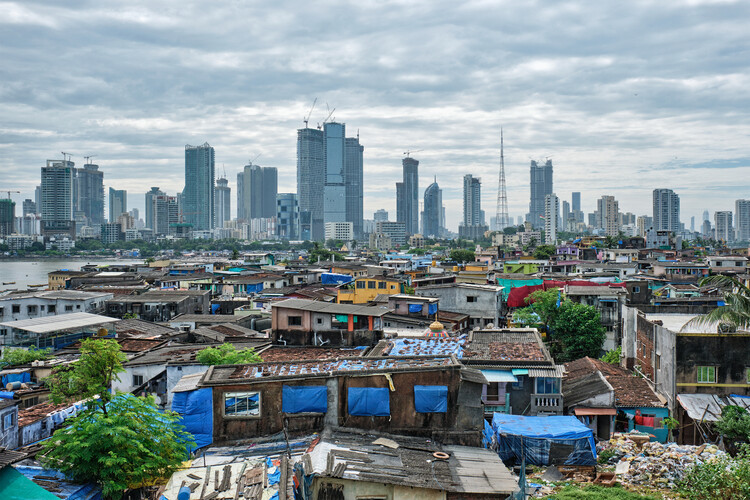
The magic of Indian architecture lies in an invisible order amidst visceral chaos. When an uncertain future knocks on the doors of local practitioners, one might begin to look within the four walls they occupy to discover an opportunity for reinterpretation.

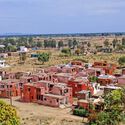
Mumbai, Delhi, Bengaluru, and other major metropolises are described as needing massive housing solutions for millions. The instinctive answer is predictable — masterplans, dense towers, and standardized units smeared over haphazard developments. The lexicon misses a deeper truth about how the people already live, work, and build in India. The shorthand used in policy and planning — slum, informal settlement, unauthorized colony — implies a temporary state to be corrected. A designer's eye views these places as layered urban histories, formed through necessity.

What Informality and Incrementality Reveal About Sustainable Urbanism in India - Image 1 of 4What Informality and Incrementality Reveal About Sustainable Urbanism in India - Image 2 of 4What Informality and Incrementality Reveal About Sustainable Urbanism in India - Image 3 of 4What Informality and Incrementality Reveal About Sustainable Urbanism in India - Image 4 of 4What Informality and Incrementality Reveal About Sustainable Urbanism in India - More Images+ 1

How Architects Are Responding to Technology That Turns Buildings into Carbon Sinks

 | Sponsored Content

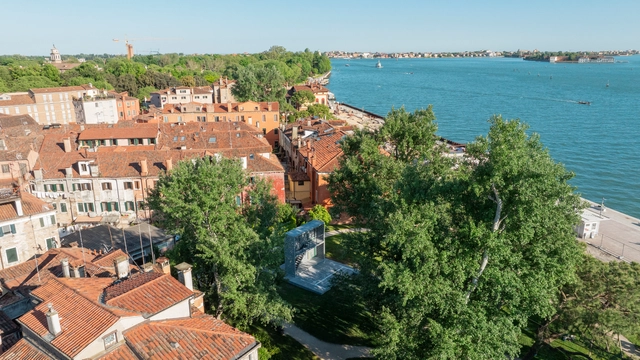
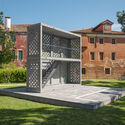
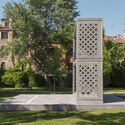
During the Time Space Existence exhibition, organized by the European Cultural Centre in Venice, the building-solutions company Holcim and Pritzker Prize-winning architect Alejandro Aravena, with his firm ELEMENTAL, unveiled a full-scale prototype that introduces a new approach in incremental housing solutions.

The housing prototype—The Basic Services Unit—was built with Hoclim's recently launched biochar technology, which transforms buildings into carbon sinks by permanently trapping carbon in a bio-based material called biochar. This material is used as a component of low-carbon concrete, cement, and mortars.

Between Housing Demand and Environmental Goals: Alejandro Aravena on Incremental Solutions and Net-Zero Concrete

During the Time Space Existence exhibition, organized by the European Cultural Centre in Venice, Pritzker Prize-winning architect Alejandro Aravena and his firm ELEMENTAL unveiled a full-scale prototype for a new approach in incremental housing solutions. Titled the USB Core, standing for Basic Services Unit housing prototype, this proposal aims to demonstrate how efficient construction can provide all the essential housing components in a minimal space. The prototype is also the result of a collaboration between the architecture office and concrete manufacturer and researcher Holcim, and is built out of a newly developed type of net-zero concrete mix. It also incorporates fully recycled aggregates, in alignment with circular economy principles. The collaboration aims to demonstrate a more environmentally conscious yet cost-effective way of providing essential services to at-risk communities without harming the planet.

While on site in Venice, ArchDaily's managing editor Maria-Cristina Florian had the chance to sit down with Alejandro Aravena and discuss the implications of this collaboration, the urgent need for housing, and the role of the architect as the coordinator of a process involving many actors.

Between Housing Demand and Environmental Goals: Alejandro Aravena on Incremental Solutions and Net-Zero Concrete - Image 1 of 4Between Housing Demand and Environmental Goals: Alejandro Aravena on Incremental Solutions and Net-Zero Concrete - Image 2 of 4Between Housing Demand and Environmental Goals: Alejandro Aravena on Incremental Solutions and Net-Zero Concrete - Image 3 of 4Between Housing Demand and Environmental Goals: Alejandro Aravena on Incremental Solutions and Net-Zero Concrete - Image 4 of 4Between Housing Demand and Environmental Goals: Alejandro Aravena on Incremental Solutions and Net-Zero Concrete - More Images+ 29

How Do You Design for Informality?

Subscriber Access | 

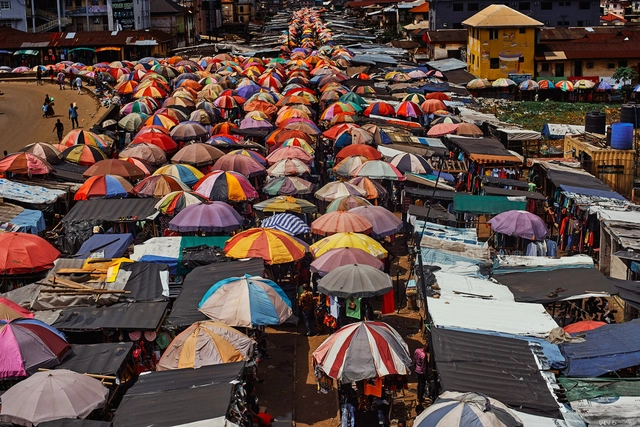
Informal architecture is the dominant mode of urbanization in rapidly growing and industrializing cities worldwide. In Delhi, the city with the largest population in India has half of its residents living in informal settlements. Lagos, with a population of over 22 million, also has 60% of its residents living in informal settlements. This pattern is also observed in Cairo, Johannesburg, Kinshasa, and other cities in the global south that face similar challenges of inequality and housing shortages. As their population grows and urbanization progresses, the exploration of informal architecture schemes to address the demand for affordable housing and basic services will only increase. While the primary purpose of design is to provide structure, lessons from informal architecture offer insights into how architects can respond to such schemes.

How Do You Design for Informality? - Image 1 of 4How Do You Design for Informality? - Image 2 of 4How Do You Design for Informality? - Image 3 of 4How Do You Design for Informality? - Image 4 of 4How Do You Design for Informality? - More Images+ 3

Incremental Iconation: A Path for Developing Monumental Buildings in the Global South

Buildings that are designed to layer stories and memories, evoke a sense of aspiration, define cultural narratives, and build a national identity will always be important in all societies. When buildings have this power to shape communities, make an impact on a city’s image, and change the course of socio-economic growth, then they can be identified as iconic. Though the term “iconic” is subjective, it is one that pushes the boundaries of architecture in any context. It calls for spatial originality, proposes innovative material technology, and necessitates a radical socio-economic investment to be realized.
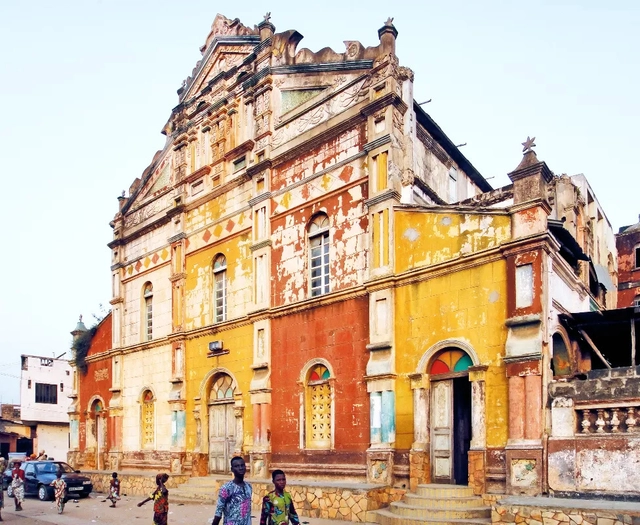
However, since the economies of developing countries in the global south cannot meet the requirements of these architectural structures, is there a more suitable socio-economic model for monumental structures in this context? Can the incremental principles of small adaptable changes and growth be applied to the finite iconic aspiration of this architecture?

Incremental Iconation: A Path for Developing Monumental Buildings in the Global South - Image 1 of 4Incremental Iconation: A Path for Developing Monumental Buildings in the Global South - Image 2 of 4Incremental Iconation: A Path for Developing Monumental Buildings in the Global South - Image 3 of 4Incremental Iconation: A Path for Developing Monumental Buildings in the Global South - Image 4 of 4Incremental Iconation: A Path for Developing Monumental Buildings in the Global South - More Images+ 2

Architects Propose 120 Incremental Social Houses for Iquitos, Peru

Building and growing are two actions that should be considered more often than not at the same time. This is how the 2017 "Build to Grow" social housing competition, looked to establish bases that sustain a flexible way of living. The event took place in the Belén district in the city of Iquitos, on 3.7 hectares plot of land. The project that received first place proposed to locate 120 incremental homes, that alternatively allowed users to modify and expand it according to their needs and economic means. In short, a home with a solid nucleus formed by a structure that supports changing activities.