Dornbracht's Coya series designed by Sieger Design. Image Courtesy of Dornbracht
When is a form still circular or rectangular? In twentieth-century modernism, this question was largely absent. Architecture was built on clarity, reduction, and formal purity. Influenced by architects such as Le Corbusier and Ludwig Mies van der Rohe, modernist design established a visual order based on rational geometry, industrial materials, and the rejection of ornament. Circle and square, function and expression, were kept strictly apart—a logic that dictated the rigid, modular layouts of traditional bathrooms for decades.
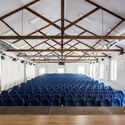
Over the years, cinema architecture has continually reinvented itself. From cinematic experiences that engage multiple senses to material technologies that reinterpret the aesthetics of past eras, the concept of the movie theater has enabled the recovery, revitalization, and renewal of numerous obsolete, ruined, or even historically protected spaces. Just as the Majestic Cinema reflects an important community function in Zanzibar, Tanzania, many twentieth-century buildings have found in adaptive reuse an opportunity to restore and preserve cultures, memories, and traditions that remain meaningful to their communities.
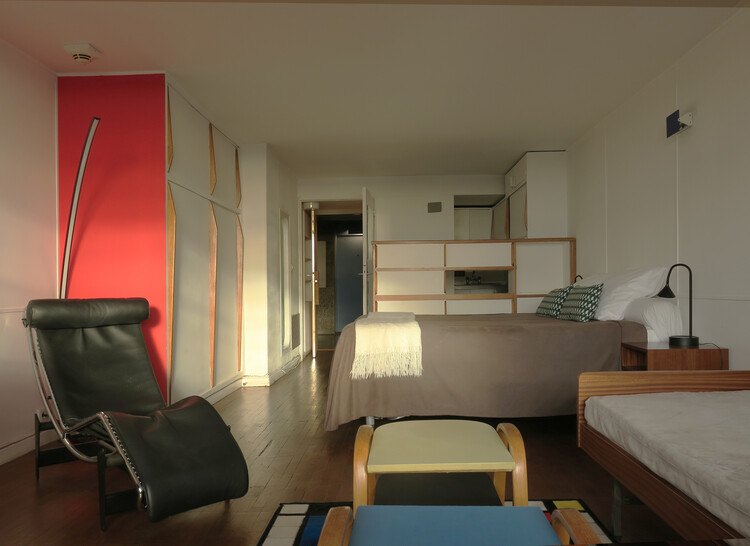
Modernism is often encountered through built form, photographed facades, canonical plans, concrete manifestos. For most people, its first encounter was far more immediate. It was a chair in an office, a shelf in a living room, a compact unit that reorganized how one sat, stored, or slept. Long before modern architecture could be widely commissioned, it was furniture that entered everyday space, carrying with it a new logic of living. Modernism's promise of transforming life was often delivered through these smaller, repeatable objects.
To understand this shift, furniture has to be read as a condensed form of architecture rather than decoration. Early twentieth-century designers treated it precisely this way. Le Corbusier described furniture as équipement de l'habitation (equipment of living), placing it within the operational system of the building rather than outside it. Similarly, the Bauhaus approached chairs and tables as industrial prototypes, embedding principles of standardization, efficiency, and mass production into their design. As architectural historian Beatriz Colomina has argued, modern architecture did not circulate only through buildings, but through media and objects that translated its ideas into everyday life. Furniture became architecture in miniature: portable, reproducible, and capable of reorganizing space without reconstructing it.
Interpreting the contemporary habitat is a priority for architects and designers worldwide. Amid shifting trends, stylistic blends, and the revival of different techniques, contemporary interior design brings together materials, textures, and colors to transform the user experience. Within the domestic realm, a series of realities, tensions, and activities unfold, with design serving as a strong foundation and support system to meet the needs of its inhabitants. During Milan Design Week 2026, ICEX and Elle Decor Italia presented the fourth edition of Appartamento Spagnolo—a spatial framework created to showcase contemporary Spanish interior design within a historic context.
Heritage, in interiors, is increasingly rarer to be only a matter of preservation alone. More often it arrives as friction: the encounter between what a building already is—its plan logic, its scars, its structural inconsistencies—and what contemporary life demands of it.
Some of the most convincing projects today are not those that "restore" an interior back to a single moment, nor those that erase the past under a seamless new skin. They are the ones that stage a relationship between old and new—allowing contrast to do more than tell a story, and letting the clash become a pragmatic tool for construction, budget, and speed.
What defines the atmosphere of a home? Beyond material palettes and natural light, sound plays a defining role in how spaces are perceived and inhabited. The reverberation of footsteps across stone, the muted calm of a textile-lined room, or the way music carries through an open-plan interior all shape the sensory identity of domestic space. Architecture is experienced not only visually, but acoustically.
The concept of the "soundscape" describes this relationship between people, sound, and the built environment. In residential architecture, sound is more than background noise or technical performance; it influences privacy, concentration, rest, and emotional comfort. Geometry and materiality act as the primary acoustic conductors: while concrete, glass, and stone reflect and amplify, timber and upholstery soften and absorb. Ceiling heights, circulation paths, and room proportions further shape how sound travels and settles across a space.
Waterway bathroom concept by Haihua Zhang and the bathroom collection AXOR Archivio by Barber Osgerby. Image Courtesy of AXOR
Water has always occupied a unique position in architecture: elemental yet elusive, functional yet symbolic. It is both a material and a medium that shapes cities, structures rituals, and influences how space is perceived. Across cultures, water is understood not only as a source of life but as a carrier of meaning, associated with purification, renewal, and continuity. Its presence in the built environment often extends beyond utility, becoming a device through which architecture engages the senses and constructs atmosphere.
Walking into an electrical store can be intimidating. At first glance, all the lights are on, and the thousands of chandeliers and lamps are blinding. When you walk toward the shelves, you see dozens of options, shapes, colors, prices, and uses. On each package, informational tables display numbers that can seem confusing at first. Lumens, color temperature, wattage—there are many unfamiliar terms. Before defaulting to the cheapest option, only to find that it creates an uncomfortable or poorly balanced atmosphere, understanding a few key concepts can make a significant difference.
Lighting design plays a fundamental role in shaping how spaces are perceived and used, influencing comfort, atmosphere, and even productivity. Poorly designed lighting, on the other hand, can compromise these qualities. Rather than approaching lighting as a purely technical decision, it can be understood as an integral part of architectural design. To help clarify these choices, the following overview introduces the most common types of light sources and key concepts associated with them.
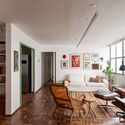
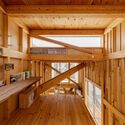
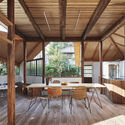
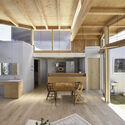
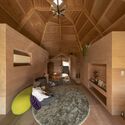
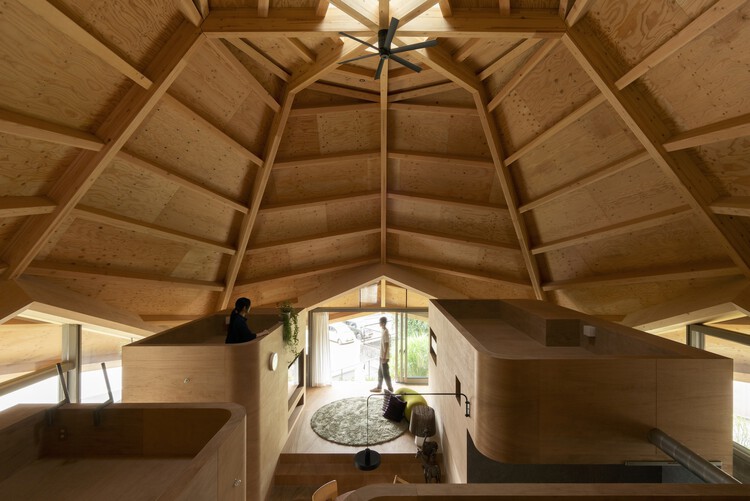
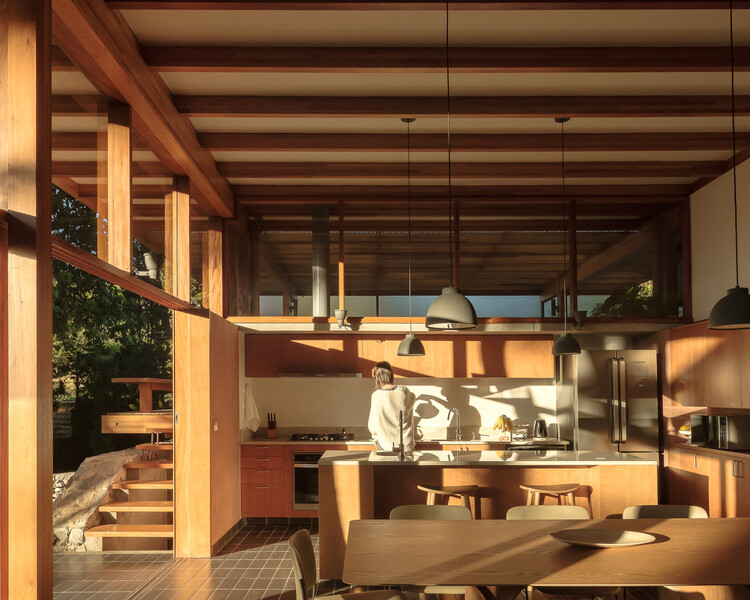
Contemporary Japanese architecture continues to demonstrate how to adapt the evolving needs of modern residents to a rich building tradition and artisanal legacy. Wood has always been the soul of Japanese architecture. In many recent residential projects, this material transcends its structural role to become the primary finish for various surfaces — ranging from floors and ceilings to furniture and architectural elements. These environments strike a delicate balance between elegance and coziness.
The use of natural, unpainted finishes highlights the material's inherent honesty while also celebrating the unique character of each piece, its natural grain, and the diversity of the overall composition. While some houses feature sober, dark-stained timbers to create a grounded atmosphere, others utilize lighter woods like pine to foster a bright, airy, and ethereal feel. This versatility proves that wood can adapt to any aesthetic, from the rustic to the ultra-minimalist.
Bolete Lounge BIO® by Andreu World x Patricia Urquiola. Image Courtesy of Andreu World
When walking into a large living space, a hotel lobby, or an open-plan workplace, the first thing that can be noticed is not what divides the space, but what holds it together. There are rarely clear boundaries, no obvious rooms, no strict partitions, yet the space still feels organized. Some areas invite a pause; others dictate movement; others foster community. The transitions are subtle, but legible.
At the same time, these interiors are expected to do more. They must accommodate constant change, withstand intensive use, and respond to environmental pressures by reducing waste, extending lifespans, and avoiding frequent replacement. The question is not only how a space looks, but how it performs over time. What is actually doing the heavy lifting?
Videos
Dornbracht Madison fittings for Brenners Park-Hotel & Spa in Baden-Baden. Image Courtesy of Dornbracht
During renovation projects, replacement is often preferred over refurbishment. Used fixtures are removed, new products specified, timelines secured. Particularly in hospitality projects, where closures are costly and operations are tightly scheduled, installing new components appears to be the most reliable solution. It is faster, easier to coordinate, and aligns with established workflows. Refurbishment operates differently. It requires careful dismantling instead of disposal, evaluation instead of substitution, and trust in the quality of what is already there. It introduces complexity into a process designed for efficiency.
The recent renovation of Brenners Park-Hotel & Spa in Baden-Baden demonstrates that under the right circumstances, this additional effort can become a deliberate architectural strategy for similar projects, especially when the original materials were never intended to be temporary.
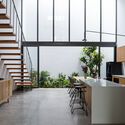
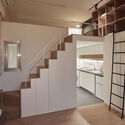
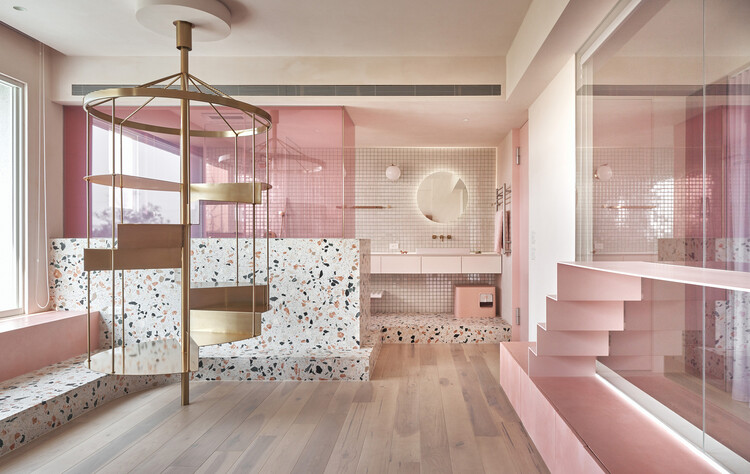
In many high-density cities across Asia, the staircase is often treated as a necessary evil. Whether in apartment buildings, private homes, or retail interiors, it is frequently hidden, tucked away, or pushed to the margins—an element to be minimized so more area can be given to "usable" space. Yet as density intensifies and square footage becomes increasingly scarce, architects and designers are forced to rethink this vertical puzzle.
The question shifts from how to conceal the staircase to how to make it work harder: can it become a productive addition to the interior—an architectural device that does more than connect levels, performing dual (or multiple) duties rather than simply consuming floor area?
In an age dominated by screens and digital images, the full character of a designed object often remains hidden. Only when encountering an object in person can one sense its texture, notice how it interacts with light, or even perceive its subtle smell. These sensory qualities— so difficult to convey online—reveal why design fairs continue to matter. Increasingly, these fairs have become spaces for experimentation in contemporary design, where ideas about materials, collaboration, and social responsibility are publicly explored. Curated programs, exhibitions, and experimental installations transform these events into environments where designers, manufacturers, and researchers test new possibilities for the built realm.
Set along the outer breakwater of Port de Cap-d'Ail, located next to Monaco, the Beach House occupies a threshold between land and sea. Surrounded by water and docked boats, the building sits in close dialogue with the harbor, exposed to the shifting light, reflections, and atmosphere of the Mediterranean. Within this setting, the house reads almost like another vessel moored along the harbor wall.
When architect Dave Rowles began work on the project, however, the residence offered little of this character internally. The former private home had been stripped back almost entirely, leaving a raw concrete shell. The renovation, therefore, began with a fundamental question: how can an interior capture the qualities of its surroundings? Rather than competing with the powerful maritime context, the design focused on creating a calm, material-driven interior that frames and amplifies the beauty and experience of the surrounding landscape crafted from oak, cedar, marble, and stainless steel details. In collaboration with barth, a company specializing in interior craftsmanship, Rowles transformed the concrete structure into a cohesive interior, where natural materials, light, and refined detailing define both the interior and exterior spaces.
The BIG SEE Festival returns on May 21-22, 2026, to Portorož, Slovenia, as the leading architecture and product design platform in South-East Europe, bringing together architects, designers, brands, and decision-makers from across the world. Formerly known as BIG Architecture and BIG Design, the unified BIG SEE Festival reflects an expanded ambition: to frame architecture and design as critical tools for navigating complexity, responsibility, and change.
In the picture: F128 PA Black Ambiance Granite, U590 PM/TM Deep Blue, U705 PM/TM Angora Grey, U755 PM/TM Havanna Grey, H1708 ST17 Brighton Chestnut. Image Courtesy of EGGER
Designing an interior is, in many ways, an exercise in orchestration. Just as a conductor coordinates instruments, timbres, rhythms, and intensities to compose a coherent piece, the architect brings together materials, color, light, texture, and proportion to define the spatial quality and atmosphere of an environment. None of these decisions operates in isolation: the choice of a surface influences how light is reflected; a given material can shape how a room ages over time; color, in turn, directly affects the perception of scale.
Wood-based materials such as decorative particleboards, MDF boards or laminates can therefore be understood as more than simple finishes. Industrially produced, they combine decor selection, surface texture, and technical substrate, defining both their appearance and the way a space responds to use, light, and time. Factors such as dimensional stability, ease of maintenance, and resistance to wear become integral to design decisions, particularly in interiors subject to intensive use.
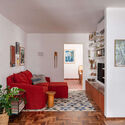
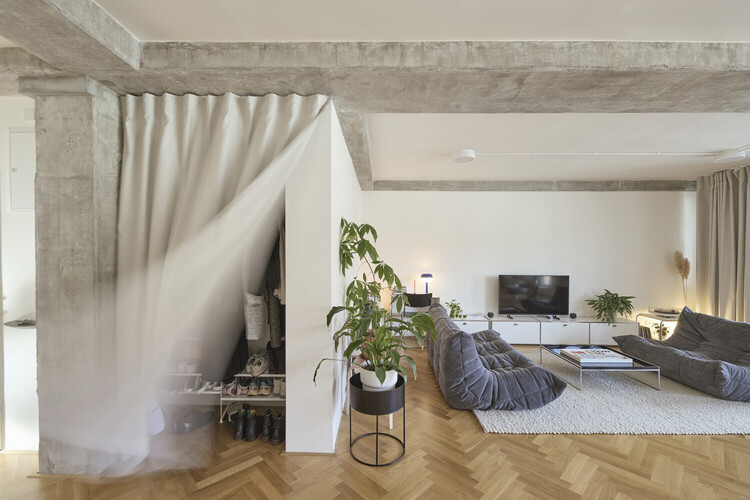
For decades, heritage has been easiest to recognize from the street. We protect facades, skylines, and monuments because they are visible, stable, and legible as cultural assets. Yet most of what we remember about living is how we eat together, withdraw, argue, care, and rest, which happen far from view. It happens inside rooms. As open plans quietly give way to thresholds, corridors, and enclosures, a deeper question emerges: what if cultural memory survives not in what architecture shows, but in how it is lived?
"Feeling at home" is more than just an expression—it is the sense of warmth and comfort that transforms a space into a true refuge. To achieve this, elements like color, texture, lighting, and materials play a crucial role in shaping an environment that fosters relaxation and well-being. Backed by research in environmental psychology and neuroscience, the connection between physical spaces and human behavior highlights how architecture can directly influence the atmosphere, turning chaos into tranquility.