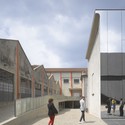
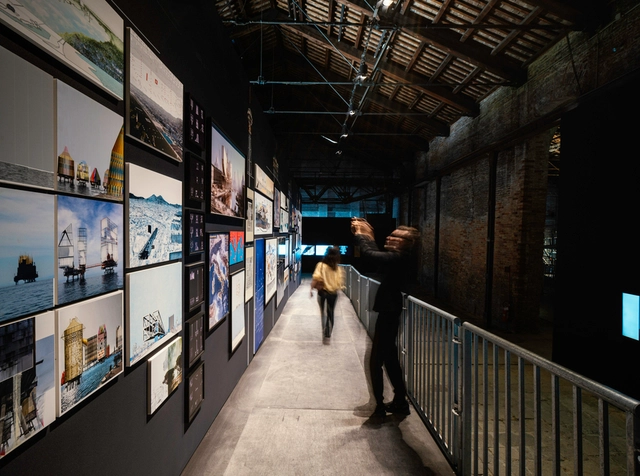
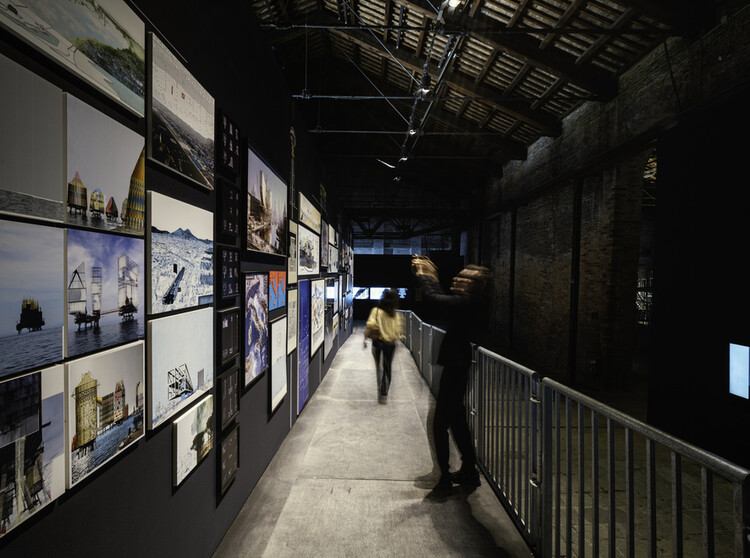
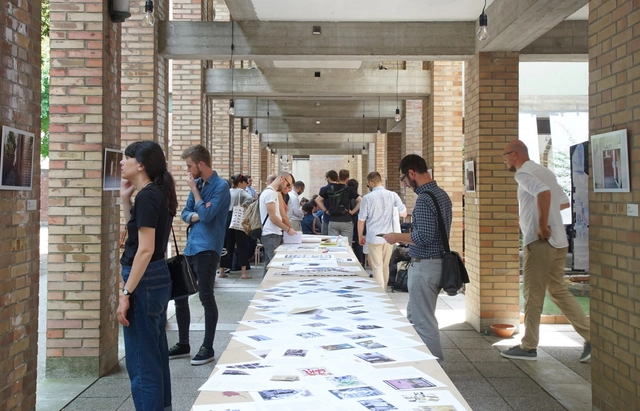
"La Quadreria" interior photo gallery. Italian Pavilion at the 2025 Venice Architecture Biennale. Image Courtesy of PCM Studio di Paola C. Manfredi
The Italian Pavilion at the 19th International Architecture Exhibition – La Biennale di Venezia is situated in the Tese delle Vergini of the Arsenale and is promoted by the Directorate-General for Contemporary Creativity of the Italian Ministry of Culture. This year, the Pavilion hosts architectural, scientific, and cultural reflections on the Mediterranean Sea and its neighboring oceans, in an exhibition titled "Terrae Aquae. Italy and the Intelligence of the Sea", curated by Architect and Professor Guendalina Salimei. The exhibition brings together projects from diverse actors in Italian society through an open call, whose objective was to rethink the boundary between land and water as an integrated system of architecture, infrastructure, and landscape. In response to the Biennale's central theme, the exhibition aims to stimulate the awakening of a collective intelligence capable of triggering a renewal in that relationship, starting from the Italian coast and expanding globally.
In this video from NOWNESS, an excerpt from Yuri Ancarani's documentary "Il Capo" (The Chief), the filmmaker captures the mesmerizing business of Marble extraction in the hills of Northwest Italy. The prized delicacy of the Carrara stone's surface is juxtaposed against the dramatic size and weight of the blocks they are removing, which eventually fall with an earth-shattering thud. Similarly the rugged power of the excavators is in marked contrast to the precise, understated gestures of the chief himself, who directs his workers with a complex series of predetermined hand signals.
"Marble quarries are places so unbelievable and striking, they almost feel like they are big theaters or sets," explains Yuri Ancarani. "I was so taken by the chief, watching him work. How he can move gigantic marble blocks using enormous excavators, but his own movements are light, precise and determined."
This article was originally published on February 25, 2015.
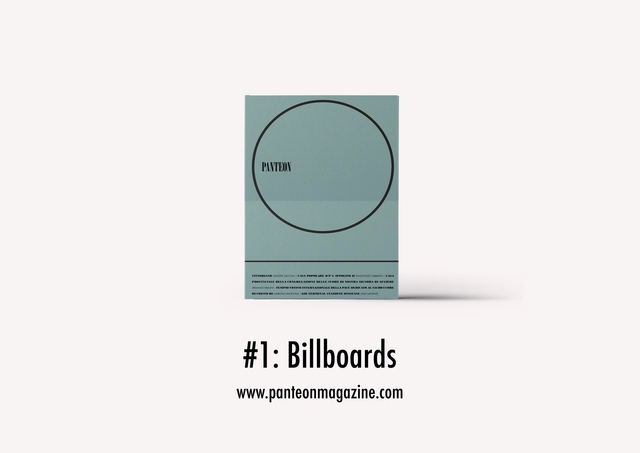
Panteon is a magazine about architecture, released twice a year. Panteon aims to be a platform for architectural debate using the city of Rome as a pretext, as an infinite warehouse from which to draw answers to a potentially infinite number of questions.
The topic of the call is "Billboards”
Panteon is an anachronistic venture: anachronistic is the content, anachronistic is the product, anachronistic is its use.
The protagonist is the architecture of the city of Rome, all built between 1911 and 1989 within the GRA, our contemporary city wall, whose analogies are arbitrary and questionable.
Panteon aims to be a platform for architectural debate using the city of Rome as a pretext, as an infinite warehouse from which to draw answers to a potentially infinite number of questions.
The ‘Unfolding Pavilion’ is an exhibition and editorial project that pops up at major architecture events in previously inaccessible but architecturally significant buildings.
On each occasion the ‘Unfolding Pavilion’ features a different theme inspired by the space it occupies, by means of commissioned original works that react to it and to its wider cultural-historic background. The ‘Unfolding Pavilion’ doesn’t necessarily care about the hosting event’s theme. It lets its occupied space inspire its own theme. Without a good exhibition space (of the finest architectural making), the 'Unfolding Pavilion’ doesn’t have any reason to exist.
Research is the key to Andrea Oliva’s project for Shed #19—not only because this old factory was turned into a technopole for industrial investigation, but also because the architect’s proposal used research as a way of identifying the building’s possible transformations. In this case, the rich industrial history of the plant and the area is deemed essential for its refurbishment; its recovery depends on understanding its significance.
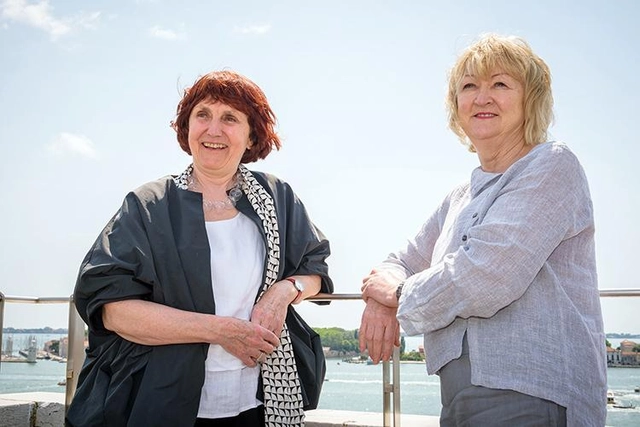
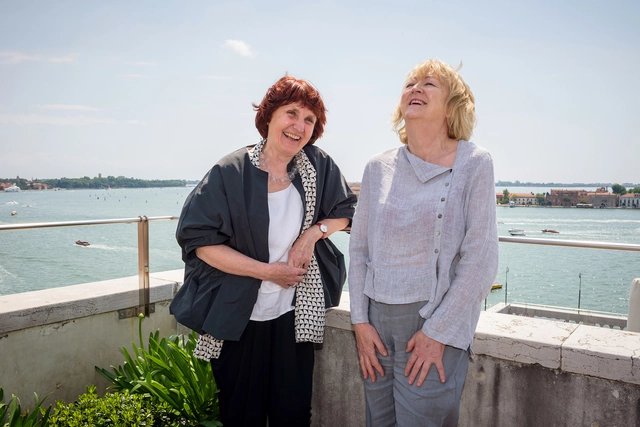
At a press conference earlier today, curators of the 2018 Venice Biennale Yvonne Farrell and Shelley McNamara of Grafton Architects revealed more information about this year's upcoming event, to be hosted from May 26th to November 25th. Building on the thematic concept the duo presented last June—“Freespace”—the event will feature a main exhibition in the Central Pavilion of the Giardini and the Arsenale featuring work by 71 participants, while two Special Sections will feature a total of 29 further participants. Elsewhere, 65 national pavilions will present contributions from around the world, including 7 first-time participants: Antigua & Barbuda, Saudi Arabia, Guatemala, Lebanon, Mongolia, Pakistan and the Holy See.
In August 2016, a powerful 6.2-magnitude earthquake struck central Italy, resulting in the loss of nearly 300 lives and the destruction of centuries-worth of historic architecture. At the center of the destruction was Amatrice, a beautiful hill town set in the Latium Apennines, which was reduced to mere rubble, leaving hundreds dead or injured and the survivors homeless.
Curators of the German Pavilion at the 2018 Venice Architecture Biennale. Image Courtesy of GRAFT
In 2018, Germany will be reunified for 28 years, the precise amount of time that the inner German border wall—which was active from between 1961 and 1989—stood between "East" and "West". With this in mind, the German State have announced "Unbuilding Walls" as the theme of the German Pavilion at the 2018 Venice Architecture Biennale. Curated by GRAFT with Marianne Birthler, the exhibition will be designed to "respond to current debates on nations, protectionism, and division."
At a meeting convened today at the Biennale's headquarters at Ca’ Giustinian in Venice, Italy, Grafton Architects—Yvonne Farrell and Shelley McNamara—revealed the theme and outline for the 2018 Venice Architecture Biennale, which they have titled Freespace. According to the Directors, the forthcoming Biennale will celebrate "generosity and thoughtfulness," and "a desire to engage."
We believe that everyone has the right to benefit from architecture. The role of architecture is to give shelter to our bodies, but also to lift our spirits. A beautiful wall forming a street edge gives pleasure to the passer-by, even if they never go inside.
Freespace will "reveal diversity, specificity, and continuity in architecture. Together," they proposed, "we can reveal the capacity of architecture to connect with history, time, place, and people. These qualities sustain the fundamental capacity of architecture to nurture and support a meaningful impact between people and place." In their closing statement, Farrell and McNamara chose to quote an Ancient Greek proverb: a society grows great when old men plant trees whose shade they know they will never sit in.
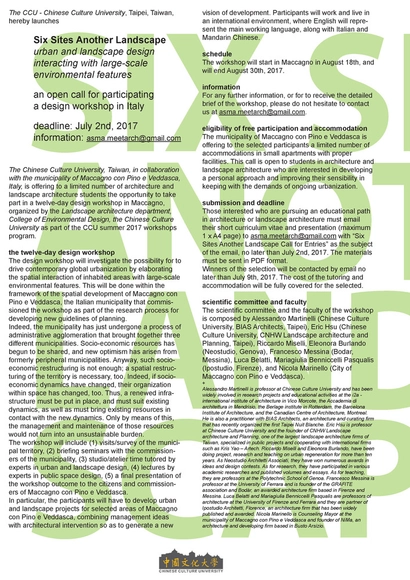
The Chinese Culture University, Taiwan, in collaboration with the municipality of Maccagno con Pino e Veddasca, Italy, is offering to a limited number of architecture and landscape architecture students the opportunity to take part in a twelve-day design workshop in Maccagno, organized by the Landscape Architecture Department, College of Environmental Design, the Chinese Culture University as part of the CCU summer 2017 workshops program.
With the 2017 Salone del Mobile now behind us, photographer Laurian Ghinitoiu has shared a collection of photographs from Milan Design Week. From housing prototypes to immersive "digital installations", the annual design show—which is often touted to be the fourth largest of any kind in the world—this year brought together a wide range of practitioners and design companies. In Milan, unusual collaborations are the order of the day.
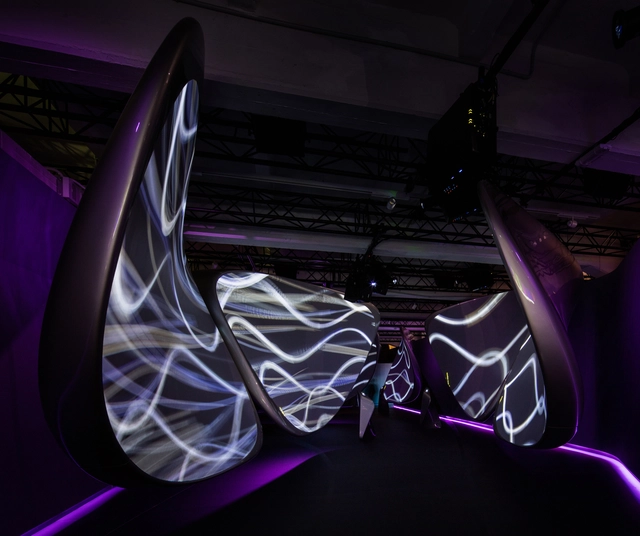
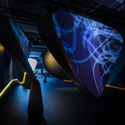
Zaha Hadid Architects has collaborated with Samsung and digital art and design collective Universal Everything to create an immersive technology installation at the 2017 Milan Design Week, taking place this week in the Italian city. Named ‘Unconfined,’ the pavilion will showcase Samsung’s new Galaxy S8 smartphone by leading visitors through an immersive environment inspired by the device.
GSAPP Conversationsis a podcast series designed to offer a window onto the expanding field of contemporary architectural practice. Each episode pivots around discussions on current projects, research, and obsessions of a diverse group of invited guests at Columbia, from both emerging and well-established practices. Usually hosted by the Dean of the GSAPP, Amale Andraos, the conversations also feature the school's influential faculty and alumni and give students the opportunity to engage architects on issues of concern to the next generation.
Videos
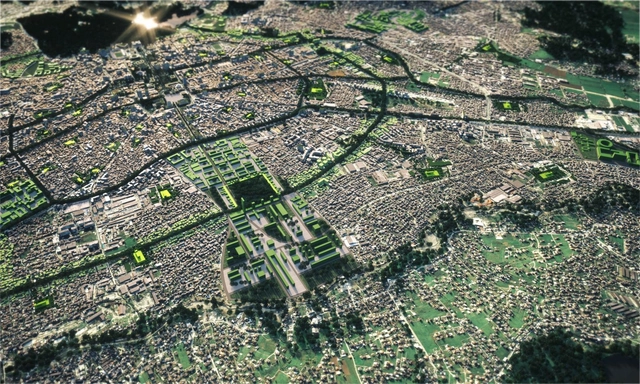
Bird's eye view of the regenerated city centre. Image Courtesy of Attu Studio
In 1925, Italian designer Armando Brasini created a sweeping masterplan to transform the Albanian capital city of Tirana. Almost one hundred years later, the Tirana 2030 (TR030) Local Plan by Italian firm Stefano Boeri Architetti has been approved by Tirana City Council. Collaborating with UNLAB and IND, Boeri seeks to define a new era in the country’s capital, incorporating controlled development, advanced infrastructure, green corridors, and an enhancement of the city’s architectural heritage.
With the opening of the Fondazione Prada art galleries in May, OMA showed a different side to their practice, one focusing on preservation and assemblage rather than the iconography and diagrammatic layout that many associate with the firm. In this interview, originally published by Metropolis Magazine as "Koolhaas Talks Prada," Rem Koolhaas explains the reasoning behind this new approach, and how they attempted to avoid falling into the clichés of post-industrial art spaces.
When the Fondazione Prada opened its doors to a new permanent home in Milan dedicated to contemporary culture, it not only placed the Italian city firmly at the forefront of today’s global art world, but also introduced an ambitious new way of thinking about the relationship between architecture and art. The location—an original 1910 distillery in a distinctly gritty part of the city—comprised seven spaces including warehouses and three enormous brewing cisterns with a raw industrial quality that the architects, Dutch firm OMA, retained while adding three new buildings made of glass, white concrete, and aluminum foam. One, the centrally located Podium, is intended for temporary shows, while another—still under construction—is a nine-story tower that will house the foundation’s archives, art installations, and a restaurant. The third, a theater with a mirrored facade, features folding walls that allow the building to open onto a courtyard. In total, the collection of buildings provides nearly 120,000 square feet of exhibition space, more than twice that of the new Whitney Museum of American Art. Metropolis correspondent Catherine Shaw visited the site with Pritzker Prize–winning architect Rem Koolhaas to find out more about the challenges of creating a new cultural paradigm.
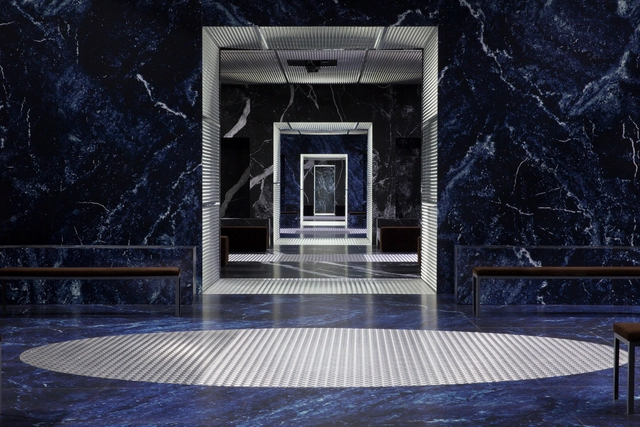
On Sunday, Prada ditched the classic runway to kickoff their 2015 Fall/Winter menswear line in a “disorienting landscape” designed by OMA’s research counterpart AMO. The partitioned catwalk transformed an exiting room inside the Fondazione Prada at Via Fogazzaro 36 in Milan into an intimate series of interconnected spaces affectionately referred to as “The Infinite Palace.”
“The existing room is disguised into a classic enfilade of rooms, gradually changing proportions as in an abstract mannerist perspective. As opposed to a single stage, the new sequence of spaces multiplies and fragments the show into a series of intimate moments,” described AMO.




.jpg?1529424893 "© atelier XYZ")



.jpg?1520285865&format=webp&width=640&height=580)
.jpg?1520286114 "© Laurian Ghinitoiu")
.jpg?1520338615 "© Laurian Ghinitoiu")
.jpg?1520285315 "© Laurian Ghinitoiu")
.jpg?1520338605 "© Laurian Ghinitoiu")
.jpg?1520285865)



.jpg?1492020579&format=webp&width=640&height=580)
.jpg?1492020513 "SO-IL. Image © Laurian Ghinitoiu")
.jpg?1492020331 "COS × Studio Swine. Image © Laurian Ghinitoiu")
.jpg?1492020534 "SO-IL. Image © Laurian Ghinitoiu")
.jpg?1492020424 "DS+R. Image © Laurian Ghinitoiu")
.jpg?1492020579)
.jpg?1492100907&format=webp&width=640&height=580)


.jpg?1492100907)







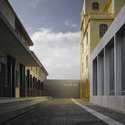
.jpg?1438347714 "The Fondazione’s inaugural exhibition, the Serial Classic, explores questions of authenticity and imitation in classical antiquity. The lifesize sculptures are mounted on an intricate flooring system designed for the exhibition and composed of travertine, brushed aluminum, and perspex—all exposed along the edges. Image © Attilio Maranzano")
.jpg?1438347662 "The gilded exhibition hall is the central focal point of the Fondazione. Called the Haunted House, the structure’s blank utilitarian features are draped in gold leaf, an ostensibly spontaneous extravagance that Koolhaas post-rationalizes on functionalist grounds. The building towers above the rest of the campus’s open-air spaces and warehouses, which all can be taken in from the Haunted House’s balconies. Image © Bas Princen - Fondazione Prada")