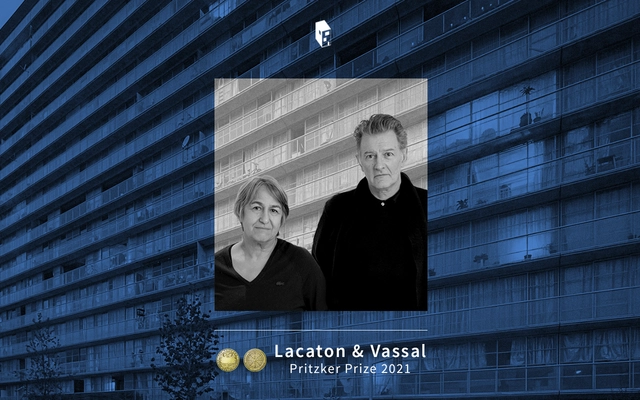
1. ArchDaily
  2. Jean-Philippe Vassal

Jean-Philippe Vassal: The Latest Architecture and News

PREVI Lima and the Politics of Resident Authorship in Social Housing

Subscriber Access | 

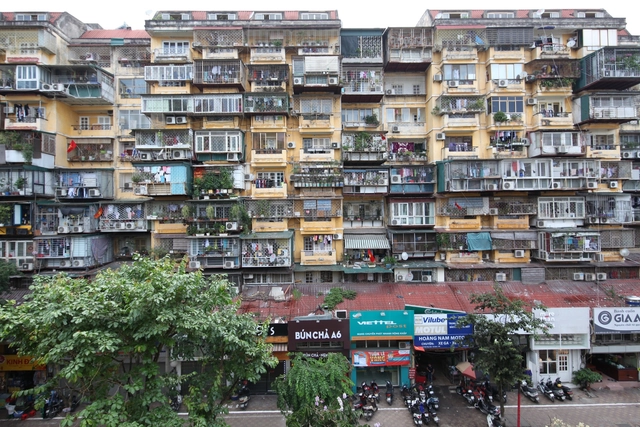
Architects are accustomed to being credited for buildings long after construction ends. Names remain attached to projects through photographs, publications, and histories, often decades after the original drawings were produced. Buildings, on the other hand, rarely remain faithful to that narrative for long. Families grow, technologies change, businesses emerge, and daily life introduces demands that no plan can fully anticipate. Over time, architecture accumulates modifications, repairs, additions, and improvisations that gradually distance it from its original form.

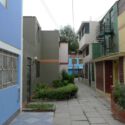
Few projects confront this question as directly as PREVI Lima. Conceived in the late 1960s as Peru's Experimental Housing Project, PREVI invited an international group of architects to develop housing prototypes capable of accommodating growth over time. The project is often remembered for its ambitious roster of designers, which included figures such as James Stirling, Aldo van Eyck, and Christopher Alexander. More than fifty years later, the neighborhood has become a record of resident decisions, revealing a form of architecture designed to remain unfinished.

PREVI Lima and the Politics of Resident Authorship in Social Housing - Image 1 of 4PREVI Lima and the Politics of Resident Authorship in Social Housing - Image 2 of 4PREVI Lima and the Politics of Resident Authorship in Social Housing - Image 3 of 4PREVI Lima and the Politics of Resident Authorship in Social Housing - Image 4 of 4PREVI Lima and the Politics of Resident Authorship in Social Housing - More Images+ 14

UIA 2026 Barcelona Announces Full Program, Detailing Formats, Exhibitions, and City-Wide Itineraries

The UIA World Congress of Architects 2026 Barcelona has released its full program, outlining the structure, participants, and range of activities scheduled to take place from June 28 to July 2, 2026. Expanding on the previously introduced theme, Becoming. Architectures for a Planet in Transition, the Congress is conceived as a distributed event across multiple venues and urban contexts rather than a single-site conference. Organized by the International Union of Architects (UIA) in collaboration with the Higher Council of the Colleges of Architects of Spain (CSCAE) and the Architects' Association of Catalonia (COAC), the event is expected to gather approximately 10,000 participants and 250 speakers from more than 130 countries.

UIA 2026 Barcelona Announces Full Program, Detailing Formats, Exhibitions, and City-Wide Itineraries - Image 1 of 4UIA 2026 Barcelona Announces Full Program, Detailing Formats, Exhibitions, and City-Wide Itineraries - Image 2 of 4UIA 2026 Barcelona Announces Full Program, Detailing Formats, Exhibitions, and City-Wide Itineraries - Image 3 of 4UIA 2026 Barcelona Announces Full Program, Detailing Formats, Exhibitions, and City-Wide Itineraries - Image 4 of 4UIA 2026 Barcelona Announces Full Program, Detailing Formats, Exhibitions, and City-Wide Itineraries - More Images+ 18

Who Has Won the Pritzker Prize?

Subscriber Access | 

The Pritzker Prize is the most important award in the field of architecture, awarded to a living architect whose built work "has produced consistent and significant contributions to humanity through the art of architecture." The Prize rewards individuals, not offices, as happened in 2000 (when the jury selected Rem Koolhaas instead of his firm OMA) or in 2016 (with Alejandro Aravena selected instead of ELEMENTAL); however, the Prize can also be awarded to multiple individuals working together, as was the case in 2001 (Herzog & de Meuron), 2010 (Kazuyo Sejima and Ryue Nishizawa from SANAA), and 2017 (Rafael Aranda, Carme Pigem, and Ramon Vilalta from RCR Arquitectes).

The Architecture of Restraint: When Choosing Not to Build Becomes Design

In a world facing ecological exhaustion and spatial saturation, the act of building has come to represent both creation and consumption. For decades, architectural progress was measured by the new: new materials, new technologies, new monuments of ambition. Yet today, the discipline is increasingly shaped by another form of intelligence, one that values what already exists. Architects are learning that doing less can mean designing more, and this shift marks the emergence of what might be called an architecture of restraint: a practice defined by care, maintenance, and the deliberate choice not to build.

The principle recognizes that the most sustainable building is often the one that already stands, and that transformation can occur through preservation, repair, or even absence. Choosing not to build becomes a political and creative act, a response to the material limits of the planet and to the ethical limits of endless growth. That Architecture moves beyond the production of new forms to embrace continuity, extending the life of structures, materials, and memories that already inhabit the world.

The Architecture of Restraint: When Choosing Not to Build Becomes Design - Image 1 of 4The Architecture of Restraint: When Choosing Not to Build Becomes Design - Image 2 of 4The Architecture of Restraint: When Choosing Not to Build Becomes Design - Image 3 of 4The Architecture of Restraint: When Choosing Not to Build Becomes Design - Image 4 of 4The Architecture of Restraint: When Choosing Not to Build Becomes Design - More Images+ 33

Lacaton & Vassal Receives the 2023 Soane Medal

Sir John Soane’s Museum has announced French architecture practice Lacaton & Vassal as the recipient of the 2023 Soane Medal. The award comes in recognition of the office’s work spanning over 3 decades. Through an honest design approach, the office became known for the resourceful repurposing of materials and existing structures to prioritize the needs of residents and local communities. For this approach, the office has been previously awarded as the 2021 Pritzker Prize 2021 Laureate.

Lacaton & Vassal Receives the 2023 Soane Medal - Image 1 of 4Lacaton & Vassal Receives the 2023 Soane Medal - Image 2 of 4Lacaton & Vassal Receives the 2023 Soane Medal - Image 3 of 4Lacaton & Vassal Receives the 2023 Soane Medal - Image 4 of 4Lacaton & Vassal Receives the 2023 Soane Medal - More Images+ 1

Pritzker Architecture Prize Ceremony Video Honors Sir David Chipperfield, the 2023 Laureate

The Pritzker Architecture Prize has released the ceremony video to honor of the 2023 Laureate of the prestigious Pritzker Prize, Sir David Chipperfield. Following the announcement from earlier this year, the ceremony was held on November 14th at the Ancient Agora of Athens, presented and sponsored by the Hyatt Foundation. It included the 2023 Laureate Lecture and Panel Discussion, where David Alan Chipperfield was joined by Francis Kéré, the 2022 Laureate, and Anne Lacaton and Jean-Philippe Vassal, the 2021 Laureates.

Pritzker Architecture Prize Ceremony Video Honors Sir David Chipperfield, the 2023 Laureate - Image 1 of 4Pritzker Architecture Prize Ceremony Video Honors Sir David Chipperfield, the 2023 Laureate - Image 2 of 4Pritzker Architecture Prize Ceremony Video Honors Sir David Chipperfield, the 2023 Laureate - Image 3 of 4Pritzker Architecture Prize Ceremony Video Honors Sir David Chipperfield, the 2023 Laureate - Image 4 of 4Pritzker Architecture Prize Ceremony Video Honors Sir David Chipperfield, the 2023 Laureate - More Images+ 1

Watch David Chipperfield, Francis Kéré, Anne Lacaton and Jean-Philippe Vassal Live at the 2023 Pritzker Prize Laureate Lecture & Panel Discussion

The Pritzker Architecture Prize presents The Role of Practice, the 2023 Laureate Lecture and Panel Discussion, today, Tuesday, May 23rd at 3:40 PM EEST, in partnership with the National Technical University of Athens, and with the participation of the Aristotle University of Thessaloniki, University of Patras and the Technical University of Crete.

The Pritzker Architecture Prize 2023 Laureate David Chipperfield will deliver the lecture, reflecting on architectural practice's role, responsibilities, and opportunities. Moreover, the 2023 winner will explore "how market forces have dominated architecture and become increasingly detached from its place, just as the challenges of the climate crisis, loss of biodiversity, and social inequality have heightened the urgency for a more proactive position". Alejandro Aravena, Jury Chair, and 2016 Laureate will introduce the lecture, which will be followed by a conversation between David Chipperfield, Francis Kéré, 2022 Laureate, and Anne Lacaton and Jean-Philippe Vassal, 2021 Laureates, as they each "reveal the successes and failures of their respective journeys which effected their architectural philosophies and works, and led them to the shared stage of the present".

The Pritzker Architecture Prize Releases Ceremony Video to Honor 2022 Laureate, Francis Kéré

Honoring the 2022 Laureate, the Burkinabé architect Francis Kére, The Pritzker Prize releases a ceremony video from the recently opened Marshall Building at the LSE, designed by the 2020 Pritzker Laureates Yvonne Farrell, and Shelley McNamara. The documentary includes remarks by the awardee, Tom Pritzker, and previous Laureates such as Alejandro Aravena, Norman Foster, Anne Lacaton, and Jean-Philippe Vassal. This ceremony presents Kéré with the 2022 Pritzker Prize medallion, the highest honor in architecture, certifying him as a Laureate for his extraordinary work with communities and architectural ingenuity.

The Pritzker Architecture Prize Releases Ceremony Video to Honor 2022 Laureate, Francis Kéré - Image 1 of 4The Pritzker Architecture Prize Releases Ceremony Video to Honor 2022 Laureate, Francis Kéré - Image 2 of 4The Pritzker Architecture Prize Releases Ceremony Video to Honor 2022 Laureate, Francis Kéré - Image 3 of 4The Pritzker Architecture Prize Releases Ceremony Video to Honor 2022 Laureate, Francis Kéré - Image 4 of 4The Pritzker Architecture Prize Releases Ceremony Video to Honor 2022 Laureate, Francis Kéré - More Images+ 2

The Pritzker Architecture Prize Releases Ceremony Video Honouring the 2021 Laureates Anne Lacaton and Jean-Philippe Vassal

The Pritzker Architecture Prize Releases Ceremony Video Honouring the 2021 Laureates Anne Lacaton and Jean-Philippe Vassal - Featured Image
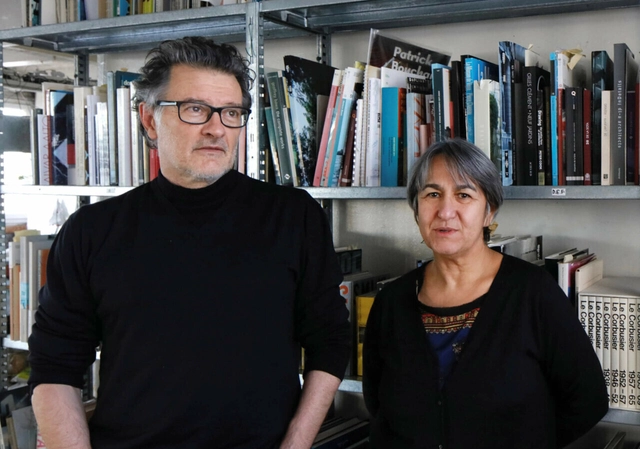
Courtesy of Laurent Chalet. ImageAnne Lacaton and Jean-Philippe Vassa

The Pritzker Architecture Prize released a special ceremony video honouring the 2021 laureates Anne Lacaton and Jean-Philippe Vassal. Previously held in person, each time at a different architecturally significant venue around the world, this year’s ceremony is the second pre-filmed event in the history of the Prize, following the one in 2020. The ceremony features filmed remarks from various speakers, among which are several jury members, Jury Chair Alejandro Aravena, the 2020 Prize recipients Shelley McNamara and Yvonne Farrell, as well as this year’s Laureates themselves. The video also pays tribute to the achievements of Lacaton and Vassal through footage of their built work.

The Pritzker Architecture Prize Releases Ceremony Video Honouring the 2021 Laureates Anne Lacaton and Jean-Philippe Vassal - Image 1 of 4The Pritzker Architecture Prize Releases Ceremony Video Honouring the 2021 Laureates Anne Lacaton and Jean-Philippe Vassal - Image 2 of 4The Pritzker Architecture Prize Releases Ceremony Video Honouring the 2021 Laureates Anne Lacaton and Jean-Philippe Vassal - Image 3 of 4The Pritzker Architecture Prize Releases Ceremony Video Honouring the 2021 Laureates Anne Lacaton and Jean-Philippe Vassal - Image 4 of 4The Pritzker Architecture Prize Releases Ceremony Video Honouring the 2021 Laureates Anne Lacaton and Jean-Philippe Vassal - More Images+ 2

Christophe Hutin Curates France's Pavilion for the 2021 Venice Biennale, Highlighting “Communities at Work” in Europe, Asia, America and Africa

The French pavilion at the 2021 Venice Biennale, “aims to reflect on the meeting between architectural know-how and the inhabitants’ own experiences of their living spaces”. Curated by Christophe Hutin, the intervention entitled “Communities at Work” will provide an immersive experience with the help of images in motion. Using five specific case studies on different continents: in Europe, Asia, America, and Africa, the exhibition presents a journey into a world where communities transformations their own living spaces, without following any formal schemes designed by an architect.

Christophe Hutin Curates France's Pavilion for the 2021 Venice Biennale, Highlighting “Communities at Work” in Europe, Asia, America and Africa - Image 1 of 4Christophe Hutin Curates France's Pavilion for the 2021 Venice Biennale, Highlighting “Communities at Work” in Europe, Asia, America and Africa - Image 2 of 4Christophe Hutin Curates France's Pavilion for the 2021 Venice Biennale, Highlighting “Communities at Work” in Europe, Asia, America and Africa - Image 3 of 4Christophe Hutin Curates France's Pavilion for the 2021 Venice Biennale, Highlighting “Communities at Work” in Europe, Asia, America and Africa - Image 4 of 4Christophe Hutin Curates France's Pavilion for the 2021 Venice Biennale, Highlighting “Communities at Work” in Europe, Asia, America and Africa - More Images+ 14

Translucency & Raw Materials: A Brief Analysis of Lacaton & Vassal's Solutions

Subscriber Access | 

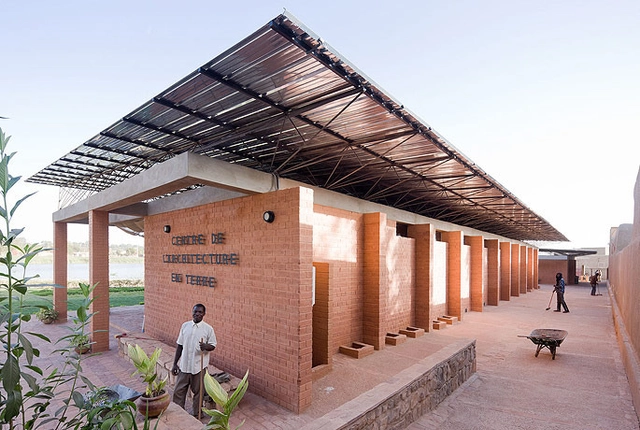
Paulo Mendes da Rocha often says that the function of architecture is nothing more than ‘supporting the unpredictability of life’. Spaces stand everyday life, meetings, landscape, art. Something like a frame, which is often also considered a supporting element of a work of art, since it highlights and, mainly, directs the viewer's gaze to the main object. The phrase of the Brazilian architect combines well with the way that the Lacaton & Vassal office works. The French couple's award raises some questions about how accurate their choices are for the current moment in the world. This includes the philosophy of their work, the design solutions adopted and the material palette generally adopted.

Why Lacaton & Vassal Won the 2021 Pritzker Prize

Subscriber Access | 

Pritzker Prize 2021 Laureates, French architects Anne Lacaton and Jean-Philippe Vassal, founders of Lacaton & Vassal, are known for their “never demolish” principle and their notion of sustainability embodied in a three-pillar balance: economic, environmental, and social. In this exclusive video for ArchDaily, Martha Thorne, executive director of the Pritzker Architecture Prize and Dean of IE School of Architecture and Design, shares some of the reasons why Lacaton & Vassal has won the Pritzker Prize 2021.

Lacaton & Vassal’s Transformation of 530 Dwellings Through the Lens of Laurian Ghinitoiu

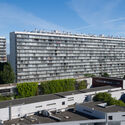
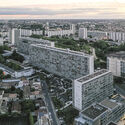
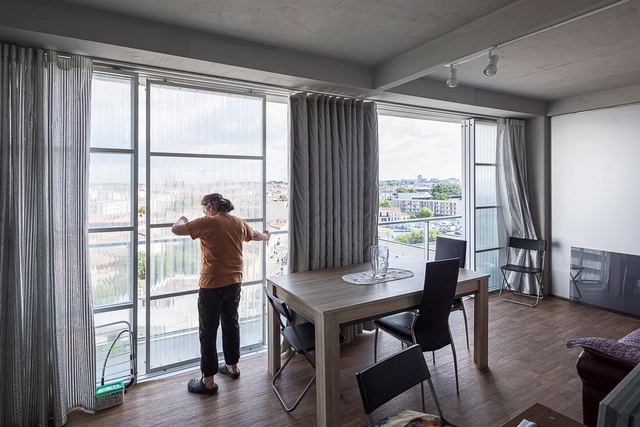
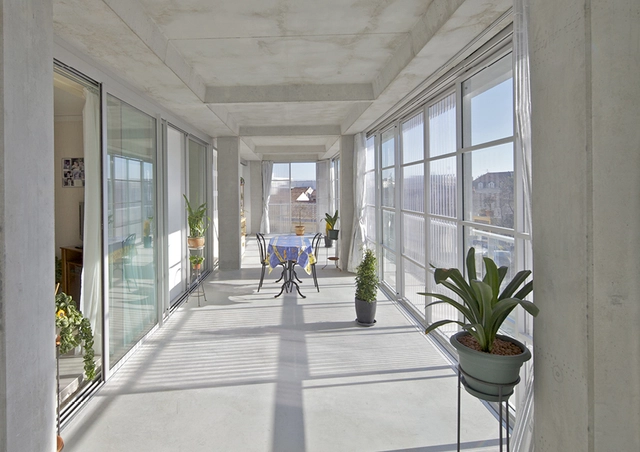
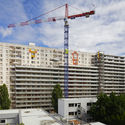
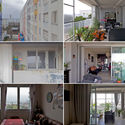
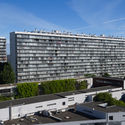
Renowned photographer Laurian Ghinitoiu has shared with ArchDaily a series of photos of one of the most influential projects of recent Pritzker Laureates, Anne Lacaton, and Jean-Philippe Vassal. The Transformation of the 530 dwellings in Bordeaux, 3 modernist residential buildings, reflect Lacaton & Vassal's sensitivity towards understanding existing structures. It also highlights how with minimal interventions, radical changes can be made to the habitability and usability of a modernist building -knowing that in Europe, the majority of these structures have ended up being demolished-. This approach was enough to select this transformation as the winner of the EU Mies 2019 Award, for the best contemporary architecture in Europe.

Lacaton & Vassal’s Transformation of 530 Dwellings Through the Lens of Laurian Ghinitoiu - Image 1 of 4Lacaton & Vassal’s Transformation of 530 Dwellings Through the Lens of Laurian Ghinitoiu - Image 2 of 4Lacaton & Vassal’s Transformation of 530 Dwellings Through the Lens of Laurian Ghinitoiu - Image 3 of 4Lacaton & Vassal’s Transformation of 530 Dwellings Through the Lens of Laurian Ghinitoiu - Image 4 of 4Lacaton & Vassal’s Transformation of 530 Dwellings Through the Lens of Laurian Ghinitoiu - More Images+ 20

Anne Lacaton and Jean-Philippe Vassal Receive the 2021 Pritzker Architecture Prize

The 2021 Pritzker Architecture Prize, architecture’s highest honor, has been granted to Anne Lacaton and Jean-Philippe Vassal, founders of Lacaton & Vassal, the French duo renowned for their multiple sustainable housing projects and for the Palais de Tokyo, a contemporary art gallery in Paris. In their three decades of work, Lacaton & Vassal always prioritized the “enrichment of human life”, benefiting the individual and supporting the evolution of the city.

Anne Lacaton and Jean-Philippe Vassal Receive the 2021 Pritzker Architecture Prize - Image 1 of 4Anne Lacaton and Jean-Philippe Vassal Receive the 2021 Pritzker Architecture Prize - Image 2 of 4Anne Lacaton and Jean-Philippe Vassal Receive the 2021 Pritzker Architecture Prize - Image 3 of 4Anne Lacaton and Jean-Philippe Vassal Receive the 2021 Pritzker Architecture Prize - Image 4 of 4Anne Lacaton and Jean-Philippe Vassal Receive the 2021 Pritzker Architecture Prize - More Images+ 32

Lacaton & Vassal: Get to Know 2021 Pritzker Winners' Built Work

Subscriber Access | 

Lacaton & Vassal: Get to Know 2021 Pritzker Winners' Built Work - Image 1 of 4Lacaton & Vassal: Get to Know 2021 Pritzker Winners' Built Work - Image 2 of 4Lacaton & Vassal: Get to Know 2021 Pritzker Winners' Built Work - Image 3 of 4Lacaton & Vassal: Get to Know 2021 Pritzker Winners' Built Work - Image 4 of 4Lacaton & Vassal: Get to Know 2021 Pritzker Winners' Built Work - More Images+ 7

Anne Lacaton and Jean-Philippe Vassal founded their architectural studio Lacaton & Vassal in 1987, years after studying and working together at the École Nationale Supérieure d’Architecture et de Paysage de Bordeaux. The practice established in Paris has been awarded this year’s prestigious 2021 Pritzker Prize. Their built work leaves strong evidence of what they believe is relevant: sustainability, wellbeing, social responsibility, and the readaptation and the respect of the existing built environment.

Who Are Lacaton & Vassal? 15 Things to Know About the 2021 Pritzker Architecture Laureates

Who Are Lacaton & Vassal? 15 Things to Know About the 2021 Pritzker Architecture Laureates - Image 1 of 4Who Are Lacaton & Vassal? 15 Things to Know About the 2021 Pritzker Architecture Laureates - Image 2 of 4Who Are Lacaton & Vassal? 15 Things to Know About the 2021 Pritzker Architecture Laureates - Image 3 of 4Who Are Lacaton & Vassal? 15 Things to Know About the 2021 Pritzker Architecture Laureates - Image 4 of 4Who Are Lacaton & Vassal? 15 Things to Know About the 2021 Pritzker Architecture Laureates - More Images+ 7

With a formal and material approach that differs from the scenarios we usually find in Architecture, Lacaton & Vassal —a French practice that marks its influence in contemporary times by being awarded the Pritzker Prize 2021— brings an open and generous vision to the field.

Grand Parc Bordeaux Wins 2019 EU Prize for Contemporary Architecture - Mies van der Rohe Award

Transformation of 530 Homes – Grand Parc Bordeaux by Lacaton & Vassal architectes, Frédéric Druot Architecture and Christophe Hutin Architecture has been awarded the 2019 European Union Prize for Contemporary Architecture – Mies van der Rohe Award. The innovative renovation of three large blocks of social housing in Bordeaux was praised for “radically improving the space and quality of life of its occupants” and for optimizing their economic and environmental cost of living.

Grand Parc Bordeaux Wins 2019 EU Prize for Contemporary Architecture - Mies van der Rohe Award - Image 1 of 4Grand Parc Bordeaux Wins 2019 EU Prize for Contemporary Architecture - Mies van der Rohe Award - Image 2 of 4Grand Parc Bordeaux Wins 2019 EU Prize for Contemporary Architecture - Mies van der Rohe Award - Image 3 of 4Grand Parc Bordeaux Wins 2019 EU Prize for Contemporary Architecture - Mies van der Rohe Award - Image 4 of 4Grand Parc Bordeaux Wins 2019 EU Prize for Contemporary Architecture - Mies van der Rohe Award - More Images+ 4

Lacaton & Vassal's FRAC Dunkerque is an Architectural Echo Both in Form and in Concept

Subscriber Access | 

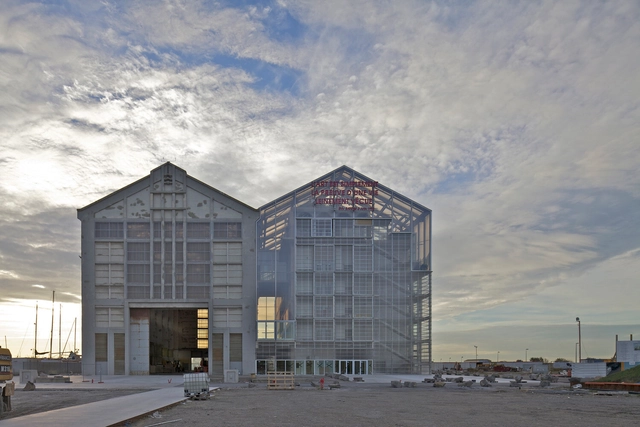
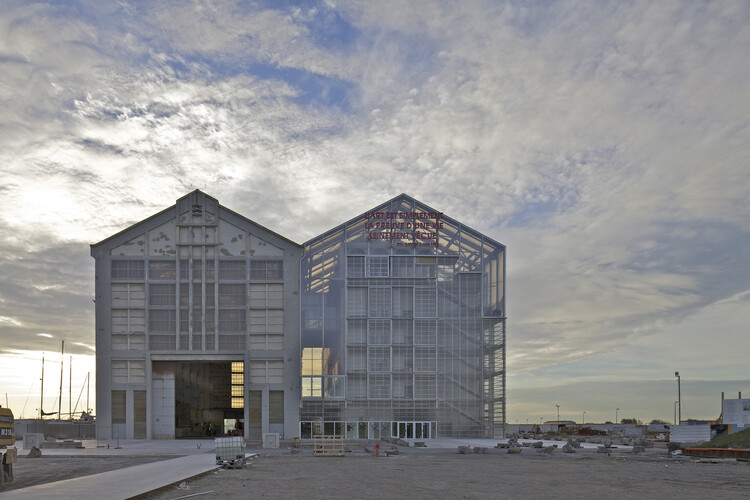
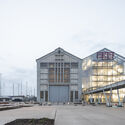
As industry has shifted over the past century, in format, location, and type, the manufacturing and industrial spaces scattered across the western world have been repurposed. You have no doubt seen these structures, though perhaps without realizing. The large windows, high ceilings, and open floor plans optimized for factory work now mark the territory of the “creative class”. Such spaces have been disproportionately appropriated by creative industries such as arts and architecture; think of Herzog + de Meuron’s renovation of the Tate Modern (from a former power station) or the recent collaborative transformation of a locomotive yard into a library in the Netherlands.