1. ArchDaily
  2. John Hejduk

John Hejduk: The Latest Architecture and News

The Project as Argument: What is Architectural Thinking?

Architecture is shaped not only by buildings, but by the ideas that make them possible. Before the constraints of capital, regulation, and procurement, there is a moment when architecture is allowed to think aloud. The first confrontation with this fertile moment usually takes place in academia, in the thesis. It is not merely a requirement for graduation, but a space of speculative freedom where architecture formulates hypotheses, builds arguments, and tests positions.

For many, it is also the first opportunity to think beyond the structure of academic programs — a first chance to explore something more personal, unresolved, or even unreasonable. While often seen as an endpoint, the thesis is better understood as a beginning: the first engagement with architecture as a form of reasoning, where the project is not yet a response, but a question.

The Project as Argument: What is Architectural Thinking? - Image 1 of 4The Project as Argument: What is Architectural Thinking? - Image 2 of 4The Project as Argument: What is Architectural Thinking? - Image 3 of 4The Project as Argument: What is Architectural Thinking? - Image 4 of 4The Project as Argument: What is Architectural Thinking? - More Images+ 27

Exhibition at Paul Rudolph’s Modulightor Building in New York Unites Works of Architectural Art from Gehry, Rossi, and More

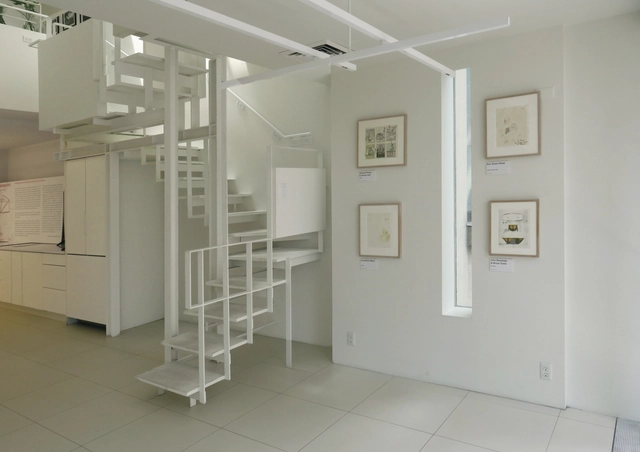
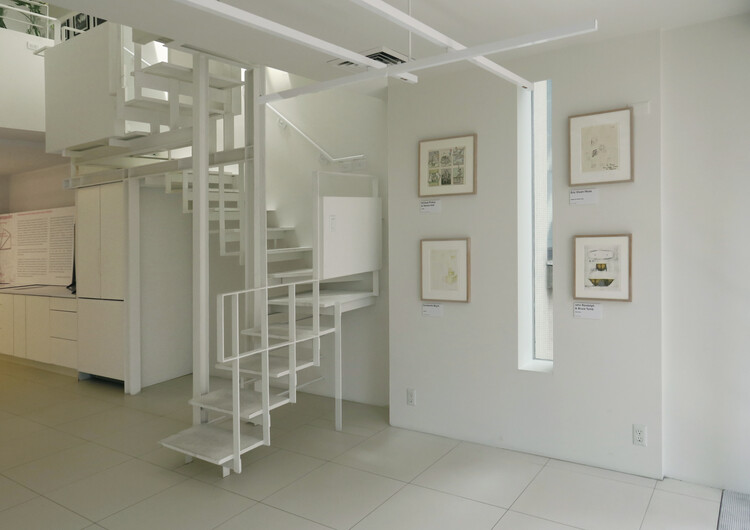
An exhibition of architectural drawings and photographs, titled "Architecture = Art: The Susan Grant Lewin Collection," is now on view at Paul Rudolph's Modulightor Building in Manhattan, New York. Hosted by the Paul Rudolph Institute for Modern Architecture (PRIMA), the collection brings together works by prominent architects, including Eileen Gray, Daniel Arsham, Frank Gehry, Jesse Reiser, Hani Rashid, Steven Holl, Aldo Rossi, Michael Graves, James Wines, Stanley Tigerman, John Hejduk, among others. The drawings are accompanied by a selection of photographs by architectural photographers such as Ezra Stoller, Robin Hill, Norman McGrath, Paul Clemence, and others. The exhibition opened on July 2 and will remain on view until September 20, 2025.

Exhibition at Paul Rudolph’s Modulightor Building in New York Unites Works of Architectural Art from Gehry, Rossi, and More - Image 1 of 4Exhibition at Paul Rudolph’s Modulightor Building in New York Unites Works of Architectural Art from Gehry, Rossi, and More - Image 2 of 4Exhibition at Paul Rudolph’s Modulightor Building in New York Unites Works of Architectural Art from Gehry, Rossi, and More - Image 3 of 4Exhibition at Paul Rudolph’s Modulightor Building in New York Unites Works of Architectural Art from Gehry, Rossi, and More - Image 4 of 4Exhibition at Paul Rudolph’s Modulightor Building in New York Unites Works of Architectural Art from Gehry, Rossi, and More - More Images+ 16

Santiago de Compostela Architecture City Guide: Exploring Spain’s Pilgrimage Heritage and Modern Design

Subscriber Access | 

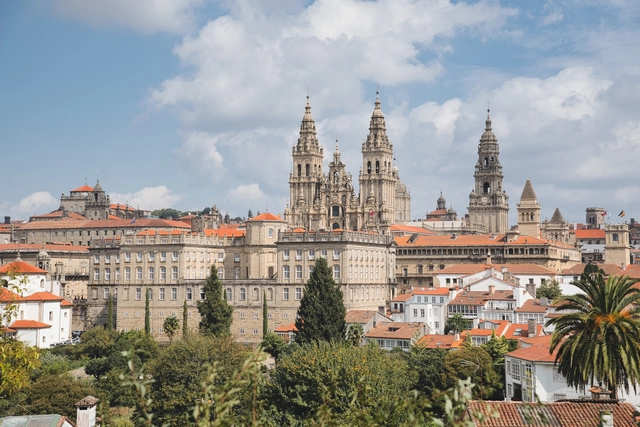
Santiago de Compostela, located in northwestern Spain, is celebrated worldwide as the final destination of the historic Camino de Santiago pilgrimage. The city's architectural identity is deeply rooted in its UNESCO World Heritage-listed historic center, where Romanesque, Gothic, and Baroque styles converge. Iconic landmarks like the Santiago de Compostela Cathedral and its surrounding plazas embody Spain's rich cultural and spiritual legacy, forming the heart of this timeless urban fabric.

In recent decades, Santiago has evolved into a hub for contemporary architectural exploration, blending its historic charm with modern interventions. Projects such as Eisenman Architects' City of Culture reflect an ambitious dialogue between avant-garde design and Galicia's natural landscape. Complementing this are works by Álvaro Siza Vieira, Arata Isozaki, Francisco Mangado, and other renowned architects, who incorporate local materials and forms into forward-thinking designs. Together, these works position Santiago de Compostela as a dynamic architectural destination within Spain's broader cultural narrative.

Santiago de Compostela Architecture City Guide: Exploring Spain’s Pilgrimage Heritage and Modern Design - Image 1 of 4Santiago de Compostela Architecture City Guide: Exploring Spain’s Pilgrimage Heritage and Modern Design - Image 2 of 4Santiago de Compostela Architecture City Guide: Exploring Spain’s Pilgrimage Heritage and Modern Design - Image 3 of 4Santiago de Compostela Architecture City Guide: Exploring Spain’s Pilgrimage Heritage and Modern Design - Image 4 of 4Santiago de Compostela Architecture City Guide: Exploring Spain’s Pilgrimage Heritage and Modern Design - More Images+ 18

Architectural Glass 101: Transparent Trends in 2024

In the 21st century, Glass has become a cornerstone material for architecture. Once limited to apertures and openings, Glass now dominates entire facades, especially in high-rise buildings where transparent cladding material is preferred to maximize views. The technological advancements in Glass have been remarkable, transitioning from single-pane panels, such as those used in Bauhaus' iron window frames, to today's triple-pane systems with specialized gas infills, such as argon, designed to address Glass's long-standing thermal limitations.

Architectural Glass 101: Transparent Trends in 2024 - Image 1 of 4Architectural Glass 101: Transparent Trends in 2024 - Image 2 of 4Architectural Glass 101: Transparent Trends in 2024 - Image 3 of 4Architectural Glass 101: Transparent Trends in 2024 - Image 4 of 4Architectural Glass 101: Transparent Trends in 2024 - More Images+ 11

Prague Architecture City Guide: 25 Historical and Contemporary Attractions to Explore in Czechia’s City of a Hundred Spires

Subscriber Access | 

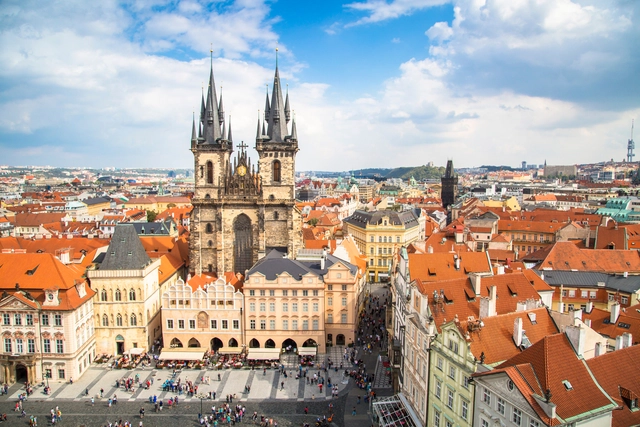
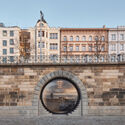
Prague, the capital of the Czech Republic, is one of Europe's best-preserved cities, having miraculously survived the widespread bombings of World War II. As the capital of the Czech Republic, Prague is home to over 1.3 million people and features an architectural heritage spanning centuries, covering a variety of architectural styles from Romanesque, Gothic, Renaissance, Baroque, and Rococo, to Modernist, Deconstructivism, and contemporary tendencies. The Old Town Square, where various architectural styles coexist, is a testament to this diversity. Known as the "Mother of all Cities," “the Golden City and “The City of a Hundred Spires,” Prague blends history and contemporary culture seamlessly. Its origins, steeped in legend, add to the city's charm.

Over the past few years, the city has also seen interest from internationally-recognized architectural offices. Following an international competition, BIG has set out to design a for the Vltava Philharmonic Hall on the riverbanks of the Vltava River, Zaha Hadid has recently completed an office and retail building in the city center, while Henning Larsen has been announced as the winner of the commission to redesign Prague Central Station, Nový Hlavák.

Prague Architecture City Guide: 25 Historical and Contemporary Attractions to Explore in Czechia’s City of a Hundred Spires - Image 1 of 4Prague Architecture City Guide: 25 Historical and Contemporary Attractions to Explore in Czechia’s City of a Hundred Spires - Image 2 of 4Prague Architecture City Guide: 25 Historical and Contemporary Attractions to Explore in Czechia’s City of a Hundred Spires - Image 3 of 4Prague Architecture City Guide: 25 Historical and Contemporary Attractions to Explore in Czechia’s City of a Hundred Spires - Image 4 of 4Prague Architecture City Guide: 25 Historical and Contemporary Attractions to Explore in Czechia’s City of a Hundred Spires - More Images+ 21

Berlin Architecture City Guide: 25 Modern and Contemporary Projects to Discover in the German Capital

Subscriber Access | 

While the city of Berlin has a long history, dating back to the 13th century, its architecture and urban fabric has undergone the most significant changes during the last century, reflecting the impact of major historical events that took place in the German capital. During the early 20th century, Berlin transformed into a modern metropolis, marked through the construction of grand buildings and imposing structures to demonstrate the city’s growing economic and political power. The 1920s and 1930s saw the emergence of the Modernist movement, which, together with the Bauhaus school of architecture founded in 1919, influenced the image and urban fabric of Berlin.

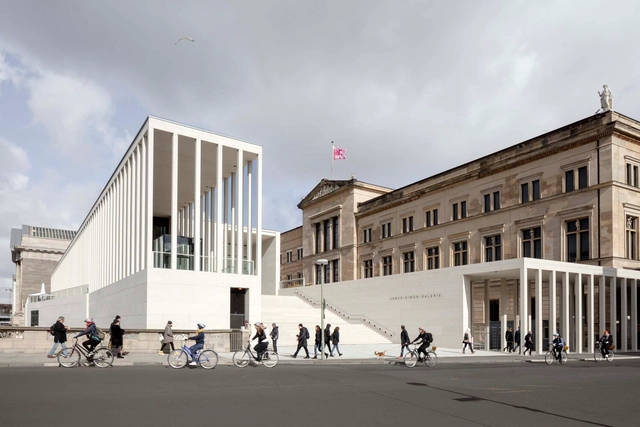
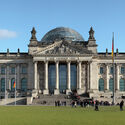
During the Second World War the city was heavily bombed, resulting in the destruction of many historical buildings. During the post-war period, reconstruction efforts focused on rebuilding infrastructure and housing, while the city remained divided until 1989, with the fall of the Berlin wall. After this period, Berlin witnessed a renewed interest in architecture and urban design. Interventions such as David Chipperfield’s Neues Museum aimed to rebuild historical monuments without erasing the markings of their difficult past. Other projects such as the renovation of the Reichstag had a different purpose. Norman Foster’s intervention intended to keep the image of this building but change its symbolism from a structure representative for the Nazi regime to one embracing the ideals of democracy and equality.

Berlin Architecture City Guide: 25 Modern and Contemporary Projects to Discover in the German Capital - Image 1 of 4Berlin Architecture City Guide: 25 Modern and Contemporary Projects to Discover in the German Capital - Image 2 of 4Berlin Architecture City Guide: 25 Modern and Contemporary Projects to Discover in the German Capital - Image 3 of 4Berlin Architecture City Guide: 25 Modern and Contemporary Projects to Discover in the German Capital - Image 4 of 4Berlin Architecture City Guide: 25 Modern and Contemporary Projects to Discover in the German Capital - More Images+ 21

“Interesting Things Happen in the Shadows”: In Conversation with Brian Healy

Boston architect Brian Healy moved around for his early career, before settling and building in New England. He had studios in Florida, California, and New York, eventually opening his office in Boston. Healy acquired his bachelor’s degree in architecture at the Pennsylvania State University in 1978 and continued his studies at Yale where he encountered such influential professors as James Stirling, Vincent Scully, John Hejduk, Aldo Rossi, and Cesar Pelli, among others.

Healy graduated with a Master of Architecture in 1981 and then used traveling scholarship money from Yale, the Van Allen Institute, and the American Academy in Rome to travel around the world for a year, exploring ancient ruins in Ireland, Italy, Greece, Sudan, Egypt, India, Nepal, and Thailand. Prior to the trip, he had worked at the offices of Charles Moore and Cesar Pelli. Upon his return, he designed and built homes in Florida before working for Richard Meier in New York. In 1985, he started Brian Healy Architects. Parallel to that he taught at over twenty universities across North America, including Yale, Harvard, MIT, and the University of Pennsylvania. Healy was the 2004 president of the Boston Society of Architects and, from 2011-2014 he served as Design Director at Perkins + Will.

“Interesting Things Happen in the Shadows”: In Conversation with Brian Healy - Image 1 of 4“Interesting Things Happen in the Shadows”: In Conversation with Brian Healy - Image 2 of 4“Interesting Things Happen in the Shadows”: In Conversation with Brian Healy - Image 4 of 4“Interesting Things Happen in the Shadows”: In Conversation with Brian Healy - Image 3 of 4“Interesting Things Happen in the Shadows”: In Conversation with Brian Healy - More Images+ 10

Lost Architecture: Exploring Unbuilt Masterpieces, One Half House by John Hejduk

Subscriber Access | 

What if we could visit any building, regardless of whether it was ever built? Or, even after it has been demolished? This video and link below focus on a single house — the One Half House — designed by John Hejduk, to resurrect and explore. It uses the program Enscape to walk through the building in order to preserve and distribute the experience of architecture that does not exist in built form. The video offers a timeline to contextualize the role of the house in John Hejduk’s career and work, an analysis of the building, and initial reactions to walking through the building for the first time. In particular, the One Half House was pivotal for thinking about how architectural volumes might relate in space without the ordering device of a grid or a wall. What magic and other lessons are lurking in the design, hidden until we could experience it?

Spotlight: John Hejduk

Subscriber Access | 
Spotlight: John Hejduk - Image 1 of 4
Wall House II, built 2001 in the Netherlands. Image © Liao Yusheng

Artist, architect and architectural theorist John Hejduk (19 July 1929 - 3 July 2000) introduced new ways of thinking about space that are still highly influential in both modernist and post-modernist architecture today, especially among the large number of architects who were once his students. Inspired both by darker, gothic themes and modernist thinking on the human psyche, his relatively small collection of built work, and many of his unbuilt plans and drawings, have gone on to inspire other projects and architects around the world. In addition, his drawing, writing and teaching have gone on to shape the meeting of modernist and postmodern influences in contemporary architecture and helped bring psychological approaches to the forefront of design.

John Hejduk's Jan Palach Memorial Opens in Prague

For the first time in history, a John Hejduk structure has been permanently installed in a public space. The American architect's Jan Palach Memorial has officially opened last week at Jan Palach Square (formerly Red Army Square) on the Alšovo Riverbank in Prague after 25 years in the making.

"The work, entitled House of the Suicide and House of the Mother of the Suicide, which was originally built in Atlanta in 1990, then Prague in 1991, honors the Czech dissident Jan Palach, whose self-immolation in protest of the Soviet invasion of 1968 served as a galvanizing force against the communist government in Czechoslovakia. A plaque at the base of the monument displays the poem The Funeral of Jan Palach, by former School of Architecture Professor David Shapiro," says The Cooper Union.
"Too Radical to Implement Yet Too Relevant to Ignore": John Hejduk's Kreuzberg Tower

Subscriber Access | 

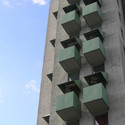
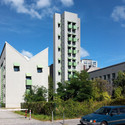
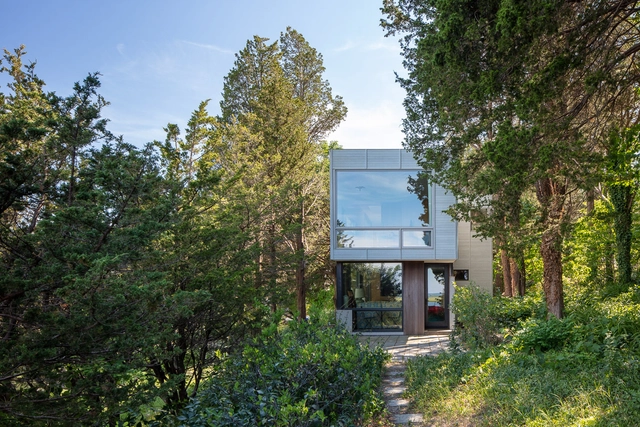
Robert Slinger, a founding partner of Berlin-based practice Kapok, narrates the story of a building "too radical to implement and too relevant to ignore." Having lived in John Hejduk's Kreuzberg Tower for eight years, Slinger "came to understand how Hejduk’s architecture both flexibly accommodates and yet asserts a presence which resists any attempts to co-opt it. Whilst impressed by its powerful exterior presence, its austerity and frontal directness left a strangely cold impression upon me."

"A house knows who loves it." – John Hejduk

"Too Radical to Implement Yet Too Relevant to Ignore": John Hejduk's Kreuzberg Tower - Residential Architecture"Too Radical to Implement Yet Too Relevant to Ignore": John Hejduk's Kreuzberg Tower - Residential Architecture"Too Radical to Implement Yet Too Relevant to Ignore": John Hejduk's Kreuzberg Tower - Residential Architecture"Too Radical to Implement Yet Too Relevant to Ignore": John Hejduk's Kreuzberg Tower - Residential ArchitectureToo Radical to Implement Yet Too Relevant to Ignore: John Hejduk's Kreuzberg Tower - More Images