Exhibition spaces convey carefully curated content with the goal of educating, inspiring, and engaging visitors, using objects and displays to tell stories. In addition to promoting education, cultural preservation, and aesthetic appreciation, these environments encourage creativity and interaction. With immersive and interactive experiences, they allow visitors to form meaningful connections with new knowledge, different perspectives, and important cultural heritages, creating both intellectual and emotional engagement.
Mexico City is renowned for its abundant museums, heritage sites, and cultural richness. In fact, the capital has over 173 museums, big and small spread out through its 16 alcaldías or burroughs. The presence of these cultural spaces injects and intensifies the artistic appeal and aspect of the vibrant city. With many pioneering Mexican architects having intertwined modern art and architecture, this gave rise to iconic museums and classics of Mexican modernist architecture.
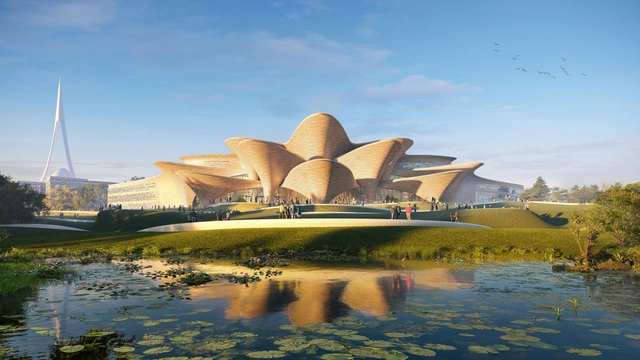
Zaha Hadid Architects (ZHA) has been announced as the architect of the Alisher Navoi International Scientific Research Centre, an expansive cultural and educational facility taking shape in New Tashkent, Uzbekistan. The center is set to incorporate the Navoi State Museum of Literature, along with a 400-seat auditorium and an International Research Center and residential school dedicated to training 200 students in the Uzbek language, literature, and music.
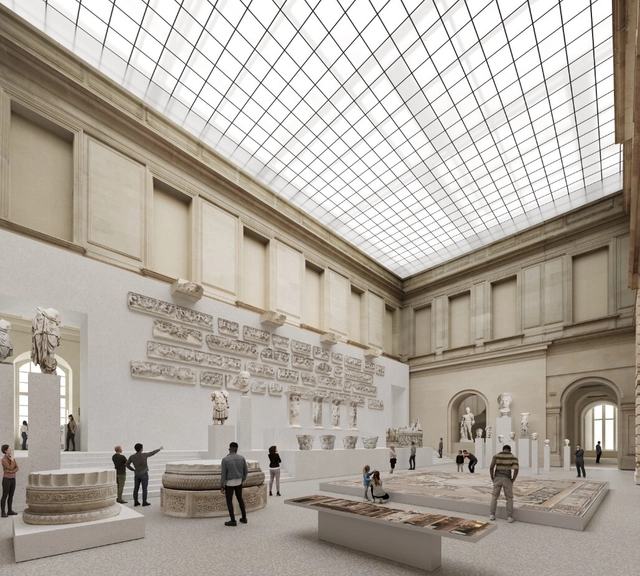
The Louvre Museum in Paris has announced the American-French consortium WHY Architecture -BGC as the winner of an international competition for the exhibition design of the museum's ninth department, dedicated to Byzantine and Eastern Christian Art. The 5,500-square-meter project aims to offer a more balanced and connected narrative of the Roman, Byzantine, and Islamic civilizations, fostering a greater understanding of the influences and relationships between artistic expressions of these historical regions. The spaces are expected to open to the public in 2027.
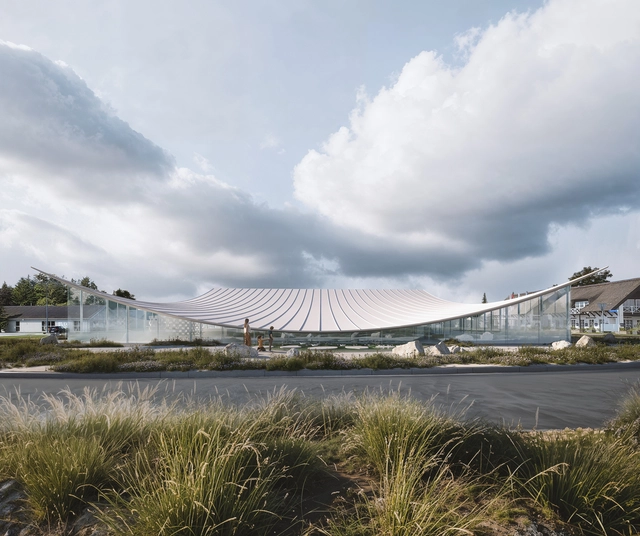
Bjarke Ingels Group (BIG) is leading the transformation of a former supermarket into the new Museum for Paper Art in Denmark's North Jutland region. With paper art deeply ingrained in Danish cultural heritage, symbolized by Le Klint's folded lampshades and H.C. Andersen's intricate paper cuttings, this renovation and expansion aim to elevate the museum's profile and double its visitor numbers. The design will celebrate paper as both an art form and a craft, extending the museum's role in promoting this unique heritage.
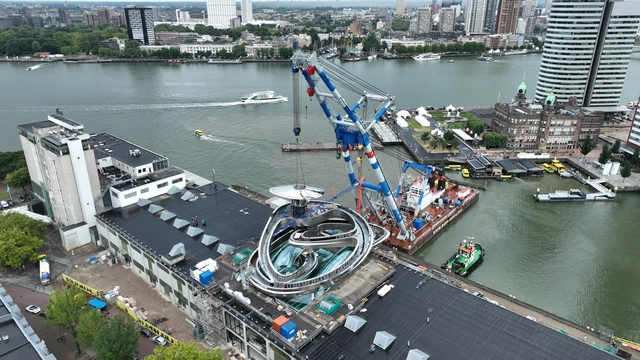
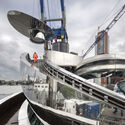
Designed by MAD Architects, the FENIX Museum of Migration is scheduled to open in Rotterdam's City Harbor in 2025. Currently under construction, the museum is set to explore the global narrative of migration through art, architecture, photography, and history. Situated in a 16,000-square-meter warehouse built in 1923, once part of the world's largest warehouse, the building has historical significance as a key storage and shipping hub for the Holland America Line. New construction photographs showcase the assembly of the metallic helix, named The Tornado, taking shape above the historical warehouse.
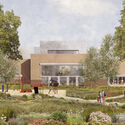
Courtesy of David Kohn Architects, noA Architecten, and Asli Çiçek
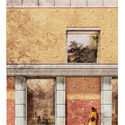
The team comprised of David Kohn Architects, noA Architecten, and Asli Çiçek has won the international competition for the redesign of SMAK, the Municipal Museum of Contemporary Art in Ghent, Belgium. The project includes the reconfiguration of the museum grounds and the extension of a cluster of historic buildings in the center of the city. Established in 1999, the Stedelijk Museum voor Actuele Kunst aims to redefine its relationship with the city and to create more appropriate space for the design of its extensive contemporary art collection.
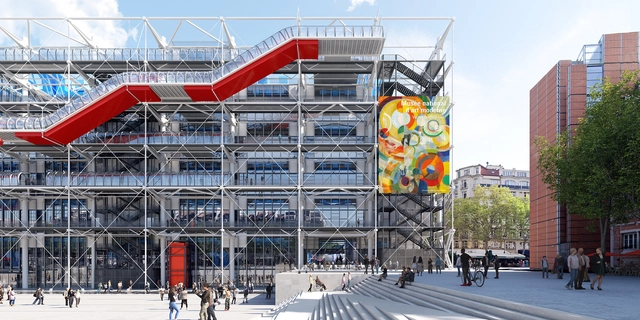
In 2020, the French Minister of Culture approved an extensive renovation program for the Centre Pompidou with the purpose of resolving the building's technical issues and ensuring the long-term viability of the iconic structure. Designed by Renzo Piano and Richard Rogers in 1971, the museum was conceived as a "living cultural machine," sparking controversy due to its unusual architecture. To ensure an efficient renovation process, the building will be fully closed for a period of 5 years, from September 2025 until 2030. French architecture studio Moreau Kusunoki has been commissioned to lead the renovation project, collaborating with Frida Escobedo Studio and AIA Life Designers, who are entrusted with the technical component of the project. The architects have been selected following an international competition, with Renzo Piano as one of the jury members.
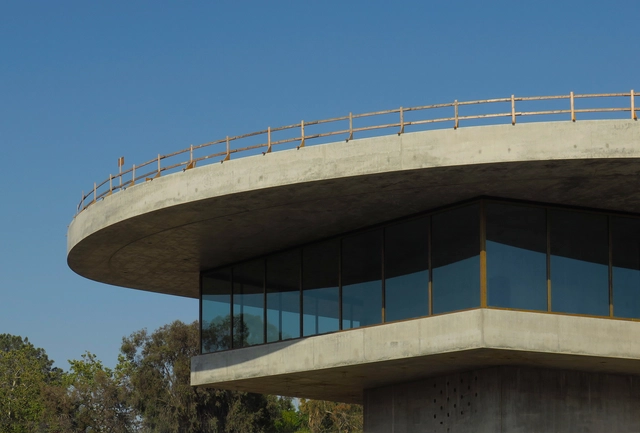
Paul Clemence has released a new series of images showcasing the ongoing construction works in The Los Angeles County Museum of Art (LACMA). Undergoing massive transformations, including a new building by Swiss architect Peter Zumthor, the LACMA is the largest art museum in the western United States. Approved in 2019, Zumthor’s design, known as the David Geffen Galleries, aims to modernize the museum’s campus.
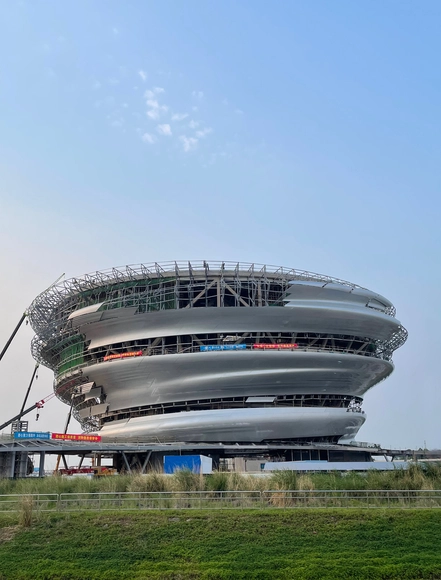
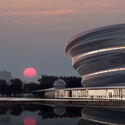
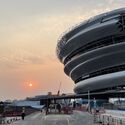
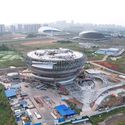
The Hainan Science Museum - construction progress. Image Courtesy of MAD Architects
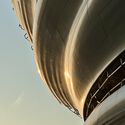
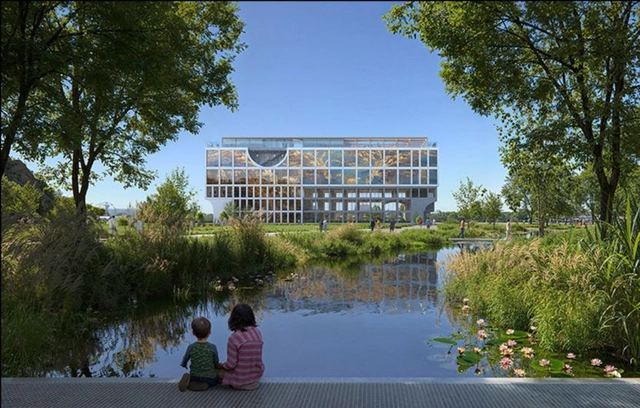
The Hainan Science Museum, designed by Ma Yansong / MAD Architects, is progressing through its construction phases. The project began its design phase in 2020, broke ground in November 2021, and completed its main structure in June 2023. The museum, located on the west coast of Haikou City in Hainan Province, aims to be a landmark that integrates modern architecture with natural surroundings, promoting the convergence of technology and nature. The museum is expected to finish its curtain wall and landscaping by June this year and open for visitors in 2025.
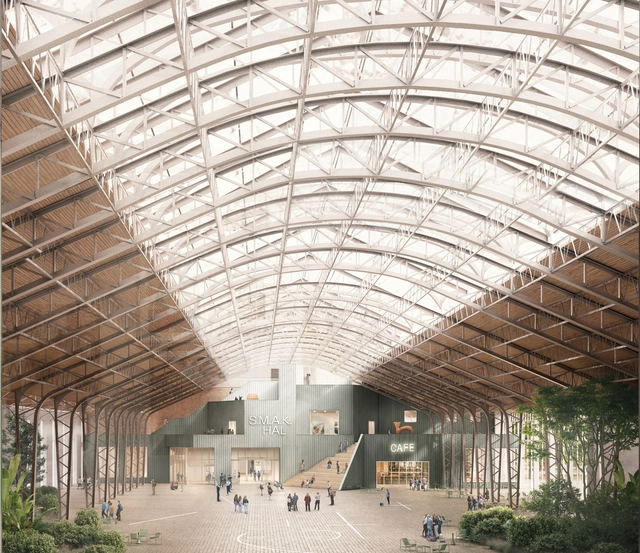
Courtesy of Neutelings Riedijk Architects / ARS Architectes
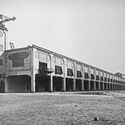
Neutelings Riedijk Architects and ARS Architects Urbanistes have just won a competition to design the Cité des Imaginaires and Grand Musée Jules Verne in Nantes, France. Selected from 160 entries, their design seeks to revitalize the historic “Moulins de Nantes” mil, also known as CAP44. This industrial heritage site, notable for its unique Hennebique concrete structure, is set to be transformed into a sustainable structure within the Garden Extraordinaire. Additionally, the museum will celebrate the legacy of the renowned author Jules Verne, born in Nantes.
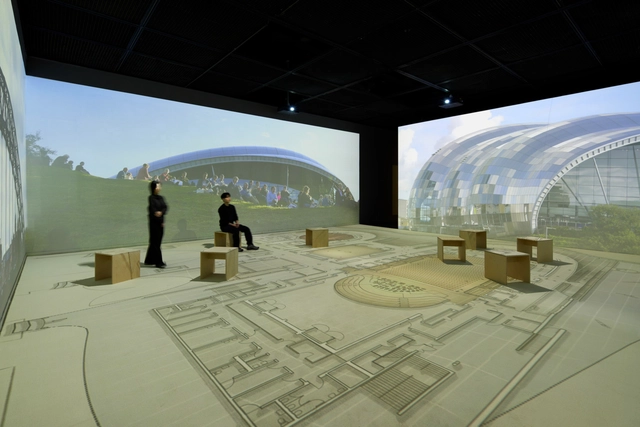
Foster + Partners has debuted their first-ever exhibition in Korea at the Seoul Museum of Art. Marking a significant moment for the studio and its relationship to South Korea, the exhibition “Future Positive” showcases the work of Norman Foster and Foster + Partners to Korean audiences for the first time. On display from April 25th until July 21st, 2024, visitors will have the opportunity to explore the comprehensive showcase of Foster’s architectural journey from 1967 to the present day.
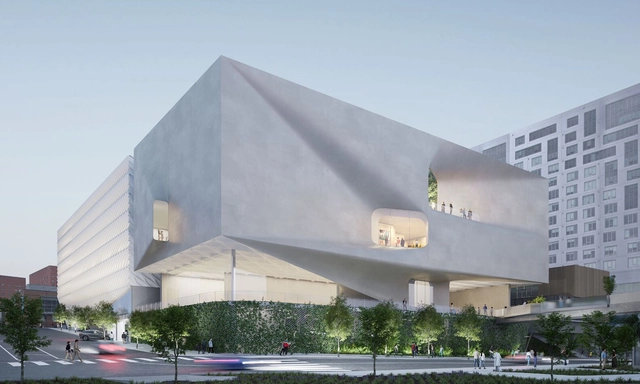
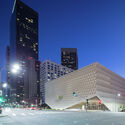
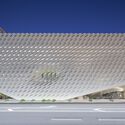
Diller Scofidio + Renfro (DS+R) has unveiled their proposal for the expansion of The Broad, a contemporary art museum founded in 2015 by philanthropists Eli and Edythe Broad on Grand Avenue in downtown Los Angeles. The project is set to adapt the existing museum, also designed by Diller Scofidio + Renfro, to the growing expectations of the public, as the institution has far exceeded its projections, now regularly attracting nearly four times more visitors than originally envisioned. The intervention aims to enhance public accessibility and offer the opportunity to host live performances and events, while also accommodating the institution’s growing collection. The expansion is expected to open before the 2028 Summer Olympics.
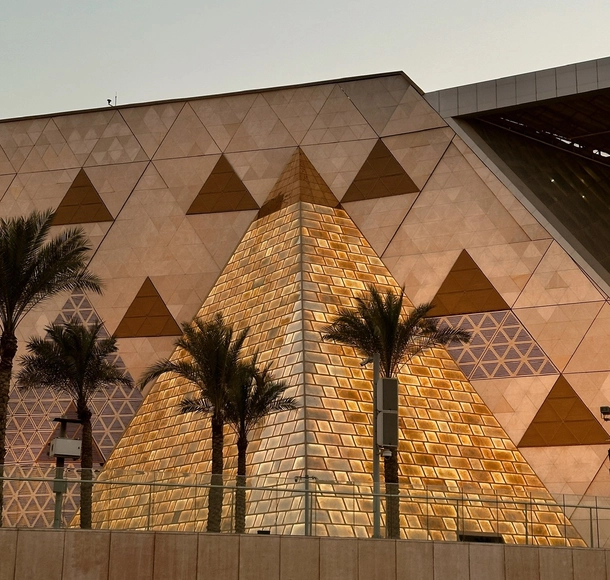
Showcasing millennia of Egyptian history and culture, the Grand Egyptian Museum is a monumental project in Cairo, Egypt, designed by the Irish firm Heneghan Peng Architects. Home to over 100,000 artifacts spanning Egypt’s storied past, the museum is on the brink of opening its doors to the public after multiple setbacks. Recent updates offer glimpses of the structure’s progress, with photographs captured by Egyptian photographer Farida Bustani providing sneak peeks of the architectural landmark.
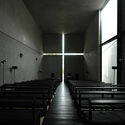
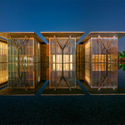
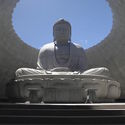
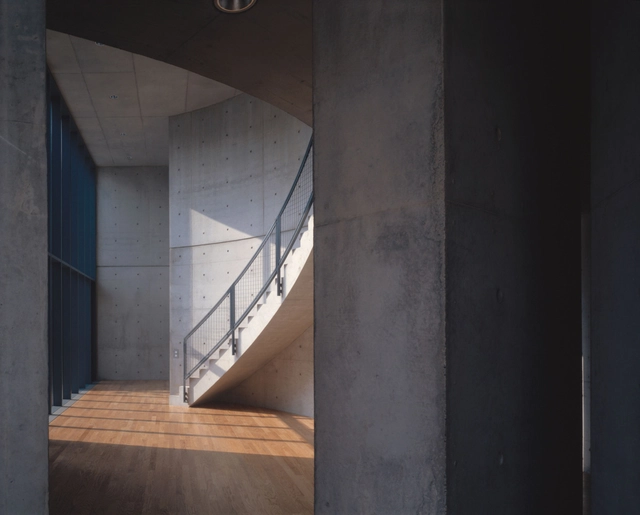
If there is any consistent factor in his work, says Pritzker-winning architect Tadao Ando, then it is the pursuit of light. Ando’s complex choreography of light fascinates most when the viewer experiences the sensitive transitions within his architecture. Sometimes walls wait calmly for the moment to reveal striking shadow patterns, and other times water reflections animate unobtrusively solid surfaces. His combination of traditional Japanese architecture with a vocabulary of modernism has contributed greatly to critical regionalism. While he is concerned with individual solutions that have a respect for local sites and contexts Ando’s famous buildings – such as the Church of the Light, Koshino House or the Water Temple – link the notion of regional identity with a modern imagining of space, material and light. Shoji walls with diffuse light are reinterpreted in the context of another culture, for instance, filtered through the lens of Rome’s ancient Pantheon, where daylight floods through an oculus. Ando’s masterly imagination culminates in planning spatial sequences of light and dark like he envisioned for the Fondation d’Art Contemporain François Pinault in Paris.
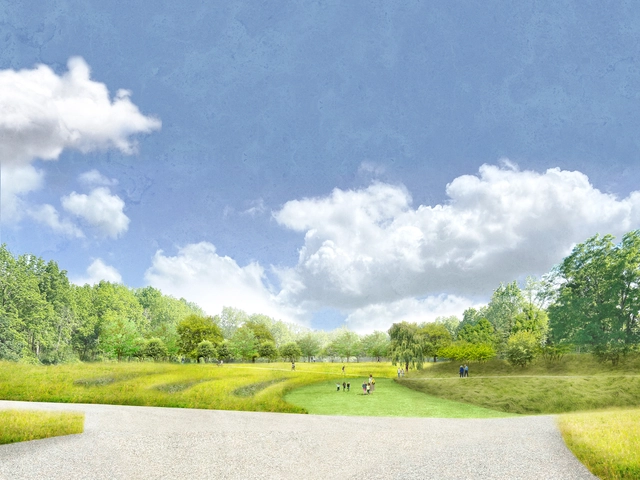
Rendering of Dia Beacon’s south landscape. Image Courtesy of Studio Zewde, 2024
Dia Art Foundation announced a major landscape project to reimagine the land at Dia Beacon, New York. Commissioned landscape architect Sara Zewde of Studio Zewde aims to go beyond the simple arrangement of attractive plants and integrate ideas of ecology, culture, and people into the design. Taking over the museum’s 32-acre campus, the project will create an expanded outdoor park, free to access for visitors and locals alike, complete with native meadows, sculptural landforms, and winding pathways. The project, which has been recently extended to also include the museum’s eight back acres, is expected to open to the public in 2025.


























.jpg?1555434139 "Koshino House, Ashiya-shi / Japan. Image © Kazunori Fujimoto")