1. ArchDaily
  2. Orkidstudio

Orkidstudio: The Latest Architecture and News

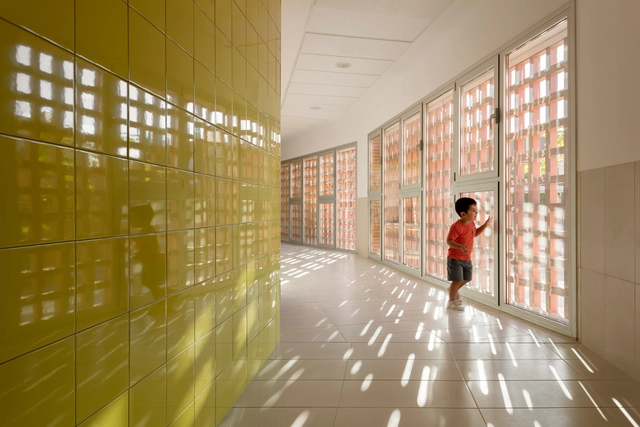
Interior Wellbeing: The Design Of Educational Spaces

The ongoing pandemic has been a disruption to the everyday routines of billions around the world, as due to being confined to their households, the separation between work and rest has become extremely blurry, with people forced to rethink and reconfigure the layout of their personal spaces. Conversations have abounded on how to create flexible working spaces in a home environment, and if offices themselves are an outdated model that we should leave behind. A missing part of that conversation, however, is the impact that the pandemic has had on children, specifically primary-school level children, on their education - as inequalities are emphasized, some children learning with slow internet connection speeds, or struggling to have the space required to adequately complete educational activities.

Interior Wellbeing: The Design Of Educational Spaces  - Image 1 of 4Interior Wellbeing: The Design Of Educational Spaces  - Image 2 of 4Interior Wellbeing: The Design Of Educational Spaces  - Image 3 of 4Interior Wellbeing: The Design Of Educational Spaces  - Image 4 of 4Interior Wellbeing: The Design Of Educational Spaces  - More Images+ 11

Beyond Angkor Wat: Cambodia's New Cultural Architecture

The Kingdom of Cambodia has a rich history of Khmer architecture. Built from the latter half of the 8th century to the first half of the 15th century, these structures are embodied by the iconic Angkor Wat temple complex. But new architecture is being built throughout Cambodia, projects that reinterpret culture and tradition to create modern spaces for contemporary life.

Beyond Angkor Wat: Cambodia's New Cultural Architecture - Image 1 of 4Beyond Angkor Wat: Cambodia's New Cultural Architecture - Image 2 of 4Beyond Angkor Wat: Cambodia's New Cultural Architecture - Image 3 of 4Beyond Angkor Wat: Cambodia's New Cultural Architecture - Image 4 of 4Beyond Angkor Wat: Cambodia's New Cultural Architecture - More Images+ 8

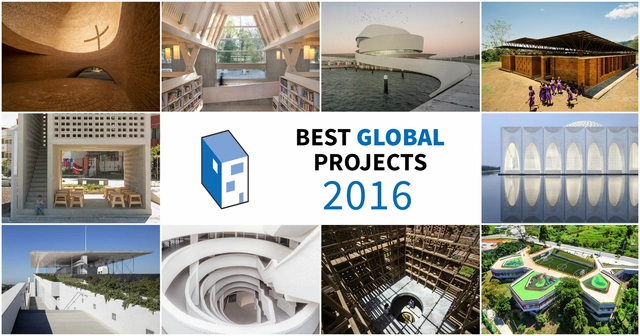
The 10 Best Global* Architecture Projects of 2016 (*Asia, Africa and South America Not Excluded)

Subscriber Access | 

As the common phrase attests, “history is written by the victors.” We therefore know that the story of the West is that of Europe and the United States, while the other actors in world history are minimized or invisible: it happened to the Chinese and Japanese during World War II, to the Ottoman Empire in sixteenth-century Europe, and to racial majorities in the common reading of Latin American independence. The same thing happens in architecture.

The current boom of the Global South is based not only on new work, but rather on the recognition of an invisible architecture which was apparently not worthy of publication in the journals of the 1990s. The world stage has changed, with the emergence of a humanity that is decentralized yet local; globalized, yet heterogeneous; accelerated, yet unbalanced. There are no longer red and blue countries, but a wide variety of colors, exploding like a Pollock painting.

This serves as a preamble to consider the outstanding projects of 2016 according to the British critic Oliver Wainwright, whose map of the world appears to extend from New York in the West to Oslo in the East, with the exception of Birzeit in Palestine. The Global South represents more than 40% of the global economy and already includes most of the world’s megacities, yet has no architecture worthy of recognition? We wanted to highlight the following projects in order to expand the western-centric world view, enabling us to truly comprehend the extent of architectural innovation on a global scale.

Architects Team Up with Khmer Women to Build a Community Centre with Fabric and Concrete

Subscriber Access | 

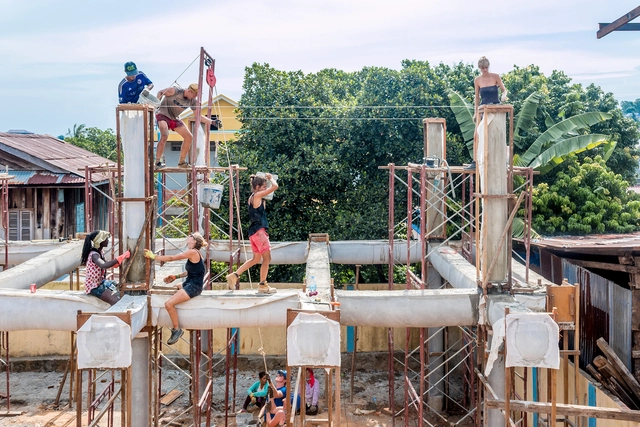
Using an innovative method of casting concrete in lightweight fabric molds, the architects of Orkidstudio -- along with StructureMode -- teamed up with a group of Khmer women in Sihanoukville, Cambodia to rebuild a community centre in the city’s urban heart.

The construction technique was developed and tested by engineers from StructureMode using a combination of physical testing and computer analysis software, Oasys GSA Suite, to predict the stretch of a particular fabric when concrete is poured inside. Through three-dimensional sketches the seamstresses and building team could understand the construction sequence of the form, completing the entire project in just eight weeks.

Architects Team Up with Khmer Women to Build a Community Centre with Fabric and Concrete - SustainabilityArchitects Team Up with Khmer Women to Build a Community Centre with Fabric and Concrete - SustainabilityArchitects Team Up with Khmer Women to Build a Community Centre with Fabric and Concrete - SustainabilityArchitects Team Up with Khmer Women to Build a Community Centre with Fabric and Concrete - SustainabilityArchitects Team Up with Khmer Women to Build a Community Centre with Fabric and Concrete - More Images+ 34