As the architecture community looks ahead to the announcement of the 2026 laureate of the Pritzker Architecture Prize, anticipation once again gathers around what is widely regarded as the profession's highest honor. Founded in 1979 by Jay Pritzker and administered by the Hyatt Foundation, the prize recognizes a living architect whose body of work demonstrates a consistent and significant contribution to humanity and the built environment.
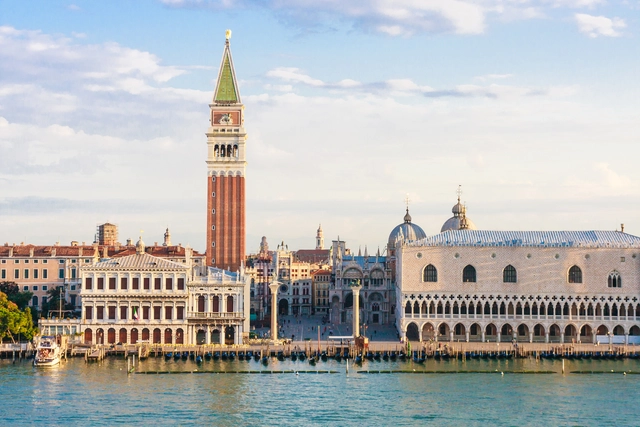
Built on a cluster of 118 small islands in the shallow Venetian Lagoon, the city of Venice, Italy, has captivated the imagination of architects and tourists alike. The area has been inhabited since ancient times, becoming a major financial and maritime power during the Middle Ages and Renaissance, as proven through the rich architecture that characterizes the city to this day. With influences from the Byzantine, Gothic, and Renaissance styles, the city represents a palimpsest of architectural narratives, overlapping and influencing each other. In recent years, Venice has become a major attraction for architects drawn to the La Biennale di Venezia, the most important Architectural Exhibition featuring national pavilions, exhibitions, and events to explore new concepts and architectural innovations.
Beyond the Biennale, Venice itself is an open-air museum for architecture lovers. While the city is best known for its historical buildings, Modernist and contemporary interventions add a new layer of interest, with many contemporary architects working with the historical fabric, like OMA's intervention and rehabilitation of Fondaco dei Tedeschi, or David Chipperfield's renovation of Procuratie Vecchie, one of the buildings that define Piazza San Marco. In addition to what the city has to offer, the site of the Venice Biennale is also marked by interventions by famous architects such as Carlo Scarpa, Sverre Fehn, and Alvar Aalto, made permanent due to their outstanding qualities.
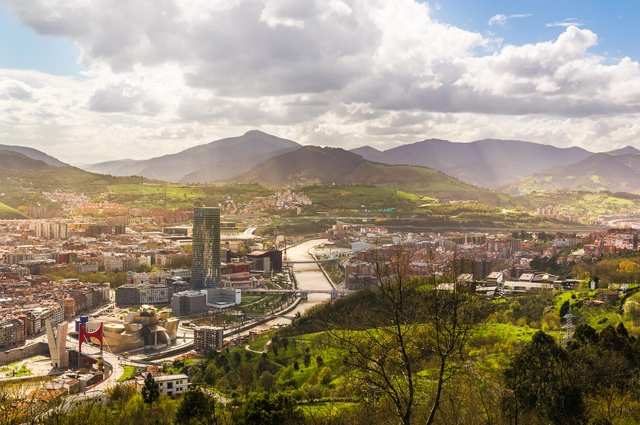
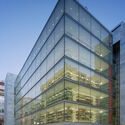
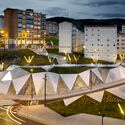
Bilbao, the largest city in Spain's Basque Country, has undergone a remarkable transformation over the past few decades. Once an industrial hub, the city has redefined itself as a center for culture, innovation, and urban regeneration. This evolution has been partly driven by architecture, which plays a central role in shaping Bilbao's identity. From contemporary landmarks to thoughtfully repurposed spaces, the city's built environment reflects a careful balance between honoring its industrial heritage and embracing modernity.
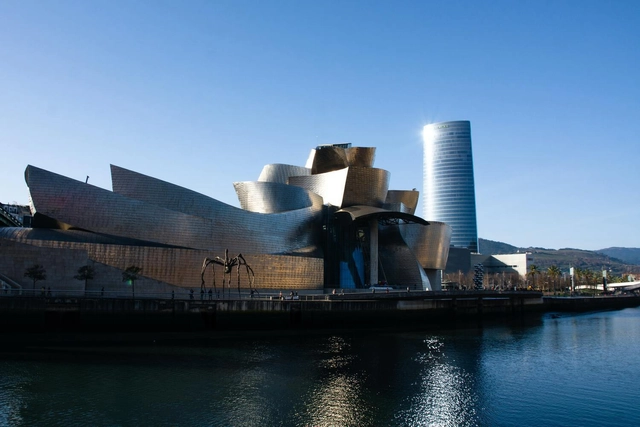
The turning point in Bilbao's architectural narrative came with the inauguration of the Guggenheim Museum Bilbao in 1997. Designed by Gehry Partners, this iconic structure catalyzed the city's renewal, sparking a wave of urban and cultural investments. This transformation became known as the "Bilbao effect," a phenomenon where a single, significant architectural project triggers wider urban regeneration and economic growth. Today, Bilbao is a dynamic architectural landscape, where works by international figures like Santiago Calatrava, Norman Foster, and Arata Isozaki coexist with projects by local studios such as ACXT and Coll-Barreu Arquitectos. Together, these interventions illustrate how architecture can be a powerful social, economic, and cultural revitalization tool.
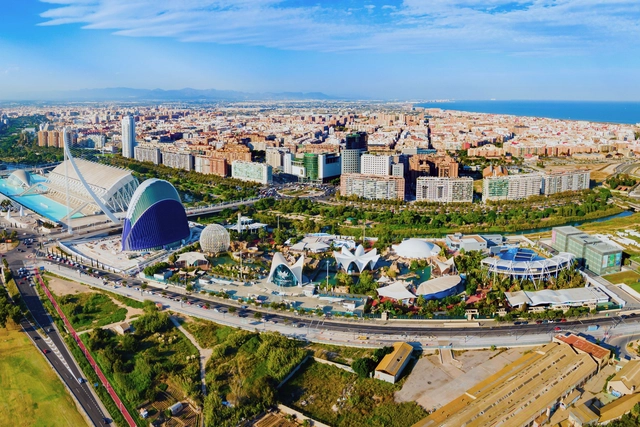
Valencia, one of Spain's most vibrant cities, boasts a rich architectural history that mirrors its cultural and historical evolution. Founded by the Romans in 138 BC, the city has been shaped by successive waves of influence, from the Visigoths and Moors to the Christian reconquest in the 13th century. Each period left a distinct architectural imprint, giving Valencia a unique blend of Gothic, Baroque, and Renaissance structures alongside modern interventions. Among the city's most prominent historic landmarks is the La Longa de la Seda, a UNESCO World Heritage site, which exemplifies late Gothic civic architecture, alongside the majestic Valencia Cathedral, where Romanesque, Gothic, and Baroque elements intertwine, illustrating the city's layered past.
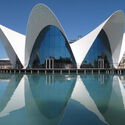
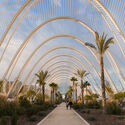
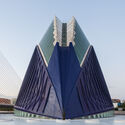
Valencia's architectural evolution did not end with its historical legacy. Today, the city is a dynamic example of how modern and contemporary architecture can coexist with ancient structures. The striking City of Arts and Sciences, designed by Valencian architect Santiago Calatrava, has become an international symbol of innovation, pushing the boundaries of futuristic design. In parallel, urban planning projects like transforming the former Turia riverbed into a lush green park have redefined public space and sustainability in the city. This balance between preservation and cutting-edge design reflects Valencia's commitment to embracing modernity while honoring its historical roots, making it not only a city steeped in history but also one at the forefront of contemporary architectural practice.
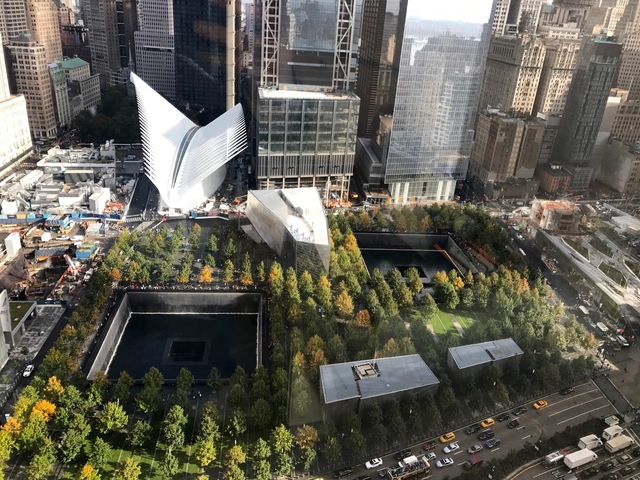
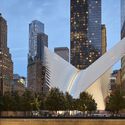
On the morning of September 11, 2001, two hijacked commercial jetliners struck the Twin Towers in Lower Manhattan, a third plane struck the Pentagon, and a fourth crashed in rural Pennsylvania. A total of 2.977 people were killed in the terrorist attacks. In the face of this unprecedented loss, the city of New York promised to rebuild Lower Manhattan as a lively neighborhood while honoring and maintaining the memory of this day. Thus began one of the largest reconstruction projects in New York City, a process that is still ongoing now, 23 years after the tragedy.
The XIV Florence Biennale of Art and Design announced that Santiago Calatrava will receive the Lifetime Achievement Award, a "tribute to one of the most influential architects of our times and a recognition of your audacious experimentation, extraordinary talent, and ingenious ability to combine architecture and art in projects imagined and designed in harmony with nature and oriented towards the ideals of beauty.”
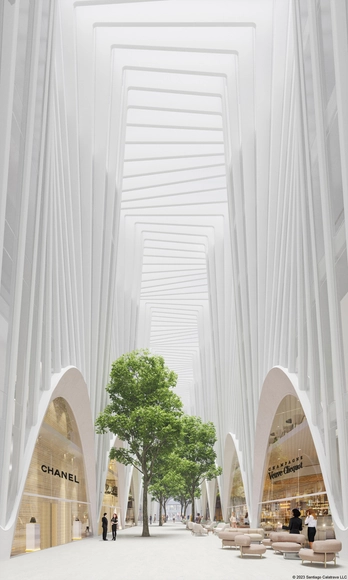
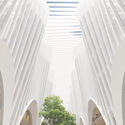
Spanish architect and engineer Santiago Calatrava has unveiled the design of the Calatrava Boulevard, a complex offering upmarket restaurants, retail, and office spaces in Düsseldorf, Germany. Located on a highly visible site between Königsallee boulevard, Königstrasse, and Steinstrasse, the new complex features a curved and vaulted 135-foot-tall roof and a flowing interior street, creating the appearance of a sculptural light-filled canyon. The project, done in collaboration with Uwe Reppegather, Founder and Managing Director of the CENTRUM Group, is set to be completed by 2028.
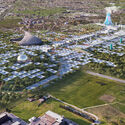
CRA-Carlo Ratti Associati, together with architect Italo Rota and urbanist Richard Burdett, unveiled the master plan for Rome’s bid to host the World Expo in 2030. The project proposes a joint effort from every participating country to contribute to a solar farm that could power the exhibition site and help decarbonize the surrounding neighborhoods. The Expo is proposed to take place in Tor Vergata, a vast area in Rome and home to the eponymous university and a densely inhabited residential district. All the pavilions are designed to be fully reusable, as the area is proposed to be transformed into an innovation district after the event in the hope of revitalizing the somewhat neglected neighborhood. The master plan was developed with several partners, including ARUP for sustainability, infrastructure, and costing, LAND for landscape design, and Systematica for mobility strategy.
The Guggenheim Museum in Bilbao is celebrating its 25th anniversary this October 2022. Set on the edge of the Nervión River in the Basque Country, Spain, Frank Gehry's Guggenheim boosted the city's economy with its astounding success and changed the museum's role in city development. Twenty-five years on, the Bilbao Effect continues to challenge assumptions about urban transformations and inspires the construction of iconic pieces of architecture that uplift cities' status, calling investors and visitors.
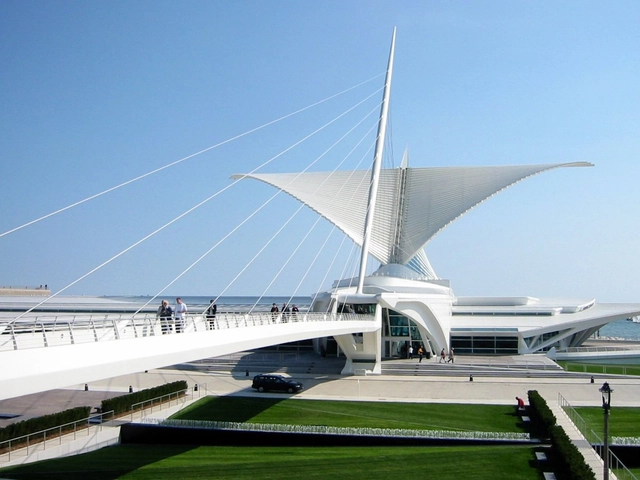
The Quadracci Pavilion at Milwaukee Art Museum. Image via Flickr user bvincent licensed under CC BY-ND 2.0
The Quadracci Pavilion by Santiago Calatrava and the Contemporary Arts Center by the Pritzker-winner Zaha Hadid are celebrating their 20th anniversary. Both buildings are the first US projects completed by these legendary architects that have contributed to the stimulation of economic development in Midwestern American cities over the past two decades. In fact, for that reason, Milwaukee's mayor declared September 16 "Santiago Calatrava Day" to commemorate the Pavillion's opening.
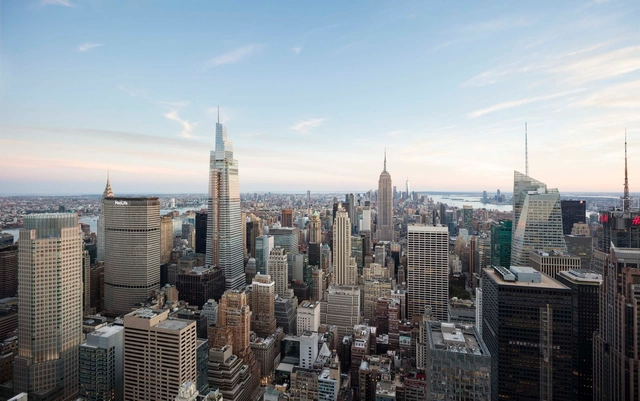
As the largest city in the United States, New York City is one of the most diverse and vibrant cities in the world, recognized by many as the center for global media, culture, fashion art, and finance. The city was founded in 1624 by settlers from the Dutch Republic and has since grown into “the city that never sleeps”.
While almost every style of architecture exists in New York City, the metropolis is most well known for its skyscrapers, both in historical styles such as Neoclassical and Art Deco and in their varied contemporary expressions. The first building to bring the world's tallest title to New York was the New York World Building, in 1890. Later, New York City was home to the world's tallest building for 75 continuous years, starting with the Park Row Building in 1899.
The Glyptothek Museum will showcase the first exhibition dedicated to Santiago Calatrava's array of sculptures and paintings inspired by Greek Antiquity. Running from June 21st to October 23rd, "Beyond Hellas: Santiago Calatrava in the Glyptothek" traces the architect's career as a sculptor, highlighting the influence of histories and cultures on Calatrava's design process.
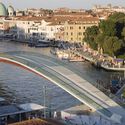
The city of Venice has decided to replace the glass on Santiago Calatrava’s Ponte della Costituzione with stone, as the slick surface was the cause of numerous incidents. The decision comes after several attempts to limit slips using resin and non-slip stickers, even placing keep-off signs on the glass surface when the winter weather rendered the floor increasingly dangerous. Inaugurated in 2008, the bridge has been the subject of controversy and protest from the onset, as the building costs and timeframe surpassed initial estimates and complaints about falls began early on.
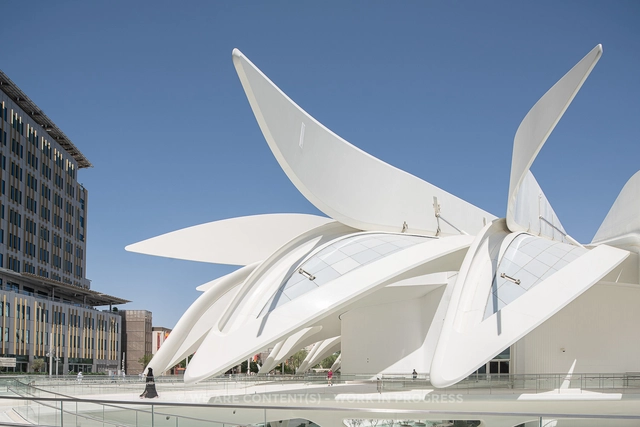
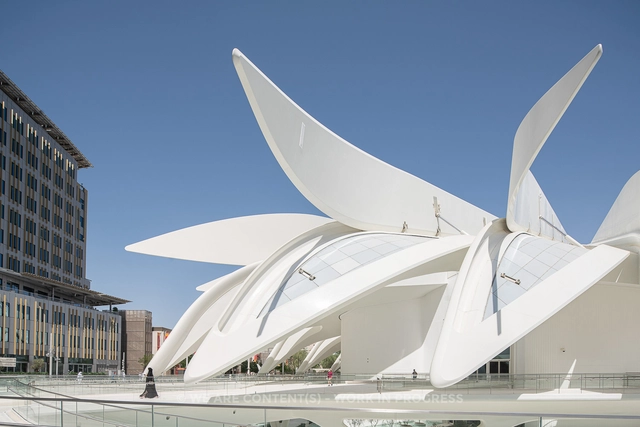
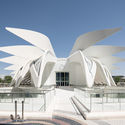
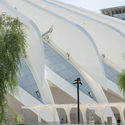
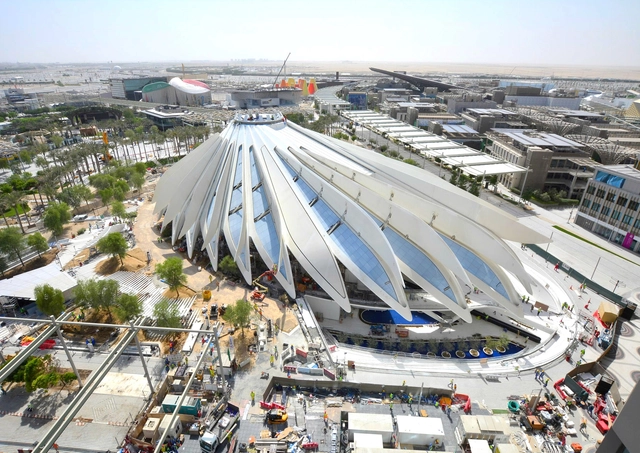
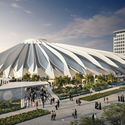
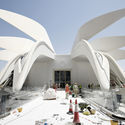
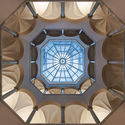
A "symbolic interpretation of the flow of movement", Calatrava’s design for the UAE Pavilion at the 2020 Expo Dubai is a 15,000 square meters immersive and multisensory experience. Images recently shot by Stephane Aboudaram highlight a structure of 28 automated cantilevered wings, that open and rotate at a range of 110 and 125 degrees. Moreover, these photos also show a central skylight, that mimics the logo of this year’s expo.
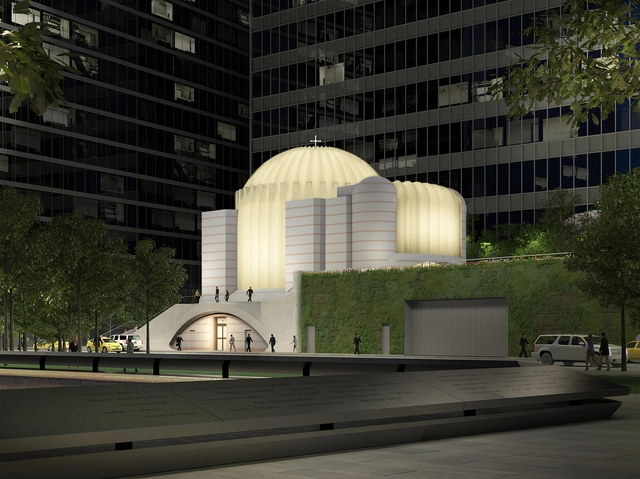
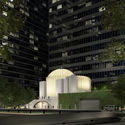
Spanish architect and engineer Santiago Calatrava is rebuilding World Trade Center’s St. Nicholas Greek Orthodox Church and National Shrine in New York City. The church, which was destroyed during the 9/11 attacks, began its reconstruction process in 2015, and is finally reaching completion in 2022. The new structure's design is inspired by a mosaic of Istanbul's Hagia Sophia Grand Mosque, formerly the Church of Hagia Sophia, which was one of the fundamental factors in defining the original architecture of the St. Nicholas Greek Orthodox Church.
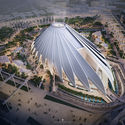
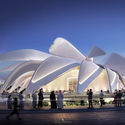
Spanish architect and engineer Santiago Calatrava has unveiled the design of the UAE Pavilion at Expo 2020 in Dubai, UAE. The 15,000 square meters pavilion stands as a "symbolic interpretation of the flow of movement", designed with carefully curated lines and spaces that blend with its surroundings of greenery, shaded arcades, and cantilevered wings. The national monument is set to create an immersive, multisensory experience for visitors from both an architectural standpoint, as well as integrated cinematic features, introducing them to the history, culture, and futuristic innovations of the UAE.
The historical Roman town has been busy at work and new exciting buildings, squares, and public parks have bloomed across the city. Since my first trip to Zürich in 2014, a lot has happened around good old Turicum.
After a compelling trip organized by Visit Zürich and my friend Philipp Heer, we were able to visit some of the newest, most interesting and uplifting places of the city. Flitting hither and thither, Roc Isern, David Basulto, and I enjoyed the privilege of a tailored itinerary, access to Zürich's gems, and perhaps the most inspiring, the architects behind these amazing structures.
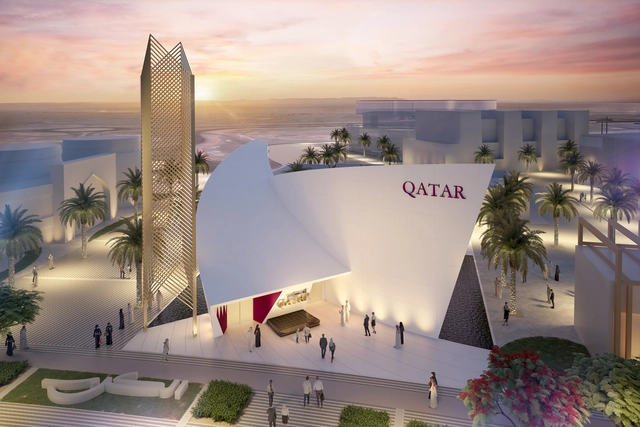
Spanish architect and engineer Santiago Calatrava has unveiled the design of the QatarPavilion at Expo 2020 in Dubai, UAE. The design is inspired by the four elements represented on the Coat of Arms of Qatar and will include two main galleries and exhibition spaces, providing visitors with engaging, inclusive, and interactive environments.