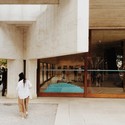
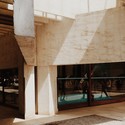
Suzhou Museum of Imperial Kiln Brick. Image Cortesía de Jiakun Architects
The Pritzker Prize is the most important award in the field of architecture, awarded to a living architect whose built work "has produced consistent and significant contributions to humanity through the art of architecture." The Prize rewards individuals, not offices, as happened in 2000 (when the jury selected Rem Koolhaas instead of his firm OMA) or in 2016 (with Alejandro Aravena selected instead of ELEMENTAL); however, the Prize can also be awarded to multiple individuals working together, as was the case in 2001 (Herzog & de Meuron), 2010 (Kazuyo Sejima and Ryue Nishizawa from SANAA), and 2017 (Rafael Aranda, Carme Pigem, and Ramon Vilalta from RCR Arquitectes).
Every architectural project is the result of deliberate choices. Beyond form and function, buildings embody technical, political, and cultural decisions that shape their relationship with both their surroundings and the people who inhabit them. ArchDaily’s AD Narratives series explores these processes by bringing together accounts that trace projects from initial conception to built realization. In parallel, the AD Classics series turns to works of historical significance, presenting not only the stories behind these buildings but also technical drawings that allow for a deeper, more informed reading of their architecture.
In a world facing ecological exhaustion and spatial saturation, the act of building has come to represent both creation and consumption. For decades, architectural progress was measured by the new: new materials, new technologies, new monuments of ambition. Yet today, the discipline is increasingly shaped by another form of intelligence, one that values what already exists. Architects are learning that doing less can mean designing more, and this shift marks the emergence of what might be called an architecture of restraint: a practice defined by care, maintenance, and the deliberate choice not to build.
The principle recognizes that the most sustainable building is often the one that already stands, and that transformation can occur through preservation, repair, or even absence. Choosing not to build becomes a political and creative act, a response to the material limits of the planet and to the ethical limits of endless growth. That Architecture moves beyond the production of new forms to embrace continuity, extending the life of structures, materials, and memories that already inhabit the world.
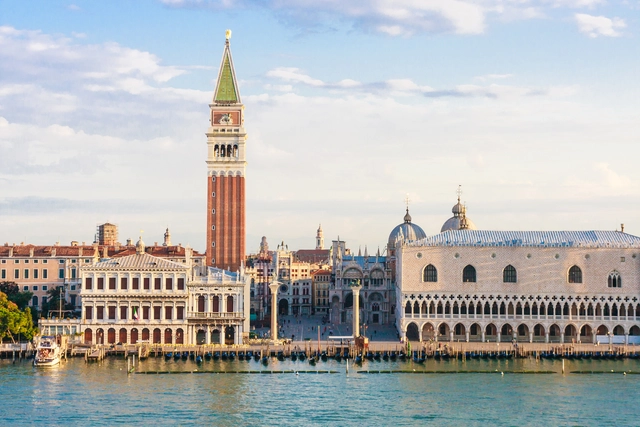
Built on a cluster of 118 small islands in the shallow Venetian Lagoon, the city of Venice, Italy, has captivated the imagination of architects and tourists alike. The area has been inhabited since ancient times, becoming a major financial and maritime power during the Middle Ages and Renaissance, as proven through the rich architecture that characterizes the city to this day. With influences from the Byzantine, Gothic, and Renaissance styles, the city represents a palimpsest of architectural narratives, overlapping and influencing each other. In recent years, Venice has become a major attraction for architects drawn to the La Biennale di Venezia, the most important Architectural Exhibition featuring national pavilions, exhibitions, and events to explore new concepts and architectural innovations.
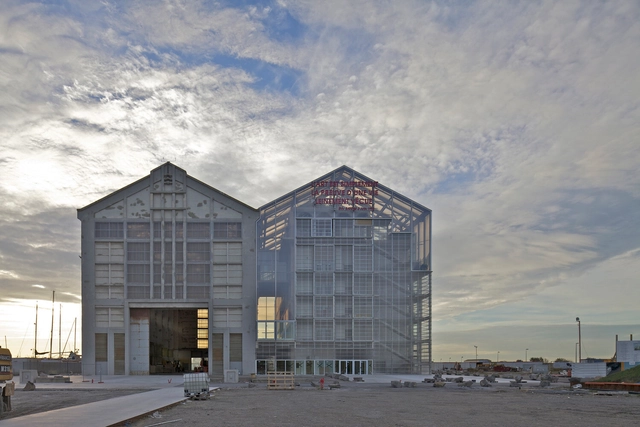
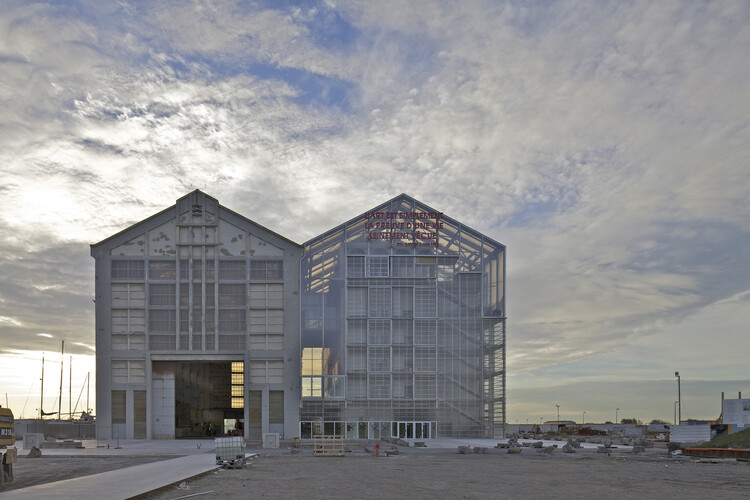
Beyond the Biennale, Venice itself is an open-air museum for architecture lovers. While the city is best known for its historical buildings, Modernist and contemporary interventions add a new layer of interest, with many contemporary architects working with the historical fabric, like OMA's intervention and rehabilitation of Fondaco dei Tedeschi, or David Chipperfield's renovation of Procuratie Vecchie, one of the buildings that define Piazza San Marco. In addition to what the city has to offer, the site of the Venice Biennale is also marked by interventions by famous architects such as Carlo Scarpa, Sverre Fehn, and Alvar Aalto, made permanent due to their outstanding qualities.
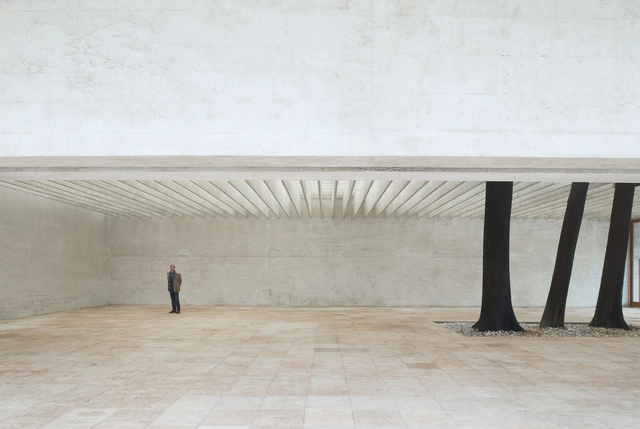
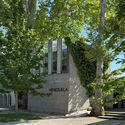
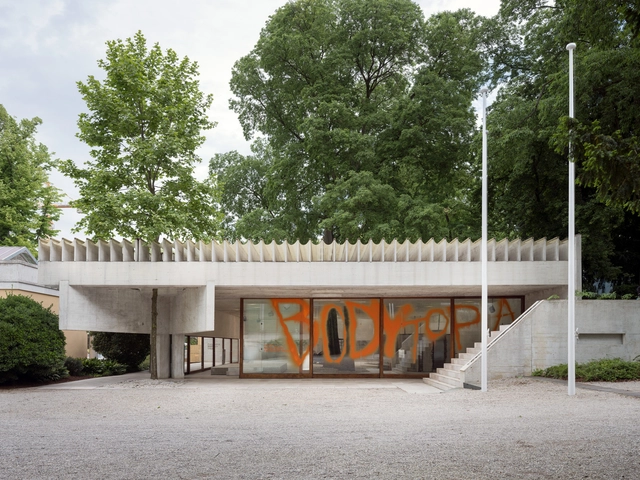
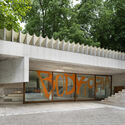
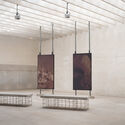
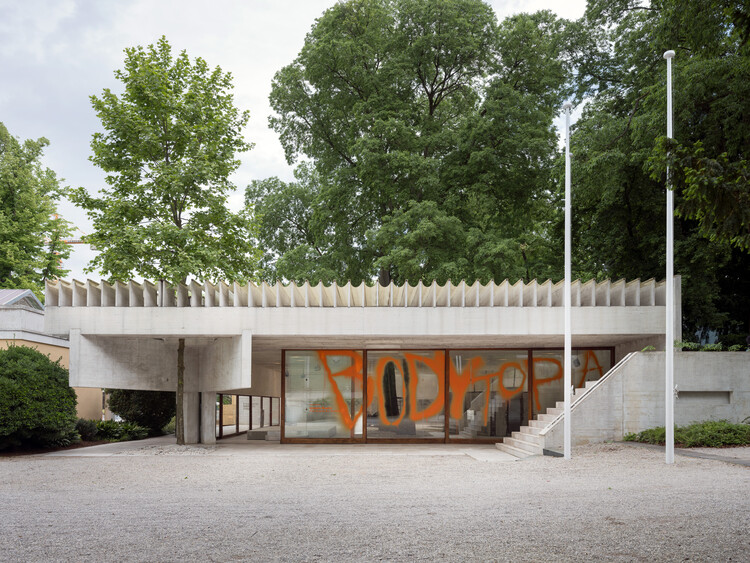
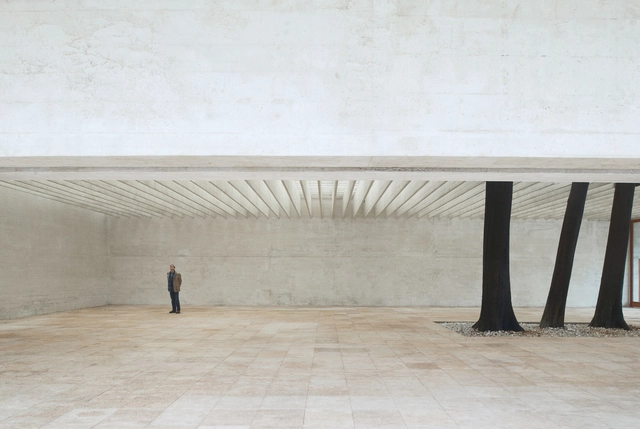
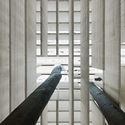
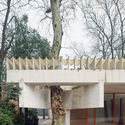
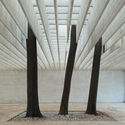
As a result of the ideas competition organized by the governments of Sweden, Finland, and Norway in 1958, Sverre Fehn's Nordic Pavilion won first prize, becoming one of the most significant works of his career and one of the most outstanding Scandinavian architectural achievements during the mid-20th century. Designed to create a space at the Venice Biennale for the biennial exhibitions of these countries, Fehn's proposal addressed several key architectural challenges—ranging from its integration with the site and incorporation of pre-existing elements to the handling of physical boundaries and uniform natural lighting. His design explored the interaction between architecture and trees, the flexibility in the exhibition space, the filtering of light, the connection between interior and exterior, the concept of movement through space, and the display of artworks.
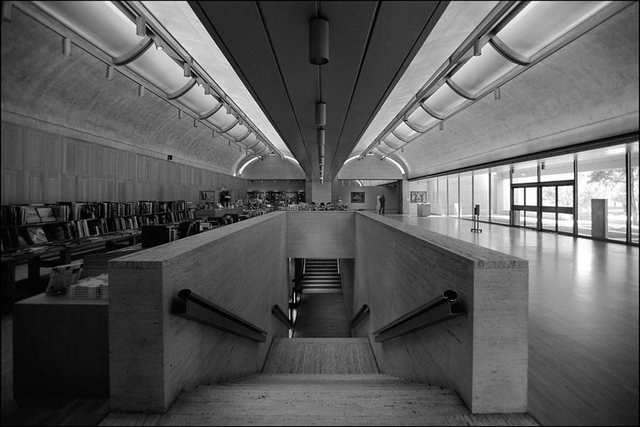
Kimbell Art Museum / Louis Kahn. Image Courtesy of Xavier de Jauréguiberry
AD Classics presents you with some of the greatest buildings of the past that have influenced and shaped architecture today. Throughout ArchDaily's 13 years, more than 200 classics were published, and for this edition, we have rounded up the top 20 most visited Architecture Classics to date.
Modernist architecture came about in the early 20th century as a response to large-scale changes in technology, construction, and society; particularly through the use of glass, steel, and reinforced concrete. The style was typically associated with the function of buildings from an analytical viewpoint, rational use of materials, the elimination of ornamentation, and openness to structural innovation.
Paul Tunge is a Norwegian writer, director, and cinematographer of Arthouse Films who has been involved in film production since the early 2000s. Having written, directed, shot, and produced four independent films, alongside 3 documentaries, each of his projects has been featured during major film festivals across all continents, in galleries, and various national cinemas and cinematheques.
1997 Pritzker Prize laureate Sverre Fehn (August 14th 1924 – February 23rd 2009) was a leader in Post World War II Scandinavian architecture. “His work has an intuitive confidence in how to use the Nordic landscape and its particular light conditions within the built culture, and yet throughout his career each period has reflected a refined sensitivity to international changes and attitudes in architecture,” said his close collaborator Per Olaf Fjeld. “It can be compared to a poetic work conceived on an isolated mountain by a writer with an uncanny, intuitive sense of what is going on in the towns below.” [1]
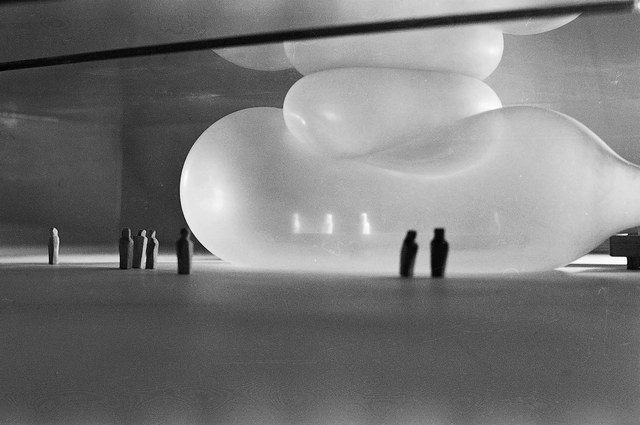
Though architectural history is replete with bricks, stones, and steel, there is no rule that states that architecture must be ‘solid’. Sverre Fehn, one of the most prominent architects of postwar Norway, regularly made use of heavy materials like concrete and stone masonry in his projects [1]. In this way, his proposal for the Nordic Pavilion at the Osaka World Expo in 1970 could be seen as an atypical exploration of a more delicate structure. Representing a very different aspect of ‘Modernity’ than his usual work, Fehn’s “breathing balloon” pavilion stands not only in contradiction to Fehn’s design canon, but to that of traditional architecture as a whole.
The Nordic nations—Finland, Norway and Sweden—have reached a pivotal point in their collective, and individual, architectural identities. The Grandfathers of the universal Nordic style—including the likes of Sverre Fehn, Peter Celsing, Gunnar Asplund, Sigurd Lewerentz, Alvar Aalto, and Eero Saarinen—provided a foundation upon which architects and designers since have both thrived on and been confined by. The Nordic Pavilion at the 2016 Venice Biennale—directed by Alejandro Aravena—will be the moment to probe: to discuss, argue, debate and challenge what Nordic architecture really is and, perhaps more importantly, what it could be in years to come.
We're asking for every practice (and individual) across the world who have built work in Finland, Norway and Sweden in the past eight years to submit their project(s) and be part of the largest survey of contemporary Nordic architecture ever compiled.
Update: the Open Call for In Therapy closed on the 24th January 2016.
Norwegian architect and Pritzker LaureateSverre Fehn’s original drawings for the Nordic Pavilion in Venice are to be presented alongside Ferruzzi’s monochromatic photographs of the building in an exhibition at the National Museum of Architecture in Oslo. Venice: Fehn’s Nordic Pavilion documents the incredible task undertaken by Fehn who, at the age of thirty-four, won the competition to design the pavilion and subsequently won international acclaim when the building was completed in 1962.







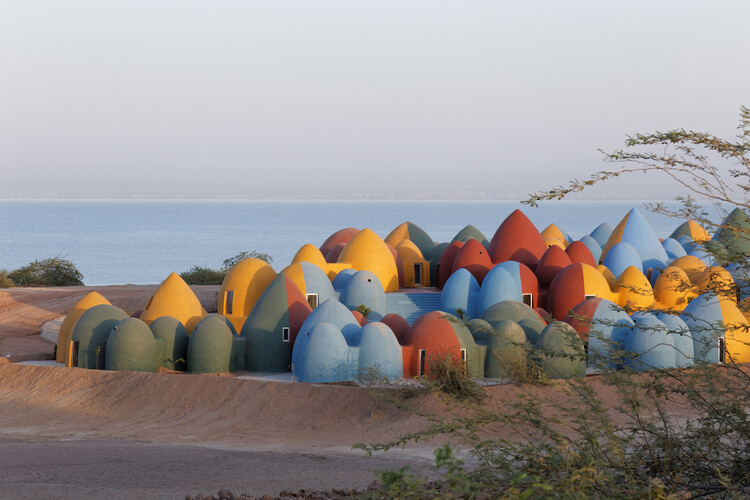








.jpg?1570002957 "La Muralla Roja / Ricardo Bofill. Image Courtesy of Ricardo Bofill")