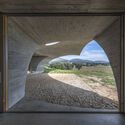
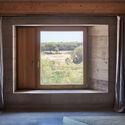
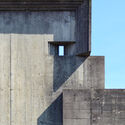
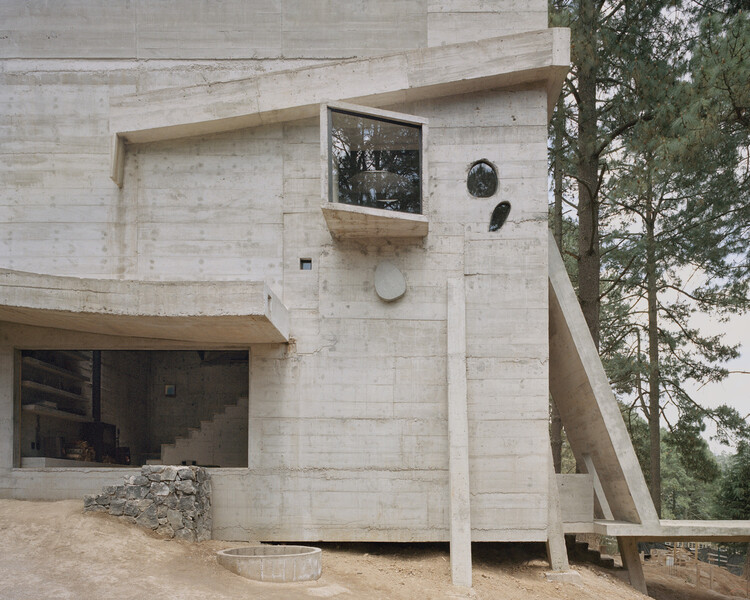
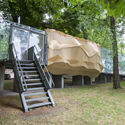
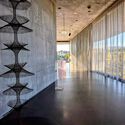
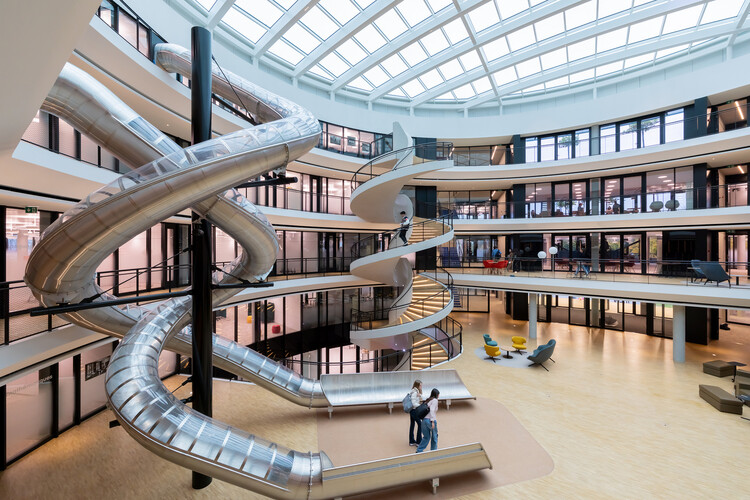
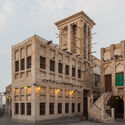
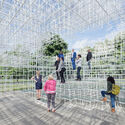
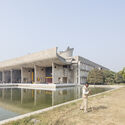
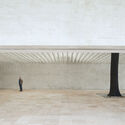
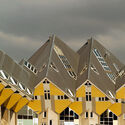
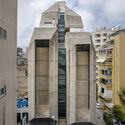
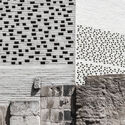
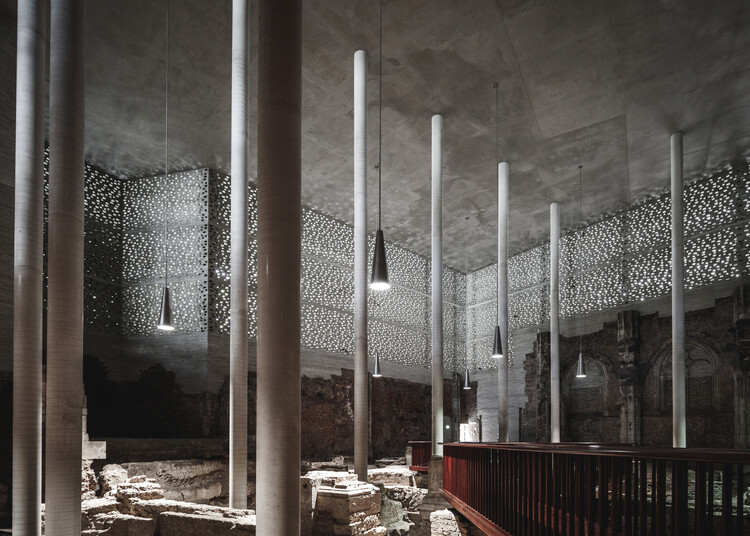
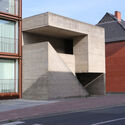
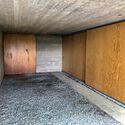
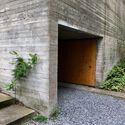
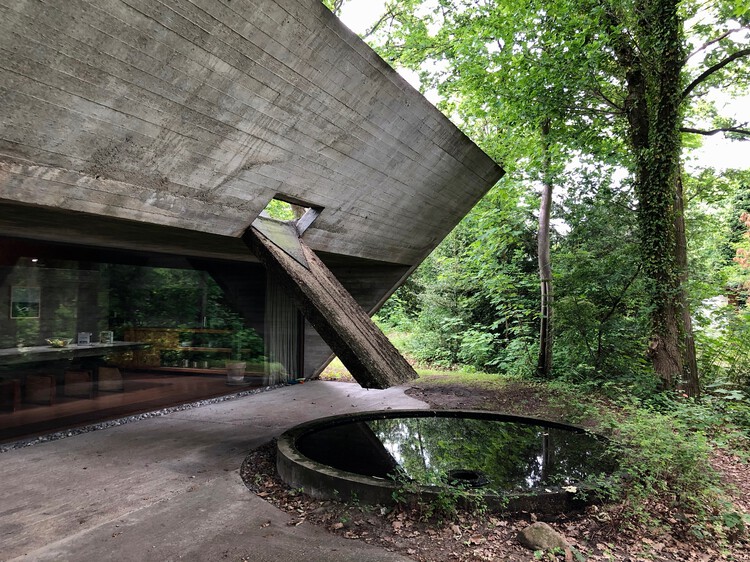
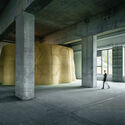
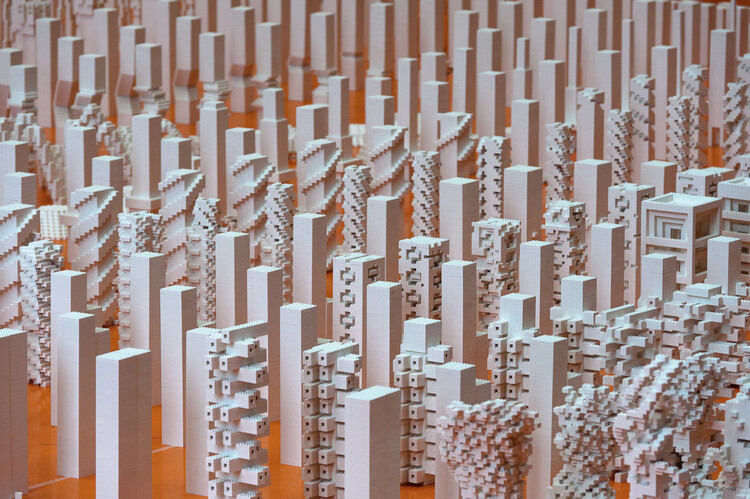
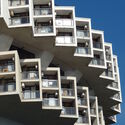
For much of the twentieth century, architectural culture was shaped by the pursuit of lightness. Steel structures and curtain walls reduced the building envelope to a thin layer separating interior from exterior, while façades became smooth, continuous surfaces where windows were cut as precise openings within an abstract plane. But for centuries, buildings were conceived as bodies of mass; walls possessed depth, windows were recessed within thick masonry, and space was often experienced as something carved from the solidity of construction. In recent years, several contemporary projects appear to revisit this older spatial logic, reintroducing thickness as an architectural condition through deep openings, monolithic volumes, and heavy envelopes.
This shift does not imply a rejection of modern construction technologies, nor does it represent a nostalgic return to historical forms. Instead, it reflects a renewed interest in the fundamental relationship between material, mass, and void. By reintroducing thickness into the architectural vocabulary, these buildings reconnect contemporary practice with long-standing traditions in which space was inseparable from the weight and depth of construction.
Modern cities are running on performance indicators. They move millions of people each day, concentrate capital, separate land uses, and sustain complex systems of logistics and consumption. In that sense, the city functions as a system to be continually adjusted and optimized.
Today's dominant metrics are familiar and widely witnessed: vehicles per hour, average commute times, floor area ratios, parking turnover, housing starts, and tax revenue per parcel of land. These figures describe a city that is legible through efficiency. They are inherited from an industrial logic, where urban space is treated more like a production mechanism than a lived-in environment. In this framing, cities begin to mimic the needs and metrics of a machine.
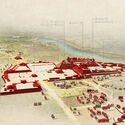
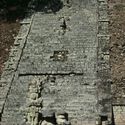
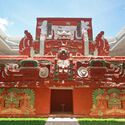
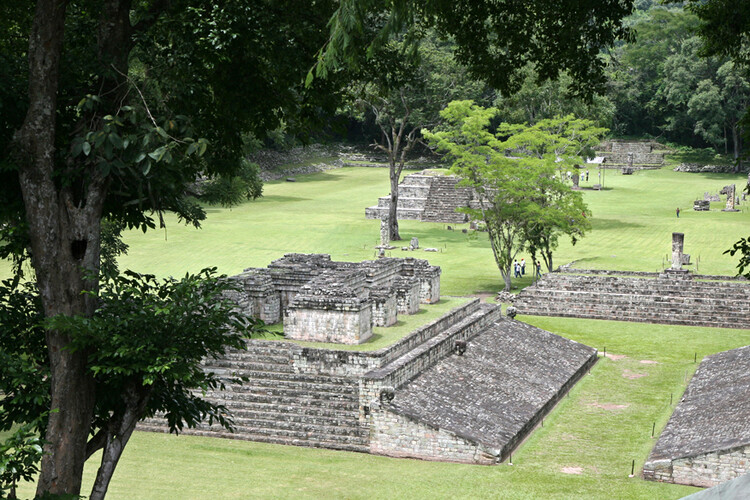
Deep in western Honduras, within a valley near the Guatemalan border, lies the ancient Maya city of Copán. Flourishing during the Classic period between the fifth and ninth centuries CE, the city developed as a regional epicenter through trade networks, dynastic politics, and monumental architecture. Today, the site is designated a UNESCO World Heritage Site due to its extensive architectural remains, including stepped pyramids, sculpted stelae, and ceremonial core. Over a century of systematic archaeological research has documented its urban morphology, revealing distinct residential districts, civic spaces, and systems of movement and visibility.
This analysis examines the spatial organization of Copán through the framework of urban theorist Kevin Lynch and "The Image of the City". By applying Lynch's five structural elements — edges, districts, paths, nodes, and landmarks — it is possible to analyze how Copán functioned not only as a ritual center but as a legible urban landscape designed to reinforce political hierarchy and regulate collective movement. Historical data for this analysis was taken from books and articles linked throughout the text, and was possible thanks to the collaboration of historian Arnulfo Ramirez de la Costa, professor and coordinator of the History program in the Department of History at the National Autonomous University of Honduras (UNAH) in Tegucigalpa.
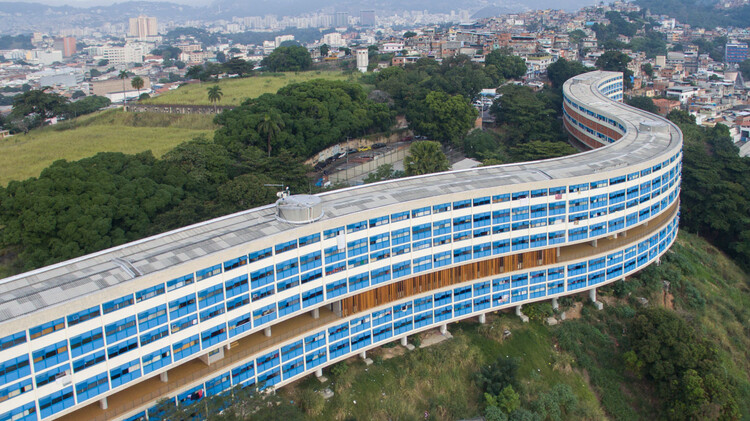
Modern housing was one of the places where modernism made its boldest promise: that architecture could reshape not only the city, but the way people lived within it. As Argentine architectural historian Ramón Gutiérrez has argued, popular housing is "the great unresolved subject, one that usually does not appear in histories of architecture." In Latin America, this absence is significant. Across the 20th century, expanding cities turned housing into one of the clearest ways to imagine urban change, and modernism entered not only plans and drawings, but apartments, neighborhoods, streets, and domestic routines.
Yet once built, these projects entered cities shaped by politics, memory, inequality, and changing ways of occupation. Their meanings no longer belonged only to the original plan, but to the ways they were inhabited, altered, and transformed over time. What this history reveals is not adaptation, but friction: the moment when architecture stops being an ideal model and meets the city it cannot fully control.
"There is no space without event, no architecture without action." When Bernard Tschumi wrote these words, he was articulating a fundamental principle of the architect's practice. Architecture is about behavior. Every stroke of a pen on a floor plan is a proposition about how occupants will move or what actions become possible.
To draw is to architect a reality. Though with this power, architecture does not command. It does not issue instructions or enforce compliance, but it operates through a soft control — a mode of influence that shapes behavior by structuring perception and guiding attention.
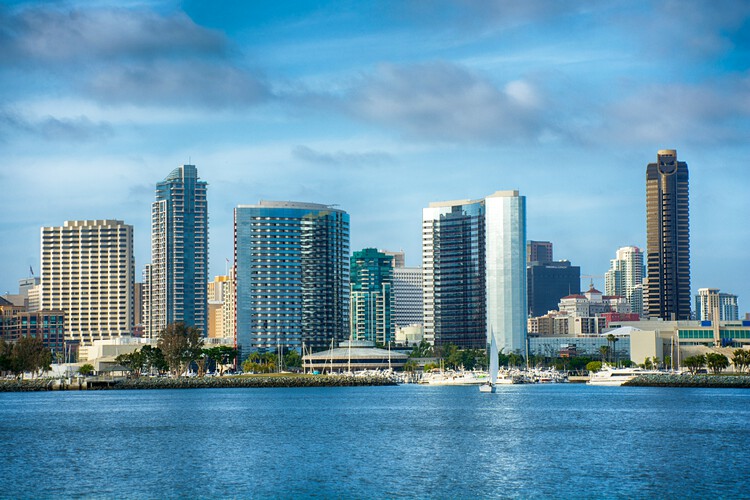
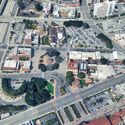
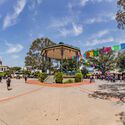
San Diego, California. Photo by Samuel Ramos on Unsplash
Very close to the Mexican border, in the southwest corner of the United States, lies the city of San Diego. Its urban history began in 1769 with the arrival of a Spanish military expedition commanded by Gaspar de Portola, which marked the first permanent settlement in the territory that was known as Alta California. However, unlike the more formally urbanized administrative capitals and towns of Mexico and Central America, San Diego was conceived as a frontier outpost. Today, it has become the second-largest city in California, just after Los Angeles, and its urban grid tells a story about the Hispanic heritage that is intertwined with the contemporary cultural environment of the United States.
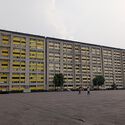
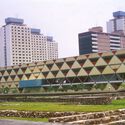
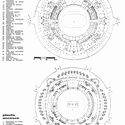
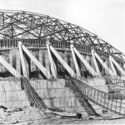
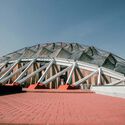
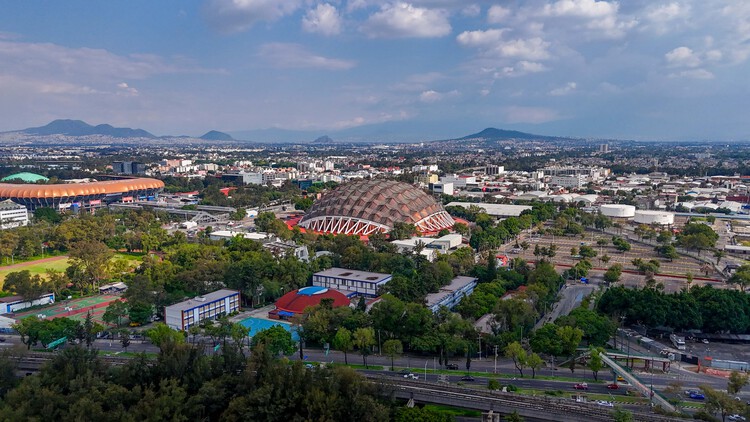
When Mexico City hosted the Olympics in 1968, it was the first time the Games had been awarded to a Latin American country as well as the first time for a Spanish-speaking nation to host them. This made the games a good opportunity to project Mexico and its culture internationally, thus prompting the government to constitute an organizing committee with prominent local talent. They appointed Pedro Ramírez Vázquez as its president, a Mexican architect who held significant influence over the state's mid-century building program. His approach was explicit: architecture as a synthesis of international modernist technique with Pre-Columbian references and local material culture. Under his direction, the committee would oversee the construction and adaptation of venues distributed across the southern districts of Mexico City, nearly all designed and built by local architects, engineers, and technicians.
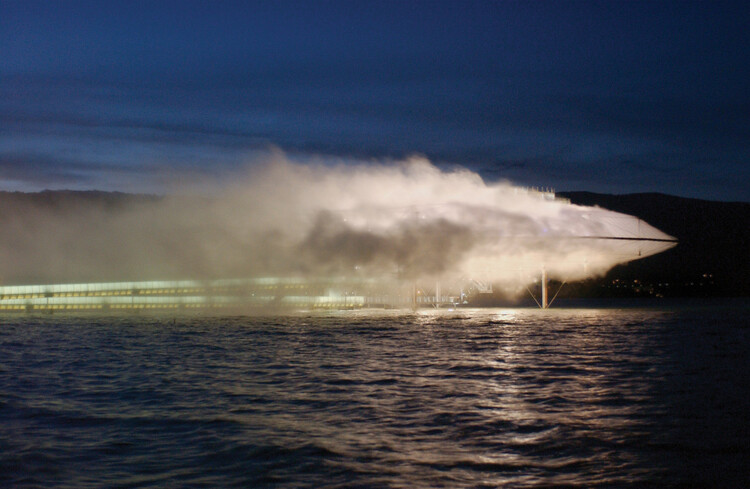
Blur Building, Lake Neuchatel, Yverdon-les-Bains, Switzerland, 2002. Image Courtesy of Diller Scofidio + Renfro
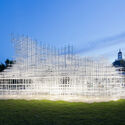
Architecture is traditionally chronicled through the persistence of the solid. We define the discipline by the weight of the lintel, the mass of the pier, and the resistance of the wall. Even when lightness is invoked, it is usually understood as a subtractive act, the thinning of a section or the precarious reduction of a load. Yet there is a parallel history, less visible and harder to isolate, in which the primary material of construction is not what occupies space, but what moves through it.
To treat air as a medium is to move past the binary of the envelope. The boundary between the interior and the world ceases to be a line of absolute separation and becomes, instead, a site of filtration and pressure. We begin to see the building as a thermal valve, a series of gradients where moisture, velocity, and heat are not merely background "conditions" to be mitigated by mechanical systems, but are the very substances being shaped.
"The story of architecture is not wrong," argued Lesley Lokko in her introduction to the Venice Architecture Biennale 2023, "but it is incomplete." For most of the 20th century, architectural history spoke in one tongue: a singular, dominant narrative centered on a handful of movements, names, and cities, whose reach and influence appeared universal precisely because alternative voices were rendered inaudible. Design movements, however, rarely traveled intact across borders. They were frequently absorbed, resisted, reinterpreted, and transformed depending on geography, politics, economy, climate, and available materials. What arrived in one place as doctrine became, somewhere else, something entirely different.
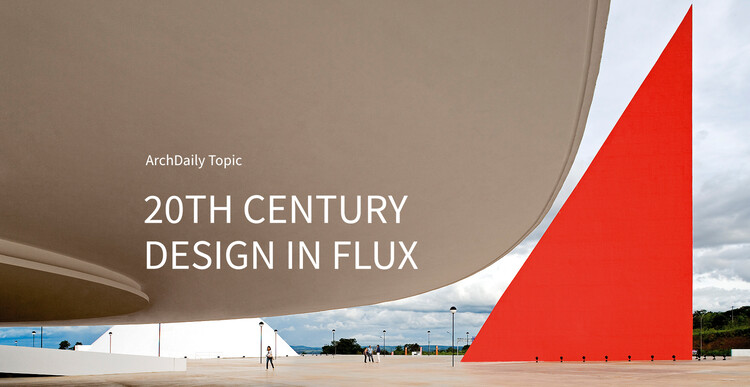
This month, ArchDaily explores 20th Century Design in Flux: A Global Reinterpretation of Architectural History, a topic that traces the century's design languages not as a single canon but as a constellation of evolving, intersecting, and continually reinvented trajectories. The theme challenges the assumption that regional and non-Western architectures were merely derivative — positioning them instead as sites of active reinterpretation, where global ideas were filtered through local materials, climates, labor, and cultural practices to produce something entirely distinct.
In 1962, the architect Buckminster Fuller envisioned a floating city that would free humanity from its dependence on the Earth. The speculative project consisted of enormous geodesic spheres that would naturally levitate in air warmed by the sun and be anchored to mountaintops. Designed to house thousands of people, Fuller’s Cloud Nine aimed to ease land ownership pressures, address housing shortages, and contribute to environmental preservation.
More than half a century later, we remain far from realizing Fuller’s vision. Creating a truly floating structure on the Earth’s surface is still, for now, an unattainable ideal. While supports continue to be necessary, we manipulate their position, intensity, and number, developing structural “acrobatics” to at least approach the idea of overcoming gravity — a desire that has long fascinated humanity.
Architecture begins as an encounter with gravity. It is the ancient act of placing weight upon the earth, of persuading matter to stand, hold, and shelter. Within this fundamental condition of heaviness, however, lies a quieter possibility: density itself can generate a sense of lightness—a perceptual condition in which the body, fully convinced of matter's weight, begins to experience space as suspension.
Much of contemporary architecture has pursued lightness through reduction: thinner structures, smoother surfaces, increasingly seamless transitions between interior and exterior. Here, lightness is equated with disappearance, as if gravity could be overcome by withdrawing material presence. Yet there exists another register in which lightness is not the result of absence, but of intensification. It emerges when material presence becomes so precise, so fully asserted, that it begins to alter perception itself—when mass remains heavy, but no longer behaves as simply inert.
Architectural history often advances through iconic gestures or technological breakthroughs, yet some works remain influential precisely because they resist spectacle. Built between 1972 and 1974 in Sint-Martens-Latem, Belgium, the Van Wassenhove Residence stands as one of those quiet but decisive projects. Conceived as a single, continuous concrete volume set within a wooded landscape, the house challenges conventional ideas of domestic comfort, privacy, and spatial hierarchy. Its presence is direct and uncompromising, yet it avoids monumentality, positioning itself instead as a lived structure shaped by everyday rituals and long-term inhabitation.
The house was designed by Juliaan Lampens, a figure who operated largely outside the dominant architectural narratives of his time. Working mostly in Flanders and often on private commissions, Lampens developed a body of work centered on radical spatial reduction, material honesty, and an almost ethical approach to construction. The Van Wassenhove Residence is frequently described as his most complete work, not because it introduces new ideas, but because it consolidates many of the principles that run consistently through his career.
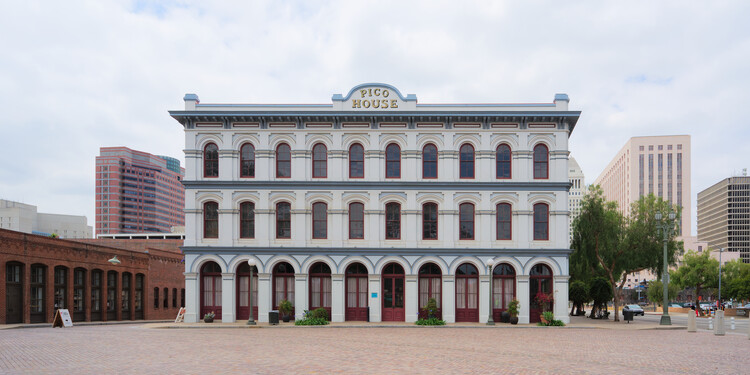
Pico House, part of Los Angeles Plaza Historic District. Image by Daniel L. Lu - Own work, CC BY-SA 4.0
Today, the urban form of Los Angeles is characterized by 20th-century sprawl and extensive automotive infrastructure. However, the physical reality of the city's original core reveals a more complex history that is deeply rooted in Hispanic heritage. In fact, Los Angeles did not originate from the standardized American land system that defines most of the United States' territory. Instead, it is a product of the Spanish urban tradition in the Americas, which followed a structure repeated across major cities on the continent. The intersection of these systems created a layered urban geometry and history that remains visible in the city's contemporary street patterns.
When Los Angeleswas founded in 1781 as a pueblo by Felipe de Neve, it was an outpost of the Viceroyalty of New Spain. Viceroyalties were political divisions of the Spanish territories in America, and by the late 18th century, New Spain was vast. It stretched from southern Costa Rica, all the way north to Alta California, bordering the east at the Mississippi River and the newly independent United States of America. At this time, Mexico City functioned as the primary administrative and economic hub, leaving frontier regions like Alta California to rely on a specific triad of settlements: missions (religious), presidios (military), and pueblos (civilian).
Before the digital turn, architecture's memory was largely tangible. It lived in the weight of drawings, the patina of models, and the thickness of books. To preserve architecture meant to preserve its traces, the documents, sketches, and photographs through which buildings could be remembered long after their material form had changed or disappeared. The modern architectural archive, as it developed in the 20th century, was both a refuge and a device of legitimacy. Institutions such as the Canadian Centre for Architecture, Casa da Arquitectura, or the Deutsches Architekturmuseum were built upon the conviction that to preserve architecture was to preserve its documents.
However, these archives didn't merely store knowledge. They determined what counted as architecture, who belonged to its canon, and how history would be told. To archive is to edit the past — to decide what enters, what is omitted, and how it will be interpreted. The archive, as theorised by Michel Foucault and later by Jacques Derrida, is never neutral; it is an instrument of power, a space that selects and excludes. In architecture, these dynamics are especially evident as they record the visible while silencing what falls outside their categories. The act of collecting has always been, implicitly, an act of judgment.
Porous City / MVRDV and The Why Factory. Image Courtesy of Frans Parthesius, MVRDV and The Why Factory
This article is part of our new Opinion section, a format for argument-driven essays on critical questions shaping our field.
Every architectural epoch has been defined by its instruments. The compass, the drawing board, the camera, and the computer have each altered how architects think and produce. Yet the current moment feels qualitatively different. As artificial intelligence and generative systems enter daily workflows, tools cease to be passive extensions of the architect's hand and begin to operate as semi-autonomous agents. They propose, optimize, and simulate, producing outcomes that are, at times, beyond the author's full anticipation.
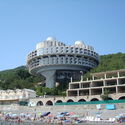
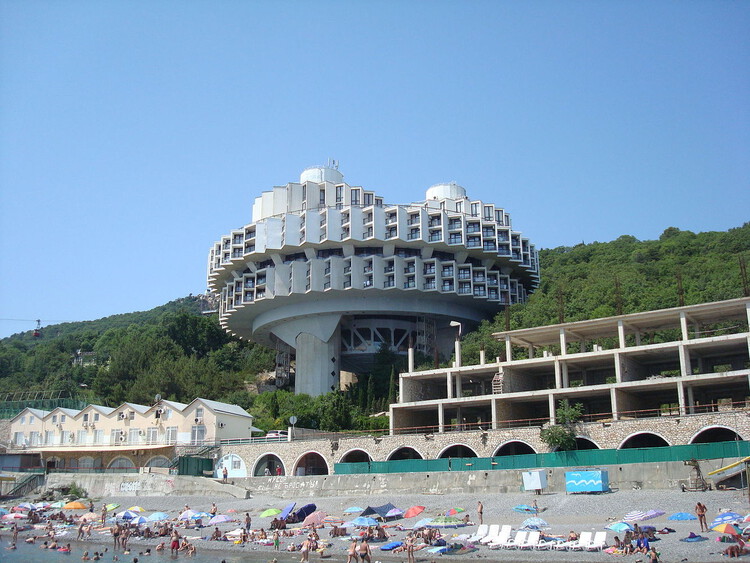
Perched above the cliffs of Crimea, the Druzhba Thermal Sanatorium appears less as a building than as a landed spacecraft. Its circular forms, suspended decks, and spiraling ramps evoke a scene from Andrei Tarkovsky's Solaris (1972), where architecture and psychology merge into a single landscape. Built between 1978 and 1985 by Igor Vasilevsky, the complex was conceived as a thermal resort for workers of the oil industry, part of the Soviet Union's extensive network of sanatoria dedicated to health and recreation.
Beyond its function as a place of recovery, Druzhba, meaning "friendship", embodied a broader political and aesthetic ambition. It sought to merge technological prowess with the restorative ideals of socialist modernity, translating collective well-being into concrete form. Rising from a steep coastal slope overlooking the Black Sea, its massive structure defies gravity, supported by a central concrete core from which radial wings extend like the blades of an enormous gear. Seen from a distance, it feels simultaneously mechanical and organic, a hybrid of infrastructure and landscape.
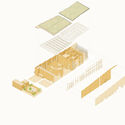
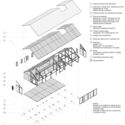
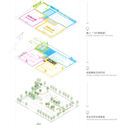
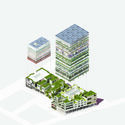
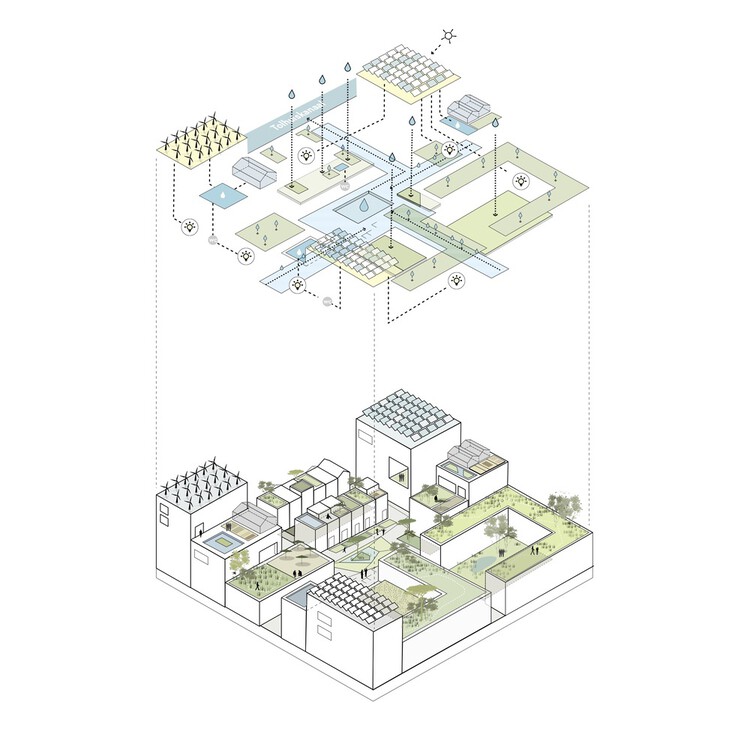
In the translation of three-dimensional reality onto a two-dimensional plane, axonometry stands as one of the graphic systems of representation that form the foundation of the language used by architecture and design professionals. Alongside plans, sections, and elevations, its exploded views often stand out for their ability to study the multiple layers that compose a project. Although axonometry is also employed in other disciplines such as engineering and urban planning, it consistently proves its capacity to function as more than a mere representational tool, strengthening the understanding not only of a project's construction processes, materials, and structural systems but also expanding the communication of the ideas and design processes that shape a project.
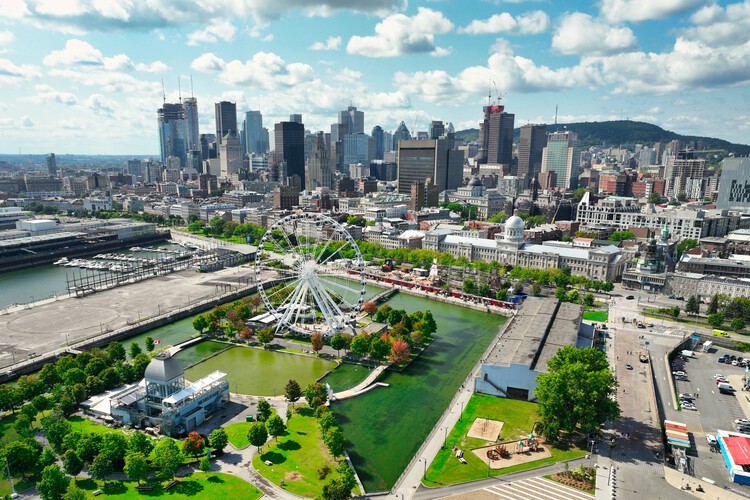
The architectural history of North American cities in the 20th century is often characterized by the pursuit of urban renewal. In the United States, Boston, Portland, and San Francisco are just some examples of when municipal governments prioritized high-speed vehicular infrastructure over the existing urban fabric. In Canada, Montreal would have followed this trajectory if not for the intervention of several figures throughout its history, most notably Blanche Lemco van Ginkel (1923–2022). A Harvard-trained planner and architect who, along with her husband Sandy Van Ginkel, advocated for the preservation of urban heritage while applying the principles of modernist infrastructure.