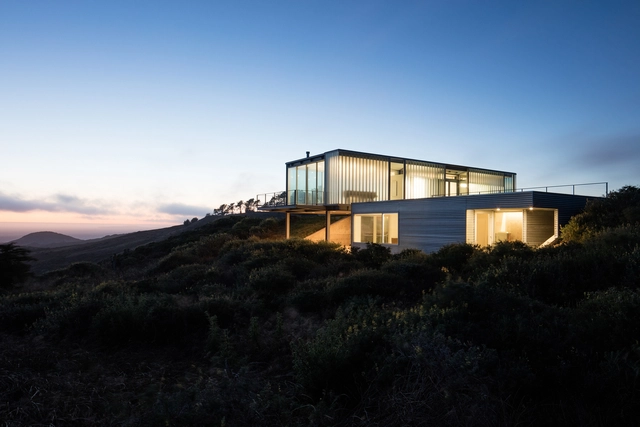
While not entirely dependent on one another, the relationship between architecture and mental well-being is an important topic, as designers and architects can contribute to creating a more enjoyable environment for everyone. From strategies to enhance mental health in shared workspaces to the ways in which architecture can contribute to preventing cognitive decline, understanding the potential impact of environmental neurosciences and the ways they apply to architecture is an essential skill for our profession.
As has become customary in recent years, on the first Monday of October, we celebrate both World Architecture Day and World Habitat Day, serving as a reminder to the global community of its collective responsibility for the well-being of the built environment. This edition, like its predecessors, sheds light on the realm of architecture and the challenges faced by our cities, introducing new themes, contemplating the state of our urban areas, and proposing constructive strategies.
Since urban economies have encountered significant difficulties this year, the UN's World Habitat Day focuses on "Resilient Urban Economies: cities as drivers of growth and recovery." Launching Urban October, this event seeks to bring together diverse urban stakeholders to deliberate on policies to help cities recover after the dual economic impacts caused by the COVID-19 pandemic and conflicts worldwide. Aligned with this concept, World Architecture Day, created by the UIA in 1985, has chosen to concentrate on "Architecture for Resilient Communities," emphasizing the role and duty of architecture in fostering thriving community existence while initiating a global dialogue regarding the interconnectedness of urban and rural regions within every nation.
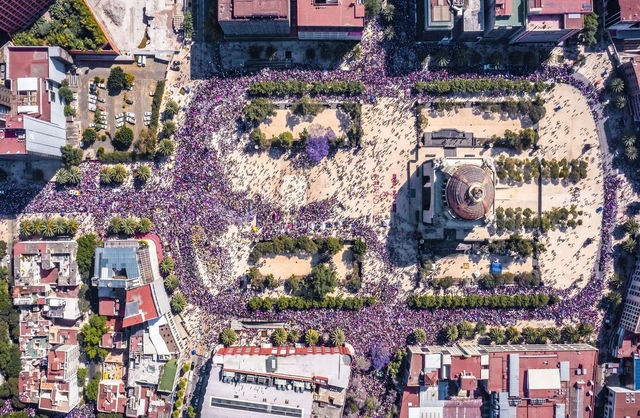
Protest has always been a powerful tool for creating change, and public spaces provide a platform for social engagement in societies. As part of the International Day of Democracy, we examine Africa, its series of emerging protests in the past year, and how citizens in various countries question political justice, demand better living standards from their government, and interrogate their nation’s sovereignty. With demonstrations ranging from organized large-scale marches to smaller spontaneous outbursts, residents of these countries have explored public spaces in symbolic and significant ways to amplify their voices. These spaces include public squares with cultural and historical meaning, sites of political buildings, or makeshift protest areas such as roads and open areas. Through this, African cities show how people make these spaces their own and how the power of their conglomeration cannot be ignored in unwrapping the democratic essence of public spaces.
Every year since its establishment in 1970, Earth Day aims to bring into focus not only the increasingly threatening effects of climate change but also highlight the effective measures and adaptation efforts that can improve the quality of our environment. This year’s event comes after a report from the United Nations’ Intergovernmental Panel on Climate Change (IPCC) in March, which presented another warning on the magnitude of changes produced by human-induced global warming and its impact on people and ecosystems. The same report does offer some hopeful prospects as well, showing that adaptation measures can build resilience, but those urgent systemwide transformations are needed to secure a net-zero future. In response to these findings, the 2023 Earth Day is focused on the theme of “Investing in Our Planet,” as an encouragement for governments, institutions, businesses, and civil society to accelerate the change. Read on to discover several citywide initiatives aligned with these objectives of building resilience and a more sustainable future through legislation, civic involvement, and innovative systems.
In an effort to expand the debate around the issues and opportunities facing urban environments worldwide, UN-Habitat has designated October 31 as “World Cities Day”, an event celebrated annually since 2014. This year the events are centered around the theme “Act Local to Go Global”, with the aim to share experiences and approaches to local actions, the initiatives that were successful and those that were not, and to seek to understand ways in which local and regional governments can help create greener, more equitable and sustainable cities.
The theme was chosen based on the understanding that local actions are of critical importance in achieving the sustainable development goals set for 2030. The 2030 Agenda sets out the UN ambition to contribute to creating cities and human settlements more inclusive, safe, resilient, and sustainable. The world’s largest cities are often the most unequal. This year’s theme suggests that there is a path forward through incremental changes and localized actions. By adapting to site-specific conditions, these actions can better respond to the individual needs of the communities, and the natural conditions of climate and topography and can help strengthen the cultural identity of urban environments.
The first Monday of October of every year marks World Architecture Day and World Habitat Day. Celebrated simultaneously, they both seek to shed light on the built environment and its challenges, taking on a different theme with each new edition. This year, through its World Architecture Day, the UIA is focusing on “Architecture for well-being”, in line with the designation of 2022 as the UIA Year of Design for Health in buildings and cities. In parallel, the UN’s World Habitat Day, is centered on “Mind the Gap. Leave No One and Place Behind”, looking at the problem of growing inequality and challenges in cities and human settlements, due to the triple ‘C’ crises – COVID-19, climate and conflict.
Introducing Urban October, 31 days to promote a better urban future, World Architecture Day and World Habitat Day push forward the debates on urban sustainability. Joining the conversation every year, ArchDaily takes part in this occasion by promoting content that tackles the main objectives of this day, raising awareness, presenting solutions, engaging the international community, and “empowering everyone who makes architecture happen to create a better quality of life”.
As the climate crisis continues to present itself as a significant threat to the future of the ecosystem and built environment, this year's IPCC report, titled Climate Change 2022: Impacts, Adaptation, and Vulnerability, found that while adaptation efforts are being observed across all sectors, the progress being implemented so far is greatly uneven, as there are gaps between the actions taken and what is needed. On this year's Earth Day, we explore the progress being made by governments and architects to achieve net-zero operations within the next decades.
While women make up an equal part of the population, they are not equally represented when imagining, planning, designing, and constructing the built environment around the globe. Thriving to rebalance forces and close the gap of gender inequality, the world is moving slowly but surely into a more diverse, equitable, and inclusive future. Looking back at 2021, this year has seen the selection of Lesley Lokko as curator of the 2023 Venice Biennale, Anne Lacaton winning with her partner Jean-Philippe Vassal the 2021 Pritzker Prize, the 6th woman to ever receive the award, and the MAXXI Museum celebrating the transformative role of female architects in the profession's evolution over the last century.
The 2022 Women's International Day, according to the UN is centered on “Gender equality today for a sustainable tomorrow”, focusing on females involved in building a sustainable future, while the official platform of the 8th of March is concentrating its efforts on breaking the bias and eliminating discrimination. Recognizing every single day the female force that shapes the built environment, ArchDaily on the other hand, turned to its global audience this year, seeking input to shed light on even more women architects, from the four corners of the world. Always trying to reach new realms, this selection of 25 professionals is looking to adjust the historical narrative by highlighting pioneers of the field, to present established practitioners molding the world we live in, and to share profiles of activists and scholars, implicated in change.
Courtesy of UN-Habitat and Global Utmaning/ Edited by ArchDaily
The built environment destined for everyone is still, to this day, not envisioned by everyone. Last year on Women’s day, we stated that “the battle for equality is far from over”. Highlighting continuously women architects and gender-related topics, this year, ArchDaily is turning the tables and seeking guidance from our audience. We highly value our reader's opinions, and now more than ever, we are seeking your input, to reach more realms and shed light on unfamiliar female figures to the international scene.
In your opinion, who are the female architects missing from our platform? Help us put the spotlight on women implicated in the built environment and nominate major female characters from across the globe, so that we can adjust the narratives, feature their work, and share knowledge and tools for a more inclusive world. These women can belong to any part of history: from young upcoming forces to established individuals or firms to figurines that were part of architecture's history. They can also have diverse professional backgrounds, from architects, planners, designers, to builders and decision-makers, all profiles involved in shaping the environment that surrounds us are eligible.
A little less than two years after the onset of a global pandemic, inclusion in the architecture profession is unfortunately still a limited conversation. A 2020 survey by the UK’s Architects' Journal revealed a sobering amount of obstacles for Black architects in the UK, and in the United States, prominent Black practitioners such as Mabel O. Wilson of Studio & have questioned the Eurocentric nature of a large amount of architectural study.
As cities grow in scale, dimensions, and amplitude, taking in 60% of the world population, the United Nations has designated the 31st of October as “World Cities Day”, an opportunity to talk furthermore about global urbanization, addressing challenges, encouraging opportunities across borders and highlighting responses. Focusing this edition on the theme of “Adapting Cities for Climate Resilience”, this day, part of Urban October, seeks to raise awareness about the climate crisis and its repercussions on the built environment.
Cities, at the center of the global challenges, are hubs for institutions, society, economy, commerce, and transportation. Understanding the importance of “Thinking the City”, we have compiled in this roundup, articles published by ArchDaily’s editors that offer planning tools and guidelines, tackle the different components of the urban realm and highlight worldwide as well as contextual questions and responses.
This year both organizations have defined themes related to improving the quality of life and reducing the effects of the climate crisis by taking action in the built environment. While the International Union of Architects' 2021 World Architecture Day theme is "Clean Environment for a Healthy World", UN-Habitat's World Habitat Day has announced "Accelerating Urban Action for a Carbon-Free World" as their topic.
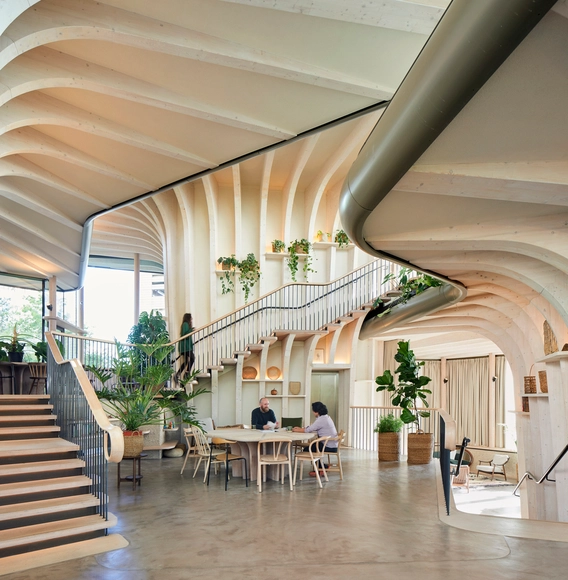
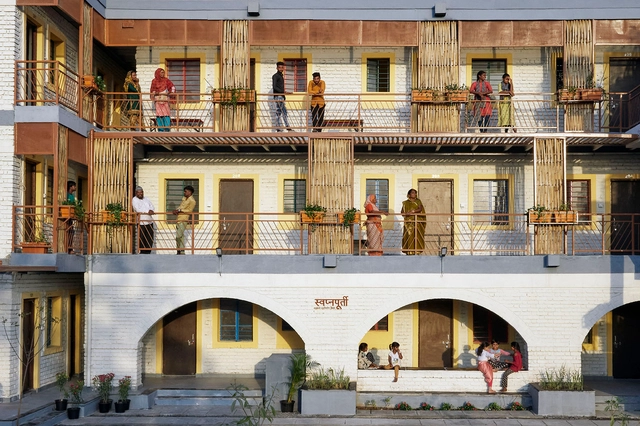
Architectural photography has developed into its own art form, and it might be as important as the built work itself. We consume architecture not only physically and spatially in a building but also through photographs. A good image reportage work can give the viewer a feeling of the atmosphere, senses, and design intentions the project may spark, without actually being in the place. Photography is also a way of documenting the project's process, the use of materials, lighting, and architectural elements, and as a result, tell a complete story behind a building.
To celebrate World Photography Day, we've gathered a list of 25 architectural photographers from around the world who are worth knowing - and following on Instagram. These emerging photographers have been selected for their ability to capture architecture each in their own unique ways. Get to know them!
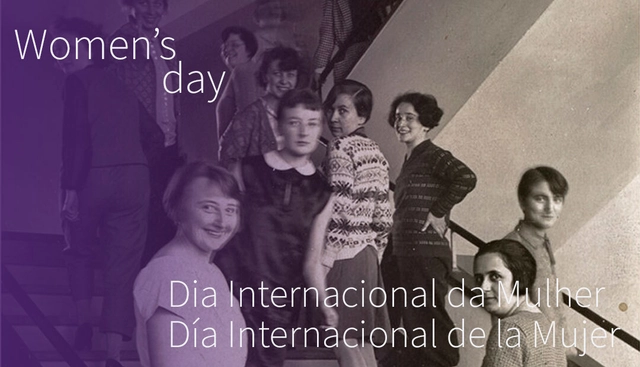
Another year and another International Women’s Day. Although recently, the gender debate has taken considerable attention, the battle for equality is far from over. Even in the 21st century, architecture can still be a challenging profession for women. Progress is happening though, and in 2020, Yvonne Farrell and Shelley McNamara became the 4th and 5th women to receive the Pritzker prize, ever since its inception in 1979.
Not limiting our coverage to the 8th of March, ArchDaily recognizes every day the female force that is shaping the built environment around the world. In fact, Women in Architecture is one of the main pillars of our content strategy. This year, for International Women’s Day, ArchDaily has decided to feature a week of curated content, with exclusive interviews and thought-provoking editorials. Join us as we highlight women that deserve a seat at the table, and share tools to achieve an inclusive world.
World Architecture Day, celebrated on the first Monday of every October, was set up by the Union International des Architects (UIA) back in 2005 to “remind the world of its collective responsibility for the future of the human habitat”, coinciding with UN-Habitat's World Habitat Day.
https://www.archdaily.com/277569/happy-world-architecture-dayArchDaily Team
To celebrate World Photography Day, we've gathered a list of 10 BIPOC architectural photographers from around the world who are worth knowing - and following on Instagram.
The following names have also been recognized in two open lists that are constantly being updated in order to promote diversity in the photography industry: Diversify Photo and BIPOC STUDIOS. The idea behind these platforms is to allow Architects, Designers, Creative Directors, and art consumers in general, to discover photographers that identify themselves as Black, Indigenous, People of Color, available for assignments and commissions.
"Every picture tells a story" - at least, that's according to that great philosopher of our time, Rod Stewart. But what about the stories behind the pictures themselves? At ArchDaily we know that a great image requires not only great architecture but also a skilled photographer, so to celebrate World Photo Day we decided to find out more about the most popular images on ArchDaily. We've taken the ten most bookmarked images in My ArchDaily, and contacted some of the photographers to find out more about their images - read on to see the top ten, and to find out the stories behind six of them.
https://www.archdaily.com/772022/world-photo-day-2015-the-10-most-saved-images-in-my-archdailyAD Editorial Team

























_Simone_Bossi.jpg?1629234719&format=webp&width=640&height=580)
_Maria_Gonzalez.jpg?1629145604 "© Maria Gonzalez")
_Triệu_Chiến_01.jpg?1629145656 "© Trieu Chien")
_Alex_shoots_buildings.jpg?1629229852 "© Alex Shoots Buildings")
_Leonid_Furmansky.jpg?1629230142 "© Leonid Furmansky")
_Simone_Bossi.jpg?1629234719)