1. ArchDaily
  2. Architectural Criticism

Architectural Criticism: The Latest Architecture and News

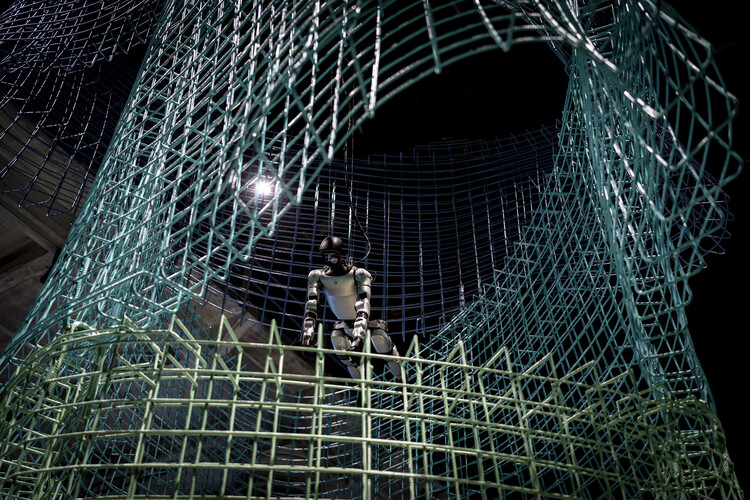
The Intelligens Biennale Gathers the Data, But Fails to Synthesize It

This article introduces our new Opinion section, a format for argument-driven essays on critical questions shaping our field.

The Venice Architecture Biennale has always been larger than itself. Never content with merely being an exhibition, it has always carried ambitions that expand beyond the grounds of Arsenale and Giardini. Rem Koolhaas's Fundamentals sought to deconstruct architecture into a universal grammar; Alejandro Aravena's Reporting from the Front reframed it as a tool for social justice on the ground; Lesley Lokko's The Laboratory of the Future set out to decolonize and decarbonize the architectural canon.


The Intelligens Biennale Gathers the Data, But Fails to Synthesize It  - Image 1 of 4The Intelligens Biennale Gathers the Data, But Fails to Synthesize It  - Image 2 of 4The Intelligens Biennale Gathers the Data, But Fails to Synthesize It  - Image 3 of 4The Intelligens Biennale Gathers the Data, But Fails to Synthesize It  - Image 4 of 4The Intelligens Biennale Gathers the Data, But Fails to Synthesize It  - More Images+ 13

The Architect as Writer: Expanding the Discipline Beyond Buildings

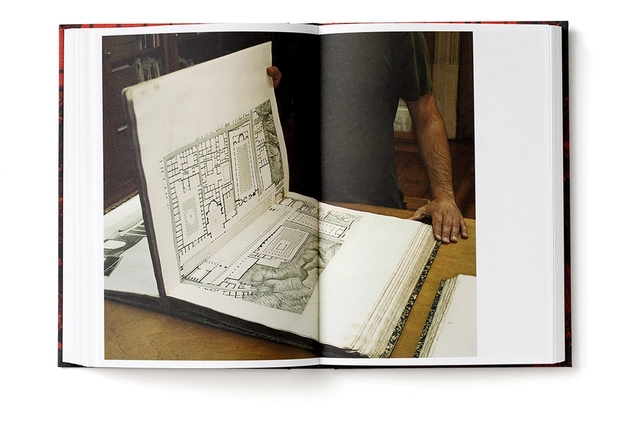
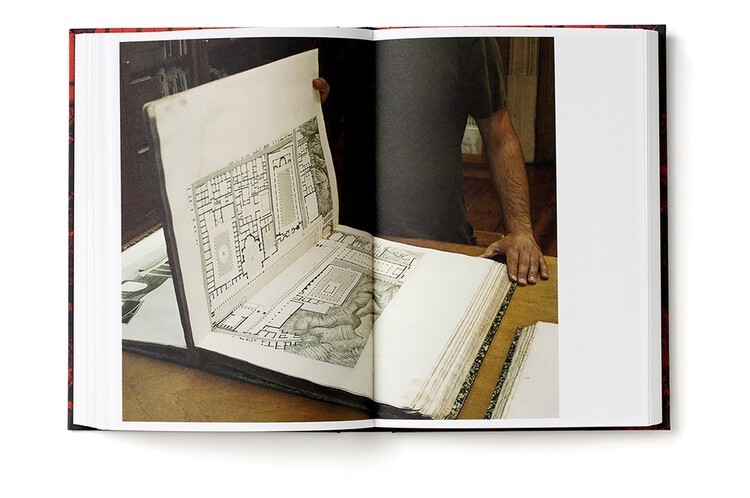
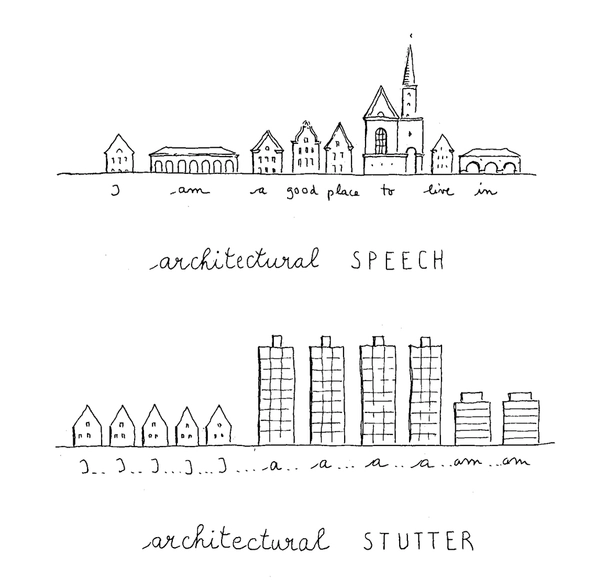
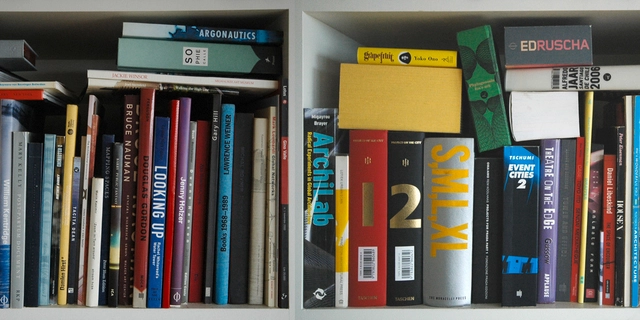
Architecture has always been more than bricks and mortar. It is equally constructed through words, ideas, and narratives. From ancient treatises to radical manifestos, from technical manuals to poetic essays, the written word has served as a spatial, pedagogical, and political tool within the field. Writing shapes how architecture is conceptualized, communicated, and critiqued — often long before, or even in the absence of, physical construction.

Historically, figures such as Vitruvius, Alberti, and Palladio employed writing to codify principles, project ideals, and legitimize architecture as a discipline. In the modern era, Le Corbusier, Adolf Loos, and Lina Bo Bardi wrote prolifically to expand the scope of architecture beyond form and function, often using publications as tools for persuasion and experimentation. The postwar period gave rise to new editorial strategies, as evident in the manifestos of Archizoom and Superstudio, and the polemical publications of Delirious New York and Oppositions, where writing served as both critique and project.

The Architect as Writer: Expanding the Discipline Beyond Buildings - Image 1 of 4The Architect as Writer: Expanding the Discipline Beyond Buildings - Image 2 of 4The Architect as Writer: Expanding the Discipline Beyond Buildings - Image 3 of 4The Architect as Writer: Expanding the Discipline Beyond Buildings - Image 4 of 4The Architect as Writer: Expanding the Discipline Beyond Buildings - More Images+ 31

Léon Krier, Influential Voice in New Urbanism, Passes Away at 79

Léon Krier, the Luxembourg-born architect and urban theorist renowned for his critical stance against modernist planning and his influential role in the New Urbanism movement, passed away on June 17, 2025, at the age of 79. Known for his uncompromising critique of modernist planning and his vision for human-scaled, walkable communities, Krier leaves behind a substantial body of built work, theoretical writing, and educational influence.

Over a career spanning several decades, Krier advocated for a return to classical architecture and human-scaled urbanism, positioning himself as a leading critic of sprawling suburban development and high-rise modernism. His advocacy for walkable, mixed-use neighborhoods and his insistence on the cultural and social value of architecture challenged the prevailing norms of late 20th-century urban planning.

Léon Krier, Influential Voice in New Urbanism, Passes Away at 79 - Image 1 of 4Léon Krier, Influential Voice in New Urbanism, Passes Away at 79 - Image 2 of 4Léon Krier, Influential Voice in New Urbanism, Passes Away at 79 - Image 3 of 4Léon Krier, Influential Voice in New Urbanism, Passes Away at 79 - Image 4 of 4Léon Krier, Influential Voice in New Urbanism, Passes Away at 79 - More Images+ 5

Learning from Artists: New Perspectives on Public Space

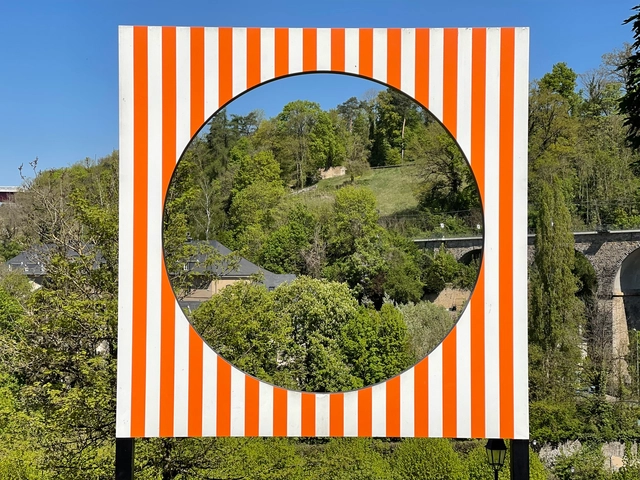
Public space has long been central to architectural thought, often framed in terms of planning, infrastructure, and regulation. From Haussmann's Paris to contemporary masterplans, architects have worked to define and formalise collective life through spatial tools. Yet, outside of these frameworks, artists have continuously offered alternative ways of understanding and inhabiting public space—ways that rely not on construction or permanence, but on presence, perception, and participation. Through actions, objects, or atmospheres, artists engage the city as a site of friction and imagination. These gestures challenge architectural conventions and invite artists to reconsider public space not as a solved form, but as a contingent and open process.

Learning from Artists: New Perspectives on Public Space - Image 1 of 4Learning from Artists: New Perspectives on Public Space - Image 2 of 4Learning from Artists: New Perspectives on Public Space - Image 3 of 4Learning from Artists: New Perspectives on Public Space - Image 4 of 4Learning from Artists: New Perspectives on Public Space - More Images+ 18

This Is Not Architecture: Resisting the Illusion of AI Design

 | Sponsored Content

In the past, AI-generated images often resembled psychedelic experiences—filled with strange, sometimes unsettling colors and forms. But recent advancements in artificial intelligence have transformed that landscape. Today, we are surrounded by images whose origins are often unknown. From playful mashups to portraits turned into works of art, it's undeniable that Artificial Inteligence has become a lasting part in our visual landscape. As Yuval Noah Harari noted in a 2023 interview with The Economist, "AI has gained some remarkable abilities to manipulate and generate language — whether through words, sounds, or images. It has, in effect, hacked the operating system of our civilization."

Architecture, naturally, has not been immune to this. Prompt-based image generators have flooded the virtual environment with renderings that span from surreal to hyper-realistic: futuristic cities, organic skyscrapers, and utopian cabins perched on idyllic cliffs. Most of these are created with general-purpose tools that prioritize visual novelty over design logic. But not all platforms follow this path. Gendo, for instance, was built specifically for architects and designers — offering finer control over parameters like scale, material, and spatial intent. Its goal isn't just to generate images, but to support design thinking. Still, these more intentional tools remain exceptions in a broader sea of generic, decontextualized imagery.

International Women’s Day 2025: The Diverse Approaches of Emerging Woman-Led Architecture Practices

Subscriber Access | 

This International Women's Day, we celebrate the contributions of women in architecture, a field traditionally dominated by men. While dominant narratives may overlook their significant impact, as the history of architecture is replete with examples of women subtly but powerfully shaping the profession. When limited to a draftsman position, Ester McCoy took a step back not to disengage but to better observe. She became the first architectural critic and historian to notice the unique flavor of Modernism developing along the West Coast during the 1950s, bringing names such as Richard Neutra, or Luis Barragan to the forefront of architectural discussions. Similarly, the name Aline Louchheim may not be a widely recognized one among architects, but, because of her, the name Eero Saarinen surely is. The profession of architectural publicist also emerged through this collaboration. These stories remind us that recognizing women's achievements in architecture is not about celebrating gender, but about acknowledging a historical bias that has hindered the entire field's progress.

International Women’s Day 2025: The Diverse Approaches of Emerging Woman-Led Architecture Practices - Image 1 of 4International Women’s Day 2025: The Diverse Approaches of Emerging Woman-Led Architecture Practices - Image 2 of 4International Women’s Day 2025: The Diverse Approaches of Emerging Woman-Led Architecture Practices - Image 3 of 4International Women’s Day 2025: The Diverse Approaches of Emerging Woman-Led Architecture Practices - Image 4 of 4International Women’s Day 2025: The Diverse Approaches of Emerging Woman-Led Architecture Practices - More Images+ 5

Formal and Material Experimentation: Key Lessons from Modernist Architecture Pioneers

Wars, decolonization, economic crises, civil movements, and industrial-technological revolutions: the 20th century was a period of radical and far-reaching transformations. These upheavals reshaped societies and redefined how people expressed their evolving aspirations, with architecture leading the way. Machines and industrialization promised technological progress and modernization, advocating for a clean break from the ornamented, historically rooted styles of the past while embracing a vision focused on functionality, efficiency, and innovation. This shift, embodied by modernism, introduced new concepts, methods, and material uses—all shaped through experimentation.

From Colonization to Le Corbusier: Was Modernism in India an Imposition or an Invitation?

When India gained independence in 1947, the nation faced a decision that would determine the course of its architectural future: brick or concrete. A seemingly mundane choice of material was rooted in a deeper philosophical divide between two potential outcomes for post-colonial India's built environment. Pioneering figures in India's struggle for independence held opposing views - Mahatma Gandhi advocated for traditional craftsmanship while Jawaharlal Nehru embraced modernism. The architecture one sees in the subcontinent today is a mosaic of both, begging the question: was modernism in India a foreign imposition or a celebrated import?

From Colonization to Le Corbusier: Was Modernism in India an Imposition or an Invitation? - Image 1 of 4From Colonization to Le Corbusier: Was Modernism in India an Imposition or an Invitation? - Image 2 of 4From Colonization to Le Corbusier: Was Modernism in India an Imposition or an Invitation? - Image 3 of 4From Colonization to Le Corbusier: Was Modernism in India an Imposition or an Invitation? - Image 4 of 4From Colonization to Le Corbusier: Was Modernism in India an Imposition or an Invitation? - More Images+ 4

Upper Lawn: A Manifestation of Alison and Peter Smithson's Architectural Vision

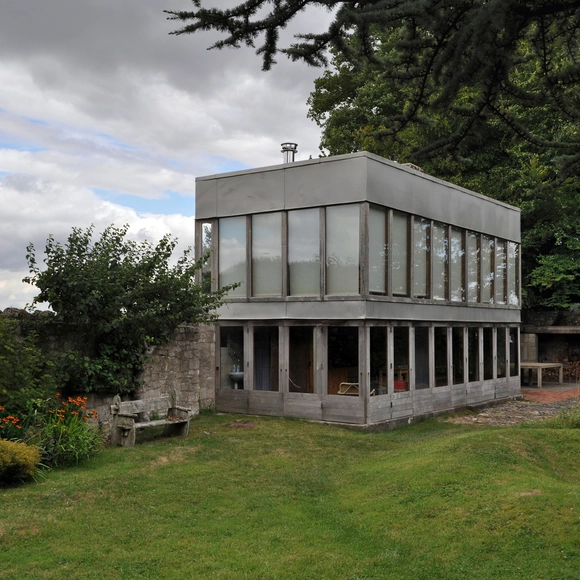
Nestled near the ruins of Fonthill Abbey in the English countryside, Upper Lawn Pavilion — also known as the Solar Pavilion — is a modest yet profound architectural experiment by Alison and Peter Smithson. Built between 1959 and 1962 as a weekend retreat and laboratory for ideas, the pavilion embodies their ethos of economy, material honesty, and respect for context, reflecting the pioneering spirit of New Brutalism.

Upper Lawn's thoughtful interplay between the new and the existing is particularly compelling. Built on the remains of an 18th-century English farmhouse, the pavilion repurposes thick masonry walls from the original structure, incorporating elements such as the well, trees, and lawn into its design. Using prefabricated materials like timber, glass, and aluminum, the Smithsons constructed a light-filled space that harmonizes with its surroundings, embodying their principle of "as found architecture" — a concept rooted in honoring and adapting to preexisting conditions rather than imposing on them.

Upper Lawn: A Manifestation of Alison and Peter Smithson's Architectural Vision - Image 1 of 4Upper Lawn: A Manifestation of Alison and Peter Smithson's Architectural Vision - Image 2 of 4Upper Lawn: A Manifestation of Alison and Peter Smithson's Architectural Vision - Image 3 of 4Upper Lawn: A Manifestation of Alison and Peter Smithson's Architectural Vision - Image 4 of 4Upper Lawn: A Manifestation of Alison and Peter Smithson's Architectural Vision - More Images+ 11

A Compact Yet Fundamental Survey of the Modern Movement: In Conversation with Kenneth Frampton

If there is one book every architecture student must have on their shelf, it must be an architectural history. There is no more comprehensive yet compact alternative than Kenneth Frampton's Modern Architecture: A Critical History, originally published in 1980 by Thames & Hudson. Its much-expanded latest fifth 734-page, 813-illustration edition came out in 2020. In 2023, I discussed the book at length with the author in a video interview, now available on YouTube.

Regarding one compact yet fundamental survey of the evolution of the Modern movement, Modern Architecture: A Critical History is unquestionably the most authoritative, complete, and in-depth chronicle. The most valuable addition to the new book is the introduction of new chapters focusing on regions such as Canada, Mexico, Colombia, Australia, China, India, and Sri Lanka, among others. These chapters shed light on many before-overlooked practices that operated outside of traditional centers of power, namely Western Europe, the United States, and Japan.

A Compact Yet Fundamental Survey of the Modern Movement: In Conversation with Kenneth Frampton - Image 1 of 4A Compact Yet Fundamental Survey of the Modern Movement: In Conversation with Kenneth Frampton - Image 2 of 4A Compact Yet Fundamental Survey of the Modern Movement: In Conversation with Kenneth Frampton - Image 3 of 4A Compact Yet Fundamental Survey of the Modern Movement: In Conversation with Kenneth Frampton - Image 4 of 4A Compact Yet Fundamental Survey of the Modern Movement: In Conversation with Kenneth Frampton - More Images+ 5

Pioneers of Architecture Criticism: 5 Women Who Are Shaping the Built Environment Through Words

Architecture criticism and journalism are often expected to announce "the good, the bad, and the ugly" in architecture and the built environment. Its purposes go however further than that. As Michael Sorkin put it, "seeing beyond the glittering novelty of form, it is criticism's role to assess and promote the positive effects architecture can bring to society and the wider world". In other words, by telling us what they are seeing, critics are also showing us where to look in order to identify and address the issues plaguing our built environment.

The field of architecture journalism has been led by female writers even in times when the pursuit of a career in architecture was discouraged and inaccessible for women. Ada Louise Huxtable established the profession of architecture journalism by holding the first full-time position of architecture critic at a general-interest American newspaper. In 1970, she also received the first-ever Pulitzer Prize for criticism. Esther McCoy started her career as a draughtswoman at an architecture office, yet, because of her gender, she was discouraged from training as a professional architect despite her ambitions to study the field. Through her writings, she managed to bring attention to the overlooked architectural scene of the American West Coast and advocate for the values of regional Modernism.

Pioneers of Architecture Criticism: 5 Women Who Are Shaping the Built Environment Through Words - Image 1 of 4Pioneers of Architecture Criticism: 5 Women Who Are Shaping the Built Environment Through Words - Image 2 of 4Pioneers of Architecture Criticism: 5 Women Who Are Shaping the Built Environment Through Words - Image 3 of 4Pioneers of Architecture Criticism: 5 Women Who Are Shaping the Built Environment Through Words - Image 4 of 4Pioneers of Architecture Criticism: 5 Women Who Are Shaping the Built Environment Through Words - More Images+ 6

Iwona Buczkowska and Angela Davis Receive the Jane Drew and Ada Louise Huxtable Prizes 2023

The Jane Drew Prize for Architecture 2024 and the Ada Louise Huxtable Prize for Contribution to Architecture 2024 have been awarded to Polish-French architect Iwona Buczkowska and American political activist and author Angela Davis, respectively. Honoring their work and commitment to their practices, the awards highlight their efforts to raise the profile of women in architecture. The Jane Drew Prize celebrates Buczkowska’s innovative approach to social housing and public buildings in France. Meanwhile, the Ada Louise Huxtable Prize recognizes Angela Davis’s leadership in the movement to abolish the prison system.

Paying Tribute to the Influential Architects We Have Lost in 2023

As we step into the new year, we take a moment to reflect on the lasting impact of celebrated architects, designers, and curators who passed away in 2023. This past year witnessed the departure of influential figures who, through their talent and dedication, left an indelible mark on the built environment. Some embarked on their careers with bold gestures that reshaped architectural paradigms, while others worked quietly, placing a profound focus on the human experience or the invisible figures of out profession.

This reflective pause allows us to acknowledge the enduring legacy of personalities such as India's first Pritzker Prize Laureate, Balkrishna Doshi, the tireless women’s rights advocate Beverly Willis, the first curator of the Venice Architecture Biennale, Paolo Portoghesi, writer, critic and curator Jean-Louis Cohen, and many more.

Paying Tribute to the Influential Architects We Have Lost in 2023 - Image 5 of 4Paying Tribute to the Influential Architects We Have Lost in 2023 - Image 18 of 4Paying Tribute to the Influential Architects We Have Lost in 2023 - Image 43 of 4Paying Tribute to the Influential Architects We Have Lost in 2023 - Image 23 of 4Paying Tribute to the Influential Architects We Have Lost in 2023 - More Images+ 49

Architecture and Communication: Dissemination, Curators and Architecture News

In 1999, Birgit Lohmann and Massimo Mini co-founded designboom, self-proclaimed as the "first online architecture and design magazine." Seven years later, Facebook transitioned from Ivy League universities to massive audiences, while the first tweet was posted on formerly-known Twitter. Sixteen years have passed since these milestones.

While 16 years may be a short period in architecture, digital media and social networks are far from being considered emergent in the history of the internet. In fact, they form the core of the current Web 2.0 model, characterized by a dual interaction between content producers and consumers: sharing, liking, remixing, and reposting.

Indeed, the speed and magnitude of the transformations that digital media have undergone, and in turn, driven, provide the opportunity to begin documenting the history of the digital era and its impact on architecture.

Can Architectural Journalism Shape the Future of the Profession?

Koolhaas' journalism work won him fame in architecture before he completed a single building. The switch from storyteller to architect was more a change in the script than a professional shift. He pointed out that "[architecture] is a form of scriptwriting that implicitly describes human and spatial relationships." Restating the role of architecture in defining daily life beyond buildings and cities' construction, architecture is also a written and spoken tool capable of explaining daily worldwide events, giving voices to unspoken projects, and actively shaping the future of the architect's role. 

Can Architectural Journalism Shape the Future of the Profession? - Image 1 of 4Can Architectural Journalism Shape the Future of the Profession? - Image 2 of 4Can Architectural Journalism Shape the Future of the Profession? - Image 3 of 4Can Architectural Journalism Shape the Future of the Profession? - Image 4 of 4Can Architectural Journalism Shape the Future of the Profession? - More Images+ 1

“As Architects, We Don’t Discover Our Identity, We Construct It”: In Conversation with Rahul Mehrotra

Rahul Mehrotra is a practicing architect based in Boston and Mumbai and he has been teaching at Harvard’s GSD where he is currently Chair of the Department of Urban Planning and Design and Director of the Master in Architecture in Urban Design Degree Program. Born in 1959, Mehrotra grew up in Lucknow, a city in Northern India and an important cultural and artistic hub. His father was a manager at a large machine tool company. The family moved a lot following Mehrotra senior’s frequent promotions, which led to changing residences owned by his company. Besides a few years in Lucknow and Delhi, they lived in different neighborhoods within Mumbai.

“As Architects, We Don’t Discover Our Identity, We Construct It”: In Conversation with Rahul Mehrotra - Image 1 of 4“As Architects, We Don’t Discover Our Identity, We Construct It”: In Conversation with Rahul Mehrotra - Image 2 of 4“As Architects, We Don’t Discover Our Identity, We Construct It”: In Conversation with Rahul Mehrotra - Image 3 of 4“As Architects, We Don’t Discover Our Identity, We Construct It”: In Conversation with Rahul Mehrotra - Image 4 of 4“As Architects, We Don’t Discover Our Identity, We Construct It”: In Conversation with Rahul Mehrotra - More Images+ 25

The Fetishization of Architecture: the Object Above the Subject and Processes

Subscriber Access | 

The philosopher and sociologist Henri Lefebvre coined the notion of "production of space" in 1974, breaking with the vision of space as a container or scenario of objects and social relations, to move towards space understood as a process. From this vision based on the Marxist tradition, space is a product and a producer of social relations and processes.

The Fetishization of Architecture: the Object Above the Subject and Processes - Image 1 of 4The Fetishization of Architecture: the Object Above the Subject and Processes - Image 2 of 4The Fetishization of Architecture: the Object Above the Subject and Processes - Image 3 of 4The Fetishization of Architecture: the Object Above the Subject and Processes - Image 4 of 4The Fetishization of Architecture: the Object Above the Subject and Processes - More Images+ 9

Kazuyo Sejima and Phyllis Lambert Are the Recipients of the 2023 Jane Drew and Ada Louise Huxtable Prizes Celebrating Women in Architecture

SANAA co-founder Kazuyo Sejima and influential Canadian architect Phyllis Lambert have been awarded the Jane Drew and Ada Louise Huxtable prizes, respectively, as a recognition of their work and commitment to design excellence and for raising the profile of women in architecture. The Jane Drew Prize for Architecture commends Kazuyo Sejima for her achievements as an architect, while the Ada Louise Huxtable Prize recognizes Phyllis Lamber’s contribution to the wider architectural industry. The two awards are presented by UK-based publications Architects’ Journal and The Architectural Review.

Kazuyo Sejima and Phyllis Lambert Are the Recipients of the 2023 Jane Drew and Ada Louise Huxtable Prizes Celebrating Women in Architecture - Image 1 of 4Kazuyo Sejima and Phyllis Lambert Are the Recipients of the 2023 Jane Drew and Ada Louise Huxtable Prizes Celebrating Women in Architecture - Image 2 of 4Kazuyo Sejima and Phyllis Lambert Are the Recipients of the 2023 Jane Drew and Ada Louise Huxtable Prizes Celebrating Women in Architecture - Image 3 of 4Kazuyo Sejima and Phyllis Lambert Are the Recipients of the 2023 Jane Drew and Ada Louise Huxtable Prizes Celebrating Women in Architecture - Image 4 of 4Kazuyo Sejima and Phyllis Lambert Are the Recipients of the 2023 Jane Drew and Ada Louise Huxtable Prizes Celebrating Women in Architecture - More Images+ 1