1. ArchDaily
  2. Ephemeral Architecture

Ephemeral Architecture: The Latest Architecture and News

"Calibrated Instability": Daryan Knoblauch on Building With Tension, Time, and Light

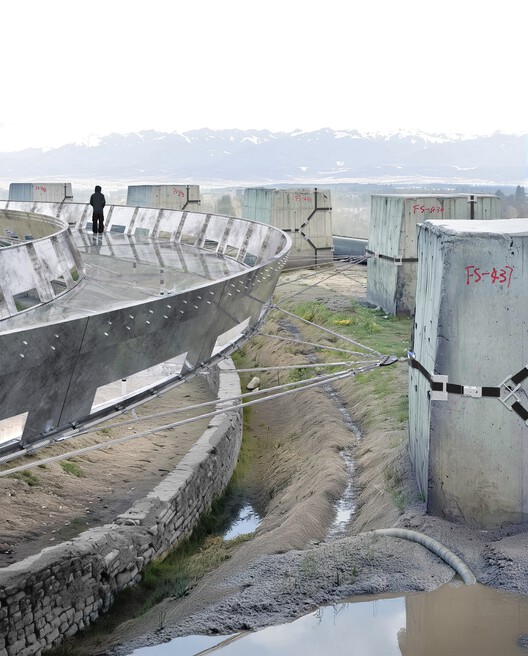
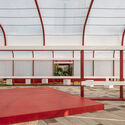
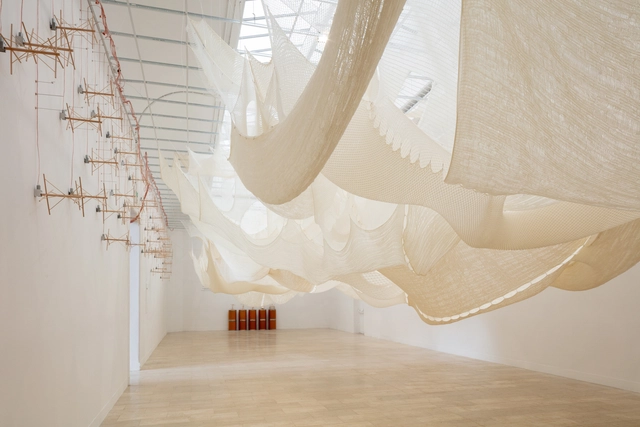
Daryan Knoblauch's work sits at the intersection of architecture and live cultural production, with a focus on how space is made legible through tension and atmosphere. Rather than treating temporary work as a lesser category of architecture, Knoblauch approaches installations, stages, and event architectures as full disciplinary problems—where enclosure, stability, light, and movement must be resolved with the same seriousness as any building, often under tighter constraints and faster timelines.

Across projects, a consistent thread is the productive tension between high-modern precision and an intentionally raw clarity of assembly. Membranes and lightweight systems are not deployed as surface effects, but as structural and spatial instruments—tuned to wind, load, and occupation, and calibrated to produce a sublimity that is felt as much as it is seen. Here, ephemerality is not simply a duration, but a design condition: temporality makes forces—weather, wear, performance—more visible, and demands an ethic of making that is both exacting and adaptable.

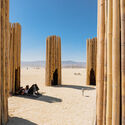
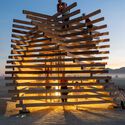
"Calibrated Instability": Daryan Knoblauch on Building With Tension, Time, and Light - Image 1 of 4"Calibrated Instability": Daryan Knoblauch on Building With Tension, Time, and Light - Image 2 of 4"Calibrated Instability": Daryan Knoblauch on Building With Tension, Time, and Light - Image 3 of 4"Calibrated Instability": Daryan Knoblauch on Building With Tension, Time, and Light - Image 4 of 4Calibrated Instability: Daryan Knoblauch on Building With Tension, Time, and Light - More Images+ 4

What Textiles and Translucency Bring to Public Space: 5 Lightweight Interventions

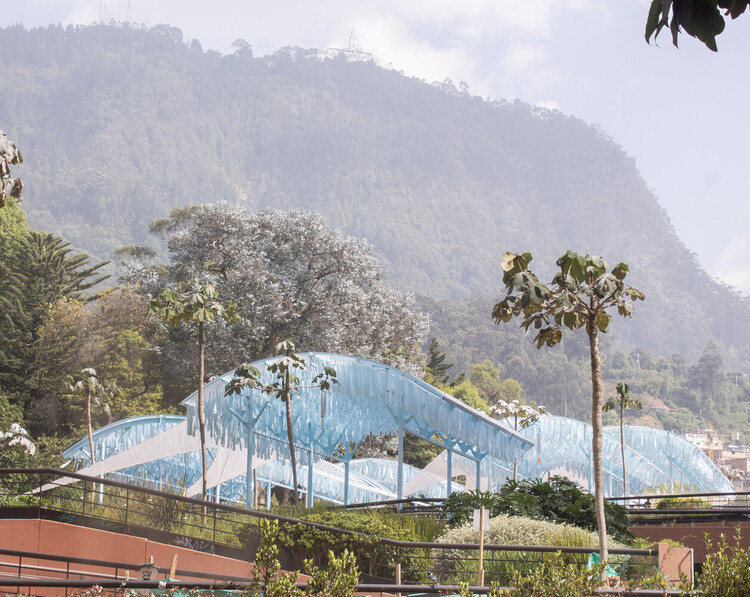
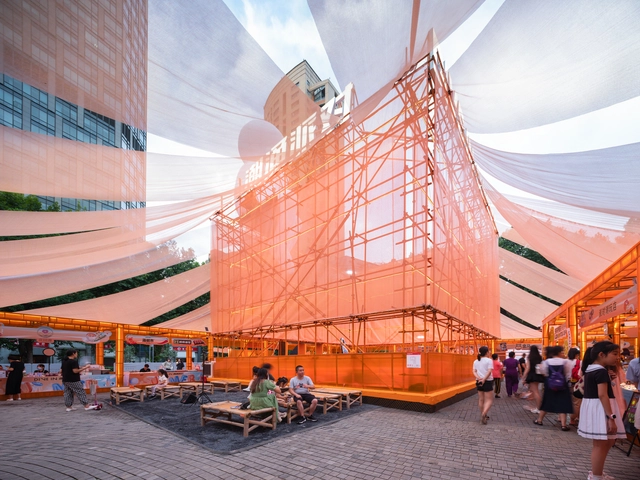
What do lightweight materials bring to public space with an ethical, ecological, and non-extractive design principle? Various textile textures offer a point of entry, being closer to the body than heavy conventional structural materials. Through its flexibility and responsiveness, it enables a form of soft enclosure rather than a fixed boundary in architectural space. Responding to minimal environmental stimuli, the fabric brings continuous movements into space. When layered or assembled, it produces gradations of density, depth, and enclosure, while recent innovative fabrication technologies extend the possibilities of its form and structural durability.
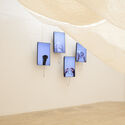
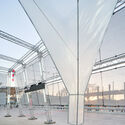
Semi-transparent materials further mediate the conditions of visual permeability and bodily experience of the space. By transmitting and filtering light, they blur clear separations between interior and exterior, solid and void, creating thresholds that are neither fully open nor fully enclosed, but constantly in negotiation. Reinterpreting structure in urban space through lightweight, translucency, and softness opens up alternative modes of spatial perception and bodily engagement.

What Textiles and Translucency Bring to Public Space: 5 Lightweight Interventions - Image 1 of 4What Textiles and Translucency Bring to Public Space: 5 Lightweight Interventions - Image 2 of 4What Textiles and Translucency Bring to Public Space: 5 Lightweight Interventions - Image 3 of 4What Textiles and Translucency Bring to Public Space: 5 Lightweight Interventions - Image 4 of 4What Textiles and Translucency Bring to Public Space: 5 Lightweight Interventions - More Images+ 15

The City as a Laboratory of Processes: A Decade of Urban Experimentation with Concéntrico

Subscriber Access | 

As cities continue to develop, we are seeing ever more well-planned, thoroughly executed, and tightly regulated approaches to shaping urban centres and their surrounding spaces—for better and for worse. As codes, restrictions, and guidelines improve and tighten, urban environments become safer, more balanced, and less prone to surprise. Yet the flip side is that highly managed districts can drift toward over-order and sanitisation, shedding the messy, accretive character that once produced alleyways, residual spaces, and unexpected sequences of movement—conditions often born from ongoing community improvisation in the grey zones of regulation.

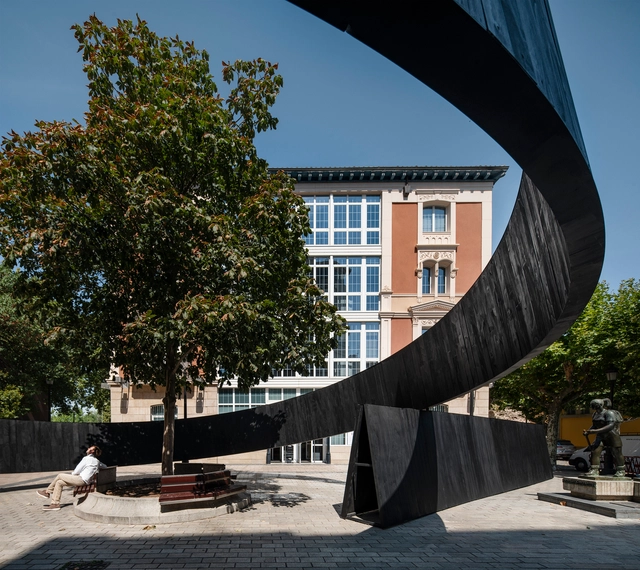
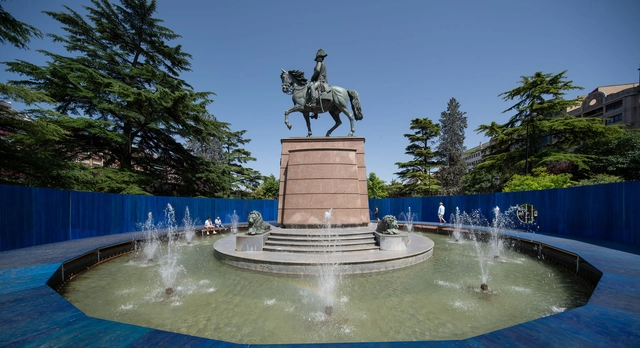
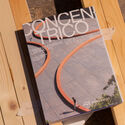
In response, a growing number of initiatives around the world are proposing short-term urban installations that test alternate futures for the city. These works aim to provoke dialogue between what the city is and what it could offer its communities through thoughtful, context-specific spatial practices. One notable example is Concéntrico, the international festival in Logroño, Spain, conceived as an urban innovation laboratory. Marking its tenth edition, the festival is about to publish Concéntrico: Urban Innovation Laboratory, a book that surveys a decade of urban design and collective transformation shaped through successive editions of the festival. Its launch is paired with an international tour designed to share a decade of insights on collective transformation and design.

The City as a Laboratory of Processes: A Decade of Urban Experimentation with Concéntrico - Image 1 of 4The City as a Laboratory of Processes: A Decade of Urban Experimentation with Concéntrico - Image 2 of 4The City as a Laboratory of Processes: A Decade of Urban Experimentation with Concéntrico - Image 3 of 4The City as a Laboratory of Processes: A Decade of Urban Experimentation with Concéntrico - Image 4 of 4The City as a Laboratory of Processes: A Decade of Urban Experimentation with Concéntrico - More Images+ 32

From Symbols to Architecture: In Conversation with EXTUDIO, ENORME Studio, and Smart and Green Design, Authors of the Spanish Pavilion at Expo Osaka 2025

Subscriber Access | 

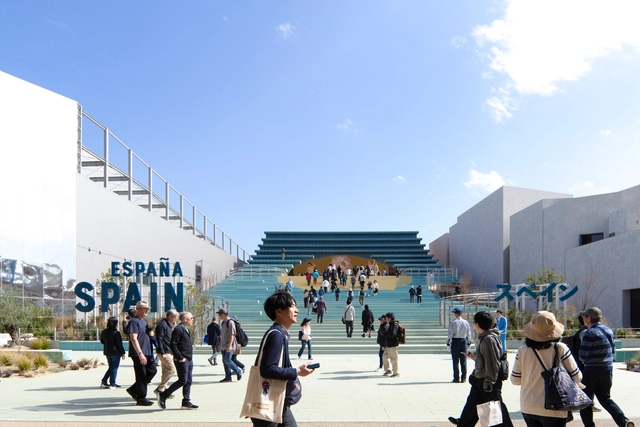
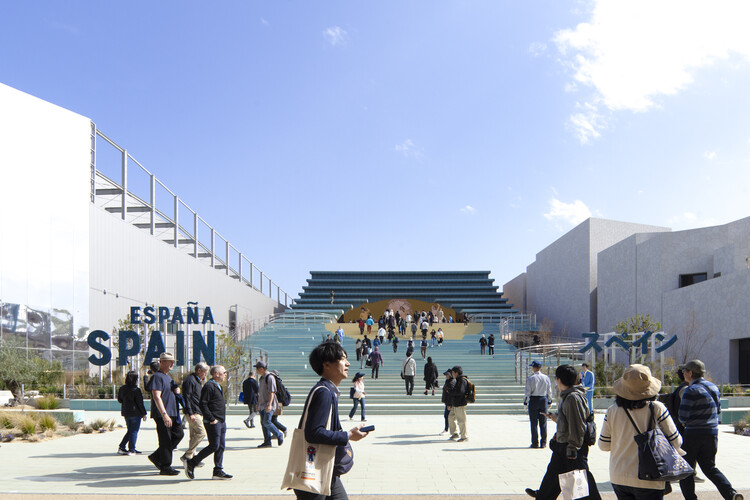
Since its opening in April, Expo Osaka has welcomed millions of visitors from around the world, standing as a true showcase of innovation, architecture, and design. Among its highlights is the Grand Ring, designed by Japanese architect Sou Fujimoto, considered the largest timber architectural structure in the world. Under the theme of Expo 2025 — “Designing Future Society for Our Lives”, along with Saving Lives, Empowering Lives, and Connecting Lives — more than 150 countries have used their pavilions to address key topics in contemporary architecture, such as circular construction, cultural memory, and innovation and technology aimed at shaping a sustainable built environment for the future.

From Symbols to Architecture: In Conversation with EXTUDIO, ENORME Studio, and Smart and Green Design, Authors of the Spanish Pavilion at Expo Osaka 2025 - Image 1 of 4From Symbols to Architecture: In Conversation with EXTUDIO, ENORME Studio, and Smart and Green Design, Authors of the Spanish Pavilion at Expo Osaka 2025 - Image 2 of 4From Symbols to Architecture: In Conversation with EXTUDIO, ENORME Studio, and Smart and Green Design, Authors of the Spanish Pavilion at Expo Osaka 2025 - Image 3 of 4From Symbols to Architecture: In Conversation with EXTUDIO, ENORME Studio, and Smart and Green Design, Authors of the Spanish Pavilion at Expo Osaka 2025 - Image 4 of 4From Symbols to Architecture: In Conversation with EXTUDIO, ENORME Studio, and Smart and Green Design, Authors of the Spanish Pavilion at Expo Osaka 2025 - More Images+ 26

Concéntrico 2025: The Politics of Urban Presence

Subscriber Access | 

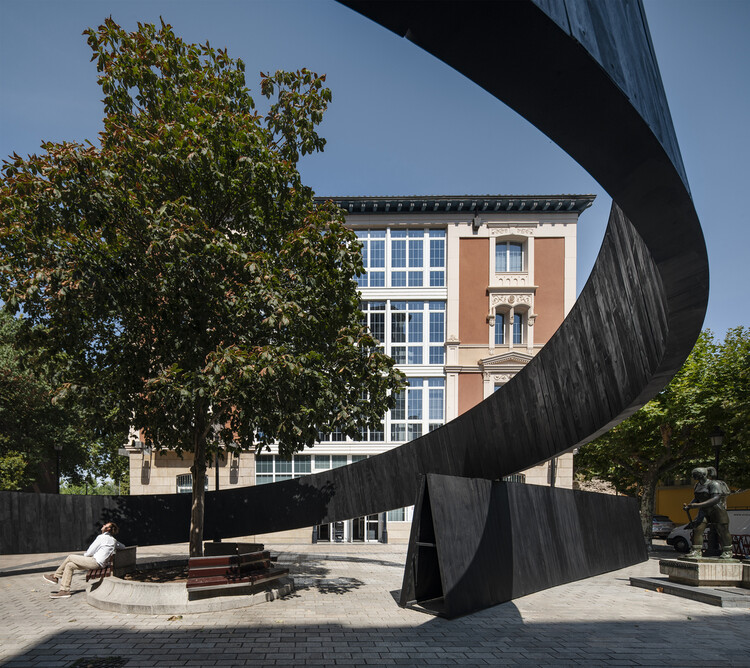
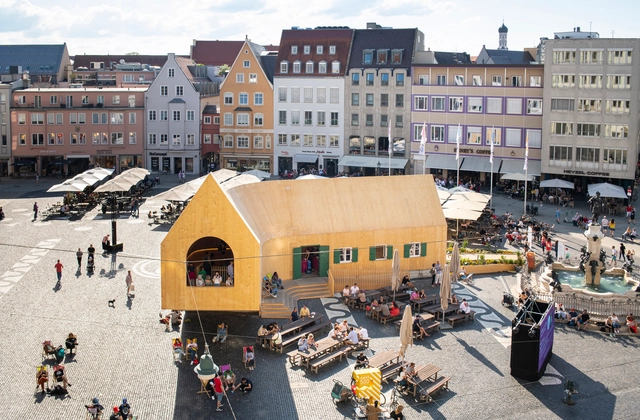
Every June, the Spanish city of Logroño transforms into a space of architectural dialogue, opening its streets, plazas, riverbanks, and traffic islands to temporary structures that redefine how cities are inhabited. For ten editions, Concéntrico has worked not as a specialized fair or an architecture biennale, but as a portable museum — a curatorial gesture that brings a dispersed collection of contemporary architecture into public space. Set in a city suspended between arid plains and distant mountains, far from the circuits of capital cities and cultural institutions, Concéntrico presents itself as a temporary promise. It's a reminder that even cities that are often overlooked can host architecture that is current, diverse, and speculative. In this sense, the festival is less about celebration and more about activation.

But beyond its curatorial logic, Concéntrico operates as a political structure. In the ancient sense of polis, it invites citizens, architects, and institutions to reassess what public space can be. The interventions offer speculative proposals for urban life that reveal what is missing, what is possible, and what should be questioned. A temporary pool over a fountain, a bathhouse in a roundabout, or a shared meal on a major avenue are not just spatial gestures — they are political statements, asking how urban infrastructure might be redirected from control to care, from efficiency to encounter. In that way, the festival becomes not just a reflection of the city, but an instrument for its transformation.

Concéntrico 2025: The Politics of Urban Presence - Image 1 of 4Concéntrico 2025: The Politics of Urban Presence - Image 2 of 4Concéntrico 2025: The Politics of Urban Presence - Image 3 of 4Concéntrico 2025: The Politics of Urban Presence - Image 4 of 4Concéntrico 2025: The Politics of Urban Presence - More Images+ 58

Learning from Artists: New Perspectives on Public Space

Public space has long been central to architectural thought, often framed in terms of planning, infrastructure, and regulation. From Haussmann's Paris to contemporary masterplans, architects have worked to define and formalise collective life through spatial tools. Yet, outside of these frameworks, artists have continuously offered alternative ways of understanding and inhabiting public space—ways that rely not on construction or permanence, but on presence, perception, and participation. Through actions, objects, or atmospheres, artists engage the city as a site of friction and imagination. These gestures challenge architectural conventions and invite artists to reconsider public space not as a solved form, but as a contingent and open process.

Learning from Artists: New Perspectives on Public Space - Image 1 of 4Learning from Artists: New Perspectives on Public Space - Image 2 of 4Learning from Artists: New Perspectives on Public Space - Image 3 of 4Learning from Artists: New Perspectives on Public Space - Image 4 of 4Learning from Artists: New Perspectives on Public Space - More Images+ 18

Serbia’s Wool Installation Explores Circular Design at Venice Architecture Biennale 2025

The Serbian Pavilion at the 19th Venice Architecture Biennale consists of an immersive installation made of wool. The exhibition, titled Unraveling: New Spaces, was curated by architect Slobodan Jović and designed by an interdisciplinary team composed of Davor Ereš, Jelena Mitrović, Igor Pantić, Sonja Krstić, Ivana Najdanović, and Petar Laušević. The interior space of the Pavilion, located in the Biennale's Giardini, is occupied by an ephemeral installation that follows the principles of circular design, effectively producing no waste. The installation consists of a broad woven wool fabric that gradually unknits according to a guided choreography of algorithmic precision, completely disassembling by the end of the Biennale's exhibition.

Serbia’s Wool Installation Explores Circular Design at Venice Architecture Biennale 2025 - Image 1 of 4Serbia’s Wool Installation Explores Circular Design at Venice Architecture Biennale 2025 - Image 2 of 4Serbia’s Wool Installation Explores Circular Design at Venice Architecture Biennale 2025 - Image 3 of 4Serbia’s Wool Installation Explores Circular Design at Venice Architecture Biennale 2025 - Image 4 of 4Serbia’s Wool Installation Explores Circular Design at Venice Architecture Biennale 2025 - More Images+ 64

Serpentine Reveals New Details of Marina Tabassum's "A Capsule in Time" 2025 Pavilion

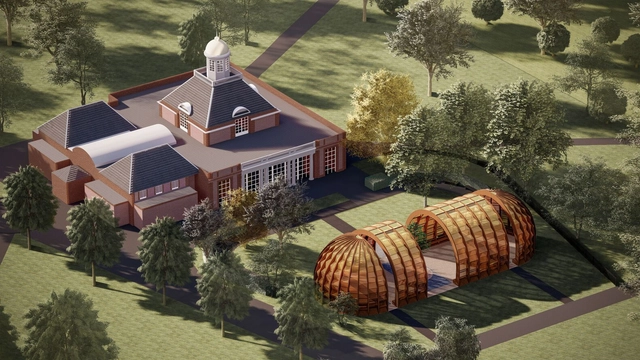
Bangladeshi architect and educator Marina Tabassum and her firm, Marina Tabassum Architects, have been selected to design the 2025 Serpentine Pavilion. Titled "A Capsule in Time," the proposal takes inspiration from the ephemeral nature of architecture in the Bengal Delta, incorporating a semi-transparent structure intended to evoke a sense of community and connection. The Pavilion will open to the public on June 6th, until 26 October 2025, with a press preview two days before the opening. Tabassum's pavilion will mark the 25th year since the Serpentine's first commission of Zaha Hadid's inaugural structure in Hyde Park in 2000.

Pavilions in Urban Spaces: On the Experimentation, Recycling, and Reuse of Materials

Subscriber Access | 

How do pavilions emerge in architecture? What role do they play in urban spaces? Beyond the multiple interpretations that exist around the world, the pavilion, as an architectural principle and typology, tends toward extroversion, often associated with a centrifugal nature and visual openness toward the horizon, which is linked to its origins as a tent offering shelter from the elements. Pavilions are usually identified as isolated and independent structures that can promote lateral openings in the urban space, panoramic or introspective views, technological reflections, and material experiments that are recognizable from the outside or once inside.

Pavilions in Urban Spaces: On the Experimentation, Recycling, and Reuse of Materials - Image 1 of 4Pavilions in Urban Spaces: On the Experimentation, Recycling, and Reuse of Materials - Image 2 of 4Pavilions in Urban Spaces: On the Experimentation, Recycling, and Reuse of Materials - Image 3 of 4Pavilions in Urban Spaces: On the Experimentation, Recycling, and Reuse of Materials - Image 4 of 4Pavilions in Urban Spaces: On the Experimentation, Recycling, and Reuse of Materials - More Images+ 26

An Interconnected Mushroom Grove and a Shelter from the Desert Sun: 8 Installations at Burning Man 2024

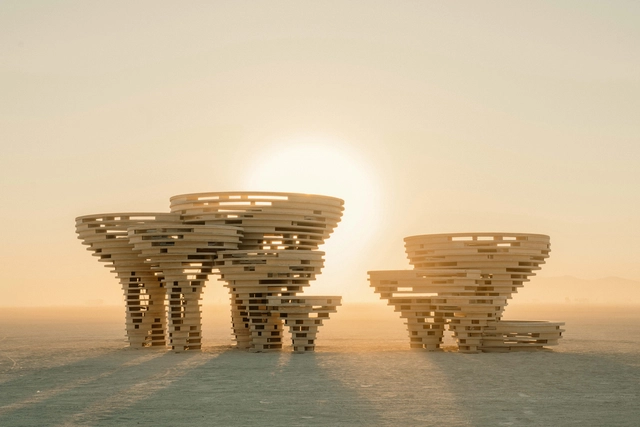
Known for its unconventional art installations and striking desert setting, the Burning Man festival has concluded this year with an array of temporary installations spread across the Black Rock Desert in Nevada. The festival's 2024 theme, "Curiouser & Curiouser," inspired by Lewis Carroll's Alice in Wonderland, encouraged participants to embrace wonder and whimsy.

At Burning Man, a tapestry of themes emerges through diverse installations, from reflections on connectivity and isolation to explorations of time and space. Installations like Nebula Shroom Grove and the Temple of Together emphasize community and unity, inviting interaction and participation. Pieces like "I'm Fine" and Tree Circle delve into universal emotions and humanity's connection to the infinite, while works like Matter Out of Time and The End of Time play with perceptions of time and reality.

An Interconnected Mushroom Grove and a Shelter from the Desert Sun: 8 Installations at Burning Man 2024 - Image 1 of 4An Interconnected Mushroom Grove and a Shelter from the Desert Sun: 8 Installations at Burning Man 2024 - Image 2 of 4An Interconnected Mushroom Grove and a Shelter from the Desert Sun: 8 Installations at Burning Man 2024 - Image 3 of 4An Interconnected Mushroom Grove and a Shelter from the Desert Sun: 8 Installations at Burning Man 2024 - Image 4 of 4An Interconnected Mushroom Grove and a Shelter from the Desert Sun: 8 Installations at Burning Man 2024 - More Images+ 36

First Look at Burning Man 2024: Exploring Curiouser & Curiouser Art Installations

Every August, the Black Rock Desert in Nevada transforms into a vibrant city for Burning Man, a week-long festival that culminates in the ceremonial burning of a large wooden effigy. Established in 1986, the festival is renowned for its unconventional art installations and striking desert setting. While varied in their expression, the installations follow a central theme of the year. For this edition, the title “Curiouser & Curiouser” takes inspiration from the Mad Hatter from Lewis Carroll’s Alice in Wonderland, prompting participants to engage with wonder and embrace the whimsical and mysterious. This year’s central temple installation is designed by Caroline Ghosn to represent togetherness and mutual respect. Following a Burning Man Tradition, the temple design is selected following an international competition.

Ephemeral Architectures: Engaging Communities through Temporary Structures

Subscriber Access | 

Ephemeral architectures, characterized by their temporary and flexible nature, have emerged as powerful tools for revitalizing urban spaces and fostering architectural creativity. These transient installations transform public areas, engaging communities, and prompting reflections on the potential futures of our cities. By temporarily transforming environments, ephemeral architectures encourage both architects and the public to reimagine the possibilities of urban living. This dynamic interplay, between the temporary and the permanent, challenges traditional architectural practices and opens up new avenues for sustainable and inclusive urban development.

Ephemeral Architectures: Engaging Communities through Temporary Structures - Image 1 of 4Ephemeral Architectures: Engaging Communities through Temporary Structures - Image 2 of 4Ephemeral Architectures: Engaging Communities through Temporary Structures - Image 3 of 4Ephemeral Architectures: Engaging Communities through Temporary Structures - Image 4 of 4Ephemeral Architectures: Engaging Communities through Temporary Structures - More Images+ 32

TAC! Urban Architecture Festival 2024: Discover the Pavilion by Óscar Cruz García and Pablo Paradinas Sastre in Vigo, Spain

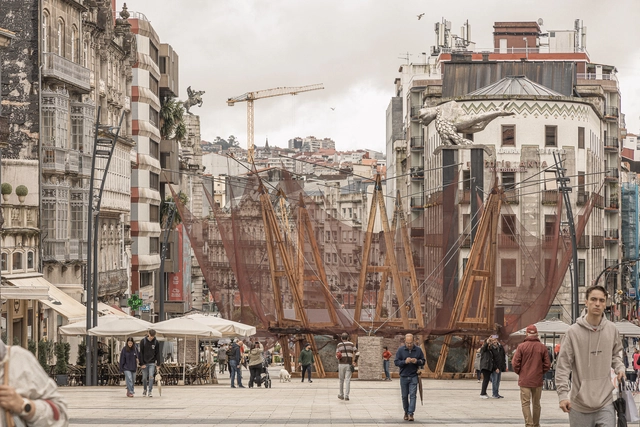
Until July 14, 2024, the pavilion ¡Qué faena(r)! ('What a Task!') by Óscar Cruz García and Pablo Paradinas Sastre will be installed at Puerta del Sol in Vigo, one of the two winning temporary pavilions of the third edition of TAC! Urban Architecture Festival. Reflecting on public spaces and the regeneration of urban centers as the main theme of this new edition, the proposal combines tradition and innovation, involving local producers and artisans during the process and simultaneously reusing materials considered waste, such as fishing nets, rusty 'bombos,' recovered wood from bateas, and granite blocks that gain a second life after fulfilling their mission in the sea.

Temporary Architecture in India: Marketplaces and Bazaars

Subscriber Access | 

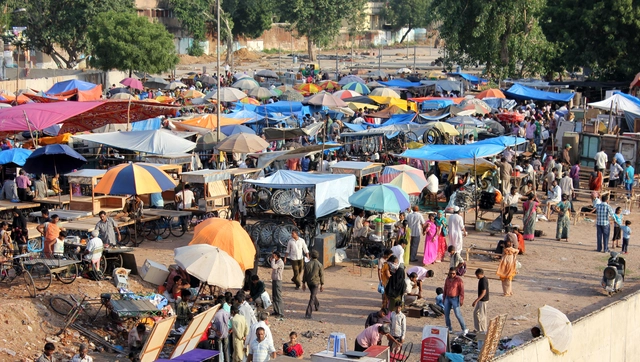
India's urbanscapes are characterized by a negotiation between the formal and the informal; permanence and impermanence. Structured amidst the concrete high-rises and planned neighborhoods, makeshift markets and bazaars form the core of city life. Often composed of sustainable structures, these transient commercial hubs exhibit a form of rudimentary architecture that spreads its roots deep in India's cultural and economic traditions.

The heart of India's informal urbanism lies in its public marketplaces and roadside bazaars that have existed for centuries. These urban zones have a history, believed to have originated from the era of traveling merchants and imperial trade relations. Today, these environments have evolved into dense labyrinths of impermanent shelters made from recycled tin sheets, tarpaulin canopies, and wooden poles. These bazaars organically transform neighborhoods into a choreographed chaos of vendors, goods, and the common public. Weekly markets are usually massive in scale and are set up every few days only to disappear again.

Temporary Architecture in India: Marketplaces and Bazaars - Image 1 of 4Temporary Architecture in India: Marketplaces and Bazaars - Image 2 of 4Temporary Architecture in India: Marketplaces and Bazaars - Image 3 of 4Temporary Architecture in India: Marketplaces and Bazaars - Image 4 of 4Temporary Architecture in India: Marketplaces and Bazaars - More Images

The Paradox of Sustainable Architecture: Durability and Transience

To convey the might and prestige of their empire, the Romans constructed enduring architecture as symbols of their long-lasting reign. Emperors employed grand public works as assertions of their status and reputation. Conversely, Japanese architecture has long embraced ideas of change and renewal, evident in the ritualistic rebuilding of Shinto shrines. A practice, known as shikinen sengu, is observed at Ise Jingu, where the shrine is purposefully dismantled and reconstructed every twenty years. Across the world, philosophies around permanence and impermanence pervaded architectural traditions. Amidst the climate crisis, how do these tenets apply to modern architectural design?

The Paradox of Sustainable Architecture: Durability and Transience - Featured ImageThe Paradox of Sustainable Architecture: Durability and Transience - Image 3 of 4The Paradox of Sustainable Architecture: Durability and Transience - Image 1 of 4The Paradox of Sustainable Architecture: Durability and Transience - Image 2 of 4The Paradox of Sustainable Architecture: Durability and Transience - More Images

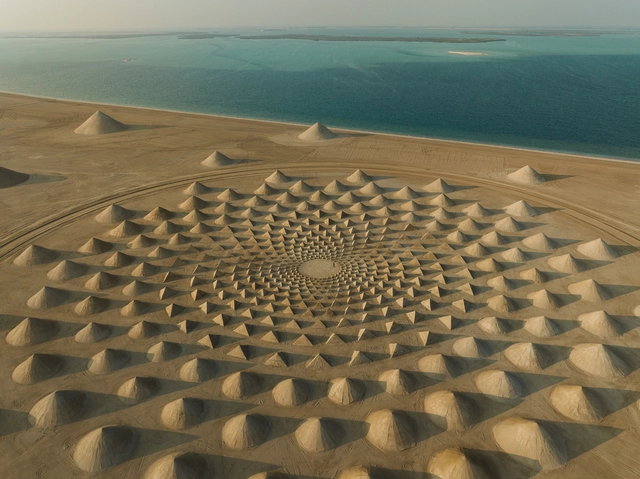
Jim Denevan's Monumental Land Art Debutes in Abu Dhabi

“Self Similar,” a sprawling and immersive land artwork created by Jim Denevan has just debuted in Abu Dhabi, UAE as part of a more extensive city-wide exhibition. Curated by Reem Fadda, Director of Abu Dhabi Culture Programming and Cultural Foundation, along with Alia Zaal Lootah, this city-wide exhibition showcases 35 distinct site-specific artworks by both local and international artists. Scheduled to run until January 30, 2024, the exhibit is a diverse collection aiming to engage audiences.

Jim Denevan's Monumental Land Art Debutes in Abu Dhabi - Image 1 of 4Jim Denevan's Monumental Land Art Debutes in Abu Dhabi - Image 2 of 4Jim Denevan's Monumental Land Art Debutes in Abu Dhabi - Image 3 of 4Jim Denevan's Monumental Land Art Debutes in Abu Dhabi - Image 4 of 4Jim Denevan's Monumental Land Art Debutes in Abu Dhabi - More Images+ 7

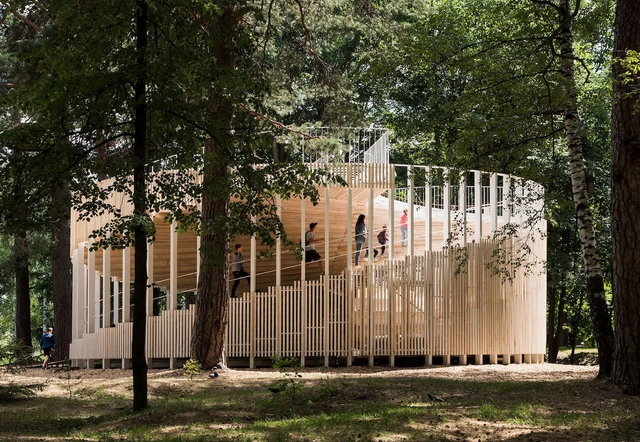
Sustainability and Innovation in Ephemeral Architecture: 15 Wooden Pavilions

Throughout the modern era, pavilion architecture has consistently reflected cutting-edge architectural trends. These temporary or semi-permanent structures, often featured in exhibitions, fairs, cultural events, and sports gatherings, provide a platform for exploring new materials and design concepts. Pavilion designs are intended for easy assembly and disassembly and are typically used for short durations, making it crucial to consider reducing environmental impact without sacrificing aesthetics and innovation. In this endeavor, wood emerges as a key ally.

Sustainability and Innovation in Ephemeral Architecture: 15 Wooden Pavilions - Image 1 of 4Sustainability and Innovation in Ephemeral Architecture: 15 Wooden Pavilions - Image 2 of 4Sustainability and Innovation in Ephemeral Architecture: 15 Wooden Pavilions - Image 3 of 4Sustainability and Innovation in Ephemeral Architecture: 15 Wooden Pavilions - Image 4 of 4Sustainability and Innovation in Ephemeral Architecture: 15 Wooden Pavilions - More Images+ 12

TAC! Urban Architecture Festival 2023 Inaugurates the Mediterranean Pavilion in Valencia

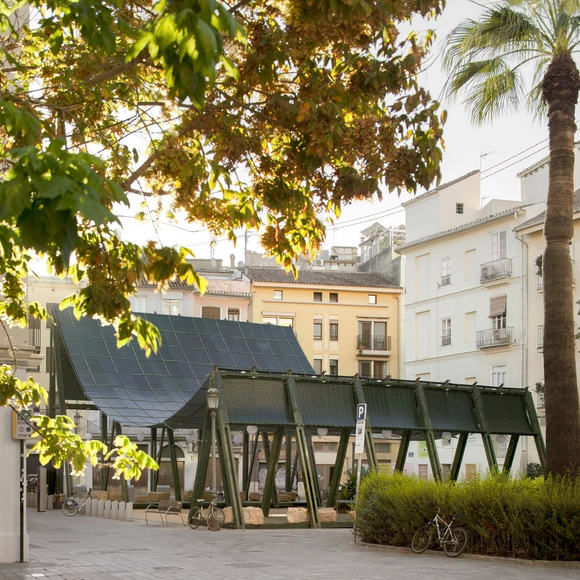
Until October 16, 2023, the second edition of TAC! Urban Architecture Festival will take place in the city of Valencia under the temporary Mediterranean pavilion designed by Manuel Bouzas. Located in the Plaza Músico López Chavarri in the Carmen neighborhood, the pavilion pays homage to vernacular architecture in response to the Mediterranean climate and the role of the Mediterranean shutter, a mechanism that for centuries provided an effective, simple, and lightweight solution for sun protection, allowing habitable spaces to adapt to climatic conditions.