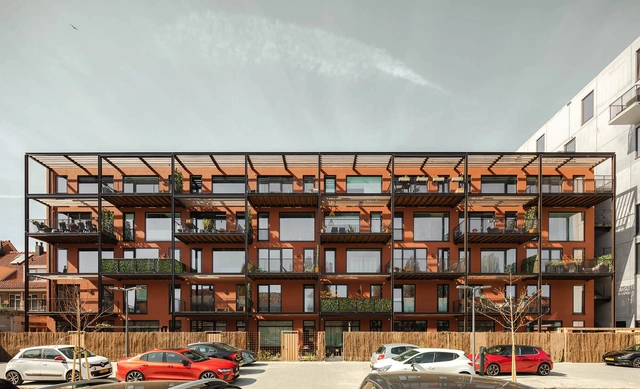
“In recent years, we have been confined to our homes more and more,” says health mentor and entrepreneur, Enitor Joiner. “This has made us more aware of the (dis)comforts of our immediate living environment. For example, sitting still for long periods while working at home leads to physical complaints such as RSI. A poor living environment can also cause stress and and mental challenges. Loneliness is a growing problem in society, and a general lack of knowledge of healthy living patterns has led to an increase in disease. With this in mind, Marc Koehler Architects and I got to work by asking ourselves: how can we create a pleasant living environment that automatically contributes to a healthy lifestyle?”
https://www.archdaily.com/987445/is-comfort-killing-usMarc Koehler Architects and Enitor Joiner
In the architectural conversations taking place today, sustainability is a key topic of interest. Architecture firms embrace the term as a key part of their design ethos, and architecture schools globally have integrated designing “green” architecture as a core component of their curriculums. This sustainability conversation has also filtered down into more individual actions one can take within their immediate context. Online, for instance, guides abound on how you can make your home more eco-friendly and energy-efficient.
Videos
Courtesy of A Broken House, The New Yorker Documentary directed by Jimmy Goldblum
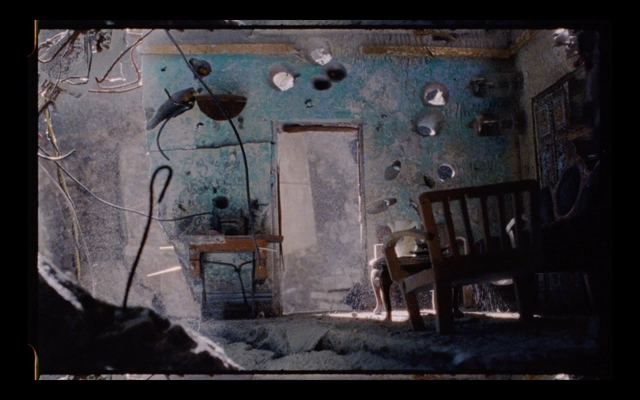
“A Broken House” is a documentary directed by Jimmy Goldblum that highlights the story of Mohamad Hafez, a Syrian native that moved to the US on a single-entry visa to study architecture and was not able to return home. Facing his fate, he channeled his homesickness in his artwork, and started producing miniature sculptures of his hometown, in order to build the “Damascus of his memories”.
“If you can’t get home, why don’t you make home”. Telling the story of the human being that lived within, the architectural project gained a political dimension after the eruption of the Syrian civil war, portraying the extent of the destruction suffered by the city, humanizing refugees, and sharing their stories.
Although the design diversity of private homes often relies on how each project responds to the topography, context, and material availability, the most significant factor of residential architecture is users and what they require in terms of spatial needs and preferences. This user-centric approach has long been practiced, Mies van der Rohe once explained that "the architect must get to know the people who will live in the planned house. From their needs, the rest inevitably follows".
This week’s curated selection of Best Unbuilt Architecture highlights private residential projects submitted by the ArchDaily community. From a private family house nestled in the forests of Russia to a reinvention of Colombia's traditional courtyard typology, this round up of unbuilt projects showcases how architects design private spaces that combine nature, functionality, privacy, and locality. The article also includes projects from Kosovo, Spain, United States, and Serbia.
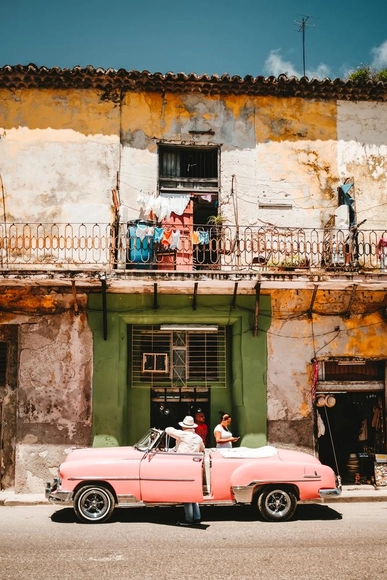
The average age of a home in Cuba is just over 75 years old, and three of them collapse every day.Cuba’s housing crisis is perhaps one of the most unique examples of urban inequity in the world. While the island nation’s extensive history of waves of foreign influence has largely shaped their government, and in turn their public policies and urban planning strategies, they yet have been able to stabilize their long-standing housing crisis- forcing thousands of Cubans to live in derelict homes or public shelters. Now, many questions are being raised about how they will build new housing, repair the existing structures, and revise laws that allow Cubans to have more autonomy in the homeownership process.
In this week's piece by Metropolis, author Kelly Beamon explores in her original article "the patriotism associated with pitched roofs and shares how architects are reimagining this staple of suburban house styles". According to its definition, a gable roof is a classic roof shape, usually in cold or temperate climates, consisting of two roof sections sloping in opposite directions and placed such that the highest, horizontal edges meet to form the roof ridge. Emblematic of the US, this article discusses its return to the urban fabric.
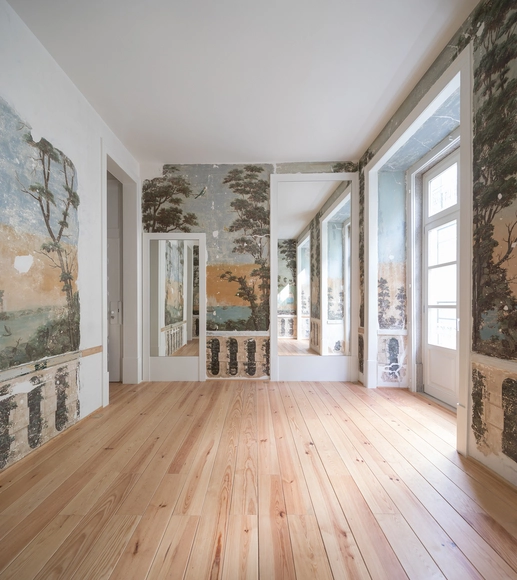
José Adrião. Douradores Apartments Lisbon | 2013–2020. Photo by Nuno Almendra, 2020
"The house is among the first concepts shared by society and architecture", states André Tavares and Pippo Ciorra, curators of the exhibition called At Home: Projects for Contemporary Housing, on display at Garagem Sul / Centro Cultural Belém, in Lisbon. The show, which is the unfolding of another one previously held at the MAXXI Museum in Rome, gathers pieces from the huge collection of the Italian institution and seeks intersections with contemporary Portuguese architectural production. Its main topic – the house, the home – has never been more discussed than right now.
Bringing together houses of different scales, built in diverse locations by various methods and techniques, and designed by Italian, Portuguese and international architects, the exhibition gathers, in groups of three, projects from which it is possible to weave relationships that go beyond geographies and materialities and foster reflections about the future of housing and what the home of tomorrow will look like.
We had the opportunity to talk with Tavares and Ciorra about the exhibition, its motivations and expectations with its opening in the physical venue of Garagem Sul. Read below.
Case Study House 22. Image via Flickr user: mbtrama Licensed under CC BY 2.0
Between 1945 and 1966, the Case Study Houses program, following the Weißenhof-siedlung exposition, commissioned a study of economic, easy-to-build houses. The study included the creation of 36 prototypes that were to be built leading up to post-war residential development. The initiative by John Entenza, editor of Arts & Architecture magazine, brought a team to Los Angeles that featured some of the biggest names in architecture at the time, including Richard Neutra, Charles & Ray Eames, Pierre Koenig, and Eero Saarinen, among others.
The program's experiment not only defined the modern home and set it apart from its predecessors, but it also pioneered new construction materials and methods in residential development that continue to influence international architecture to this day. Take a detailed look at some of the program's most emblematic work together with recommendations for facing contemporary challenges.
Focusing on the different typologies of houses, this week’s curated selection of Best Unbuilt Architecture highlights conceptual projects submitted by the ArchDaily Community. From urban developments to tiny homes, this article explores the topic of residential architecture and presents approaches from all over the world.
Featuring a cabin amidst the verdant forested region of northern Iran, a development in Georgia that offers an 80% recreational space to 20% housing ratio, and a project in Paris that re-questions our urban reality, and rethinks traditional forms of housing, this roundup tackles a multitude of scales. In addition, it underlines a collection of beach houses in Greece, Italy, Argentina, and Latvia each responding to a different landscape and topography. Other ideas underlined include the renovation of existing developments in Moscow, a residential-led transformation of a former factory in Manchester, and a family of blocks grouped around an elevated communal garden in the Netherlands.
Extreme weather and conditions call for contextual architectural approaches. From sandy deserts to cold, icy climates, how we build is intimately tied to location. Drawing from diverse project sites around the world, architects and designers create proposals that construct and organize new ways to live, work and play. These unbuilt projects rethink traditional forms while addressing a wide range of landscape conditions.
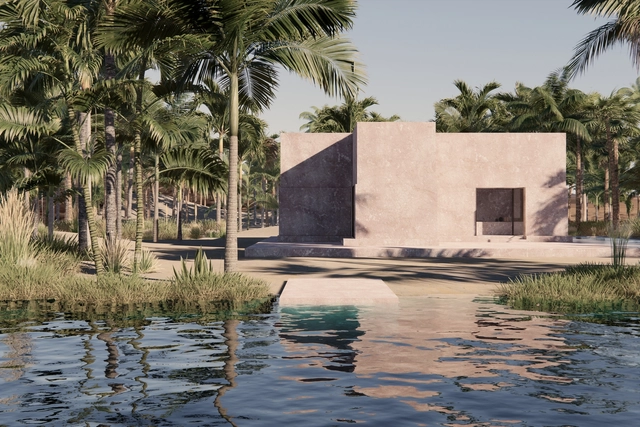
This week’s curated selection of the Best Unbuilt Architecture focuses on diverse typologies in hot and cold climates around the world. Drawn from an array of firms and local contexts, they represent proposals submitted by the ArchDaily Community. They explore everything from generative design through a desert shelter in Siwa and a cave dwelling in China to a coastal development in Spain and a series of igloo habitats for penguins in Antarctica.
ARC House. Image Courtesy of M.E architecture studio
Houses and Villas are the most researched topics on ArchDaily. Putting together a curated selection of conceptual interventions, this week’s Best Unbuilt Architecture focuses on the residential sector. From all over the world, this group presents proposals submitted by our readers.
This article highlights a floating terraces project from India, a lodge in Ethiopia, a seasonal home for an Iranian family in Germany, and a residential compound in Saudi Arabia. Beach houses in Greece, Croatia, and the U.S. are also featured, showcasing different approaches for the same program. Moreover, more futuristic interventions include the Mountain House on the rocky cliffs of British Columbia, and the blue house, an aquarium-like type of home.
This week’s curated selection of best unbuilt architecture features conceptual residential projects submitted by our readers from all around the world. Highlighting innovative designs, approaches, and compositions, this roundup puts together a series of inspiring interventions that offer a fresh look on the typical house structure.
In the following article, ArchDaily has gathered ideas from Poland, France, Hungary, Iran, and the United States. Grouped under one common theme, the feature includes a new take on the typical building complex, an attempt to shorten the transitional gap between a house and an apartment, and a collection of modular residential models that can be implemented anywhere. Moreover, it also showcases Christophe Benichou’s latest intervention, “The Pleated House” located in the Hautes Alpes in France, a hyper-sustainable house on the beach and a structure completely erased and integrated into the natural landscape.
“Home” is a new documentary series created by Apple TV+ that takes viewers on a tour of some of the world’s most intriguing dwellings. The first season, spanning nine episodes, showcases how domestic architecture is being re-evaluated across different contexts and geographical areas, taking radical, innovative, and highly creative forms.
Cabin on the Border / SO? Architecture&Ideas. Image Cortesía de SO?
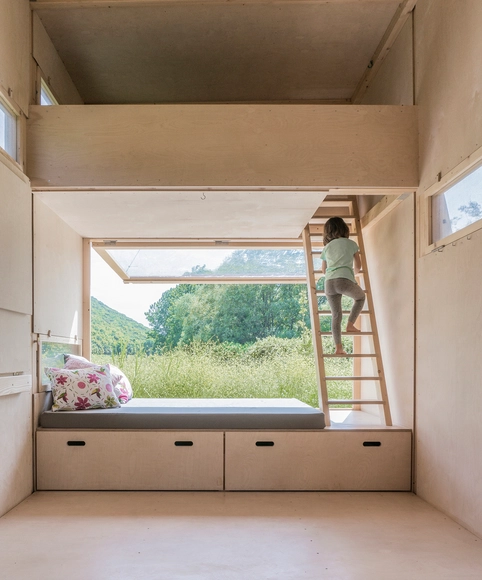
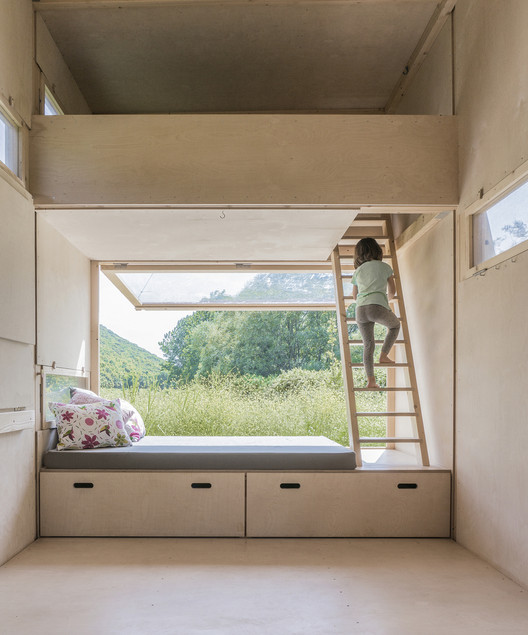
Dense cities mean small homes. With more and more frequency we are forced to adapt to spaces within which some elements simply do not fit. As architects, these restrictions actually provide us with opportunities and remind us that our goal is to give precise solutions to specific problems. Designing with infinite number square meters and/or an unlimited budget is practically unheard of.
What's the key to accommodating everything? Let's review some effective storage solutions for minimum, tight spaces.
Pragmatic Award - Director's Choice. Image Courtesy of HOME Competition 2019
The HOME competition 2019, organized by architectural initiative arch out loud, has released its winning projects. The annual challenge that pushed the limits of adaptability and innovation, asked designers “What is the future of HOME?”
Access to housing, both in the case of purchasing or renting, with any type of financing, is usually one of the most important economic investments in people's lives. It is natural to ask oneself what considerations are necessary in order to have a knowledge base before acting.
Home. Our shelter. Our private space. In an urbanized world with dense megalopolises like Tokyo, Shanghai, and São Paulo, homes are getting smaller and more expensive than ever. If you are claustrophobic, Marie Kondo is your best ally in the quest to earn some extra space. And even though private backyards have become a luxury for most, our data shows that single-family houses are still the most popular project type on ArchDaily. Why is this? (Especially when it seems incongruous given the reality of today’s crowded cities.) Why do some universities still insist on designing and building houses as academic exercises? Wouldn’t it be more creative—and more useful—to develop architecture in small-scale spaces? Would it be more rewarding to develop solutions on bigger scales?



















.jpg?1553197408&format=webp&width=640&height=580)


.jpg?1612411982 "Courtesy of Sajjad Navidi")


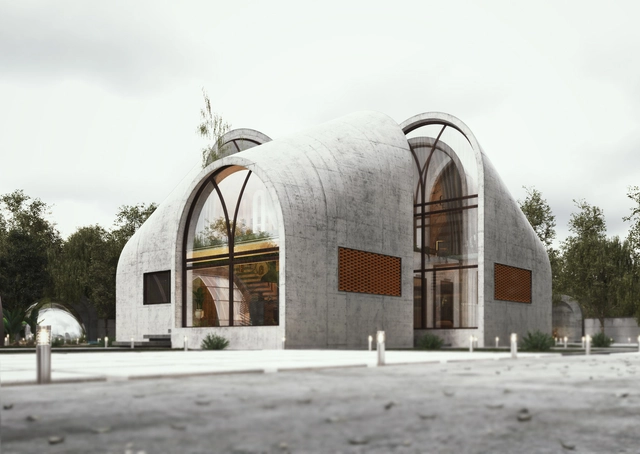


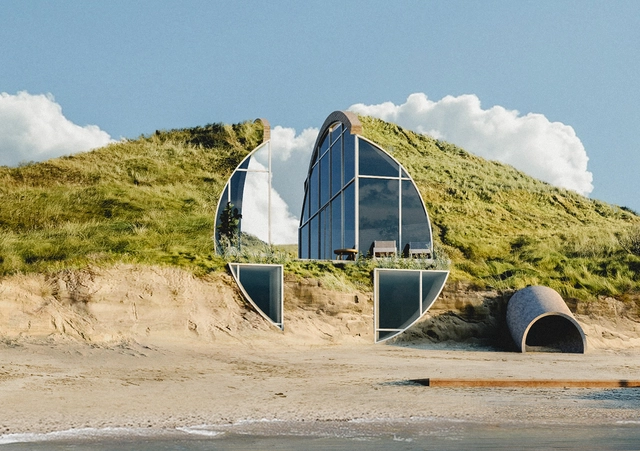

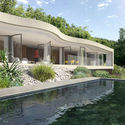
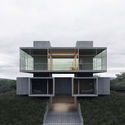
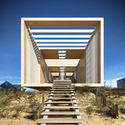






.jpg?1552337492 "Bazillion / YCL Studio. Image © Leonas Garbačauskas")


.jpg?1577975601&format=webp&width=640&height=580)
.jpg?1577975466 "Adaptability Award - Winner. Image Courtesy of HOME Competition 2019")
.jpg?1577975388 "Adaptability Award - Honorable Mention. Image Courtesy of HOME Competition 2019")
.jpg?1577975601)

.jpg?1553267060&format=webp&width=640&height=580)