Australian artist, director, and BAFTA-nominated producer Liam Young creates imaginary worlds as a way of thinking through the futures we fear, desire, and are already making. As a creator and designer of atmospheres, he proposes speculative landscapes reflecting the possibilities of a world to come, whether ideal or truthfully unsettling. In his worldbuilding practice across the film, television, and video game industries, fiction becomes a tool for navigating the environmental urgencies of the present. He is considered a "futurist" working across design strategies, technological scenarios, and collective imaginations, grounded in his academic research yet reaching a wider audience in exhibitions such as "In Other Worlds" at the Barbican Centre in London and "Age of Nature" at the Danish Architecture Center in Copenhagen. In February 2026, he was interviewed by Marc-Christoph Wagner for Louisiana Channel, where he shares his visions of our future: from architecture consolidating as a boutique industry to the need for a new kind of planetary punk at the scale of the climate crisis.
Liam Young: The Latest Architecture and News
"My Solutions Are Not Polite:" Liam Young on Architecture in the Age of Polycrisis in Louisiana Channel Interview


Global Design Forum Istanbul Concludes First Edition With City-Wide Programme of Installations and Talks

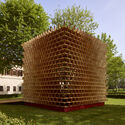
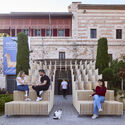
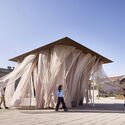
Global Design Forum Istanbul concluded its inaugural edition between May 13 and 16, 2026, bringing together architects, designers, urbanists, and cultural practitioners through a city-wide programme of installations, talks, screenings, and public events. Presented by London Design Festival in collaboration with People Places Ideas, the forum was developed and curated by Artistic Director Melek Zeynep Bulut and Forum Content Advisor Beatrice Galilee. Organized around the theme "Worlds in Contact," the programme featured contributions from figures including Lina Ghotmeh, Marina Tabassum, Liam Young, Tom Dixon, Lesley Lokko, Ma Yansong, Andrew Waugh, and Olaf Grawer, positioning Istanbul as a platform for interdisciplinary discussions on design and the built environment.
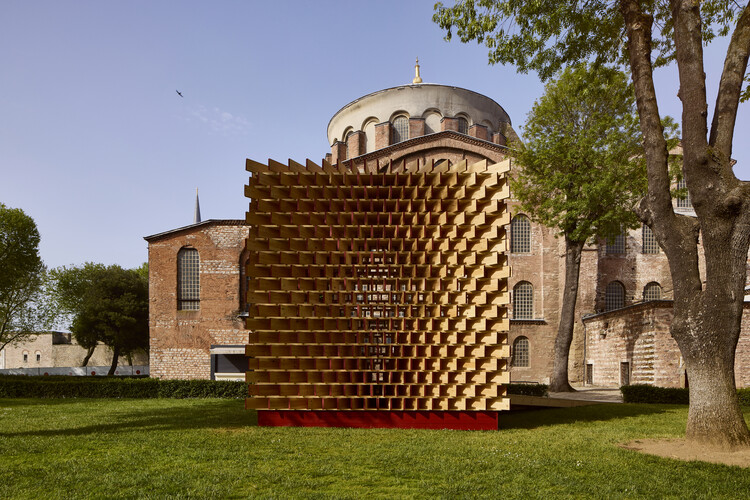
In Other Worlds by Liam Young Reimagines Cities, Landscapes, and Climate Futures at the Barbican Centre

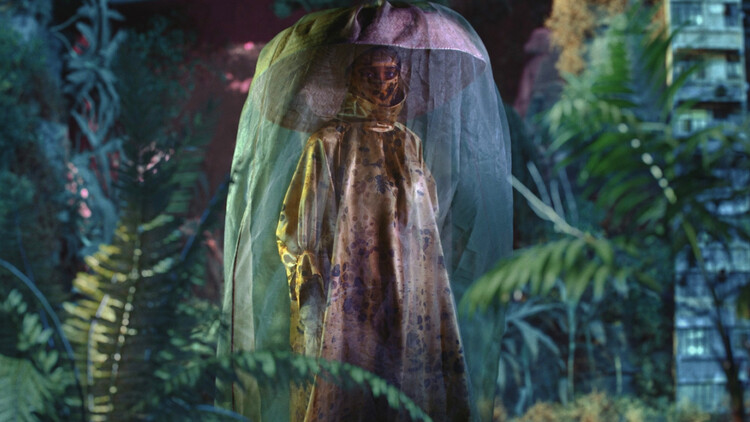
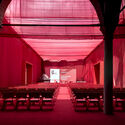
The Barbican Centre has announced In Other Worlds, a major immersive exhibition by speculative architect, filmmaker, and artist Liam Young, opening from May 21 through September 6, 2026. Occupying three distinct locations within the Barbican complex, the Silk Street Entrance, The Curve gallery, and Car Park 5, the exhibition will transform the Brutalist cultural landmark into a sequence of cinematic environments examining architecture, infrastructure, climate futures, and planetary urbanism. Developed in collaboration with writers, scientists, filmmakers, musicians, and performers, the project brings together large-scale projections, LED installations, sound environments, graphic narratives, costumes, and speculative artifacts to explore how fiction and spatial storytelling can shape conversations around environmental and technological change.



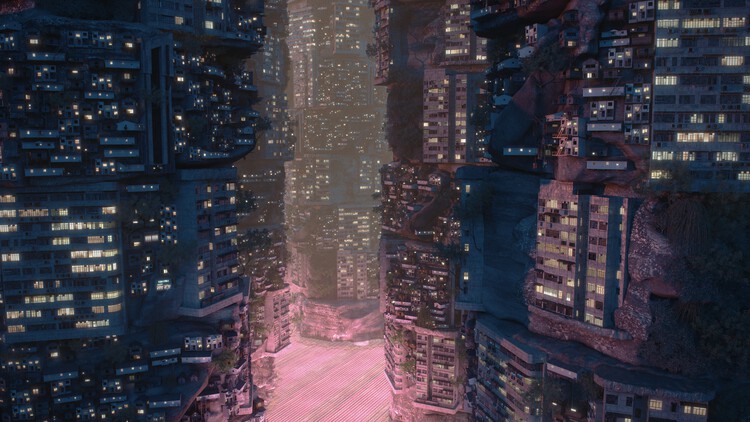
Age of Nature: New DAC Exhibition Explores the Future Relationship Between Architecture and Nature

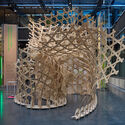
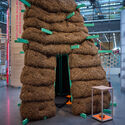
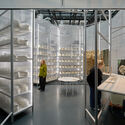
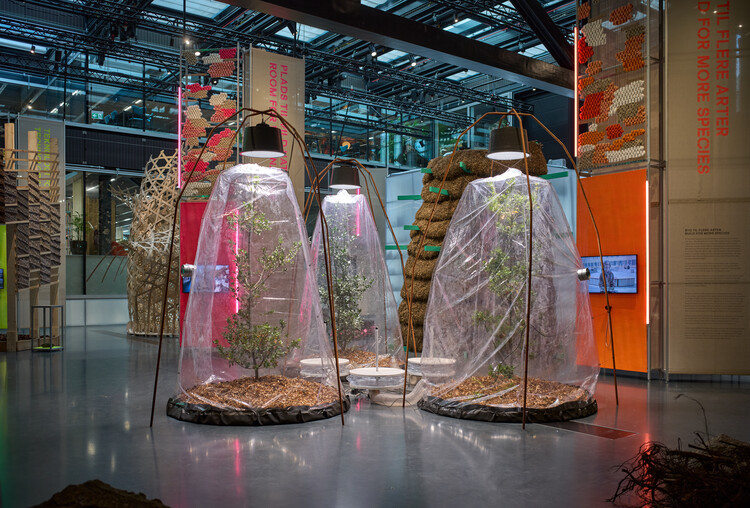
Opening on World Architecture Day, October 6, 2025, "Age of Nature" is a new exhibition at the Danish Architecture Center (DAC), on view until May 17, 2026. Presented in DAC's largest exhibition space, the show examines how architecture can evolve to support both human life and biodiversity, addressing one of the most pressing challenges of the time: redefining the relationship between the built environment and the natural world.
Discover the Full List of Special Projects and Participants of the 2025 Venice Architecture Biennale
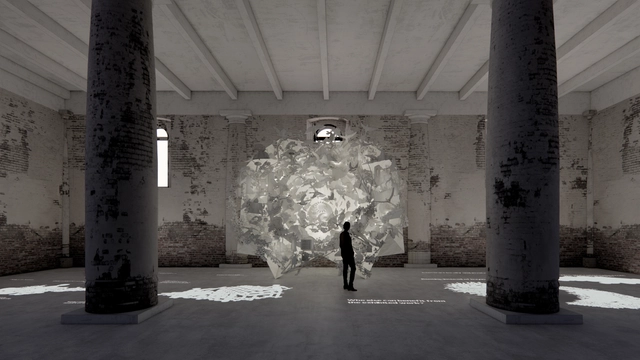
The 19th International Architecture Exhibition, organised by La Biennale di Venezia under Carlo Ratti's curatorship and the theme "Intelligens. Natural. Artificial. Collective," is set to transform Venice into a "Living Laboratory" of experimentation and collaboration. This year's special projects extend beyond the exhibition grounds, integrating into various city locations and Forte Marghera in Mestre, providing an alternative perspective that expands the reach of architectural discourse.
The Biennale promises to be a dynamic platform uniting over 750 participants from diverse backgrounds, including architects, engineers, mathematicians, climate scientists, and artists. Such a broad coalition of over 280 projects underlines the Exhibition's focus on inclusivity and interdisciplinary collaboration, an essential aspect for adaptation. The selection process proposed a bottom-up, open call approach through the Space for Ideas initiative, which ran between May and June 2024. It encouraged participation from global teams, from Pritzker Prize winners and Nobel laureates to emerging architects and scientists.


2023 Venice Architecture Biennale: 63 National Pavilions and 89 Participants with Significant Representation from Africa
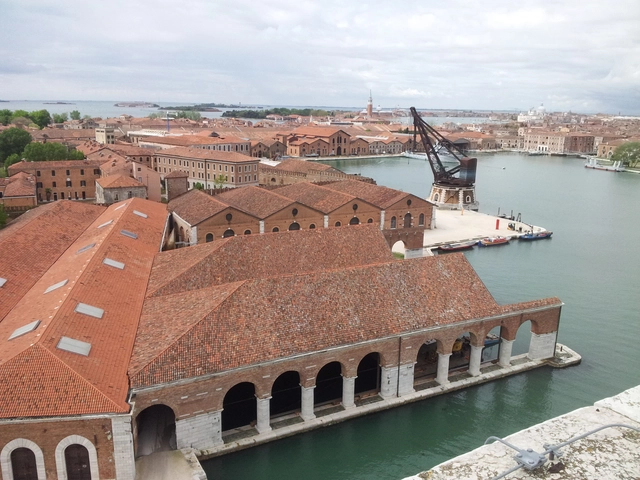
Announced today in a live presentation, the 18th International Architecture Exhibition, titled The Laboratory of the Future, curated by Lesley Lokko, will be open to the public from May 20 to November 26, 2023, in Venice, Italy. This edition will include 63 National Pavilions, 27 of which are at the Giardini, 22 at the Arsenale, and 14 in the city center of Venice. Structured in six parts, the exhibition will include 89 Participants, over half of whom are from Africa or the African Diaspora, with a 50/50 gender balance, and an average age of 43 for participants. Contributors include Adjaye Associates, atelier masōmī, Kéré Architecture, MASS Design Group, Sumayya Vally and Moad Musbahi, Theaster Gates Studio, Andrés Jaque / Office for Political Innovation, Liam Young, Neri&Hu Design and Research Office, to name a few.


Architecture Without People: the Built Environment of Machines
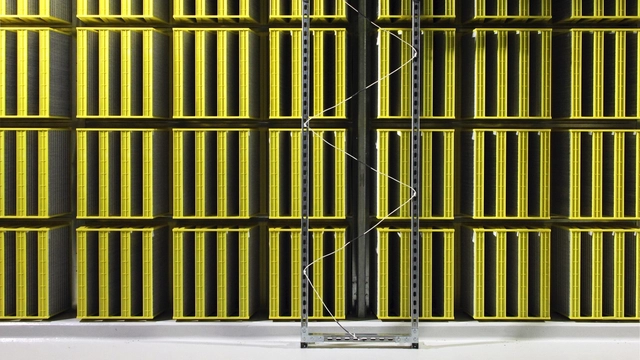
Data centers, automated assembly lines, telecommunications facilities, and warehouses represent a very utilitarian aspect of the built environment, and yet they compose a particular kind of infrastructure within contemporary society, one that is fundamental to the development of everyday life. Rarely discussed within the profession, these new typologies have more recently penetrated the architectural discourse, raising questions about the architectural significance and design potential of the spaces sustaining the mechanics of today's world.




Planet City: Using Imaginary Worlds as Sustainable Models to Tackle Climate Change
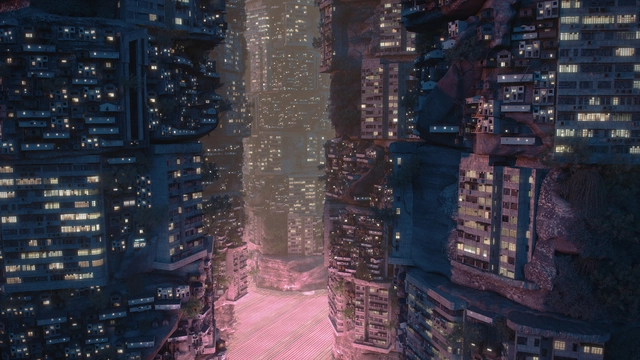
Liam Young is a speculative architect, product designer, and director who operates in the spaces between design, fiction, and futures. Young specializes in designing environments for the film and television industry, harboring the belief that creating imaginary worlds grants us the ability to connect emotionally to the ideas and challenges of our future.
Following the centuries of colonization, globalization, and never-ending economic extraction and expansionism, humans have remade the world from the scale of the cell to the tectonic plate. Young suggests in a TED Talk, “What if we radically reversed this planetary sprawl? What if we, as humans, reached a global consensus to retreat from our vast network of cities and entangled supply chains into one hyper-dense metropolis housing the entirety of the earth’s population?"


Beyond Human-Scale: Designing for Ecosystems, Migration and Machines
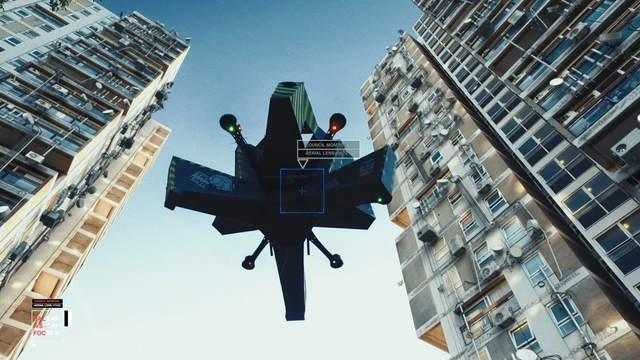
The human scale spans both physical dimensions and sensory perception. Designers create spaces and objects like steps, doorways and chairs that are closely aligned to human measurement and how we see the world. But as we look beyond the human scale, new ideas and typologies emerge that help us rethink how we conceptualize architecture and build for the future.


The 13th Shanghai Biennale Examines Interdependence at Time of Unprecedented Challenges
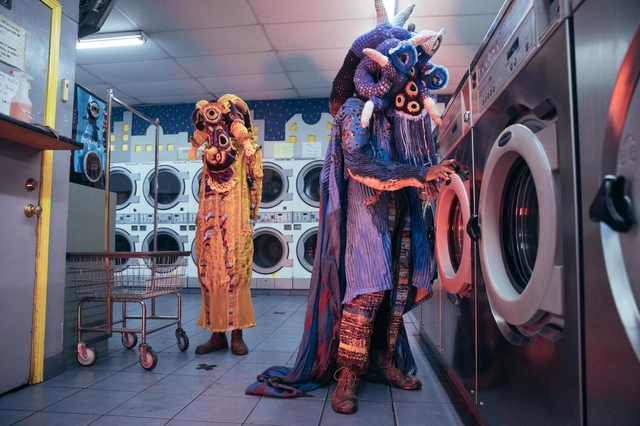
This year's Shanghai Biennale, themed Bodies of Water, examines the interconnectivity and interdependency of people, climates, ecosystems and technologies, exploring the idea of collectivity in the light of accelerating climate change and the current global pandemic. The 13th edition of the oldest biennial in China features works by 64 participating artists exploring the intricate web of interferences and connections in the contemporary world.



What is Architecture? Concepts from Coop Himmelb(l)au, Lina Ghotmeh, Liam Young and Topotek 1
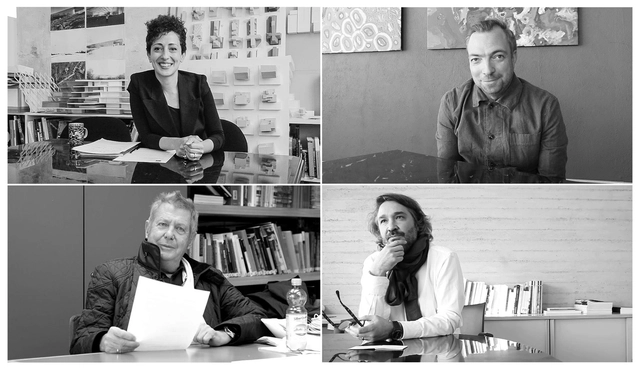
Simple in form but complex in substance, “What is Architecture?” remains an existential question for a lot of architecture students and young professionals. In an attempt to define this ever-changing interrogation and expose the different visions out there, the interview series: WIA – What is architecture? asks four, straightforward, questions to world-leading architectural designers and thinkers. Seeking to uncover their opinion on what architecture is and what it can do, these short videos reveal responses to “What is architecture? What can architecture do? What is your architectural position? and What is your design method?”.
ArchDaily has collaborated with WIA to release every week, 4 of these conversations, and to invite you to take on the challenge and answer these questions. The fourth and last article of the series presents the ideas and visions of Lina Ghotmeh, Wolf D. Prix from Coop Himmelb(l)au, Liam Young, and Martin Rein-Cano from Topotek 1.
Speculative Architecture: Where are the Contemporary Equivalents of the 60s and 70s Radical Visions?
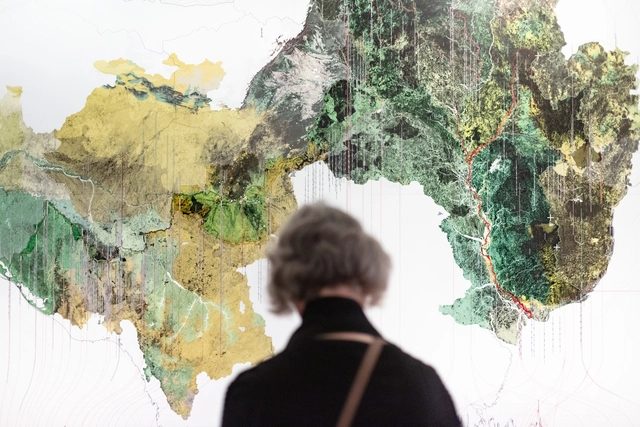
As the forces shaping our built environment have shifted, engaging technology, networks, and complex systems, architects need to envision more than the physical space but produce narratives on how to best operate within this new societal landscape. In this context, speculative architecture seems to have never been more critical; therefore this article takes a closer look at the mediums that currently question the existing conditions of the built environment and explore new architectural possibilities.
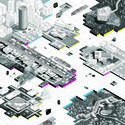

.jpg?1605822515 "Surface Ex-Tension by Jonathan Craig, Luis Arjona, Marco Nieto & Philip Elmore. Image Courtesy of Arch Out Loud. Image Courtesy of Arch Out Loud")

10 ArchDaily Interviews Reflecting on the Future of Architecture
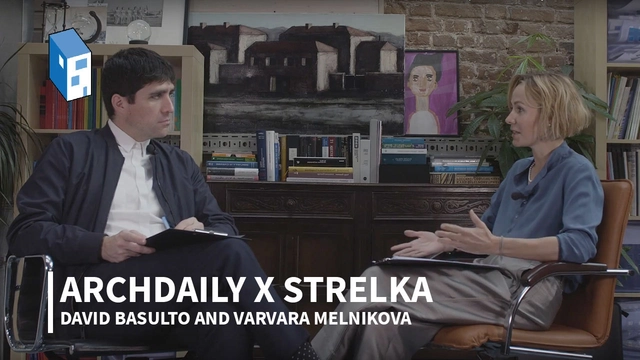
In order to inspire our audience, generate critical debates, and develop ideas, ArchDaily has been continuously questioning architects about the future of architecture. To define emerging trends that will shape the upcoming cities, examining “What will be the future of architecture?” became an essential inquiry. More relevant during these ever-changing moments, discover 10 interviews from ArchDaily’s archived YouTube playlists that will highlight diverse visions from 10 different pioneers of the architecture field.
The Future of Universities, Offices and Cities: Highlights From Digital Futures 2020
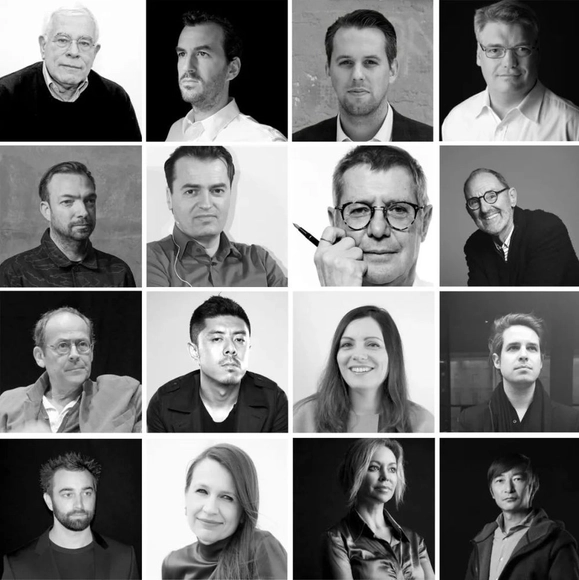
Like most functions in recent months, this year’s Digital FUTURES, which is held annually since 2011 at Tongji University in Shanghai, had to move online due to the pandemic. The organizers took this as an opportunity to give the event a global dimension, turning the festival into what they rightfully call the most significant worldwide event for architectural education ever staged, with a 24/7 display of workshops, lectures and panel discussions involving some of the most prominent architects and educators. Here is an overview of the festival, together with a selection of lectures from Digital FUTURES World.
Liam Young on Artificial Intelligence in Architecture: ArchDaily Interviews
Liam Young was once described by the BBC as "the man designing our futures". The Australian-born architect and director has carved a vibrant path through architectural discourse, standing at the intersection of design, technology, and media. A self-described "speculative architect", Young is the co-founder of thinktank Tomorrow's Thoughts Today, using vivid imagery and films to spark conversations about the future of the built environment, and the relationships between humans and machines, bits and atoms, artificial and natural. He also co-runs the Unknown Fields Division, a nomadic research studio that travels the world in search of landscapes that speak to his focus on global flows of materials, technologies, and ideas.
Seoul City Machine / Liam Young for the Shenzhen Biennale (UABB) 2019
What happens when the sensor-imbued city acquires the ability to see – almost as if it had eyes? Ahead of the 2019 Shenzhen Biennale of Urbanism\Architecture (UABB), titled "Urban Interactions," ArchDaily is working with the curators of the "Eyes of the City" section at the Biennial to stimulate a discussion on how new technologies – and Artificial Intelligence in particular – might impact architecture and urban life. Here you can read the “Eyes of the City” curatorial statement by Carlo Ratti, the Politecnico di Torino and SCUT. If you are interested in taking part in the exhibition at UABB 2019, submit your proposal to the “Eyes of the City” Open Call by May 31st, 2019: www.eyesofthecity.net
Global Architectural Political Event London
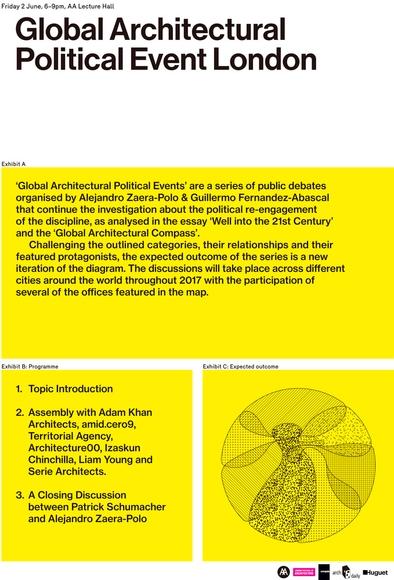
‘Global Architectural Political Events’ are a series of public debates organised by Alejandro Zaera-Polo & Guillermo Fernandez-Abascal that continue the investigation about the political re-engagement of the discipline, as analysed in the essay ‘Well into the 21st Century’ and the ‘Global Architectural Compass’.
Corporate Dystopia: Liam Young Imagines a World in which Tech Companies Own Our Cities
What if the manufacturers of the phones and social networks we cling to became the rulers of tomorrow’s cities? Imagine a world in which every building in your neighborhood is owned by Samsung, entire regions are occupied by the ghosts of our digital selves, and cities spring up in international waters to house outsourced laborers. These are the worlds imagined by self-described speculative architect, Liam Young in his latest series of animations entitled ”New City.” Read on after the break to see all three animations and learn more about what’s next in the series.