As a result of the nation’s ardent aspirations for growth and development, the social, economic, and physical landscape of India has transformed. A significant portion of the region’s population is of working age and comprises a massive market size, making India a land of opportunity especially in the eyes of foreign investors.
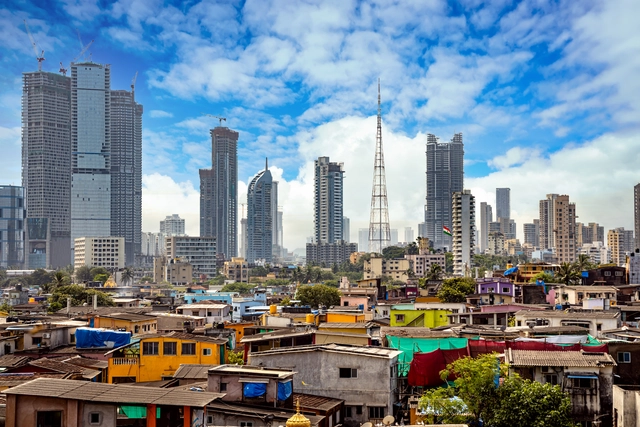
Reflecting this context, multiple mega-cities and mega-projects characterize the built environment and push the nation toward superpower status. On the flip side of the coin, these visionary projects along with the trend of rapid urbanization also bring in a range of side effects - the spread of informal settlements and in turn, the challenges to equitable development.
Built environments are a reflection of the social order and dynamic ideals of society. Neighborhoods and cities are cultural relics shaped by diverse communities, some of whose voices are heard louder than others. In the past few decades, Indian metropolitans have been booming with urbanization. Holding cities back from being Utopian hubs of growth is spatial inequality. The residential segregation that patterns the cities of India can be understood through the caste system. The issue, however, is largely intersectional. Forces rooted in class, religion, and gender also structure the country's social landscape.
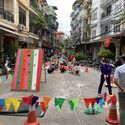
Mobile playground in Vietnam. Image Courtesy of UN-Habitat, Global Public Space Programme
The Un-Habitat or the United Nations agency for human settlements and sustainable urban development, whose primary focus is to deal with the challenges of rapid urbanization, has been developing innovative approaches in the urban design field, centered on the active participation of the community. ArchDaily has teamed up with UN-Habitat to bring you weekly news, article, and interviews that highlight this work, with content straight from the source, developed by our editors.
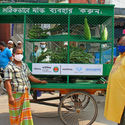
“During this pandemic, public spaces have played a vital role in the health and sustainability of urban communities around the world” states James Delaney, Block by Block chair. In fact, people need to go outside, now more than ever. In order to equip these public spaces to face the challenges of Covid-19, UN-Habitat with the Block by Block Foundation has been supporting ten cities, throughout this past year. With the help of local governments and the community, the initiatives helped covid-proof open urban entities, especially in poor neighborhoods, where there are few shared and green spaces. From creating mobile pop-up playgrounds for children in Hanoi, Vietnam, improving livelihood for street vendors in Dhaka and Khulna, Bangladesh to Covid Proofing of Public Spaces in Bhopalinformal settlements, India, these responses have provided help to those who need it the most.
The Un-Habitat or the United Nations agency for human settlements and sustainable urban development, whose primary focus is to deal with the challenges of rapid urbanization, has been developing innovative approaches in the urban design field, centered on the active participation of the community. ArchDaily has teamed up with UN-Habitat to bring you weekly news, article, and interviews that highlight this work, with content straight from the source, developed by our editors.
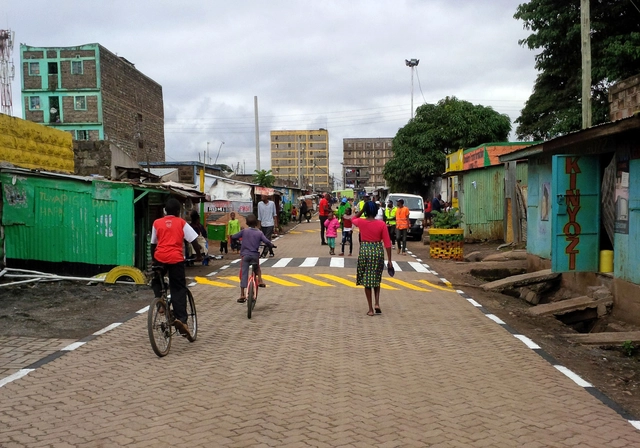
Associated with crime, waste, and garbage, Dandora in Nairobi’s Eastlands is home to 140,000 or so residents. In an on-going collaboration, between local residents and youth groups, UN-Habitat, Making Cities Together Coalition, and the Dandora Transformation League, the Model Street project has been transforming the garbage-filled community spaces into waste-free, attractive, and engaging places. Focusing on improving the shared courtyard spaces of residential compounds, an annual competition led by the youth of the neighborhood, the Changing Faces Challenge, became an initiative mobilizing citizens across Nairobi.
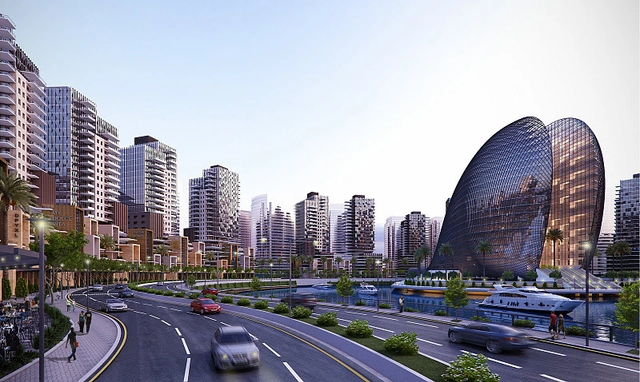
In the last two decades, the African narrative has changed phenomenally. The tired, age-old storyline—largely woven around the stereotypes of poverty, disease, and bloody civil wars—has been replaced with one celebrating the continent’s unprecedented economic growth and relative political stability. This new narrative is also about Africa’s gleaming skyscrapers, massive shopping malls, and ambitious “smart” cities being designed and built from scratch: Ebene Cyber City in Mauritius; Konza Technology City in Kenya; Safari City in Tanzania; Le Cite du Fleuve in DR Congo; Eko Atlantic in Nigeria; Appolonia City in Ghana, and others.
There are currently at least twenty of these new cities under construction in Africa and about twice that number in the works. These developments have permanently altered the continent’s urban outlook, and have offered it something different from the bland pastiche of colonial architecture that it was once known for. As a designer, I was initially excited by the quality of some of the architecture. Though I must admit that these new cities are eerie mimicries of similar developments in China, Singapore and even the UAE, and that they’re largely bereft of any cultural connection to Africa.
Singapore’s first Housing and Development Board (HDB) housing blocks were erected in November of 1960, in response to a severe lack of adequate housing for the country's 1.6 million citizens. Fast forward to 2017, and over 80% of the Singaporean population live in HDBs, with over 90% of them owning the home they live in. Often painted in vibrant colors, HDBs have a focus on community social spaces, more often than not maintaining the ground floor of the apartment blocks as open public space, exclusively for public meeting areas. These can include hawker centers, benches, tables, grills and pavilions where residents can socialize under cover from the hot Singaporean sun.
Shelter Global is pleased to invite architects, planners, students, engineers, designers, thinkers, NGOs and organizations from all over the world to take part in the 2017 Dencity Competition.
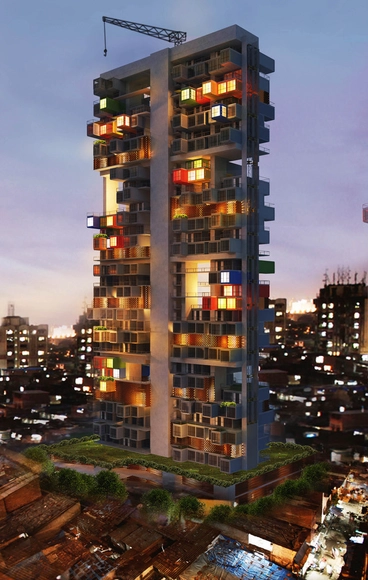
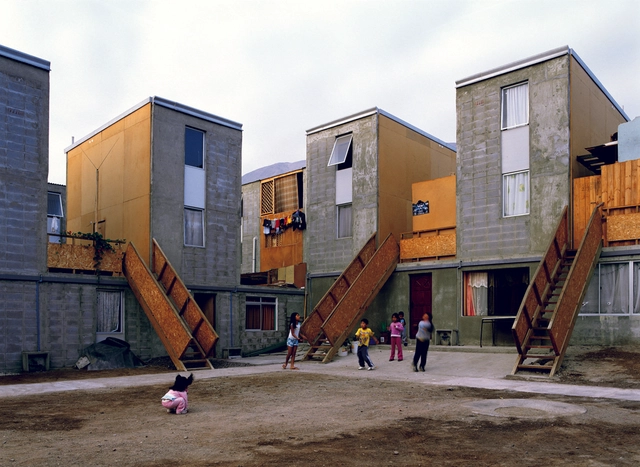
Ganti + Asociates (GA) Design has won an international ideas competition with a radical shipping container skyscraper that was envisioned to provide temporary housing in Mumbai's overpopulated Dharavi Slum. Taking in consideration that steel shipping containers can be stacked up to 10 stories high without any additional support, GA's winning scheme calls for a 100-meter-tall highrise comprised of a series of self supported container clusters divided by steel girders placed every 8 stories.
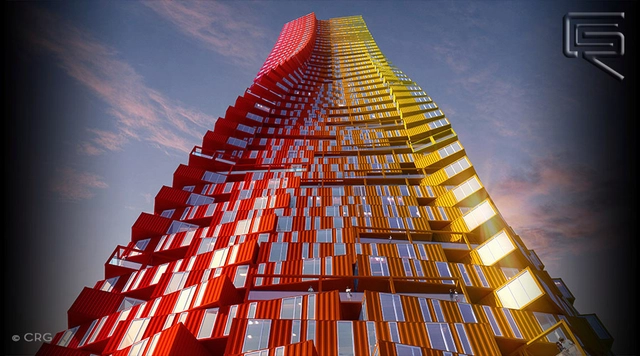
CRG Architects has won third prize in an ideas competition focused on providing temporary housing in Mumbai, India. Set with in the heavily populated Dharavi Slum, CRG's “Containscrapers” propose to house 5,000 city dwellers by stacking 2,500 shipping containers up to heights of 400-meters. If built, the radical proposal would be supported by a concrete structure and offer a range of housing options, from flats to three bedroom residences.
Justin McGuirk’s Radical Cities: Across Latin America in Search of a New Architectureshould be required reading for anyone looking for ways out of the bleak social inequality we’re stuck in. There were 40 million more slum dwellers worldwide in 2012 than there were in 2010, according to the UN. Private markets clearly can’t provide universal housing in any way approaching efficiency, and governments are often hostile to the poor. The only alternative is collective action at the grassroots level, and I’ve never read more vivid reporting on the subject.
https://www.archdaily.com/629354/radical-cities-radical-solutions-justin-mcguirk-s-book-finds-opportunities-in-unexpected-placesJoshua K Leon
According to global consultancy firm McKinsey & Company, the projected cost of providing affordable housing to 330 million households around the world currently living in substandard accommodation is $16 trillion USD. The firm's latest report, A Blueprint for Addressing the Global Affordable Housing Challenge, assesses critical pathways for providing housing to families across a range of socio-economic backgrounds and nationalities. According to the report, adequate and affordable housing could be out of reach for more than 1.6 billion people within a decade. The comprehensive report examines everything from income to cost of heating, boiling down the data into four key mandates aimed at solving the global housing crisis.
The proposed solution is one of ascending goals, similar to Maslow's hierarchy of needs, with a four-tiered plan targeted towards households earning 80% or less of the median income for any given region. The program is designed to meet McKinsey's 2025 Housing Challenge which aims to provide housing to a projected 440 million households worldwide within ten years through community engagement, gathering funding, appropriate delivery of housing models, and creation of governmental infrastructure to sustain housing.
Find out the four steps to solving the global affordable housing shortage after the break
Last year the UN General Assembly issued a resolution to “designate 31 October, beginning in 2014, as World Cities Day.” A legacy of the Expo 2010 Shanghai, the first World Cities day is being hosted today in Shanghai, with the aim of focusing on global urbanization and encouraging cooperation among countries to solve and promote sustainable urban development worldwide.
“In a world where already over half the population lives in urban areas, the human future is largely an urban future, said UN Secretary-General Ban Ki-moon, on the importance of World Cities Day. “We must get urbanization right, which means reducing greenhouse emissions, strengthening resilience, ensuring basic services such as water and sanitation and designing safe public streets and spaces for all to share. Liveable cities are crucial not only for city-dwellers but also for providing solutions to some of the key aspects of sustainable development.”
To celebrate World Cities day, we’ve rounded up 23 articles that you can’t miss on critical issues relating to our cities, ranging from sustainability to addressing equality and creative solutions for integrating cycling into our cities.
Think we’ve missed something? Let us know in the comments below.
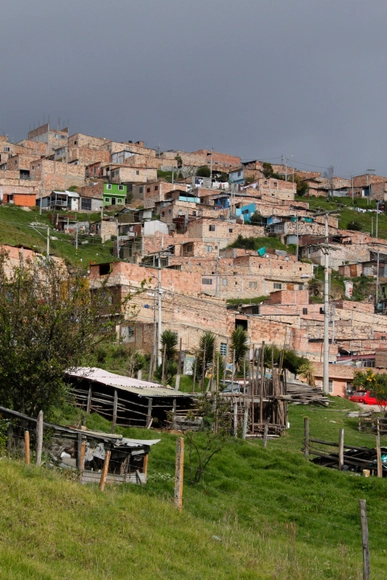
Perched behind the fog that conceals Bogotá’s mountains is William Oquendo’s house. It is a labyrinth of doors and windows, wherein a bedroom opens into the kitchen and a bathroom vents out into the living room.
Five thousand 5,000 kilometers away in Rio de Janeiro, Gilson Fumaça lives on the terrace level of a three-story house built by his grandfather, his father, and now himself. It’s sturdy; made out of brick and mortar on the ground floor, concrete on the second, and a haphazard combination of zinc roof tiles and loose bricks on the third. The last is Gilson’s contribution, which he will improve as his income level rises.
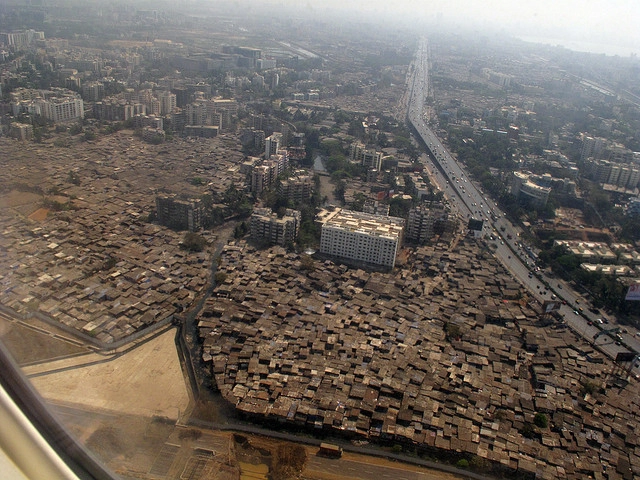
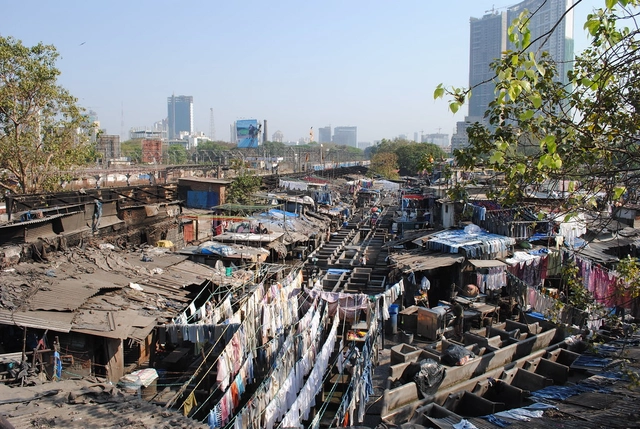
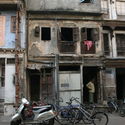
On the other side of the world in Bombay (Mumbai since 1995), houses encroach on the railway tracks, built and rebuilt after innumerable demolition efforts. “The physical landscape of the city is in perpetual motion,” Suketu Mehta observes in ‘Maximum City.’ Shacks are built out of bamboo sticks and plastic bags; families live on sidewalks and under flyovers in precarious homes constructed with their hands. And while Dharavi—reportedly the largest slum in Asia—has better quality housing, running water, electricity and secure land tenure, this is not the case for most of the new migrants into the city.
In an excellent essay for the Architectural Review, Charlotte Skene Catling deftly ties together a number of recent debates in the field of morality in architecture, from the false accusations aimed at Zaha Hadid by critic Martin Fuller to recent debates over whether architects have any responsibility to tackle poverty, an ostensibly political issue. Taking aim at one article in particular - in which Dan Hancox argues that architects such as Urban Think Tank who engage in humanitarian work are often 'fetishizing poverty' - Catling dissects the work of many of those in the field to find that they in fact do vital work to connect the top-down and bottom-up approaches that would otherwise never meet in the middle. Or, as Urban Think Tank's Alfredo Brillembourg says, in opposition to the horizontal city of the 19th century or the vertical city of the 20th, "the 21st century must be for the diagonal city, one that cuts across social divisions." Click here to read the article in full.
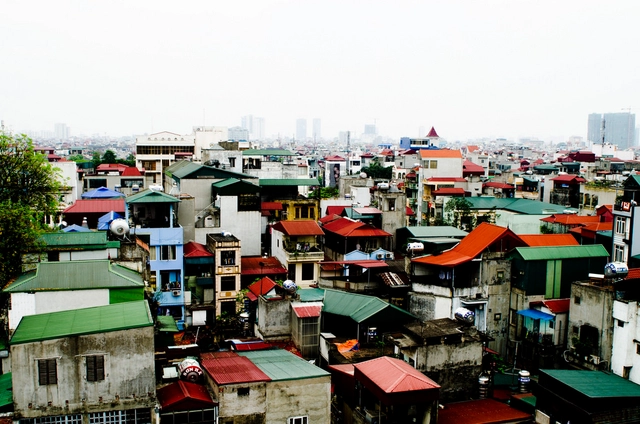
As the tide of urban migration sweeps across the developing world, cities experience an overpowering pressure to provide basic services such as electricity and sewage treatment to an enormous amount of people building illegal shacks on city outskirts. When they fail, the slum is born - but is it possible for a city to expand without slums? In Hanoi, Vietnam, officials hope to answer this question, with a number of tactics that have led to a "culture of semi-legal construction." Read this article in The Guardian to learn how Hanoi manages to curb slums and provide a basic standard of living to its poorest inhabitants.
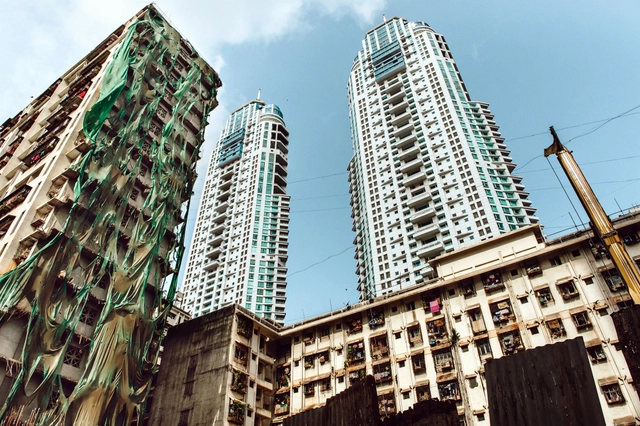
"The Indian poor live in perpetual darkness, while the Indian rich live in perpetual light." This fact is obviously embedded in Mumbai, where luxury condominiums rise in the middle of slums. Many of these extravagant buildings were designed by India's most commercially successful architect, Hafeez Contractor, who believes his arrestive work is the beginning of slum redevelopment. Learn about his crusade and how he's been criticized in this New York Times article by Daniel Brook.
In a recent article for the Atlantic Cities, Richard Florida examines some new research from MIT that criticizes the idea that slums are a natural stage in the modernization of cities, showing that many slums continue to persist and even grow in cities/countries experiencing increased prosperity. Rather than economic growth, argues Florida, accountable governments and institutions make much more of an impact on slum development. You can read the full article here.
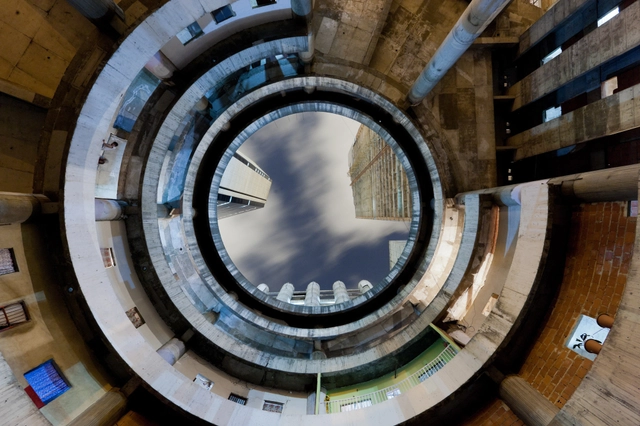
What was once a symbol of Caracas' bright financial future is now the world’s tallest slum: Venezuela's Tower of David. Squatters took over this unfinished 45-story skyscraper in the early 1990s, after its construction was stopped due to a banking crisis and the sudden death of the tower’s namesake, David Brillembourg.
Now, as the government is grappling with a citywide housing shortage, many residents have spent most of their life within the walls of David. And despite the tower’s reputation as being a hotbed of crime, residents have managed to build a self-sustaining community complete with a communal electrical grid and aqueduct water system.







(1).jpg?1614161719&format=webp&width=640&height=580)
.jpg?1614161736 "Mobile playground in Vietnam. Image Courtesy of UN-Habitat, Global Public Space Programme")
(1).jpg?1614161719)