1. ArchDaily
  2. Valerio Olgiati

Valerio Olgiati: The Latest Architecture and News

Go East: What Tirana's Bread & Heart Festival Reveals About Architecture and Landscape

Subscriber Access | 

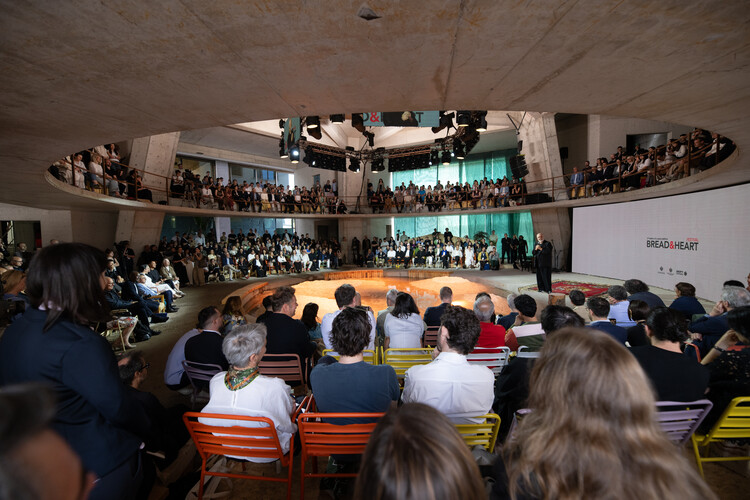
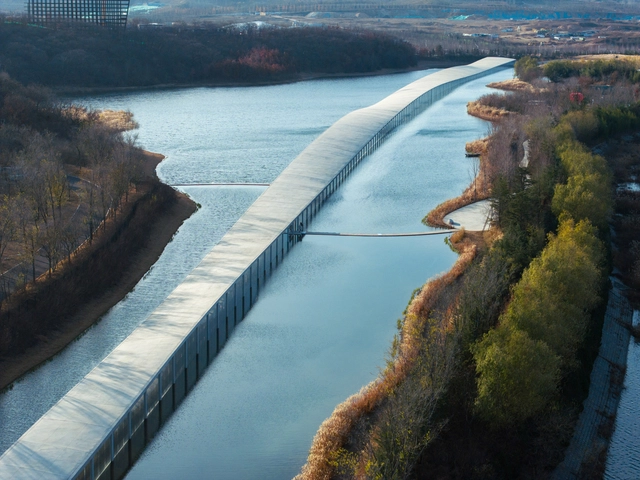
Something has been happening in Tirana that the architectural world has not quite found the language for. In the space of a few years, a city of less than a million people in one of Europe's least-known countries has become the site of an extraordinary concentration of architectural ambition — a place where offices that rarely work in the same city, let alone the same decade, are building simultaneously, and where the questions that preoccupy contemporary architecture seem to arrive with an unusual urgency.

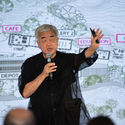
The second edition of the Bread & Heart Festival, held in Tirana from June 3 to 5, brought together more than two hundred architects, urban planners, developers, and professionals from across Europe, the Americas, Asia and beyond to discuss "Landscapes of Abundance", a theme organized around the curatorial premise of moving from portrait to landscape, from the individual building to the territory as a whole. The room it assembled would be difficult to replicate anywhere else in the architectural calendar: Francis Kéré, Jeanne Gang, Sumayya Vally, Pierre de Meuron, Bjarke Ingels, Reinier de Graaf, Stefano Boeri, Kersten Geers, Benedetta Tagliabue, Ma Yansong, among them.
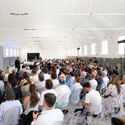
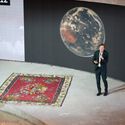
Go East: What Tirana's Bread & Heart Festival Reveals About Architecture and Landscape - Image 1 of 4Go East: What Tirana's Bread & Heart Festival Reveals About Architecture and Landscape - Image 2 of 4Go East: What Tirana's Bread & Heart Festival Reveals About Architecture and Landscape - Image 3 of 4Go East: What Tirana's Bread & Heart Festival Reveals About Architecture and Landscape - Image 4 of 4Go East: What Tirana's Bread & Heart Festival Reveals About Architecture and Landscape - More Images+ 43

Shaping Architectural Continuity: 25 Revitalization Projects Across Historic, Industrial, and Natural Sites

Heritage sites constitute complex spatial archives in which architecture, history, and collective memory converge. They encompass a wide spectrum of contexts—from archaeological remains, ancient and historic townscapes, UNESCO-listed landscapes, to early modern civic structures and industrial infrastructures. Yet these environments confront challenges: climate change, urban transformation, disaster, shifting social needs, and the gradual erosion of material fabric. Revitalization and restoration projects respond to these conditions by positioning architectural and spatial practice as an active mediator between preservation and the contemporary topologies.
In current practice, conservation is understood as a creative process of adaptation and reinterpretation that serves both communities and inhabitants. At the same time, monumental architecture continues to define the identity and landscape of a place for wider audiences and future generations. Architects and planners are called upon to negotiate sensitive historic contexts while introducing new programs, techniques, and spatial experiences. They exemplify diverse design approaches, including precise structural interventions, climate-responsive strategies, and meticulous material restoration, alongside the thoughtful insertion of new architectural elements. Equally important is their engagement with vernacular knowledge and materiality, which preserves the locality and cultural specificity of each site.

Shaping Architectural Continuity: 25 Revitalization Projects Across Historic, Industrial, and Natural Sites - Image 1 of 4Shaping Architectural Continuity: 25 Revitalization Projects Across Historic, Industrial, and Natural Sites - Image 2 of 4Shaping Architectural Continuity: 25 Revitalization Projects Across Historic, Industrial, and Natural Sites - Image 3 of 4Shaping Architectural Continuity: 25 Revitalization Projects Across Historic, Industrial, and Natural Sites - Image 4 of 4Shaping Architectural Continuity: 25 Revitalization Projects Across Historic, Industrial, and Natural Sites - More Images+ 21

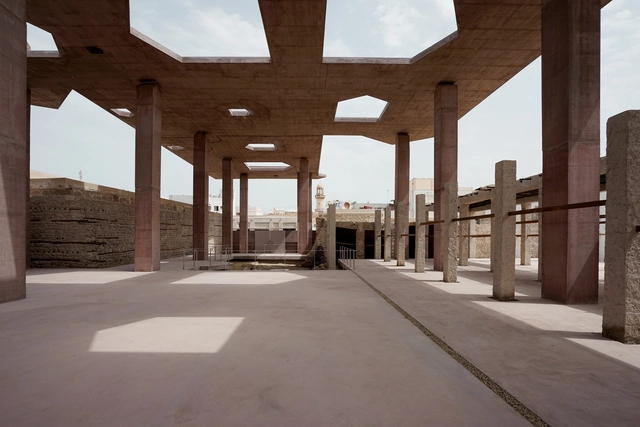
Muharraq Architecture City Guide: 10 Projects Through the Bahraini City's Developing Pearling Path

Subscriber Access | 

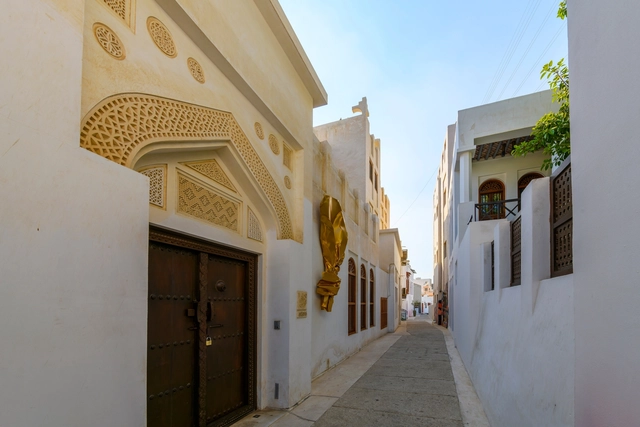
The Kingdom of Bahrain is being widely acknowledged recently through their worldwide architectural contributions at the Expo 2025 in Osaka, with their Anatomy of a Dhow pavilion by Lina Ghotmeh; or at the Venice Biennale, where the Heatwave exhibition was awarded the Golden Lion for Best National Participation. However, for the past few years Bahraini cities like Muharraq have been lending the stage for regional and international architects to discover their typical Persian Gulf architecture and add their own touches to the local sites. It's through the works of Leopold Banchini, Anne Holtrop, or Valerio Olgiati that the old has been brought back to life, along with the efforts of the local authorities and cultural figures.

Muharraq Architecture City Guide: 10 Projects Through the Bahraini City's Developing Pearling Path - Image 1 of 4Muharraq Architecture City Guide: 10 Projects Through the Bahraini City's Developing Pearling Path - Image 2 of 4Muharraq Architecture City Guide: 10 Projects Through the Bahraini City's Developing Pearling Path - Image 3 of 4Muharraq Architecture City Guide: 10 Projects Through the Bahraini City's Developing Pearling Path - Image 4 of 4Muharraq Architecture City Guide: 10 Projects Through the Bahraini City's Developing Pearling Path - More Images+ 16

ArchDaily's Best Architectural Projects of 2024

Throughout the year, ArchDaily's team of curators works on expanding and populating our project library. Located all around the world, each curator carefully considers the best works emanating from their respective regions in an effort to have a diverse representation of the most inspiring and innovative built works. The team looks to new rising practices, new technologies, and the vernacular revival of traditional construction techniques. Seeking socially driven initiatives, as well as major works by renowned architects, the overall offers a holistic view of the built world today and is relayed through the yearly project review.

ArchDaily's Best Architectural Projects of 2024 - Image 1 of 4ArchDaily's Best Architectural Projects of 2024 - Image 2 of 4ArchDaily's Best Architectural Projects of 2024 - Image 3 of 4ArchDaily's Best Architectural Projects of 2024 - Image 4 of 4ArchDaily's Best Architectural Projects of 2024 - More Images+ 96

Architectural Interventions in UNESCO World Heritage Sites: A Dialogue Between Preservation and Innovation

Subscriber Access | 

Contemporary architecture in UNESCO World Heritage contexts presents a unique challenge: revitalizing historically significant sites while adhering to strict preservation guidelines. From urban centers to natural landscapes and intangible cultural traditions, these projects demonstrate the delicate balance between innovation and heritage conservation. Whether working in a mega city, a protected landscape, or a culturally rich rural area, architects are tasked with reimagining these spaces without compromising their historical value. Each project offers a fresh perspective on how heritage sites can evolve and remain relevant in modern times.

Architectural Interventions in UNESCO World Heritage Sites: A Dialogue Between Preservation and Innovation - Image 1 of 4Architectural Interventions in UNESCO World Heritage Sites: A Dialogue Between Preservation and Innovation - Image 2 of 4Architectural Interventions in UNESCO World Heritage Sites: A Dialogue Between Preservation and Innovation - Image 4 of 4Architectural Interventions in UNESCO World Heritage Sites: A Dialogue Between Preservation and Innovation - Image 3 of 4Architectural Interventions in UNESCO World Heritage Sites: A Dialogue Between Preservation and Innovation - More Images+ 7

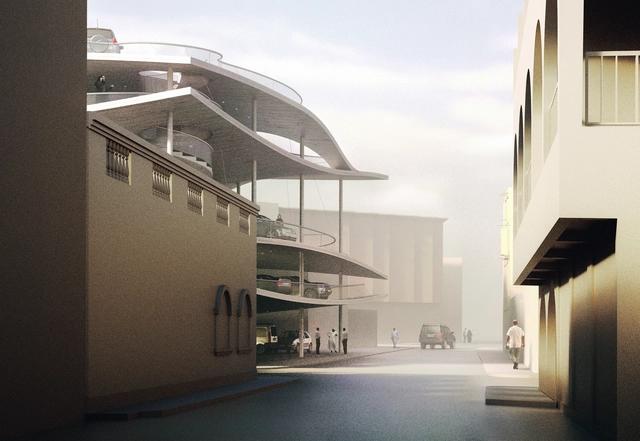
Christian Kerez Designs Parking Structure in Bahrain as Part of the Pearl Path Project

Since 2002, the historic city of Muharraq, the third-largest in Bahrain, has been the protagonist of a comprehensive preservation and development project meant to highlight its pearling history and improve the urban environment. Building on Muharraq’s legacy are several new structures designed by world-renowned architects to create the framework for the city’s revival, among which are four multistorey car parks designed by Christian Kerez and set to be completed this year. The structures envisioned not as car storage but as public spaces feature curved slabs that create a continuous transition from one level to the other while shaping a constantly changing spatial experience.

Christian Kerez Designs Parking Structure in Bahrain as Part of the Pearl Path Project  - Image 3 of 4Christian Kerez Designs Parking Structure in Bahrain as Part of the Pearl Path Project  - Image 4 of 4Christian Kerez Designs Parking Structure in Bahrain as Part of the Pearl Path Project  - Image 2 of 4Christian Kerez Designs Parking Structure in Bahrain as Part of the Pearl Path Project  - Image 1 of 4Christian Kerez Designs Parking Structure in Bahrain as Part of the Pearl Path Project  - More Images+ 9

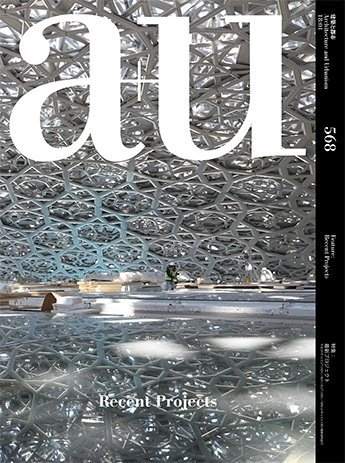
a+u 18:01 Feature: Recent Projects

This edition of a+u introduces the 23 recent works of architecture and technology that emerged from their relationship with the urban structure or the development history. In this issue, we focus our attention on the process of conceiving and realizing the projects driven by various motivations and tactics. We invite readers to look beyond the confinement of a single building and examine the works on their possibilities to be in use for a long time.

Think You Know Swiss Architecture? Think Again.

In one of his 1922 travel essays for the Toronto Star Ernest Hemingway wrote, in a typically thewy tone, of “a small, steep country, much more up and down than sideways and all stuck over with large brown hotels built [in] the cuckoo style of architecture.” This was his Switzerland: a country cornered in the heartland of Europe and yet distant from so much of its history. A nation which, for better or worse and particularly over the course of the 20th Century, has cultivated and become subject to a singularly one-dimensional reputation when it comes to architectural culture and the built environment.

Think You Know Swiss Architecture? Think Again. - Image 1 of 4Think You Know Swiss Architecture? Think Again. - Image 2 of 4Think You Know Swiss Architecture? Think Again. - Image 3 of 4Think You Know Swiss Architecture? Think Again. - Image 4 of 4Think You Know Swiss Architecture? Think Again. - More Images+ 12

The Apple and the Leaf: On How in Architecture There Are No Indisputable Truths

Subscriber Access | 

For many centuries, the demands of gravity appeared to give architecture one requirement that was largely unquestionable: that structures must rise vertically. However, with the advent of steel it was revealed that this limit had not been provided by gravity but by our own limited technologies. In this text, originally published by Domus Magazine in Italian and shared with ArchDaily by the author, Alberto Campo Baeza reflects on the architectural freedom offered by steel structures and the arbitrariness they bring to architectural space.

Isaac Newton was resting under an apple-tree in his garden when an apple fell on his head. Being endowed with such a privileged head and thoughts faster than lightning, he rose forthwith from his afternoon nap and set about calculating the acceleration of gravity.

Had Sir Isaac Newton had a little more patience and had he taken his time in getting to his feet, he might have noticed how, following the apple, a few leaves also fell from that same apple-tree, and while they fell, they did so in quite a different manner to the apple.

The Apple and the Leaf: On How in Architecture There Are No Indisputable Truths - Image 1 of 4The Apple and the Leaf: On How in Architecture There Are No Indisputable Truths - Image 2 of 4The Apple and the Leaf: On How in Architecture There Are No Indisputable Truths - Image 3 of 4The Apple and the Leaf: On How in Architecture There Are No Indisputable Truths - Image 4 of 4The Apple and the Leaf: On How in Architecture There Are No Indisputable Truths - More Images+ 1

The Images of Architects / Valerio Olgiati

Subscriber Access | 

From the Publisher. Valerio Olgiati asked architects to send him important images that show the basis of their work. Images that are in their head when they think. Images that show the origin of their architecture.

The list comprises the 44 most unique architects living today: David Adjaye, Francisco Aires Mateus, Manuel Aires Mateus, Alejandro Aravena, Ben van Berkel, Mario Botta, Alberto Campo Baeza, Adam Caruso, Peter St John, David Chipperfield, Preston Scott Cohen, Hermann Czech, Roger Diener, Peter Eisenman, Sou Fujimoto, Antón Garcia-Abril, Go Hasegawa, Jacques Herzog, Pierre de Meuron, Steven Holl, Anne Holtrop, Junya Ishigami, Arata Isozaki, Toyo Ito, Bijoy Jain (Studio Mumbai), Momoyo Kaijima, Yoshiharu Tsukamoto (Atelier Bow-Wow), Christian Kerez, Hans Kollhoff, Winy Maas (MVRDV), Peter Märkli, Jürgen Mayer H., Richard Meier, Glenn Murcutt, Ryue Nishizawa, Valerio Olgiati, John Pawson, Cecilia Puga, Smiljan Radic, Richard Rogers, Kazuyo Sejima, Jonathan Sergison, Stephen Bates, Miroslav Šik, Alvaro Siza Vieira, Eduardo Souto de Moura, Robert Venturi, Denise Scott Brown, Peter Wilson (Bolles + Wilson), Peter Zumthor.

Venice Biennale 2012: Pictographs - Statements of Contemporary Architects / Valerio Olgiati

Subscriber Access | 
Venice Biennale 2012: Pictographs - Statements of Contemporary Architects / Valerio Olgiati - Image 6 of 4
© Nico Saieh

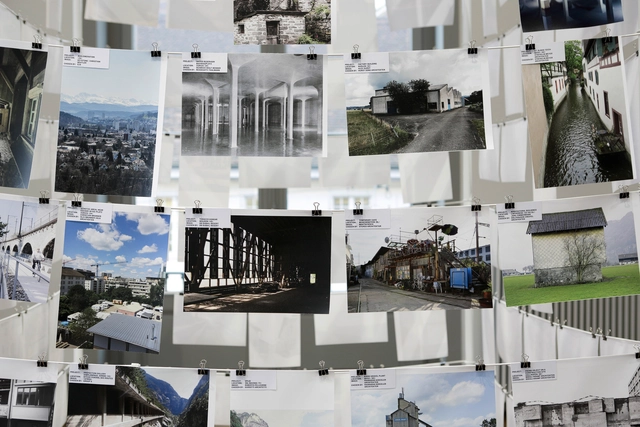
Through this installation, Swiss architect Valerio Olgiati explores the ambiguous and complex “common ground” of inspiration and imagination in architecture. Images, selected by architects from around the world, represent the infinitely varied forms of visual material that are collected in their imaginations and subsequently transformed through the creative process.

Venice Biennale 2012: Pictographs - Statements of Contemporary Architects / Valerio Olgiati - Image 5 of 4
© Nico Saieh