1. ArchDaily
  2. Women Architects

Women Architects: The Latest Architecture and News

Reclaiming the Street: Alejandra Ferrera on Architecture and Urban Life in Honduras

Subscriber Access | 

Honduras is the second-largest country in Central America, both in territory and population. Today, its urban fabric remains heavily influenced by modernist principles from the 1970s that prioritised high-speed arterial corridors and automobile-dependent "point-to-point" mobility. In addition, the country faced many challenges regarding public safety during the 2010s, which contributed to creating an urban space characterised by blind facades, high perimeter walls, and gated enclosures designed to isolate the interior from the public realm.

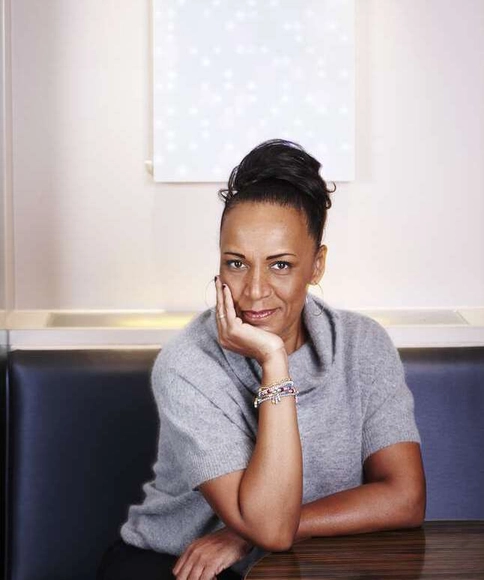
We had the opportunity to talk to Alejandra Ferrera, a Honduran architect raised in Danlí, a city in eastern Honduras. With over 15 years of practice across Brazil, the Netherlands, and Australia, she argues that while the security-driven design was a functional necessity of its time, it has resulted in a fragmented urban experience where the street serves only as a transit void rather than a place for social encounter. She suggests that even though this isolation was a justified safety measure, it created detachment between the inhabitants and the city. She also argues that overall, the public safety situation contributed to the creation of a wounded national identity that often looks outward for quality, dismissing the potential of its own context.


Reclaiming the Street: Alejandra Ferrera on Architecture and Urban Life in Honduras - Image 1 of 4Reclaiming the Street: Alejandra Ferrera on Architecture and Urban Life in Honduras - Image 2 of 4Reclaiming the Street: Alejandra Ferrera on Architecture and Urban Life in Honduras - Image 3 of 4Reclaiming the Street: Alejandra Ferrera on Architecture and Urban Life in Honduras - Image 4 of 4Reclaiming the Street: Alejandra Ferrera on Architecture and Urban Life in Honduras - More Images+ 10

Barbara Buser Recognized With the 2026 Jane Drew Prize for Her Work In Circular Construction

The AJ and The Architectural Review have named architect Barbara Buser as the winner of the 2026 Jane Drew Prize. The prize, named after English modernist architect and urban designer Jane Drew, is part of the W Awards and the W Programme, which recognise women's contributions to the architectural profession. Swiss-based architect Barbara Buser is known as an innovator in the field of recycling and reuse, and as an expert in circular construction, recognised for pioneering repurposing practices in Switzerland. The award, therefore, recognises not only her contribution to architecture itself, but above all her efforts to reduce the industry's environmental impact through socialisation initiatives. The recognition follows Anne Lacaton's award in 2025, as well as other prominent figures in the field, such as Kazuyo Sejima in 2023, Farshid Moussavi in 2022, and Yasmeen Lari in 2020.

Xu Tiantian Receives the 2026 Charlotte Perriand Award

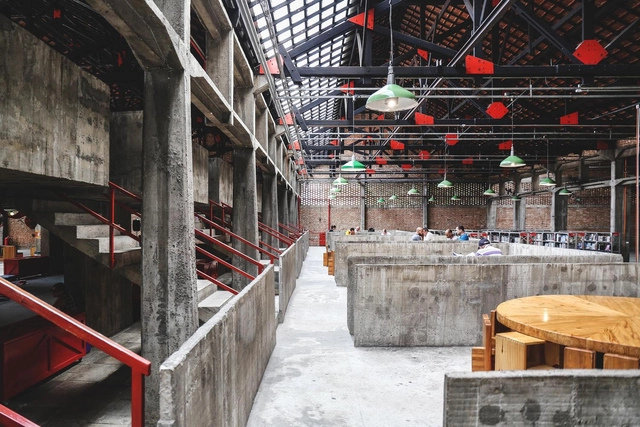
The Créateurs Design Awards (CDA) announced Xu Tiantian, Founder and Principal Architect of DnA_Design and Architecture, as the recipient of the 2026 edition of Le Prix Charlotte Perriand. The award celebrates architects whose work embodies innovation, social responsibility, and a deep engagement with community and place. The architect was recognized for her transformative work bridging urban and rural communities through innovative design interventions. Her approach to architecture was acknowledged as a tool for cultural preservation and rural revitalization, making her an exemplary recipient of this honor, previously awarded to prominent architects such as Frida Escobedo, Jeanne Gang, Kazuyo Sejima, and Ryue Nishizawa.

Xu Tiantian Receives the 2026 Charlotte Perriand Award - Image 1 of 4Xu Tiantian Receives the 2026 Charlotte Perriand Award - Image 2 of 4Xu Tiantian Receives the 2026 Charlotte Perriand Award - Image 3 of 4Xu Tiantian Receives the 2026 Charlotte Perriand Award - Image 4 of 4Xu Tiantian Receives the 2026 Charlotte Perriand Award - More Images+ 16

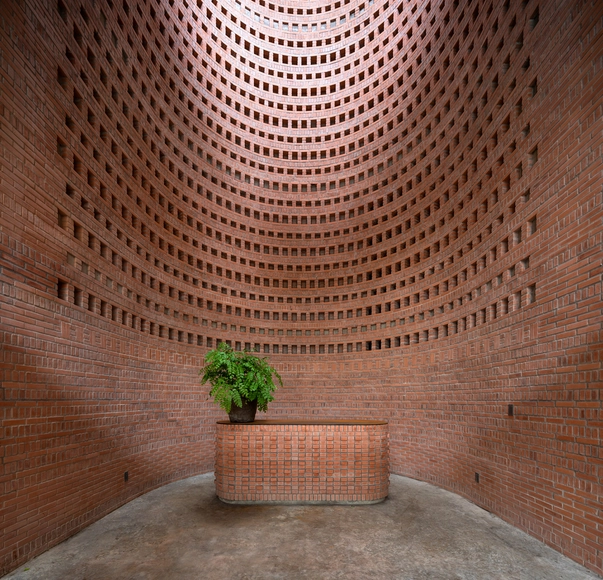
Vietnamese Architect Trần Thị Ngụ Ngôn Wins the 2025 Diversity in Architecture-DIVIA Award

The Diversity in Architecture (DIVIA) Award 2025 has been awarded to Vietnamese architect Trần Thị Ngụ Ngôn, founder of Tropical Space, in a ceremony held on 10 May 2025 at the European Cultural Centre, in Palazzo Mora in Venice. The award includes international recognition and a €10,000 prize, honoring women architects whose work contributes to cultural diversity and inclusion in architecture. This year's edition featured five other finalists: Carolina Rodas and Carla Chávez from Ecuador, Izaskun Chinchilla from Spain, Cazú Zegers from Chile, Patcharada Inplang from Thailand, and Surella Segú from Mexico, all of whom were presented as part of the Time Space Existence exhibition organized by the ECC.

Vietnamese Architect Trần Thị Ngụ Ngôn Wins the 2025 Diversity in Architecture-DIVIA Award - Image 1 of 4Vietnamese Architect Trần Thị Ngụ Ngôn Wins the 2025 Diversity in Architecture-DIVIA Award - Image 2 of 4Vietnamese Architect Trần Thị Ngụ Ngôn Wins the 2025 Diversity in Architecture-DIVIA Award - Image 3 of 4Vietnamese Architect Trần Thị Ngụ Ngôn Wins the 2025 Diversity in Architecture-DIVIA Award - Image 4 of 4Vietnamese Architect Trần Thị Ngụ Ngôn Wins the 2025 Diversity in Architecture-DIVIA Award - More Images+ 23

Marianne McKenna and Shirley Blumberg Awarded the 2025 RAIC Gold Medal by the Royal Architectural Institute of Canada

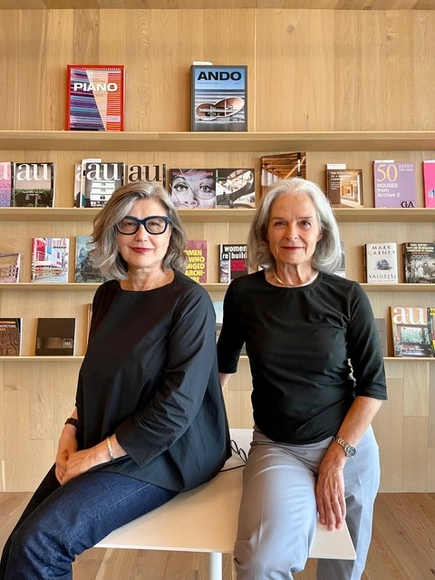
Marianne McKenna and Shirley Blumberg, founding partners of KPMB Architects, have been named the 2025 recipients of the Royal Architectural Institute of Canada (RAIC) Gold Medal, the organization's highest distinction. The award recognizes individuals whose work and influence have made an enduring contribution to Canadian architecture. The RAIC Gold Medal will be formally presented at the RAIC Conference on Architecture in June.

Marianne McKenna and Shirley Blumberg Awarded the 2025 RAIC Gold Medal by the Royal Architectural Institute of Canada - Image 1 of 4Marianne McKenna and Shirley Blumberg Awarded the 2025 RAIC Gold Medal by the Royal Architectural Institute of Canada - Image 2 of 4Marianne McKenna and Shirley Blumberg Awarded the 2025 RAIC Gold Medal by the Royal Architectural Institute of Canada - Image 3 of 4Marianne McKenna and Shirley Blumberg Awarded the 2025 RAIC Gold Medal by the Royal Architectural Institute of Canada - Image 4 of 4Marianne McKenna and Shirley Blumberg Awarded the 2025 RAIC Gold Medal by the Royal Architectural Institute of Canada - More Images+ 1

Building Appropriately: Brinda Somaya on Connecting Generations of Indian Architecture

Subscriber Access | 

India today is a country of 1.4 billion people requiring every type of building imaginable—hospitals, colleges, housing, and more. Championing sensibility and practicality in design is Brinda Somaya, an internationally acclaimed architect, urban conservationist, and academician, recently named an honorary member of the 2025 class of Fellows of the American Institute of Architects. Her work demonstrates a careful response to cultural contexts enriched with a grounded understanding of functionality, transforming them into modern relics. A four-decade career has built her portfolio that spans architecture, master-planning, and historic preservation - a constantly unfolding legacy.

Building Appropriately: Brinda Somaya on Connecting Generations of Indian Architecture - Image 1 of 4Building Appropriately: Brinda Somaya on Connecting Generations of Indian Architecture - Image 2 of 4Building Appropriately: Brinda Somaya on Connecting Generations of Indian Architecture - Image 3 of 4Building Appropriately: Brinda Somaya on Connecting Generations of Indian Architecture - Image 4 of 4Building Appropriately: Brinda Somaya on Connecting Generations of Indian Architecture - More Images+ 5

International Women’s Day 2025: The Diverse Approaches of Emerging Woman-Led Architecture Practices

Subscriber Access | 

This International Women's Day, we celebrate the contributions of women in architecture, a field traditionally dominated by men. While dominant narratives may overlook their significant impact, as the history of architecture is replete with examples of women subtly but powerfully shaping the profession. When limited to a draftsman position, Ester McCoy took a step back not to disengage but to better observe. She became the first architectural critic and historian to notice the unique flavor of Modernism developing along the West Coast during the 1950s, bringing names such as Richard Neutra, or Luis Barragan to the forefront of architectural discussions. Similarly, the name Aline Louchheim may not be a widely recognized one among architects, but, because of her, the name Eero Saarinen surely is. The profession of architectural publicist also emerged through this collaboration. These stories remind us that recognizing women's achievements in architecture is not about celebrating gender, but about acknowledging a historical bias that has hindered the entire field's progress.

International Women’s Day 2025: The Diverse Approaches of Emerging Woman-Led Architecture Practices - Image 1 of 4International Women’s Day 2025: The Diverse Approaches of Emerging Woman-Led Architecture Practices - Image 2 of 4International Women’s Day 2025: The Diverse Approaches of Emerging Woman-Led Architecture Practices - Image 3 of 4International Women’s Day 2025: The Diverse Approaches of Emerging Woman-Led Architecture Practices - Image 4 of 4International Women’s Day 2025: The Diverse Approaches of Emerging Woman-Led Architecture Practices - More Images+ 5

The Swiss Pavilion at 2025 Venice Architecture Biennale Examines Historical Gender Dynamics

The Swiss Arts Council Pro Helvetia, represented by Sandi Paucic and Rachele Giudici Legittimo, has announced that the Swiss Pavilion at the Venice Architecture Biennale 2025 will host the exhibition "The final form is determined by the architect on site," curated by Elena Chiavi, Kathrin Füglister, Amy Perkins, Axelle Stiefel, and Myriam Uzor. This all-female team poses the question: What if Lisbeth Sachs, rather than Bruno Giacometti, had designed the Swiss Pavilion? The exhibition will explore this question by reviving one of the iconic works of Lisbeth Sachs, one of the first registered female architects in Switzerland and a contemporary of Giacometti.

The Swiss Pavilion at 2025 Venice Architecture Biennale Examines Historical Gender Dynamics - Image 1 of 4The Swiss Pavilion at 2025 Venice Architecture Biennale Examines Historical Gender Dynamics - Image 2 of 4The Swiss Pavilion at 2025 Venice Architecture Biennale Examines Historical Gender Dynamics - Image 3 of 4The Swiss Pavilion at 2025 Venice Architecture Biennale Examines Historical Gender Dynamics - Image 4 of 4The Swiss Pavilion at 2025 Venice Architecture Biennale Examines Historical Gender Dynamics - More Images+ 3

Saving Montreal’s Architectural Heritage: Phyllis Lambert’s Legacy of Community-Driven Change

Subscriber Access | 

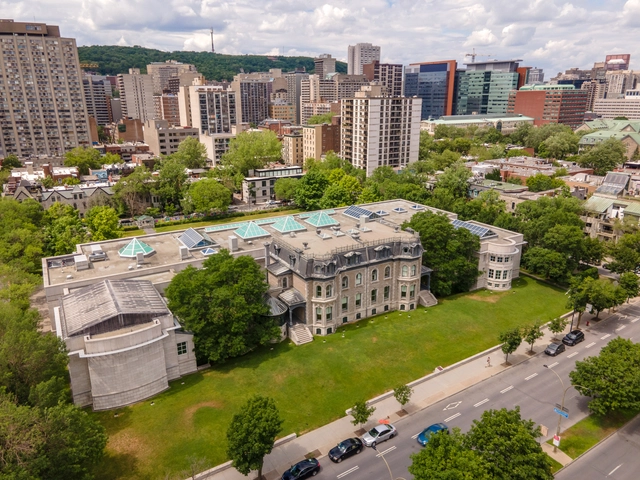
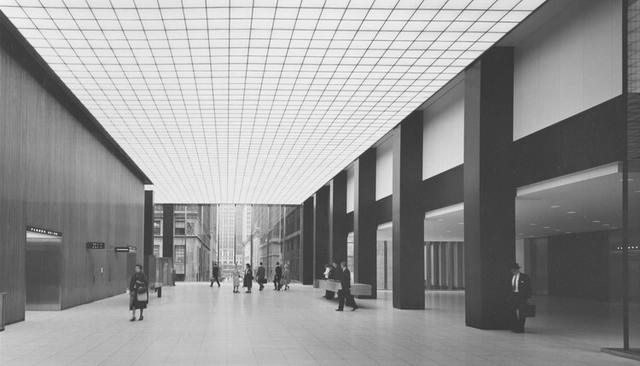
Phyllis Lambert has been a key figure in the preservation of Canada's cultural heritage. As an architect and advocate for heritage conservation, Lambert has left an indelible mark in Montreal and other cities worldwide. Her contributions to Montreal's architectural scene can't really be judged in terms of individual buildings, but rather in terms of the city as a whole. She not only cofounded the Canadian Center for Architecture (CCA), but also helped reshape the way cities like Montreal think about heritage and the importance of community voices in urban planning.

Saving Montreal’s Architectural Heritage: Phyllis Lambert’s Legacy of Community-Driven Change - Image 3 of 4Saving Montreal’s Architectural Heritage: Phyllis Lambert’s Legacy of Community-Driven Change - Image 1 of 4Saving Montreal’s Architectural Heritage: Phyllis Lambert’s Legacy of Community-Driven Change - Image 4 of 4Saving Montreal’s Architectural Heritage: Phyllis Lambert’s Legacy of Community-Driven Change - Featured ImageSaving Montreal’s Architectural Heritage: Phyllis Lambert’s Legacy of Community-Driven Change - More Images+ 5

BBC Names Lesley Lokko Among 100 Most Influential Women of 2024

Lesley Lokko, a Ghanaian-Scottish academic, writer, and curator, has been named one of the BBC's 100 most influential women of 2024. The prestigious list highlights women from around the globe who are recognized for their resilience and their contributions toward driving change in their respective fields. Lokko's inclusion reflects her groundbreaking work in architectural education, her commitment to diversity and inclusion, and her focus on addressing global challenges like decolonization and decarbonization.

BBC Names Lesley Lokko Among 100 Most Influential Women of 2024 - Image 1 of 4BBC Names Lesley Lokko Among 100 Most Influential Women of 2024 - Image 2 of 4BBC Names Lesley Lokko Among 100 Most Influential Women of 2024 - Image 3 of 4BBC Names Lesley Lokko Among 100 Most Influential Women of 2024 - Image 4 of 4BBC Names Lesley Lokko Among 100 Most Influential Women of 2024 - More Images+ 1

Designing Bombardier’s Aerospace Campus in Toronto, Canada: Insights from Lilia Koleva of NEUF architect(e)s

Adjacent to Toronto's Pearson International Airport, the Bombardier Aircraft Assembly Center represents a landmark project in Canadian aerospace design. Located next to Canada's largest airport, it blends 70,000 m2 (750,000 ft2) of technical precision with a focus on people. ArchDaily's editor Moises Carrasco had the opportunity to speak with Lilia Koleva, partner at NEUF architect(e)s and founder of the firm's Toronto office, which led this project. Koleva shared insights into her professional journey and reflected on the challenges of building and growing NEUF's Toronto-based office. She also discusses the Bombardier Campus, describing it as a defining project in her career, and how it showcases NEUF's ability to tackle large-scale, technically demanding projects while maintaining a focus on the people who use the space. This project builds on the office's prior expertise in industrial design and expands its portfolio of human-centered architectural solutions. Koleva also reflects on the importance of fostering collaboration, adaptability, and a clear understanding of client needs; qualities that have defined her approach to architecture and leadership at NEUF.

Designing Bombardier’s Aerospace Campus in Toronto, Canada: Insights from Lilia Koleva of NEUF architect(e)s - Image 1 of 4Designing Bombardier’s Aerospace Campus in Toronto, Canada: Insights from Lilia Koleva of NEUF architect(e)s - Image 2 of 4Designing Bombardier’s Aerospace Campus in Toronto, Canada: Insights from Lilia Koleva of NEUF architect(e)s - Image 3 of 4Designing Bombardier’s Aerospace Campus in Toronto, Canada: Insights from Lilia Koleva of NEUF architect(e)s - Image 4 of 4Designing Bombardier’s Aerospace Campus in Toronto, Canada: Insights from Lilia Koleva of NEUF architect(e)s - More Images+ 13

Pioneers of Architecture Criticism: 5 Women Who Are Shaping the Built Environment Through Words

Architecture criticism and journalism are often expected to announce "the good, the bad, and the ugly" in architecture and the built environment. Its purposes go however further than that. As Michael Sorkin put it, "seeing beyond the glittering novelty of form, it is criticism's role to assess and promote the positive effects architecture can bring to society and the wider world". In other words, by telling us what they are seeing, critics are also showing us where to look in order to identify and address the issues plaguing our built environment.

The field of architecture journalism has been led by female writers even in times when the pursuit of a career in architecture was discouraged and inaccessible for women. Ada Louise Huxtable established the profession of architecture journalism by holding the first full-time position of architecture critic at a general-interest American newspaper. In 1970, she also received the first-ever Pulitzer Prize for criticism. Esther McCoy started her career as a draughtswoman at an architecture office, yet, because of her gender, she was discouraged from training as a professional architect despite her ambitions to study the field. Through her writings, she managed to bring attention to the overlooked architectural scene of the American West Coast and advocate for the values of regional Modernism.

Pioneers of Architecture Criticism: 5 Women Who Are Shaping the Built Environment Through Words - Image 1 of 4Pioneers of Architecture Criticism: 5 Women Who Are Shaping the Built Environment Through Words - Image 2 of 4Pioneers of Architecture Criticism: 5 Women Who Are Shaping the Built Environment Through Words - Image 3 of 4Pioneers of Architecture Criticism: 5 Women Who Are Shaping the Built Environment Through Words - Image 4 of 4Pioneers of Architecture Criticism: 5 Women Who Are Shaping the Built Environment Through Words - More Images+ 6

Urban Brutalism: Unpacking Renée Gailhoustet’s Trailblazing Work in Ivry-Sur-Seine

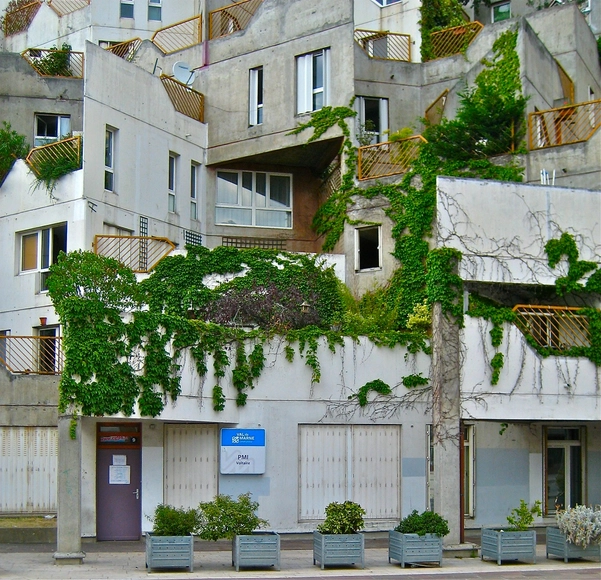
A few months ago, French architect Renée Gailhoustet was awarded the 2022 Royal Academy Architecture Prize. As housing challenges continue to embattle Paris and other French cities today, Gailhoustet was a timely choice, her body of work in the Paris suburbs – stretching back to the 1960s – still functioning today as compelling case studies to a social housing approach that concurrently embraces community and has a uniqueness of form.

Urban Brutalism: Unpacking Renée Gailhoustet’s Trailblazing Work in Ivry-Sur-Seine - Image 1 of 4Urban Brutalism: Unpacking Renée Gailhoustet’s Trailblazing Work in Ivry-Sur-Seine - Featured ImageUrban Brutalism: Unpacking Renée Gailhoustet’s Trailblazing Work in Ivry-Sur-Seine - Image 2 of 4Urban Brutalism: Unpacking Renée Gailhoustet’s Trailblazing Work in Ivry-Sur-Seine - Image 3 of 4Urban Brutalism: Unpacking Renée Gailhoustet’s Trailblazing Work in Ivry-Sur-Seine - More Images+ 8

Dorte Mandrup and an Architecture Not Afraid to Contrast the Context

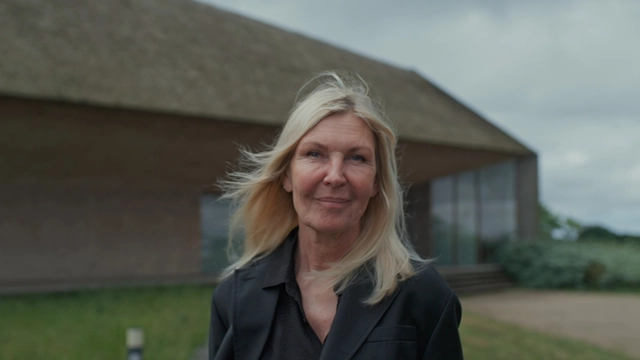
Buildings are deeply interconnected with their surroundings—the climate, culture, landscape, and the lives of their occupants. For Dorte Mandrup, a renowned Danish architect, context is more than a mere consideration; it is the driving force behind her designs. Her work demonstrates a profound curiosity about the people who will inhabit her buildings and the unique stories embedded within each site. Her buildings aren't just structures; they're thoughtful responses to their surroundings, without aiming to disappear within them.

Dorte Mandrup is featured, alongside Tosin Oshinowo, in the second installment of the documentary Women in Architecture, released November 12, 2024. Produced by Sky-Frame in collaboration with ArchDaily and directed by Boris Noir, the film builds upon the first episode, which highlighted Toshiko Mori, Gabriela Carrillo, and Johanna Meyer-Grohbrügge, offering a continued exploration of diverse perspectives within architecture.

Dorte Mandrup and an Architecture Not Afraid to Contrast the Context - Image 1 of 4Dorte Mandrup and an Architecture Not Afraid to Contrast the Context - Image 2 of 4Dorte Mandrup and an Architecture Not Afraid to Contrast the Context - Image 3 of 4Dorte Mandrup and an Architecture Not Afraid to Contrast the Context - Image 4 of 4Dorte Mandrup and an Architecture Not Afraid to Contrast the Context - More Images+ 26

How Latin American Female Architects Are Tackling Their Countries' Challenges: 4 Inspiring Interviews Highlighting Creativity and Resilience

Architecture and urban planning in Latin America face deeply rooted social, environmental, and economic challenges shaped by historical inequalities, rapid population growth, and unplanned urbanization. Addressing these issues requires innovative solutions that balance housing needs, ecological preservation, and respect for local identities. Amid this complex landscape, several visionary female architects are making a difference with creative and impactful approaches.

How Latin American Female Architects Are Tackling Their Countries' Challenges: 4 Inspiring Interviews Highlighting Creativity and Resilience - Image 1 of 4How Latin American Female Architects Are Tackling Their Countries' Challenges: 4 Inspiring Interviews Highlighting Creativity and Resilience - Image 2 of 4How Latin American Female Architects Are Tackling Their Countries' Challenges: 4 Inspiring Interviews Highlighting Creativity and Resilience - Image 3 of 4How Latin American Female Architects Are Tackling Their Countries' Challenges: 4 Inspiring Interviews Highlighting Creativity and Resilience - Image 4 of 4How Latin American Female Architects Are Tackling Their Countries' Challenges: 4 Inspiring Interviews Highlighting Creativity and Resilience - More Images

Women Architects and their Material Strategies: Bo Bardi, Merrick & Hadid

Although there is more of a balance between women and men in architecture today, the landscape was quite different a few decades ago. Pioneering women architects have been resistant in a profession dominated by men, and have faced skepticism in challenging contexts, such as construction sites itself. Zaha Hadid commented on the difficulty of inclusion in what she called the "boys club", listing the difficulties in coming to agreements or creating partnerships. Lina Bo Bardi, in turn, used her strong personality to overcome the sexism of her time. Even though these difficulties, women have always found a way to stand out and bring priceless contributions to the profession.

On countless occasions architecture has remembered famous architects and their material discoveries through time, but what about recognizing women's contributions to the discipline? Discussing their pioneering material explorations is key to understanding their role in projects. With an analysis of the work of the well-known architects Lina Bo Bardi, Norma Merrick Sklarek and Zaha Hadid –which introduced innovative techniques and material trends– the following discussion brings to light how women's ideas have influenced the development of architecture. Identifying their approaches on how to managing structures and materials helps to understand the personality of their work and how to implement similar strategies in the future.

A Woman Architect in the Mad Men Era: The Story of Natalie De Blois

On January 21, 1958, three women sat down as contestants for an episode of the popular television show "To Tell the Truth", a quiz game in which a panel tries to guess which of the three contestants is who they say they are by asking them a series of questions. The announcer reveals the true identity of the person is a registered architect, has so far designed a Hilton hotel, and is a married mother of four. Each of the women, dressed formally in pencil skirts and blouses, introduces themselves as Natalie De Blois. As the panelists reveal their lack of knowledge about architecture, only firing off questions about Frank Lloyd Wright, one asks "What is the name of the building that was torn down to build Union Carbide?" The real Natalie De Blois, at the time a senior designer at SOM, firmly answers, "Hotel Margery."

Architecture is one of the oldest recorded professions, dating back to ancient eras when builders designed historic huts and constructed some of the great wonders of the world. When we think about women who have been known as trailblazers of the industry, it's astonishing that we often talk about women who we may interact with in the workplace day to day, or who our mentors may have learned from. Natalie De Blois was a modern-day pioneer of women in the design workforce, and although her legacy began only seventy years ago, it has significantly changed the way that women can participate in the profession today.

Amplifying Female Voices: Premiering the Second Chapter of 'Women in Architecture"

"It's a long journey, but it's a valuable journey, and it's a journey that does reap rewards in the end". 

ArchDaily is excited to present the second installment of the docu-series Women in Architecture, a project launched by Sky-Frame and directed by Boris Noir. Following an initial episode featuring Toshiko Mori, Gabriela Carrillo, and Johanna Meyer-Grohbrügge, the documentary moves to Copenhagen and Lagos, spotlighting Dorte Mandrup and Tosin Oshinowo. "Two distinct personalities at very different stages in their lives and careers," as Boris Noir describes it, the protagonists bring unique perspectives to similar challenges.

Amplifying Female Voices: Premiering the Second Chapter of 'Women in Architecture" - Image 1 of 4Amplifying Female Voices: Premiering the Second Chapter of 'Women in Architecture" - Image 2 of 4Amplifying Female Voices: Premiering the Second Chapter of 'Women in Architecture" - Image 3 of 4Amplifying Female Voices: Premiering the Second Chapter of 'Women in Architecture" - Image 4 of 4Amplifying Female Voices: Premiering the Second Chapter of 'Women in Architecture - More Images+ 13